Hepper blog

Search our database of over 9,984 posts with up-to-date information from our experts and veterinarians.

Hepper is reader-supported. When you buy via links on our site, we may earn an affiliate commission at no cost to you. Learn more.

Can Cats Eat Roast Beef? Vet-Approved Facts & FAQ

By Nicole Cosgrove · Reviewed & fact-checked by Dr. Amanda CharlesVet Approved
Dr. Amanda Charles
Reviewed & Fact-Checked byDr. Amanda CharlesVeterinarian
Dr. Amanda Charles qualified as a vet in 2002 after graduating from the University of Liverpool and has been in small animal practice ever since. She has a postgraduate Certificate in Dermatology. She loves empowering pet parents by giving them up-to-date and accurate information and thrives off the variety that being a vet brings.Outside of work, Amanda has two very active young sons and an equally active Cocker Spaniel and Ragdoll cat, all of whom keep her very busy!View authorThe information is current and up-to-date in accordance with the latest veterinarian research. Read about our vets
Share
Ask us a question in the comments
Can Cats Eat Roast Beef

It can be difficult to resist the urge to offer some of your meal to your pets, but not all human foods are safe. Fortunately, cats are obligate carnivores and love meat, so a small piece of your chicken or beef may be fine as an occasional treat.

But can cats have roast beef? This one is tricky because the beef itself is safe for cats, but how it’s prepared may not be. Here’s what you need to know about sharing your roast beef with your cat.

Is Roast Beef Good for Cats?

Cats are obligate carnivores, so small pieces of meat on occasion can be a healthy treat. If cats don’t eat enough meat, they can develop serious health problems. Of course, your cat should get all the nutrition they need—including adequate animal-based protein—from a complete and balanced diet specifically designed for cats.

Some of a cat’s unique nutritional requirements include:

  • Protein: Cats have a higher requirement for protein than other species like dogs and humans. Cats need this in the form of high quality and highly digestible animal protein.
  • Taurine: This amino acid is essential for cats and only found in animal sources. Taurine can be synthesized in humans and dogs but not in cats. If they don’t get enough meat, they can’t supplement the necessary taurine and develop conditions like dilated cardiomyopathy, a heart condition that prevents their heart from pumping blood and supplying oxygen to the body.
  • Arginine: Arginine is another amino acid that cats can’t produce naturally, so they need to get it from their diet. Without arginine, ammonia builds up in the body and leads to lethargy, drooling, vomiting, and convulsions.

Roast beef provides these necessary nutrients, but there are some precautions to take.

Risks of Roast Beef for Cats

With roast beef, the beef itself is fine for cats. Roasting is also a healthier method of preparing meat compared to frying or sauteing. The problems come from what may be added to the roast beef, however.

Whether you make it yourself or purchase it, most roast beef is not just beef. It usually has seasonings, sauces, and spices like onions or garlic, which are toxic to cats. Roast beef can also be made with cooking wine, salt, and other ingredients that can make your cat sick.

If you want to make roast beef to share a little with your cat, it’s important to prepare it without any seasonings or spices. But even still, there are parts of the roast beef your cat shouldn’t eat—namely the fat trim or any bones.

Excess fat can upset your cat’s stomach and cause diarrhea and vomiting. In more serious cases, it can trigger pancreatitis, a serious and painful inflammation of the pancreas.
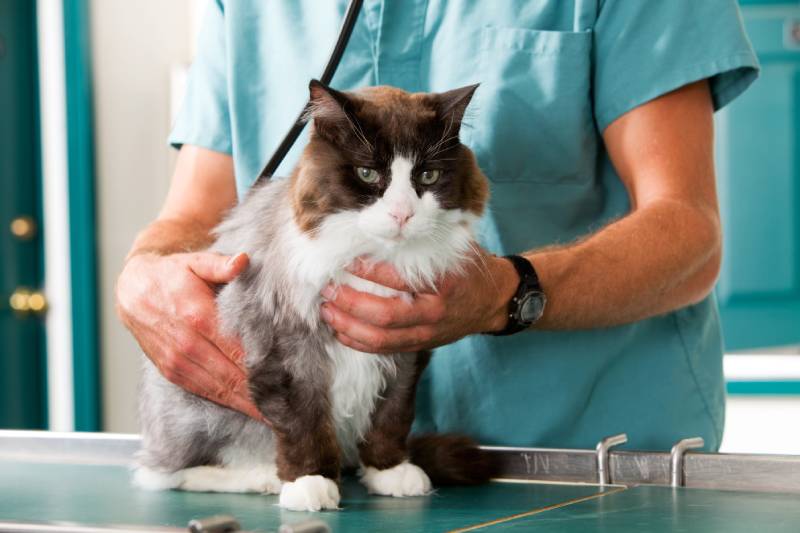
cat having a check up at a small animal vet clinic
Image Credit: Tyler Olson, Shutterstock

If the roast beef has bone fragments, they could cause your cat to break a tooth or cause a blockage in the gut, which requires emergency—and often expensive—surgery. Bone fragments can also injure the mouth or gastrointestinal tract.

You should also make sure the roast beef is fully cooked. It may seem like cats can handle raw meat like their wild counterparts, but the American Veterinary Medical Association discourages feeding raw or undercooked foods as they may increase the risk of foodborne illnesses.

In short, any roast beef you offer your cat should be plain, free of seasonings or sauces, and without fat trimming or bones. This can be a safe occasional treat but be mindful not to feed too much. Even though it’s mostly healthy, your cat’s treats should only make up about 10% of their total diet. Otherwise, you risk upsetting their nutritional balance. Always consult your vet if you have questions about your cat’s diet.

What to Do If Your Cat Eats Roast Beef

If your cat manages to gorge themselves on some roast beef, it’s not necessarily cause for panic. If the roast beef contains toxic ingredients like garlic or onion, it’s best to contact your vet and get their recommendation.

You should also watch your cat for the following signs:

  • Pale gums
  • Lethargy
  • Rapid heart rate
  • Rapid breathing
  • Weakness
  • Severe stomach upset
  • Collapse
  • Low body temperature
  • Excessive thirst and urination

These signs can indicate an emergency and require immediate veterinary attention.

Final Thoughts

Plain, cooked roast beef can be a healthy occasional treat for your cat, but it’s important to take precautions. While it’s a nice treat, feeding too much roast beef can disrupt your cat’s balanced diet. It's always best to check with your vet before adding new foods to your cat’s diet to make sure they are suitable for your pet. You also run the risk of spoiling your cat and encouraging picky eating, so be sure to feed roast beef and other treats sparingly.

Sources

Featured Image Credit: vitals, Shutterstock

Get Hepper In Your Inbox

Pet care tips from our vets and experts, straight to your inbox.

List

Select all that apply.

You may opt-out at any time. View our Privacy Policy for more information.

Nicole Cosgrove
Authored by

Nicole Cosgrove

Join the conversation

Ask a question, share your story, or send private feedback.
Rate this post
Required to post. Only our editors see your rating.
Who should see this?

A human reviews every comment before it appears. Your email is never published.

Picked to go with this article

Can Cats Eat Steak? Vet Approved Health & Nutrition Guidelines

Can Cats Eat Steak? Vet Approved Health & Nutrition Guidelines

Curious cats can cajole their way into anything, and when they catch sight of your savory steak dinner, they’ll do everything they can to snag a taste. Fortuna…

Elizabeth Gray
By Elizabeth Gray ·
Can A Cat Eat Raw Beef? Vet-Reviewed Benefits, Risks & FAQ

Can A Cat Eat Raw Beef? Vet-Reviewed Benefits, Risks & FAQ

Being obligate carnivores, cats rely on an animal-based protein diet as a primary energy source. That includes meats such as beef, fish, and chicken. A global…

Nicole Cosgrove
By Nicole Cosgrove ·
Can Cats Eat Rotisserie Chicken? Vet-Approved Facts & FAQ

Can Cats Eat Rotisserie Chicken? Vet-Approved Facts & FAQ

Who can blame your kitty for wanting a piece of the freshly cooked chicken you just brought home from the supermarket? Rotisserie chicken, in particular, smell…

Annaliese Morgan
By Annaliese Morgan ·
Can Cats Eat Turkey? Vet-Reviewed Facts & Feeding Tips

Can Cats Eat Turkey? Vet-Reviewed Facts & Feeding Tips

Whether you’re preparing a huge Thanksgiving feast or just want to enjoy a tasty turkey sandwich, your kitty may come running as soon as they get a sniff of th…

Nicole Cosgrove
By Nicole Cosgrove ·

Keep reading

More stories you might like

Can Cats Eat Deli Meat (Lunch Meat)? Nutritional Facts & Safety Guide

Deli meat is a tasty part of daily lunches for many people. We also know that cats enjoy meat, so you may have wondered if you can share the deli meat from you…

Brooke Billingsley
By Brooke Billingsley ·
Can Cats Eat Deli Meat (Lunch Meat)? Nutritional Facts & Safety Guide

Can Cats Eat Beef? Vet-Reviewed Nutrition Facts & FAQ

Beef is pretty much everywhere you look. It is on every menu, in every deli, and in most people’s refrigerators or freezers. If you’ve spent any amount of time…

Brooke Billingsley
By Brooke Billingsley ·
Can Cats Eat Beef? Vet-Reviewed Nutrition Facts & FAQ

9 Foods Cats Should & Shouldn’t Eat on Thanksgiving: Vet-Approved Options

With Thanksgiving just around the corner, it is time to review what common Thanksgiving foods cats can and can’t eat. In many cases, cats can share a bit of th…

Kristin Hitchcock
By Kristin Hitchcock ·
9 Foods Cats Should & Shouldn’t Eat on Thanksgiving: Vet-Approved Options

Can Cats Eat Pastrami? What You Need to Know

We all know how much our kitties go crazy over meat items. If you leave your plate unattended, they probably help themselves to your leftover chicken or meatba…

Ashley Bates
By Ashley Bates ·
Can Cats Eat Pastrami? What You Need to Know

What Can My Cat Eat on Christmas? 7 Vet-Approved Options

Christmas is a time we want to share with family, eat good food, wear bad sweaters, and fall asleep in front of the television. Our pets are family, and it mak…

Kerry-Ann Kerr
By Kerry-Ann Kerr ·
What Can My Cat Eat on Christmas? 7 Vet-Approved Options

Can Cats Eat Meatloaf? Vet-Reviewed Facts & Advice

When the weather is cold and days are short but somehow still seem long and stressful, sometimes you just want to sit down to a nice, warm dinner of your favor…

Nicole Cosgrove
By Nicole Cosgrove ·
Can Cats Eat Meatloaf? Vet-Reviewed Facts & Advice

Can Cats Eat Ham? Vet-Reviewed Health & Safety Guide

Our pets will generally let us know what they’re interested in. Sometimes, they’re rather forceful with their opinions, making sure that we don’t miss the sign…

Dean Eby
By Dean Eby ·
Can Cats Eat Ham? Vet-Reviewed Health & Safety Guide

Can Cats Eat Gravy? Vet-Reviewed Facts & FAQ

What cat could resist the opportunity to suck down a plate of leftover gravy? Gravy contains broth, fat, and savory goodies made of animal protein—everything y…

Ashley Bates
By Ashley Bates ·
Can Cats Eat Gravy? Vet-Reviewed Facts & FAQ