Hepper is reader-supported. When you buy via links on our site, we may earn an affiliate commission at no cost to you. Learn more.
Can Cats Eat Ham? Vet-Reviewed Health & Safety Guide


In this article
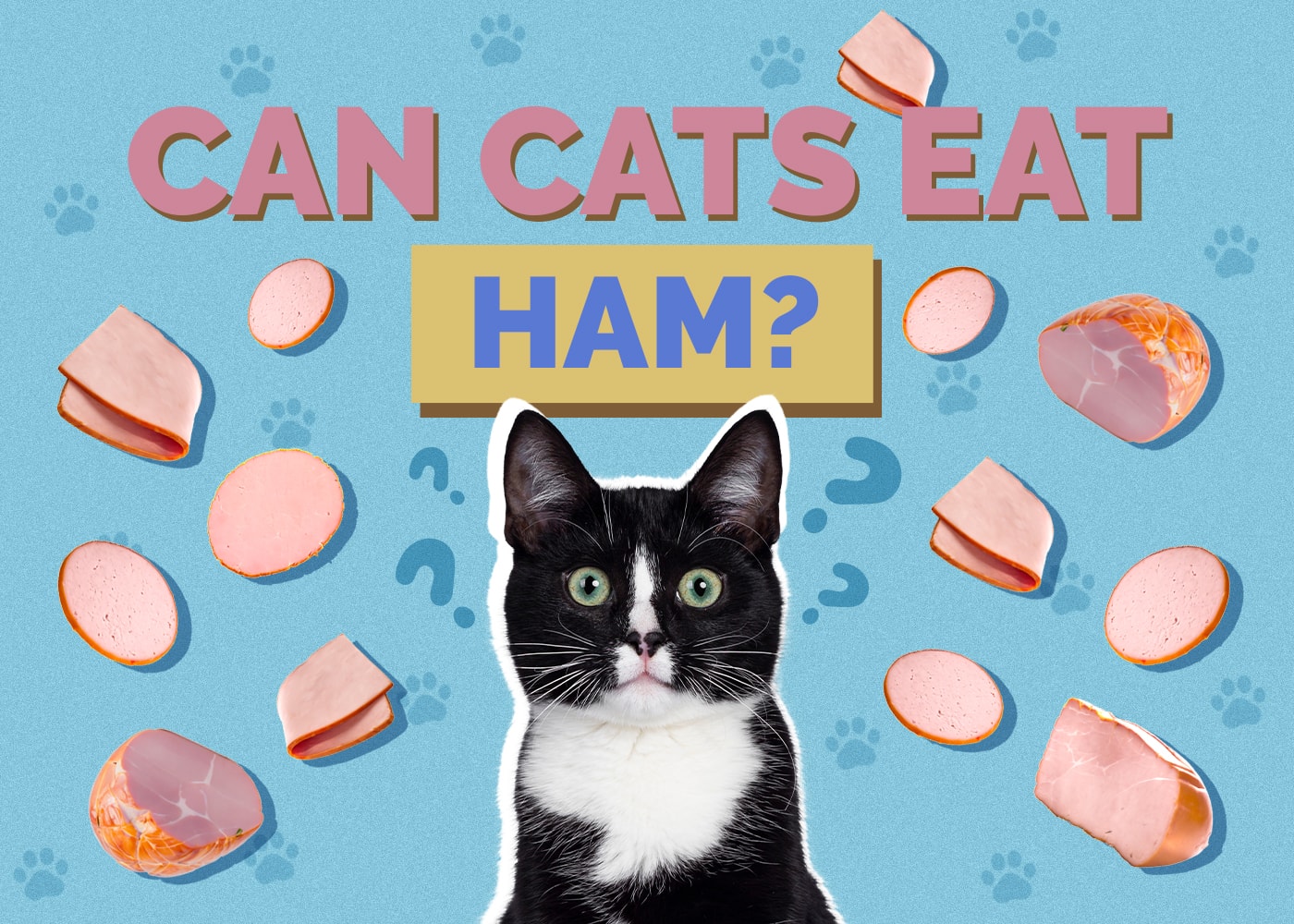
Our pets will generally let us know what they’re interested in. Sometimes, they’re rather forceful with their opinions, making sure that we don’t miss the signs they’re trying to give. Food is often one thing that will get pets riled up, and many will come the moment they hear a wrapper opening. While many foods aren’t safe to share with your beloved pets, some foods seem innocuous. If you know that cats are carnivores, then when your cat is staring you down while you’re putting that tasty morsel of ham in your mouth, you’re probably thinking that it’s a safe enough treat to offer to your favorite furry friend.
Luckily, ham is a safe treat for cats, but it shouldn’t be a staple of their diets. Since cats are obligate carnivores and ham comes straight from hogs, it poses no immediate risk for your cat to consume. However, ham shouldn’t be included on your cat’s regular menu. Even though it’s an animal-based protein source, it’s not an ideal protein source for felines due to some of the other things found in ham, which we’re going to discuss further in this article.

What Should a Cat’s Diet Look Like?
Before we start discussing the benefits and drawbacks of feeding ham to your feline, it is important to understand what a cat’s diet should even look like in the first place. Cats are obligate carnivores, which means that they get all of the nutrients their bodies require from eating other animals. In the wild, the animals that cats hunt and scavenge provide them with all the nutrients they need for growth, maintenance, and reproduction.
Domestic house cats are obviously not hunting and killing live animals on a regular basis. Still, their diet should reflect what they would be eating in the wild. Cats should be eating a diet that’s high in protein, low in carbohydrates, and has a moderate amount of fats.
Nutritional Content of Ham
So, where does ham fit into this equation? Well, ham is an animal-based protein, so it’s off to a good start. Three ounces of ham contains approximately 4 grams of fat and 14 grams of protein with a total of 100 calories. So, ham is high in protein, just like a cat needs. But these numbers can be deceiving. Fat yields more calories per gram than protein, and in 100 calories of ham, there are 36 calories from fat, meaning that ham is more than one-third of fat.
Ham is essentially devoid of carbohydrates, but that high fat content is what prevents it from being a good staple food for felines. Too many calories in the diet can easily lead to a cat becoming overweight, which is a short step from obesity. Obese cats are at higher risk of disease and tend to live lower-quality lives, so it’s not a fate that you want to force your feline into.
Generally, ham is cooked with other seasonings and spices. You’ll rarely eat just a plain piece of ham. But these additional spices might be toxic for your cat. For example, garlic and onion are commonly used for flavor, but these are both poisonous to your cat. If either was used to season the ham you feed your feline, it could cause your cat to get sick.

Are Ham Bones Safe for Cats?
There’s no doubt that your cat would love to chew on that ham bone, but in truth, it could be dangerous for your feline. As a rule of thumb, your cat should never be offered a cooked bone of any kind. The bone can easily splinter while your cat is chewing on it, which can lead to many unwanted health complications. A splintered bone might require surgery to remove if ingested by your cat.
Benefits of Feeding Ham to a Cat
While there are certainly some drawbacks to feeding too much ham to your cat, a little bit can actually be beneficial. For starters, ham is packed with protein, which can help to keep your cat healthy. Ham contains all 11 essential amino acids your kitty needs for proper feline health, including taurine. However, these benefits are often exaggerated, as a cat would also get these nutrients from their normal diet.
How Much Ham Can Cats Eat?
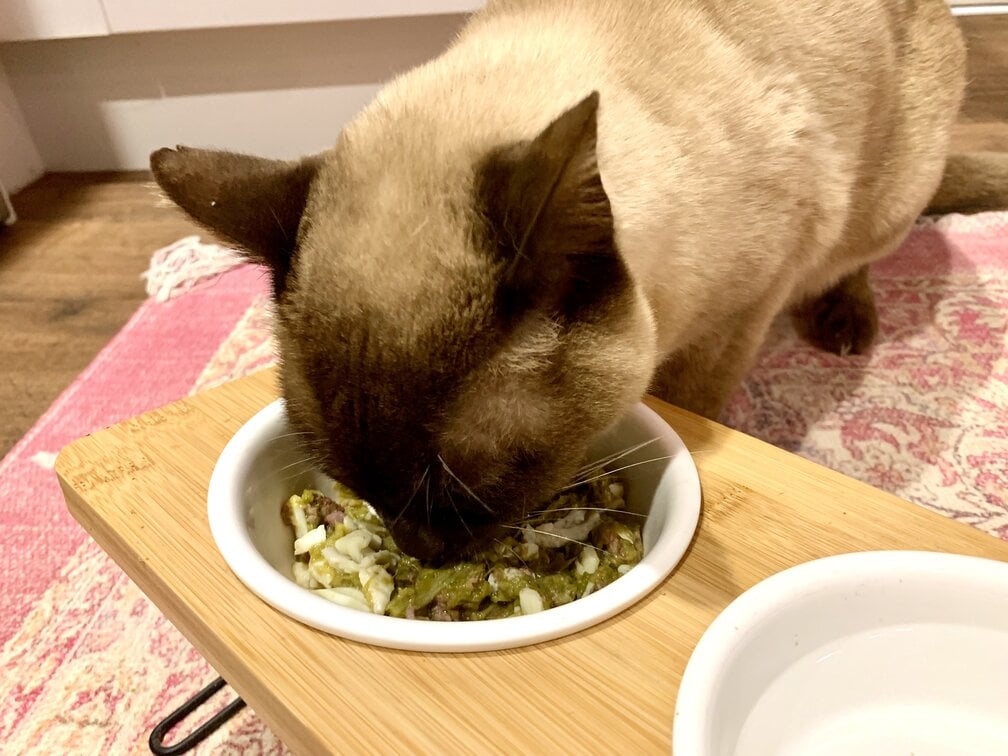
As a general rule, foods outside of your cat’s staple diet should make up no more than 10% of their total food intake. So, you should only offer ham in very small doses and only on occasion. It shouldn’t become a daily treat. The high fat and salt content of ham starts to become a bigger issue the more often you offer it to your cat, though it’s perfectly safe in small doses.
How to Feed Ham to a Cat
If you want to feed ham to your cat, you should ideally offer them cooked, unseasoned ham. Raw ham can contain parasites that could be harmful to your cat. Seasonings commonly used on ham could be toxic. Also, stay away from pre-sliced lunch meats, as these tend to have even higher salt content than other types of ham. You should cook the ham yourself to ensure that there are no additives or seasonings that could potentially harm your cat. And finally, be certain to cut it into small enough chunks that it doesn’t pose a choking hazard.
For cats on a raw meat-based diet, uncooked ham offerings should be those that are sourced from a credible outlet or butcher shop and ideally pasteurized.

Final Thoughts: Should You Feed Ham to Your Feline?
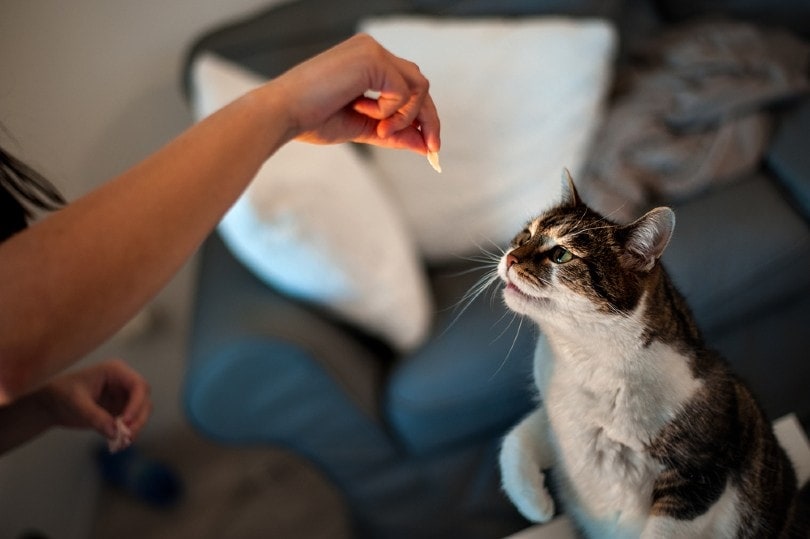
What you choose to feed your cat is a personal decision. It’s different for each family and feline. When it comes to feeding your cat ham, you can do so safely, as long as you practice moderation. Ham shouldn’t be fed as part of your cat’s regular diet, but occasionally offering ham to your cat as a treat can provide some beneficial nutrients in a tasty treat that your cat will appreciate.
Looking for more tips on what your cat can eat? Check out:
Featured Image Credit to: Alex Fox, Pixabay
Get Hepper In Your Inbox


Pet care tips from our vets and experts, straight to your inbox.
You may opt-out at any time. View our Privacy Policy for more information.
A true Renaissance man, Dean Eby has worked a variety of hands-on careers, including home building and remodeling, personal training, and now shares his experiences and understanding as a writer. An avid outdoorsman, Dean spends much of his time adventuring through the diverse terrain of the southwest United States with his closest companion, his dog, Gohan.
For Dean, few passions lie closer to his heart than learning. An apt researcher and reader, he loves to investigate interesting topics such as history, economics, relationships, pets, politics, and more.
Join the conversation
Ask a question, share your story, or send private feedback.