Hepper is reader-supported. When you buy via links on our site, we may earn an affiliate commission at no cost to you. Learn more.
Can Cats Eat Shrimp? Vet-Reviewed Nutrition Facts & FAQ


In this article
Wait a second! Before you feed your cat those table scraps, you might want to first find out if shrimp can compromise their health in any way. It’s great that you want your cat to enjoy a meal that you find delicious, but you also have to understand that, sometimes, caring is more important than sharing.
A lot of people fail to understand that certain human foods are off-limits when it comes to cats. These creatures might look ferocious on the outside, but on the inside, they are actually very delicate. We wouldn’t want shrimp to wreak havoc on them!
Because we love cats so much, we’ve decided to share what we know about shrimp with all the cat lovers out there. So, to answer the question, yes! Cats can eat shrimp. However, there are some safety measures to take before feeding them to your kitty.

Cats Can Eat Shrimp?
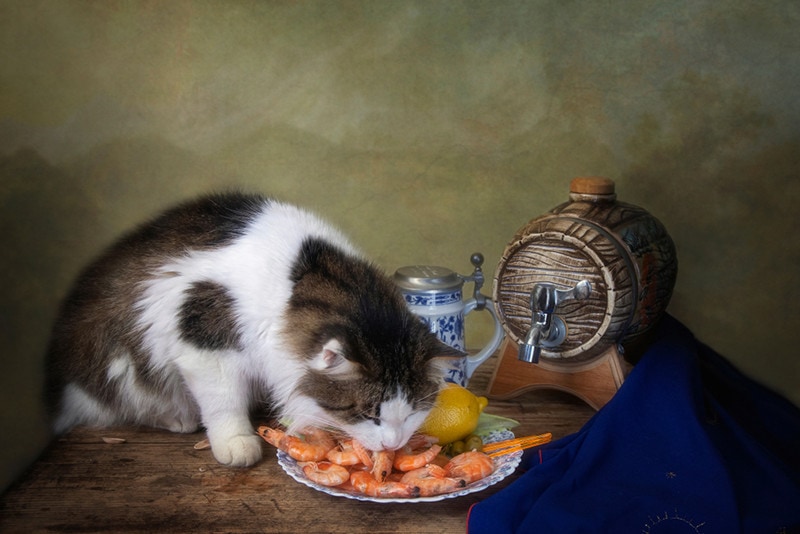
As you now know, cats can eat shrimp. However, you also have to take into account the risks involved.
Everything has an upside and a downside. And if the downside outweighs the upside, you’re better off feeding your cat something else. Also, if you’ve gotten the green light from your vet, you shouldn’t serve it as the main dish.
All these things that we’re telling you will make a lot more sense once you’ve learned everything there is to know about shrimp, why some veterinarians think it’s good for cats, and why others don’t.
Reasons Why Cats Should Eat Shrimp
Low in Calories
Go ahead and take a quick look at your shrimp’s nutritional profile. You’ll be surprised to learn that there’s only 84 calories in a 3-ounce serving. And if you think that’s intriguing, here’s the kicker: it never comes with any refined carbs.
Several studies have concluded that a significant percentage of the calories consumed per serving always originate from protein, and a small percentage from fat. Additionally, in the same serving, your cat will also be getting different minerals and vitamins that are essential in the development of their immune system.
Reasonable Cholesterol Content
We won’t even try to hide the fact that the amount of cholesterol found in shrimp is 85% higher than that found in other seafood. Excessive cholesterol ingestion in cats can result in hyperlipidemia, a condition where the level of fats in the cat’s blood is higher than the normal range.
If consumed in moderation, shrimp shouldn’t be an issue for a healthy cat. Cholesterol is needed to create cell membranes (the envelopes that surround every cell), as well as for the creation of steroid hormones, bile acids, and vitamin D.
Antioxidants
Have you ever heard of something called astaxanthin?
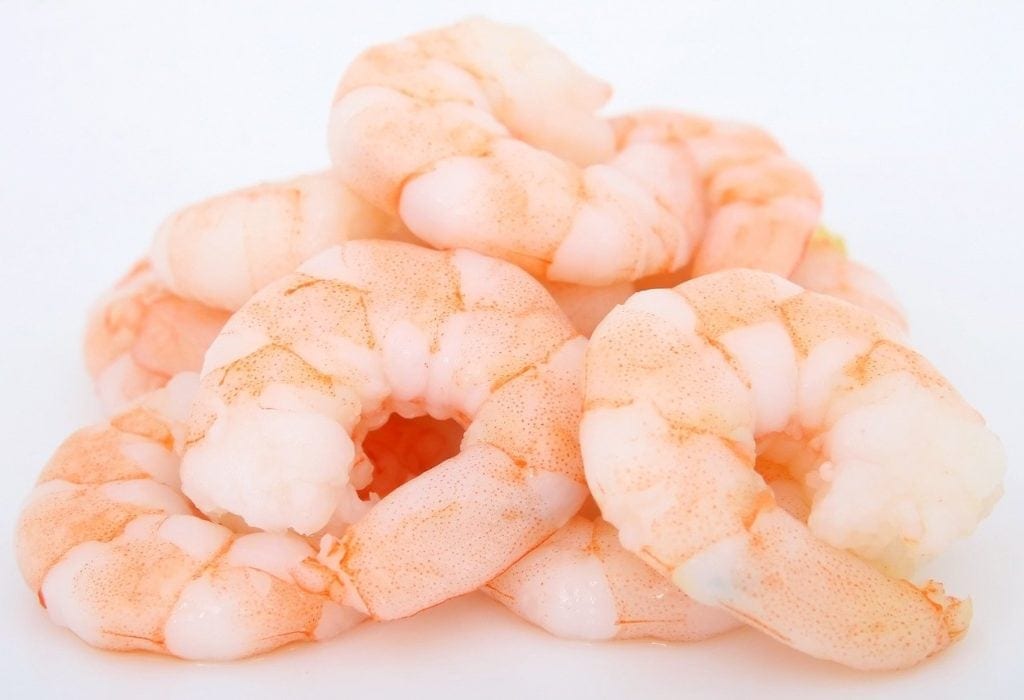
Well, it’s a tetraterpenoid—also known as an antioxidant—that is found in shrimp. You see, shrimp love to consume a lot of algae. And in that algae, you’ll find astaxanthin—the substance that makes shrimp appear reddish.
Astaxanthin has greater antioxidant activity than beta carotenes, vitamin C, vitamin E, and lutein. It offers protection at the cellular level, preventing free radicals from damaging the cat’s body cells.
Additional Nutrients
Shrimp is not just a tasty treat. It provides additional and essential nutrients like calcium, selenium, vitamin B12, magnesium, and phosphorus, all of which are beneficial to the development of the musculoskeletal system.
Dangers of Feeding Your Cat Shrimp
Iodine Poisoning
Even though it’s rarely talked about, shrimp has high levels of iodine in it. It’s obviously not high enough to affect humans, but as we said before, cats are very sensitive. You cannot compare an average human adult to a cat because people can consume up to 1,000 micrograms (mcg) of iodine and not feel any effect.
Cats suffering from hyperadrenocorticism have iodine-restrictive diets, and shrimp might be a poor choice for your cat in these cases. Excessive iodine consumption can have detrimental effects on a healthy cat. In 2009, the AAFCO adjusted cats’ dietary iodine recommendation to 150 mcg per 1,000 kcal of food.
Bacteria
Cats are usually more into raw shrimp, and that’s understandable considering they love fresh meat. But the problem is that this fresh meat may contain a bacterium known as Vibrio. This bacterium is known to commonly cause health complications such as cholera and gastritis.
And that’s not even the worst of it. A couple of years back, there was a study that found that there are at least 100 different strains of Vibrio. Furthermore, a substantial number of them have developed some form of resistance to antibiotics throughout the years.
Mercury Content
This is a conversation that we’ve had before. In fact, it’s made the news on several occasions. The mercury levels in the seas, lakes, and oceans have exponentially increased over the years, and the ripple effects have been seen in the seafood that we consume.
While shrimp have lower mercury concentrations than oysters, crabs, and fish, a cat’s body is also smaller than a human’s, so trace amounts of heavy metals could have an especially detrimental effect on their health.
Any cat that’s been poisoned by methylmercury will appear weak, depressed, anxious, and even irritable. All these are nothing more than symptoms, as the main problem will be in the nervous system. That’s the area most affected by mercury.
And for the record, there’s no cure for this type of poisoning. Your vet could help you manage the symptoms, but neurologic and renal damage is irreversible.
Antibiotic Use
A good fraction of the shrimp that we consume has been imported from other countries. As a matter of fact, if we had to work with a percentage, we’d say about 80% of our shrimp are imports because that’s the only way the market could meet the demand. And although we appreciate this increased supply, their qualities are questionable.
The imported shrimp are all farm-raised. And since farm-raised shrimp is very susceptible to different diseases, farmers in those countries always use antibiotics to treat them beforehand. We don’t really know how these antibiotics will affect your cat’s health, but we’re assuming it’s bad seeing as the FDA banned them.
We’ll reiterate this one last time: if you have to feed your cat shrimp, or if the vet recommends it as a treat, go for the wild-caught brands instead since that’s the only way you’ll be certain there won’t be any antibiotics to worry about.
Frequently Asked Questions
Can Cats Eat Deep-Fried Shrimp?
If you are going to feed shrimp to your cat, make sure it is plain, boiled shrimp. Deep-fried shrimp is cooked with excessive oils that won’t add any nutritional benefit for your cat. The batter used to coat shrimp is carbohydrate-based, and cats do better with a diet that is protein-based with moderate healthy fats and minimal carbohydrates.
When comparing the nutritional and caloric value, 100 grams of boiled shrimp has between 99-140 calories, depending on the species, and most of these calories come from proteins. In contrast, 100 grams of deep-fried shrimp has a whooping 245-310 calories, and most of these excessive calories come from processed fats and carbohydrates.
To sum it up, deep-friend shrimp does not provide ideal, species-appropriate nutrition for a cat.
What’s the Safest Way to Feed Shrimp to Your Cat?
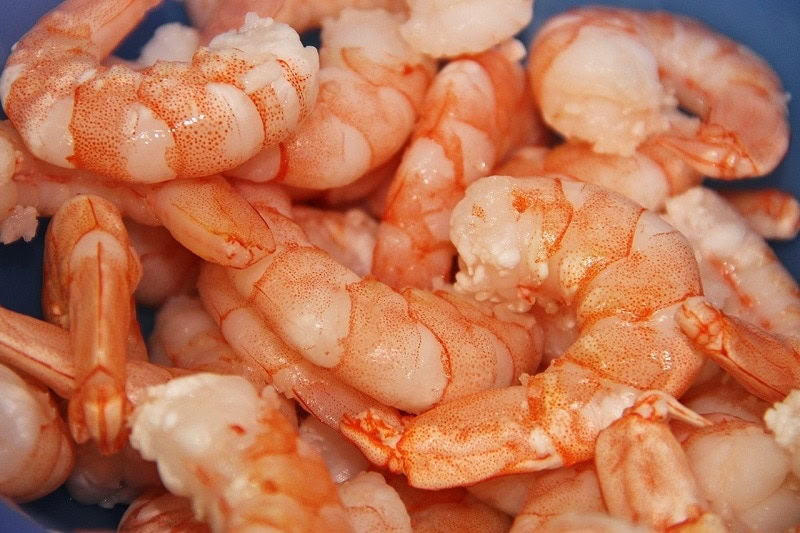
First off, make sure all that meat is deveined and doesn’t have a tail, head, or shell. Secondly, it’s best to feed your cat plain boiled shrimp instead of one that has been cooked with different ingredients. The spices meant to make it tasty to humans could be toxic to cats. And lastly, feed it in moderation. Just because your feline friend loves it so much doesn’t mean that it can be a meal replacement.
Is Processed Shrimp Good for Your Cat?
That’s a hard no. You need to understand that all processed foods have ridiculously high levels of sodium in them because sodium is known to be the best preservative. Add it to the herbs and spices used as seasoning and we’ve got ourselves a recipe for disaster.
Frozen shrimp is okay, but still not totally safe seeing as you can't always tell where the seller got it from. It could be farm-raised, but you always need to double check.
What’s the Difference Between Warm-Water and Cold-Water Shrimp?
Warm-water shrimp will be found in tropical and subtropical waters, whereas cold-water shrimp are found in the northern regions of North America. That’s the regional difference.
When they’re brought to the market, the cold-water shrimp won’t have shells while the warm-water shrimp will.
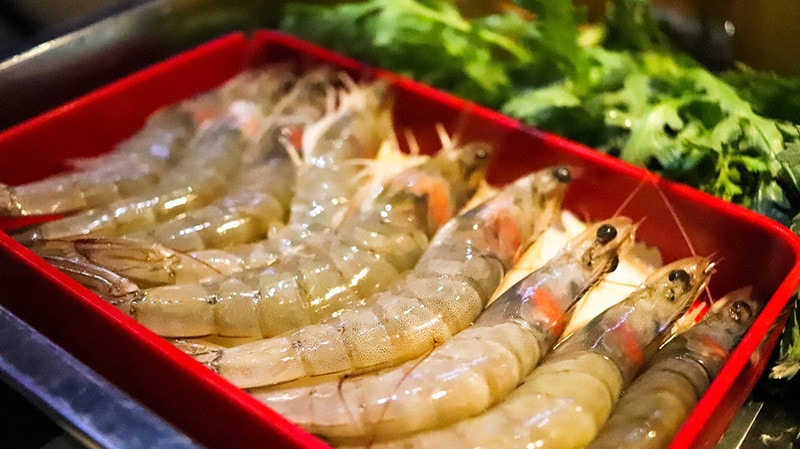
Where Can You Buy Shrimp to Feed Your Cat?
As mentioned earlier, there’s farm-raised shrimp and wild shrimp. A small percentage of shrimp found in the United States is wild shrimp, and they’re often found in the coastal ocean waters. While you can likely find some in larger grocery stores, your best best is to go to a local fish market.
The farm-raised shrimp will be found in ponds, as they have to be supplemented with formulated feeds. This type is the most common shrimp in grocery stores.
What Do Cats Love?
Cats love meat, meat, and more meat. However, they can’t really differentiate between good meat and bad meat. That’s why they have you. They’re depending on you to help them pick what’s safe for them. Of course, there are times when you’ll see them devouring fruits or vegetables, but they’d prefer to eat meat over anything else, considering they're obligate carnivores.
What Types of Bacteria Are Found in Raw Shrimp?
There’s a potential for contamination with Salmonella, Listeria, Escherichia coli, and Vibrio, and some strains can be dangerous. If you’ve noticed symptoms such as vomiting, diarrhea, or stomach upset, schedule a vet visit as soon as possible. Otherwise, the situation will worsen, and you might have a deathly ill cat on your hands.
Now that you know what you can safely feed your cat, it’s just as important to find a bowl that supports their health and well-being. With whisker-friendly bowls and a wide tray to catch any spills, our Hepper NomNom Cat Bowl is our favorite option.

- NO MESS - The 360° tray on this cat food and water bowl set has a raised design to catch and contain stray crumbs and drips. Protect your indoors and floors from wet and messy meals!
- WHISKER FRIENDLY - Shallow and wide metal containers with flat bottoms ensure your kitty can enjoy mealtime free from whisker fatigue!
- CHEW-SAFE MATERIALS - Kittens and cats love chewing on silicone and soft rubber - but it's a choking hazard. Our cat feeding station materials are anti-chew for a 100% safe feeding frenzy!

Final Thoughts
There’s no doubt in our minds that cats love shrimp, but sometimes, saying no to something is a way of showing love. So, if you feel like shrimp could easily compromise your cat’s health, feed them alternative healthy snacks. If you want to change their diet, first talk to your vet. They’ll certainly have all the answers to any questions that you might have.
See also:
Featured Image Credit: Jumpstory
Get Hepper In Your Inbox


Pet care tips from our vets and experts, straight to your inbox.
You may opt-out at any time. View our Privacy Policy for more information.
Nicole is a lover of animals of all sizes but is especially fascinated with the feline variety. She’s the proud mom of Baby, a Burmese, and works every day so he can relax in the sunshine or by the fire. She’s always had a cat in her home and has spent countless days with others, observing behaviors and softening up even the grouchiest of the lot. Nicole wants to share her kitty expertise with you so you and your cat can live happy, healthy, and care-free.
Join the conversation
Ask a question, share your story, or send private feedback.