Hepper is reader-supported. When you buy via links on our site, we may earn an affiliate commission at no cost to you. Learn more.
Can Cats Get High? Effects of Weed on Cats


In this article
Weed has become increasingly accessible and popular for both human medical and recreational purposes. This may leave you wondering whether it might have similar effects for your cat. Can cats actually get high?
Cats can get high, but it will not be a pleasurable experience for your feline. Weed is not safe for cats and they can suffer from toxic effects. In fact the Pet Poison helpline reports a 448% increase in the amount of marijuana poisoning cases in the last 6 years.
Here’s what you need to know to keep your pet safe, and what to do if your cat has been exposed to it.

Can Cats Get High?
Yes, your cat can get high, and since their body is much smaller than a human’s, a small amount can be intoxicating for your cat. They can get high by ingesting weed in an edible or by being in the same room as someone smoking and inhaling second-hand smoke.
THC (tetrahydrocannabinol) is the psychoactive compound found in the marijuana plant 1. These cannabinoids respond to cannabinoid receptors in the body, which cats have, just like humans. Mammals, which include humans and cats, have two cannabinoid receptors known as CB1 and CB2.
The CB1 receptors found in the brain, liver, fat, and muscles are known to be psychoactive, which means they affect the neurologic processes and give the feeling we know as a “high.” Cats are said to have a higher number of CB1 receptors, which means that they can get “high” a lot easier than humans.

What Are the Effects of Weed on Cats?
Like most drugs, the effect of weed on cats is based on chemistry. The weed enters the body, usually by ingestion, and interacts and changes the levels of dopamine, serotonin, acetylcholine, and norepinephrine, which are the brain's messengers.
THC is easily stored in the fatty tissue of the brain, kidneys, and liver before it gets eliminated from the body. It is metabolized in the liver, and is excreted in the feces and urine. Whatever enters the body has to exit, but weed needs to be metabolized and excreted for the effects to subside.
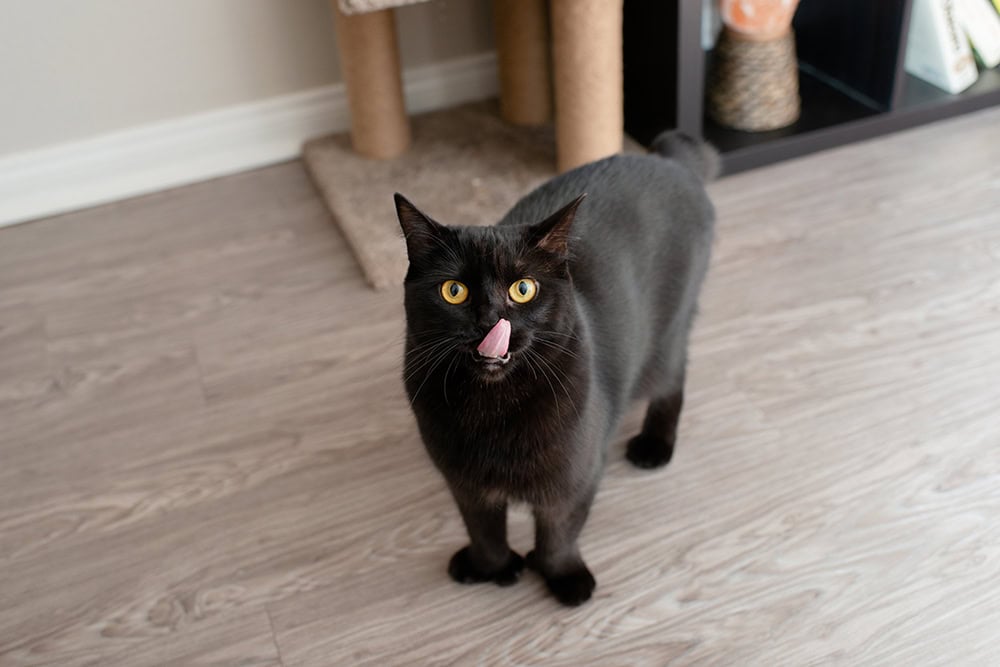
When a cat ingests weed or inhales second-hand smoke, the effects can vary from mild to strong, just like in humans. However, we now know that cats have more CB1 receptors, so they won’t need much marijuana to feel the effects. Each cat is different and can present different signs, some cats will experience severe anxiety and agitation.
Other common signs include:
Is Weed Dangerous for Cats?
Yes, weed is toxic and dangerous to cats. The exact toxic dose of marijuana toxicity is unknown and like humans, weed can affect cats differently. The severity of the effects will depend on a few factors, such as age, body size, and health status.
The signs of toxicity can be seen from 5 minutes to 12 hours after exposure, lasting from 30 minutes to several days depending on the dose.
Signs of marijuana toxicity include:
- Hypersalivation
- Loss of coordination
- Lethargy
- Slow or fast heart rate
- Excessive drooling
- Seizures
- Coma
Weed intoxication is rarely fatal, but the amount of weed that meets a toxic level is unknown. Cats can fully recover from weed toxicity, but it’s essential to have them examined and treated by your veterinarian if they have ingested any amount of weed. There is no specific antidote but vets can give supportive care to help.
What Should I Do If My Cat Ingests Weed?
The only real way to tell that your cat has ingested weed is by checking to see if they got into some edibles or if they were in the room with somebody smoking. If you know your cat has ingested or inhaled weed, you should contact your veterinarian straight away.
Try to determine how much your cat may have ingested and gather information about the edibles, such as how much marijuana they contain and which variety they contain. This will help your veterinarian make a treatment plan.
What About Medical Marijuana?
More than 50% of U.S. states have legalized medical marijuana for humans under strict guidelines, with additional states passing laws for its use recreationally. However, these laws do not apply to pets.
With that said, some pet owners have managed their pet's ailments with marijuana in states where medical marijuana is legal, but we don’t recommend it. There needs to be more research, and it needs to be prescribed by a veterinarian.
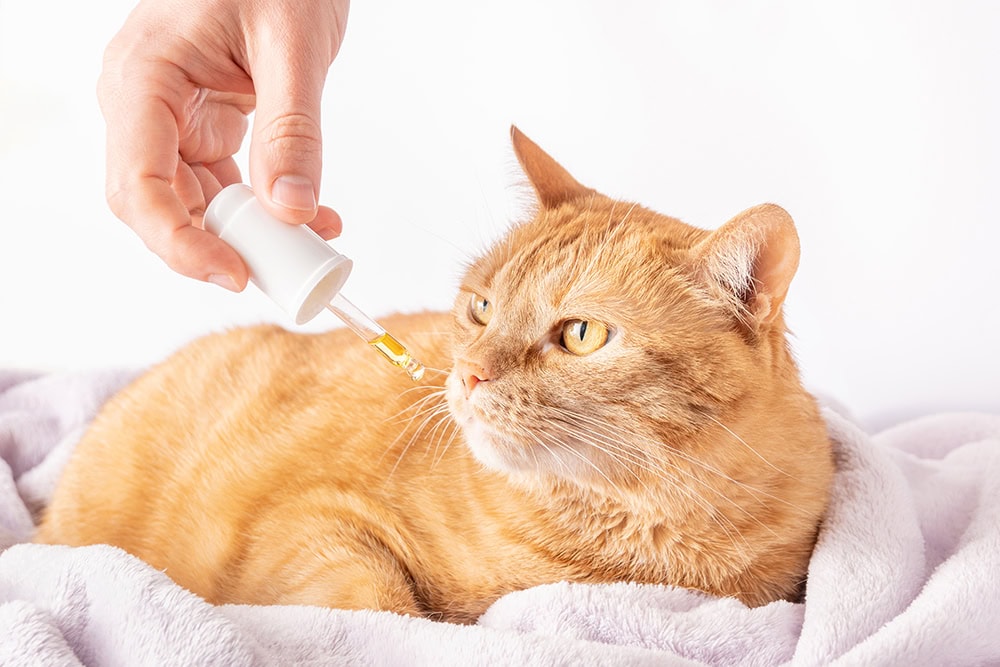
However, weed-based products that contain CBD (cannabidiol) rather than THC, have been shown to be helpful for some pets. CBD has an affinity to CB2 receptors and is not psychoactive, so will not cause cats to get ‘high’. Some veterinarians are recommending it to treat ailments such as anxiety, pain, and inflammation. It is generally considered safe for cats, but more research still needs to be done.
Cat Safety Tips for THC
Here are some tips to keep your feline safe from THC toxicity:
Conclusion
Like humans and other mammals, cats can get high and experience the effects of weed. Although you can make the decision for yourself whether to experience these psychoactive effects, cats cannot and it can be very unpleasant for them as well as toxic. In fact, cats are more sensitive to THC because they have a higher number of CB1 receptors. The effects of weed can differ depending on your cat's age, size, and health status as well as how much they have ingested or inhaled.
When it comes to cannabis, the key is to be careful. Keep marijuana out of your cat's reach and keep them away from second-hand smoke. If you are concerned your cat has had access to weed or is showing any signs of THC toxicity, contact your vet as soon as possible.
See also: Vaping Around Cats
Sources
Featured Image Credit: Frau aus UA, Shutterstock
Get Hepper In Your Inbox


Pet care tips from our vets and experts, straight to your inbox.
You may opt-out at any time. View our Privacy Policy for more information.
Annaliese began her career as a veterinary nurse in Edinburgh, later advancing her qualifications with a diploma in advanced veterinary nursing in surgery from London. Her work in small and mixed veterinary practices led her to become a head nurse, where she trained other veterinary nurses, managed the nursing department, conducted nurse clinics, and developed new patient care protocols.
Throughout her career, Annaliese has cared for thousands of patients and their owners, setting higher standards in nursing regimes with a focus on surgery and anesthesia. She co-authored multiple veterinary nursing textbooks and contributed to various mainstream publications in the UK and USA. After more than twenty years in the veterinary and pet care professions, she retired from clinical practice to pursue full-time writing. Having cared for thousands of patients and owners, Annaliese specialized in surgery and anesthesia. She was asked to co-author several veterinary nursing textbooks and contributed to a number of other publications in the UK and USA. After more than two decades in the veterinary and pet care industries, she retired her scrub suit and now works as a full-time writer.
Annaliese Morgan has been a dedicated veterinary nurse for over two decades, having completed a diploma in advanced veterinary nursing in surgery from London and qualifying from Edinburgh. Her professional experience includes managing a nursing department, training other veterinary nurses, providing patient care, and running nurse clinics in both small and mixed veterinary practices.
As an expert in surgery and anesthesia, Annaliese has treated thousands of patients and owners. In addition to being asked to co-author multiple veterinary nursing textbooks, she has written for a variety of publications in the UK and USA. After a long and successful career in the veterinary and pet care professions, Annaliese now dedicates her time to writing full-time. You can find out more about her work at www.annaliesemorgan.com.
Join the conversation
Ask a question, share your story, or send private feedback.