Hepper is reader-supported. When you buy via links on our site, we may earn an affiliate commission at no cost to you. Learn more.
Can Cats Sense Bad Energy? Everything You Need to Know!
In this article
If you’re in a bad mood, you’ve probably noticed that your negative vibes can rub off on the people around you. But have you ever wondered if your cat can also sense the unhappy emotions you’re giving off? Yes, cats can sense certain types of bad energy, which could also impact their behavior.
In this article, you’ll learn what researchers have learned about how cats can recognize and respond to human emotions, including bad ones. We’ll also discuss how to tell if your cat may be stressed by your behavior.

What Do We Mean When We’re Talking About “Bad Energy?”
Generally, the term “bad energy” refers to negative energy¹, a mental or emotional state caused by internal or external factors. You may feel bad or negative energy from other people or situations. You can also give yourself bad energy through self-criticism.
Whether or not you know how to describe bad energy, you can usually feel it or feel that you’re giving it off. But how can your cat sense bad energy?
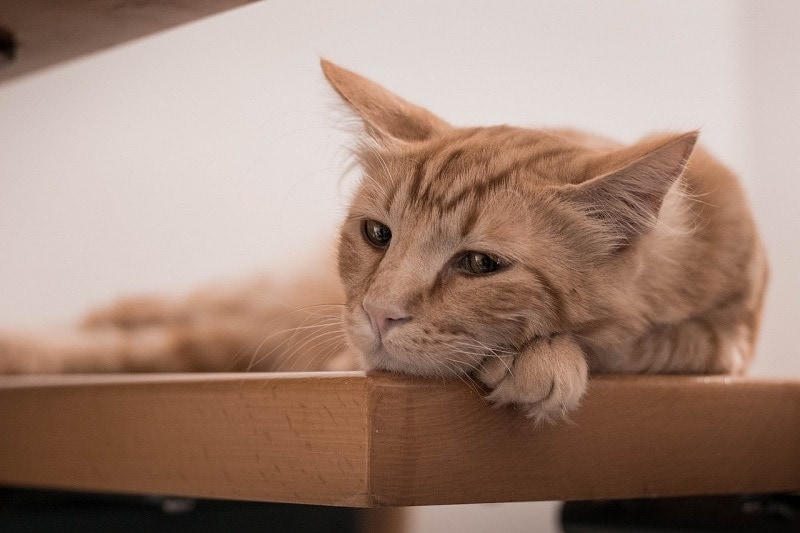
Cats and Human Emotions: What the Research Tells Us
Stereotypically, cats are known for being standoffish and uncaring about their owners’ feelings or affections. After all, dogs are known as “(hu)man’s best friend.” However, research has shown that this feline stereotype doesn’t always hold.
In 2019, researchers at Oregon State University published a study¹ examining cats’ ability to bond with their owners. They found that over half of the kittens (64%) who participated in the study formed a secure attachment with their owners that remained stable over time. This ability to form a bond with their owners helps explain how cats can sense their humans’ emotions, including bad energy.
Another study¹ from 2020 specifically examined cats’ ability to recognize emotions in people and how that recognition impacted the kitties’ behavior. This research demonstrated that cats could recognize happiness and anger based on their owners’ voices and facial expressions. The cats in the study also showed signs of stress when they recognized that their owners were giving off “bad energy” or anger.
A separate study¹ published in 2019 examined whether a cat’s behavior was impacted by its owner’s anxiety. In this case, researchers found that cats with anxious owners were more likely to develop behavioral problems, including aggression and anxiety. They were also more likely to have stress-based medical problems and to be overweight. Clearly, cats can not only sense bad energy but be negatively impacted by it as well.

The 4 Signs Your Cat is Stressed
If you’re in a negative headspace yourself, it might be hard to notice that your bad energy is stressing your cat. Here are some common signs¹ that your cat is stressed or anxious.
1. Litter Box Problems

Peeing or pooping outside of the litter box, diarrhea, constipation, or straining to urinate are all common signs of stress in cats. Some cats (almost always young males) can even become completely blocked and unable to pee due to stress, which is a medical emergency. Stress may be to blame if your cat starts having litter box problems.
2. Aggression
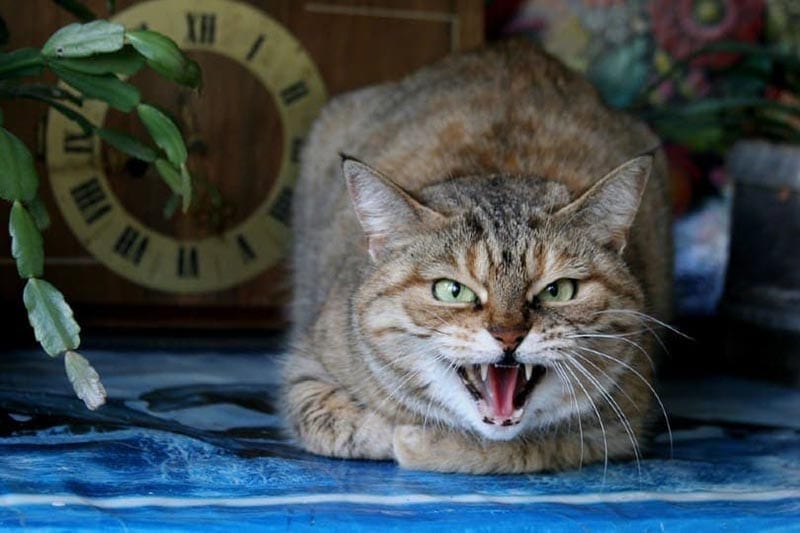
Stressed or fearful cats may begin showing signs of aggression towards people or other pets. Cats that previously got along well may suddenly start fighting. A loving and gentle cat may suddenly begin hissing and swatting at you. Aggression can be a tricky behavior to solve because of the risk of human injury.
3. Behavioral Changes
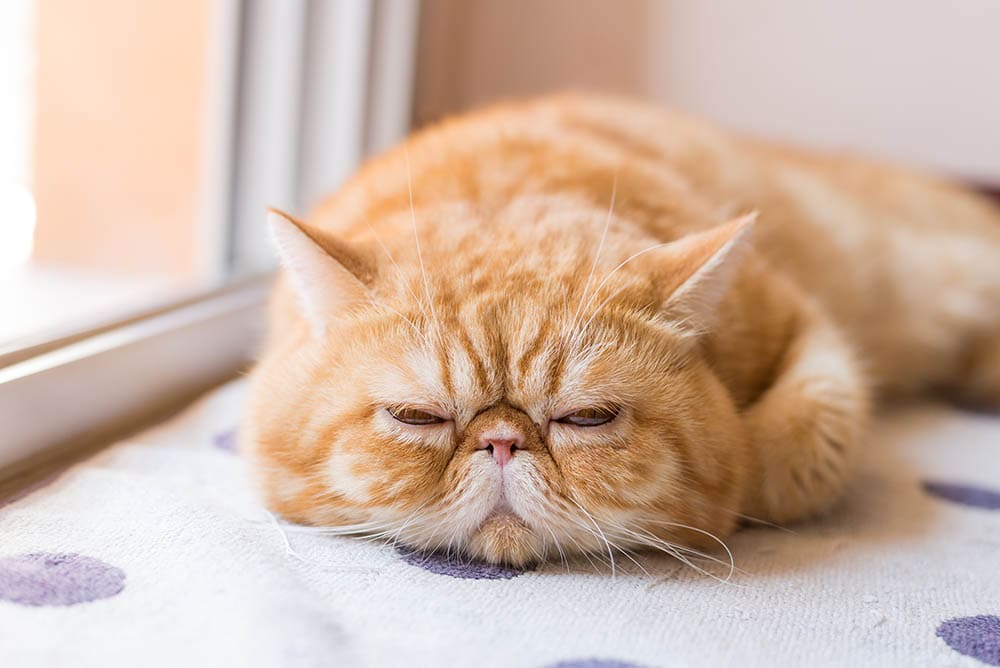
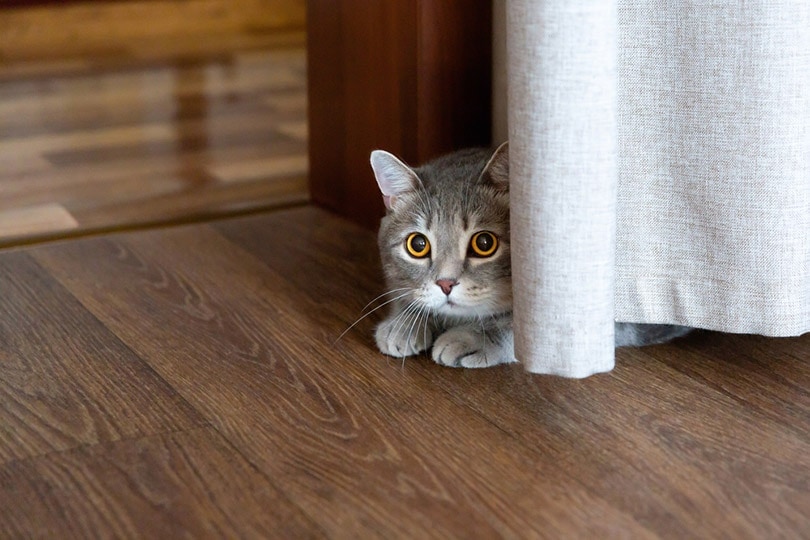
Stressed cats may exhibit other behavioral changes as well. Maybe they suddenly start sleeping all the time or hiding when they used to be outgoing. They may lose their appetite or meow constantly as well.
4. Obsessive Behavior
A stressed or anxious cat may exhibit obsessive behavior, such as constantly licking and grooming itself. Overgrooming is one of the most common signs of stress and can escalate to the point that the cat injures itself. A cat may also develop destructive behaviors like scratching excessively or chewing inappropriate items.

Conclusion
Cats may be unable to tell if a stranger gives off bad energy, but they can usually recognize it in the people they’re most familiar with. While researchers continue to study human-cat interactions and experiences, the science we have demonstrates that kitties can recognize their owners’ moods and be negatively impacted by them. However, many signs of stress in cats can also indicate medical problems. Your mood may not always be to blame for your kitty’s anxiety. If you notice any signs of stress we discussed, the best option is to see your veterinarian to rule out any medical problems. Once that happens, your vet can help you determine what might be stressing your cat and how to help.
See Also:
Featured Image Credit: Jumpstory
Get Hepper In Your Inbox


Pet care tips from our vets and experts, straight to your inbox.
You may opt-out at any time. View our Privacy Policy for more information.

A lifelong lover of all creatures great and small, Elizabeth got her first cat at 5 years old and at 14, she started working for her local veterinarian. After spending more than 20 years working as a veterinary nurse, Elizabeth decided to step away to become a stay-at-home parent to her daughter. Now, she is excited to share her knowledge with our pet parents. Elizabeth lives in Iowa with her family, including her two fur kids, Linnard, a husky mix and Algernon, the worldʻs most patient cat. When not writing, she enjoys reading, watching soccer, and spending time outdoors with her family.
Join the conversation
Ask a question, share your story, or send private feedback.