Hepper is reader-supported. When you buy via links on our site, we may earn an affiliate commission at no cost to you. Learn more.
How to Tell if a Cat Has Anxiety: 8 Vet Reviewed Signs


Cats are generally incredibly adaptable creatures that can live on their own or with humans. They can even adapt to various environments and living conditions, but cats are also incredibly sensitive, and they can easily become stressed or anxious, particularly when exposed to environmental changes such as the arrival of a new baby or pet.
They can also become anxious when they lack mental stimulation or physical activity. Events such as home renovations and moves are two other common culprits, and some cats that are particularly attached to their owners could develop separation anxiety when left alone, although research data on this is currently limited. A recent study 1 looked at 223 owned cats, and 30 of these showed separation-related problems. Interestingly, cats that had no toys, no access to the whole house, were without other animal companions, or were left on their own for 5-7 days per week were more likely to exhibit this behavior. Separation-related problems in cats are currently challenging to identify due to the limited amount of knowledge regarding this issue.
While it’s often difficult to tell if your cat is suffering from anxiety or stress, there are a few signs to look for. Keep reading to learn more about eight critical signs of feline anxiety and stress.

The 8 Critical Signs to Know If a Cat Has Anxiety
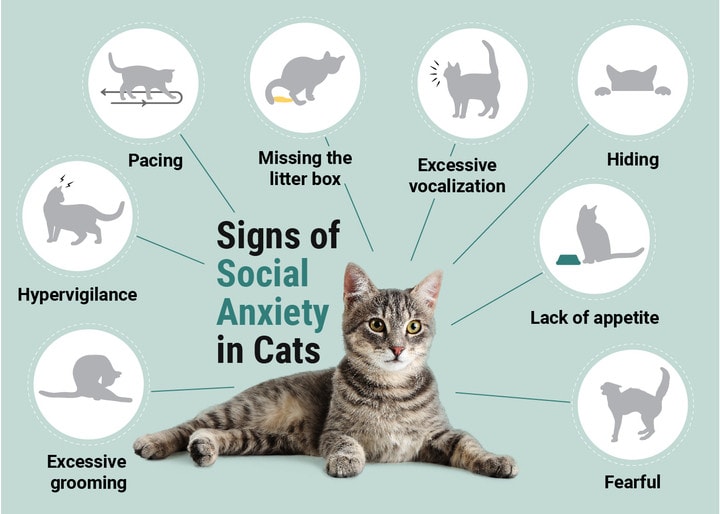
1. Missing the Litter Box
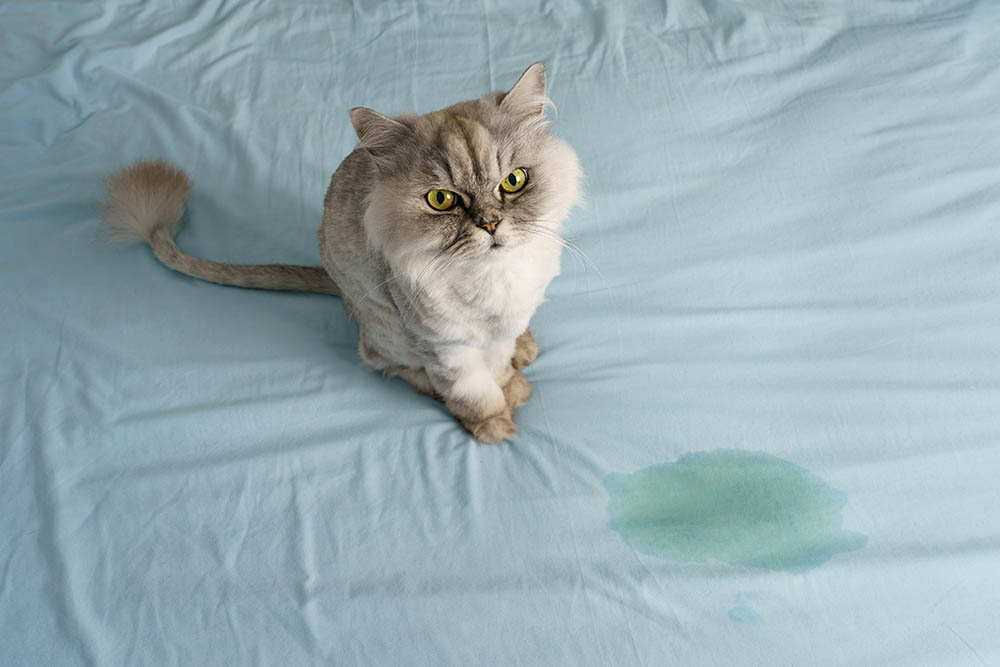
Regularly missing the litter box when passing urine and/or feces can be a sign of feline stress and anxiety, but more often it actually points to one of many medical disorders. If your cat is urinating or defecating in inappropriate places, they need to be examined by a vet as soon as possible. Your vet can establish whether there is any underlying medical reason for this change in their behavior, as some of these conditions are very serious and can even be life-threatening. You should rule these out before assuming that the cause is stress or anxiety.
Going to the toilet outside of the litter box can indicate many medical conditions, such as a urinary tract inflammation, stomach upset, arthritis, neurological illness, impaired sight or smell, pain, dementia and cognitive dysfunction in older cats, or kidney disease, all of which require veterinary attention. If these are ruled out by your vet, then it’s possible that stress and anxiety have led to your cat missing their litter box.
However, cats sometimes also refuse to use the litter box if it’s not sufficiently clean or there has been a change in the litter box location. Introducing new litter too quickly can also prompt some cats to find more attractive places to relieve themselves. It’s important to have a sufficient number of litter boxes for the number of cats in the house. The general rule of thumb is one litter box per cat plus an additional one.
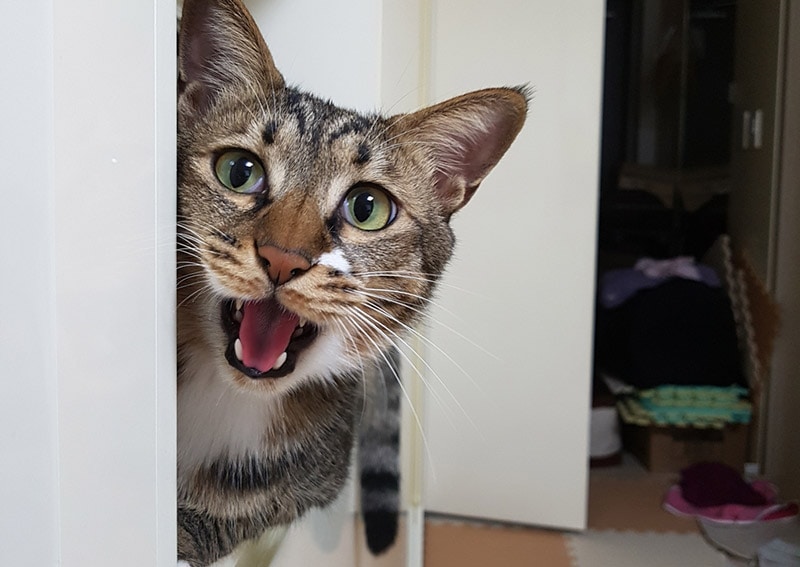
2. Excessive Vocalization
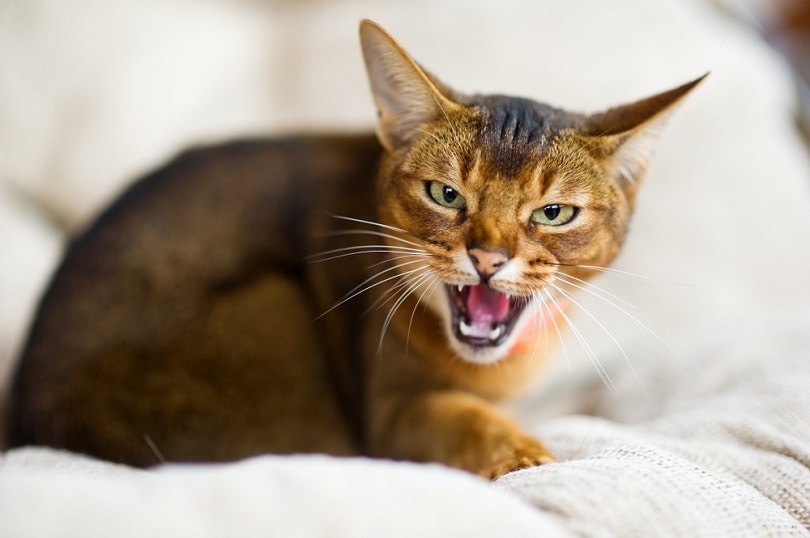
Excessive vocalization can also indicate that your companion is stressed or anxious. It’s common in cats suffering from stress or separation anxiety, and cats that are ill or in pain also often meow or yowl loudly.
Excessive vocalization usually calls for a prompt visit to the veterinarian as it sometimes indicates the existence of a severe medical condition. Older cats suffering from cognitive decline or overactive thyroid are particularly prone to this behavior, especially at night.
If your cat suddenly starts yowling excessively and seems to be in pain or unable to move, call your vet immediately, as cats with heart disease and blood clot formation will often present with extreme and painful yowling, and they need urgent veterinary attention 2. Cats that are meowing or yowling while attempting to urinate or defecate, in or out of the litter box, also need an urgent veterinary check, as this is often a sign of a serious illness that needs prompt treatment.
3. Hypervigilance
Cats that are subject to repeated environmental stressors often become hypervigilant and jumpy. Many are overreactive to noise and sudden movements and are unable to relax, remaining keyed up and ready to jump into action even when there’s no immediate threat. Consider creating a safe space or offering a hiding box for your pet to relax in peace away from whatever is triggering their anxiety.
Use a quiet location away from loud or repetitive noises, and make sure it’s off-limits to dogs and loving but rambunctious children. Ensure your cat has access to food, water, and a litter box so they don’t have to leave their safe haven to eat or use the bathroom. Add a few toys and a cat tree to provide a vertical space to relax in and look into other options to enrich your cat's environment.
But if your cat has not previously been hypervigilant and anxious or the signs are getting worse and your cat is refusing to move, eat, drink, or leave their hiding spot, they need to be checked out by a vet promptly. An illness may have caused this sudden behavioral change in your cat.
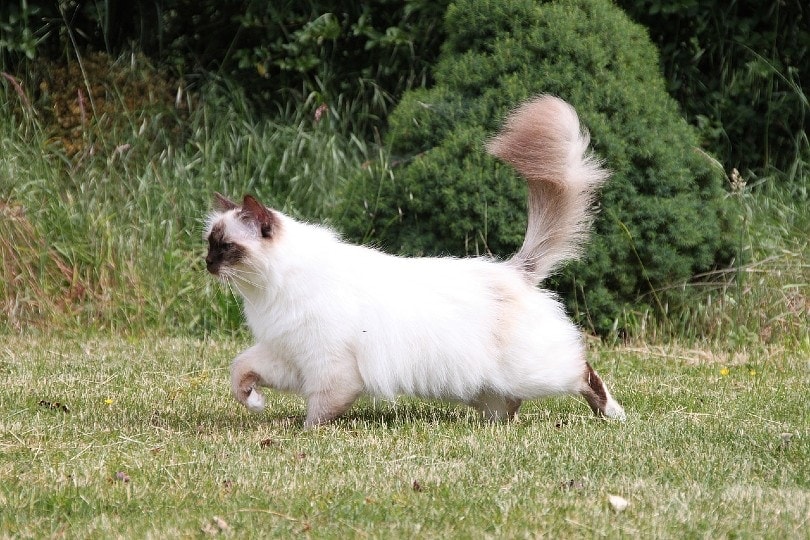
4. Pacing and Restlessness
Pacing can be another sign of feline anxiety 3. Cats that are stressed out and anxious often have trouble settling down and relaxing. Many seek natural stress relief, and pacing fits the bill for some pets.
Cats also pace when bored or in pain, and it can be a sign of conditions such as hyperthyroidism (overactive thyroid) or feline dementia. Have your buddy checked out by a veterinarian if they start pacing and becoming restless to make sure that it’s a behavioral issue rather than an illness. If your cat is pacing and squatting at the same time, as if to urinate or defecate but without actually passing anything, they need to be checked out by a vet immediately.
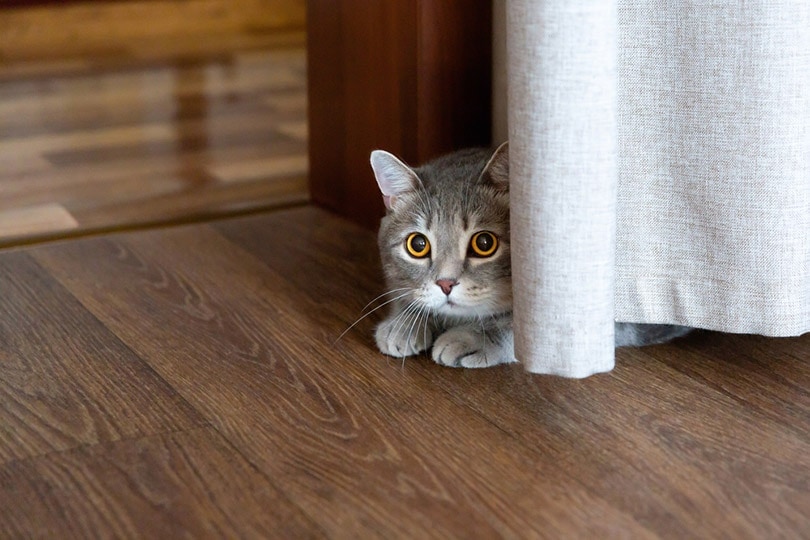
5. Hiding
Stressed cats often attempt to hide from whatever is causing their anxiety. It’s a common feline reaction to things like seeing their carrier, dogs, or lively children. Giving your pet a safe and secure place to go to when they get overwhelmed, can go a long way toward helping reduce their anxiety. A study from 2014 4 on shelter cats has shown that hiding is an important behavior when adapting to new environments, and a simple hiding box can improve the welfare of these cats. Further research needs to be done to establish the potential benefits of a hiding box for anxious pet cats, but either way, this is an easy and important enrichment option for cats that might help them cope more effectively with stress.
You can also install vertical perches in rooms where your cat likes to hang out. Cat trees and shelves are affordable and stylish, and they give cats a sense of comfort and safety, so they don’t need to hide. For most cats, being up high provides an additional sense of security and gives them a better viewpoint to see what’s going on around them. If your cat has suddenly started hiding for unexplained reasons or is unwell in any way, it’s important to get them checked by your vet right away.
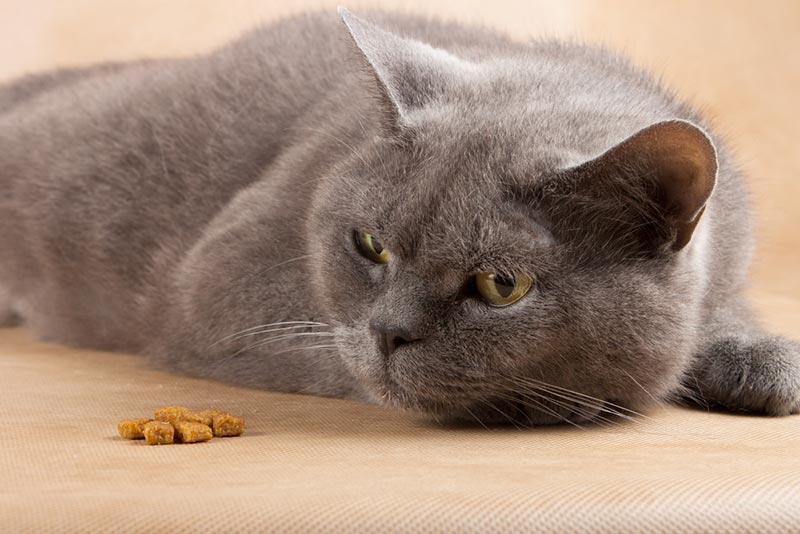
6. Lack of Appetite
Some cats lose the desire to eat when particularly stressed or anxious. It can also be seen in cats suffering from separation anxiety, alongside more common signs such as destructive behavior, excessive vocalization, urination in inappropriate places, depression and lethargy, and aggressiveness and agitation.
However, a lack of appetite can also indicate a serious underlying medical condition such as kidney or dental disease that will require veterinary investigations and appropriate treatment 5. Reach out to your veterinarian if your pet suddenly starts eating less, particularly if you haven’t changed their diet.
7. Fear-Based Body Language
Fear-based body language 6 is sometimes related to feline anxiety. It’s often seen when cats anticipate something unpleasant such as encountering another animal, unexpectedly coming in contact with a dog they’re not familiar with or a neighbor’s cat that they don’t get along with. Mild fear reactions often include tail thwacking, hairs standing up, large dilated pupils, and refusing to look directly at triggering objects or animals.
Cats often begin crouching and breathing quickly if the situation doesn’t improve. Terrified cats sometimes freeze or try to run, but don’t try to approach your cat if they’re frightened. It’s best to give them some space and time to calm themselves, as some cats can react aggressively when scared.
8. Excessive Grooming
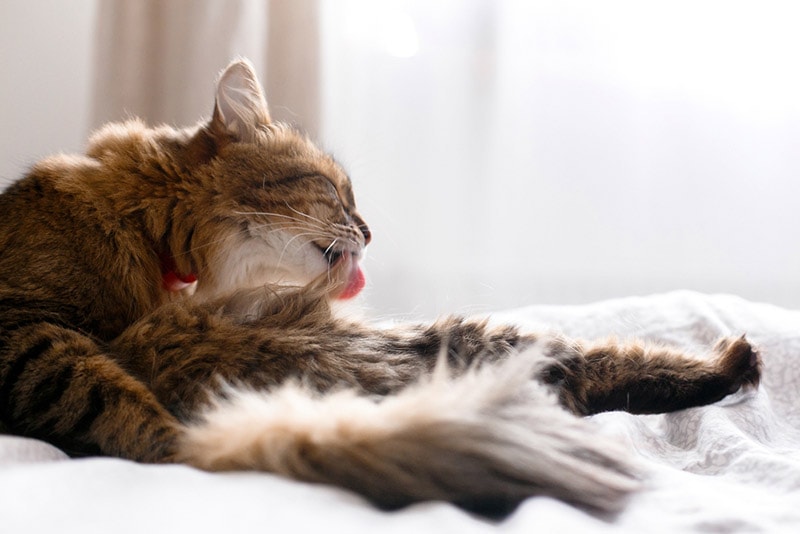
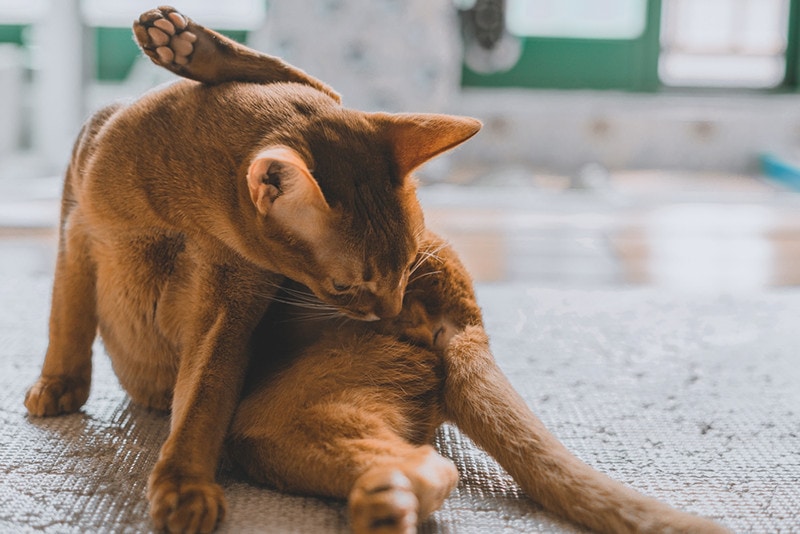
Stressed-out cats often spend lots of time grooming themselves as a self-soothing mechanism. However, sometimes this can also be due to skin problems or pain. Kitties that groom themselves too often can end up ingesting too much fur, which can lead to hairball development and tummy trouble. Some particularly anxious cats can lick themselves until they remove the hair and damage the skin below.
If your cat is suddenly over-grooming or creating sores or bald patches on their skin, you should contact your vet, as these often require treatment. Cats that groom themselves too much when stressed may benefit from a calming pheromone plug-in diffuser to create a relaxing environment. Vet-approved calming supplements are another option if the actual cause of your cat’s excessive grooming is identified as stress. Less often and depending on the cat’s personality, some cats might stop grooming altogether when stressed, but this also occurs with many illnesses that your vet can rule out.
Conclusion
Anxiety is a serious condition that negatively impacts a cat’s quality of life. Because most cats thrive on routine, environmental changes can be particularly stressful. The arrival of a new baby or pet can discombobulate even the most laid-back and happy cat.
Renovations and repetitive loud noises are other common feline stressors. Cats suffering from anxiety often hide, go to the toilet outside their litter box, groom excessively, and vocalize more than usual. Cats can be helped with structural and routine changes, such as providing safe spaces to unwind (like a hiding box), adding cat shelves and trees, and providing plenty of physical and mental stimulation and enrichment. Many signs of stress and anxiety in cats can also be present with various medical disorders, so it is best to get your cat checked by a vet to make sure that there is no underlying illness leading to these signs.
Sources
https://www.petmd.com/cat/conditions/behavioral/c_ct_fear_phobia_anxiety
https://www.petmd.com/dog/behavior/how-do-calming-dog-and-cat-pheromones-work
https://www.purina.co.uk/articles/cats/health/daily-care/why-do-cats-overgroom
https://www.aspca.org/pet-care/cat-care/common-cat-behavior-issues/litter-box-problems
https://www.newsweek.com/cats-hiding-behavior-explained-stress-triggers-1678369
Hypothyroidism in Cats - Signs of an Underactive Thyroid | Tucson Vet.
https://vcahospitals.com/know-your-pet/cat-behavior-problems---vocalization
https://www.sciencedirect.com/science/article/abs/pii/S0168159121002318
https://www.battersea.org.uk/pet-advice/cat-advice/search-cat-advice/cat-anxiety
https://www.zoetispetcare.com/blog/article/how-help-cat-anxiety
https://www.smalldoorvet.com/learning-center/medical/managing-anxiety-in-cats
https://www.purina.co.uk/articles/cats/behaviour/understanding-cats/cat-anxiety
https://www.preventivevet.com/cats/how-many-litter-boxes-does-a-cat-need
https://vcahospitals.com/know-your-pet/cat-behavior-problems---vocalization
https://www.aspca.org/pet-care/cat-care/common-cat-behavior-issues/meowing-and-yowling
https://www.aspca.org/pet-care/cat-care/feline-diy-enrichment
https://www.zoetispetcare.com/blog/article/benefits-cat-tree
https://www.sciencedirect.com/science/article/abs/pii/S0168159114002366
Featured Image Credit: StockSnap, Pixabay
Get Hepper In Your Inbox


Pet care tips from our vets and experts, straight to your inbox.
You may opt-out at any time. View our Privacy Policy for more information.
Lorre Luther a reformed lawyer from the United States, she moved to the Netherlands to follow her dream and become a writer. Currently living in Rotterdam, Lorre enjoys traveling and reveling in the astonishing beauty of our planet. As an animal lover, Lorre is convinced that cats are smarter than humans.
Join the conversation
Ask a question, share your story, or send private feedback.