Hepper is reader-supported. When you buy via links on our site, we may earn an affiliate commission at no cost to you. Learn more.
Can Cats Smile? Science-Backed Facts & FAQs

In this article
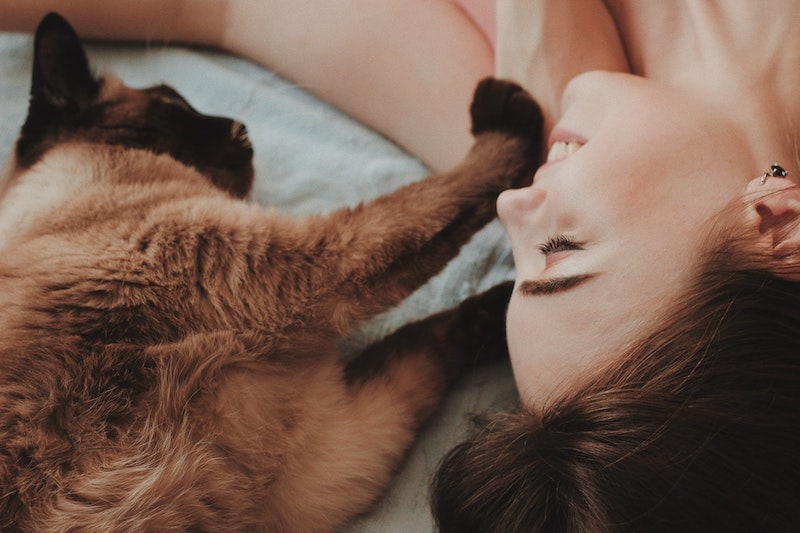
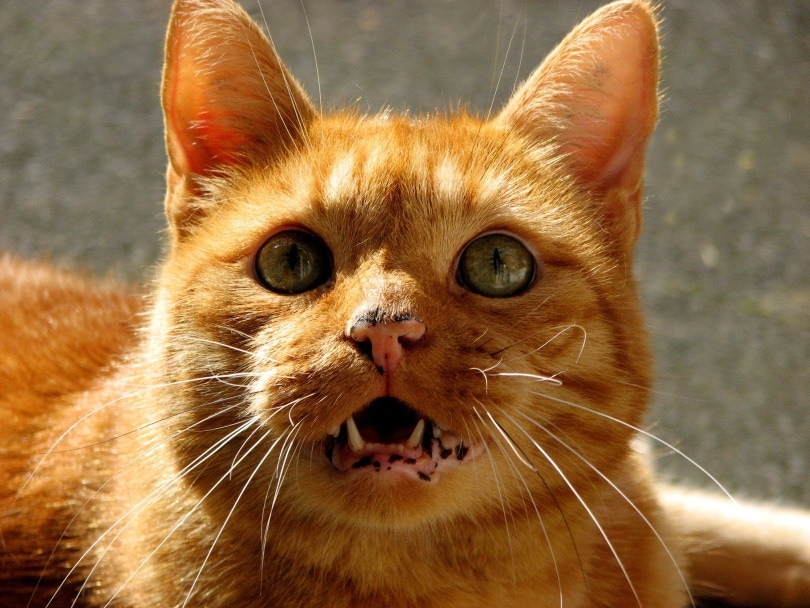
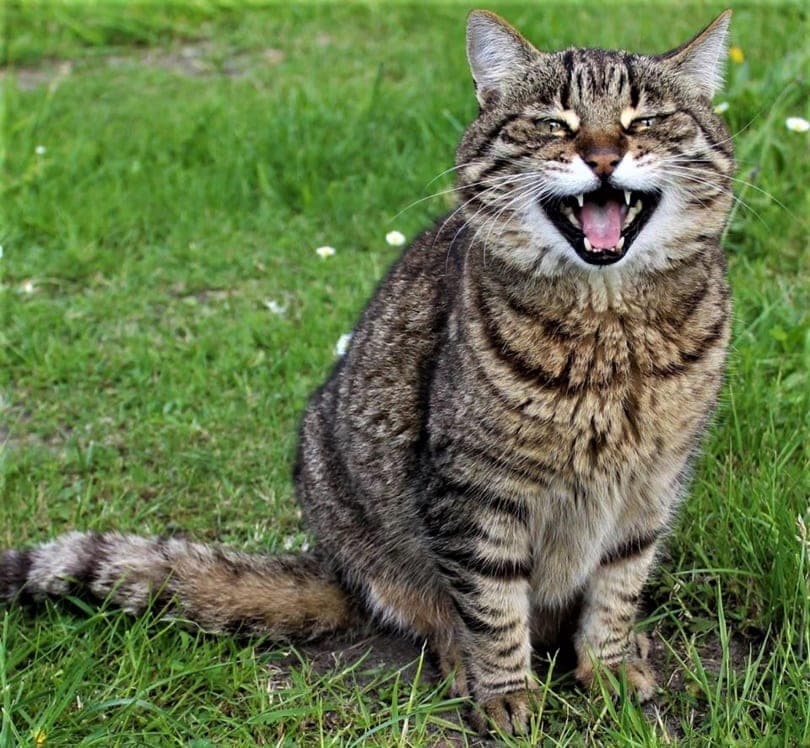
We know that our cats have emotions. Their biology and behavior are living proof that this statement is true. It’s easy to know when your pet is upset or content. They show it physically with their posture, tail position, and vocalizations. But do cats smile? The answer is no, but they do have different ways to express positive emotional states.

Body Language
It’s no mystery figuring out when a cat is happy versus angry. They use several forms of communication to express themselves and give us clues about their emotional state. A content feline holds its tail upright, whereas an upset pet will puff it out or slap it repeatedly as a warning. But we can not know by only looking at their tails. Cats use body language, including their ears, body position, and even their whiskers, to express themselves. We've learned through our years of experience living with them how to read this body language to get a good idea about their emotional state.
Happiness Beyond a Smile
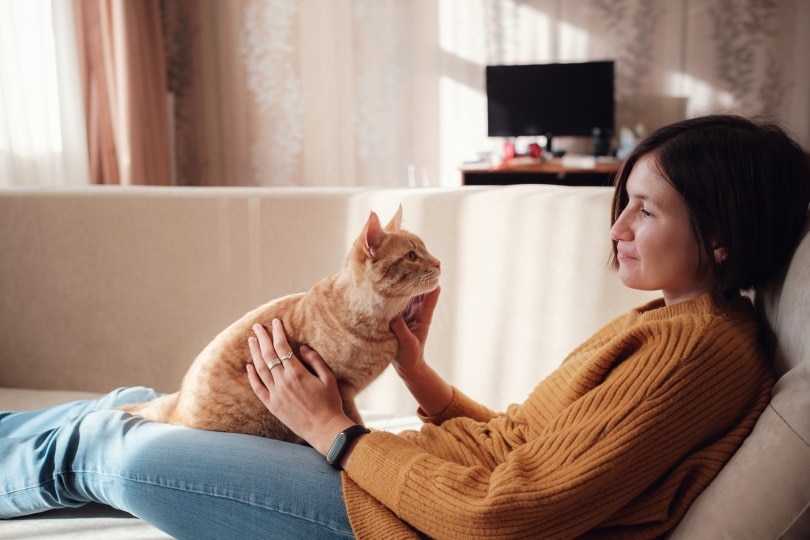
Mammals produce a hormone called oxytocin, the so-called love hormone. It is a factor in sexual relationships, birth, and social bonding. A review of the research on human-animal interactions suggests that this bonding time increases the chemical release in humans and their pets. Therefore, our cats can form attachments with us as we do with them.
Emotional Recognition Skills of the Cat
It turns out that we are not the only ones who can understand our cats’ emotional states through learning to interpret their body language. Research has demonstrated that cats can also recognize the emotional states of other cats and humans. Cats have also developed social skills that allow them to share their lives with humans, and they can understand human emotional signals of anger and happiness. This ability is a key factor for the maintenance of successful interspecies relationships with their humans.
The Anatomy of a Smile
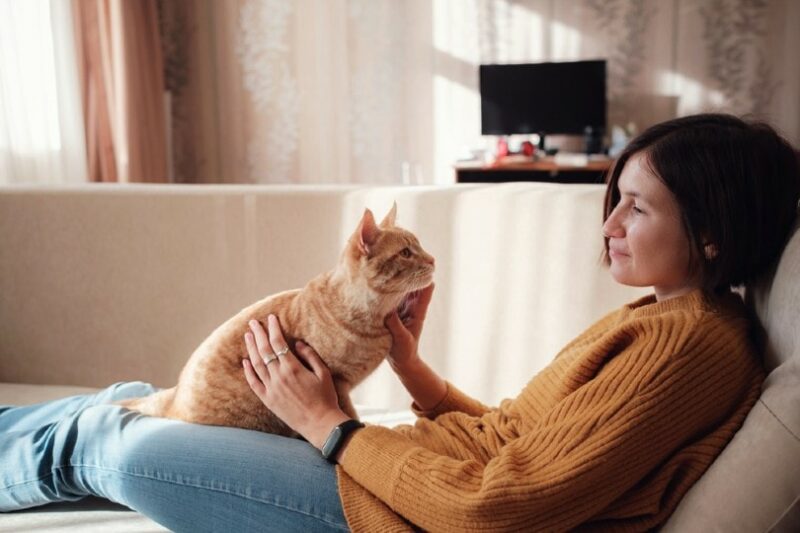
We have established that cats do experience positive emotions which, in theory, could provide an incentive for cats to smile. The next question we must ask is if felines have the physical capability to smile. That involves determining if their anatomy is on a par with ours to see if it’s even possible.
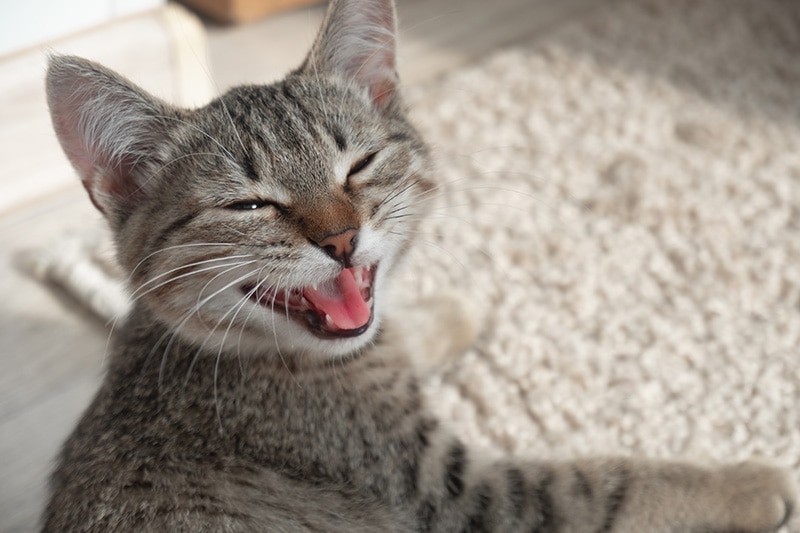
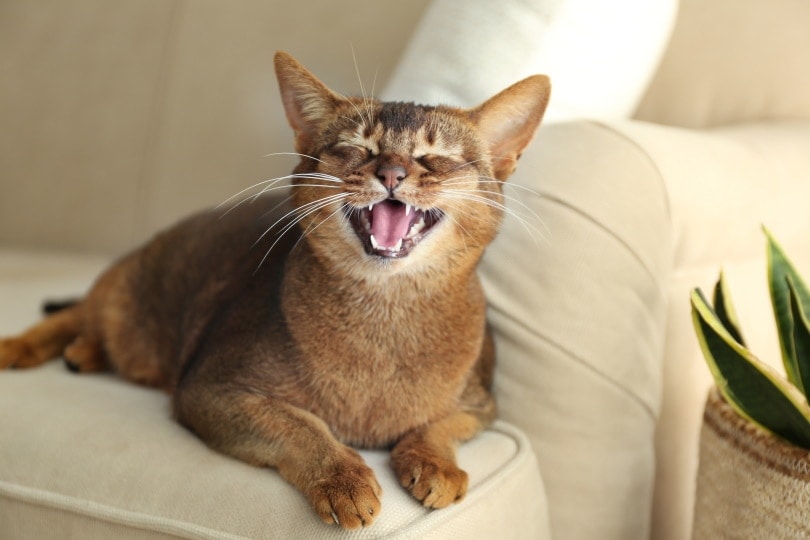
The structure and where the muscles involved insert into the facial bones differ in cats. They can use the buccinator muscle to suck milk, and the contraction of the zygomatic muscle in cats allows them to look like they are smiling since it pulls the commissure of the lips upward and backward.
However, it is very important to bear in mind that felines are sending different signals than us humans when using these muscles. It can be used as a precursor for aggression, like showing their teeth before a fight. The movement can also be a response to chemical messages, which play an important role in mating and reproduction since by moving their lips back and up, cats can use their Jacobson’s or vomeronasal organ to detect pheromones in the air. This structure sits on the roof of the animal’s mouth and supplements smell or olfaction. The movement is known as the “Flehmen response” and is a voluntary movement from the cat.
The Slow Blink
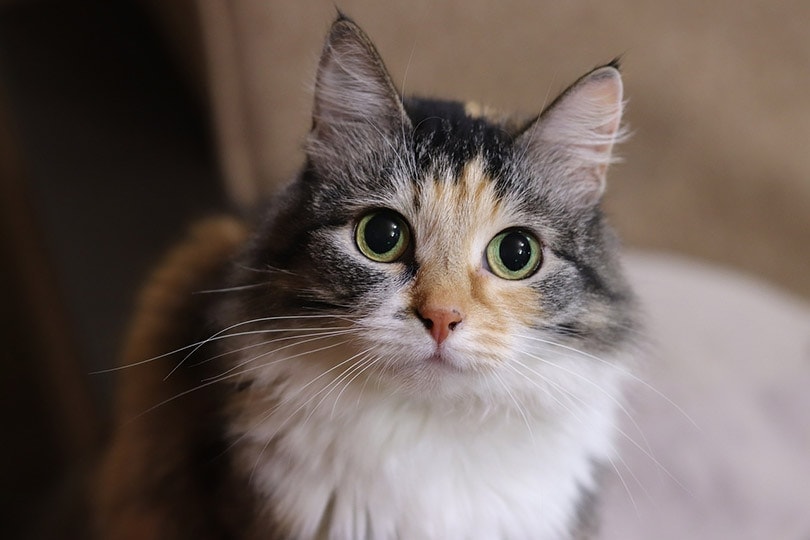
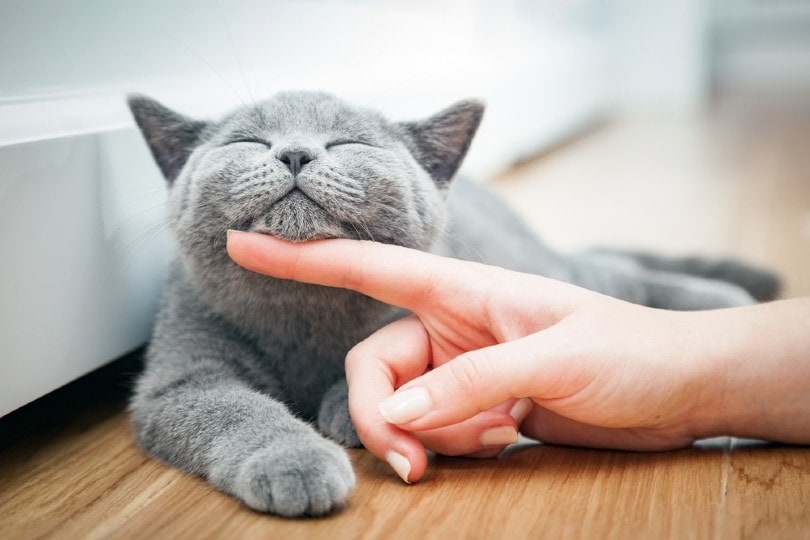
All this information doesn’t mean cats can’t express positive emotions. It’s just that they have different ways of expressing it. We know that felines can show happiness and contentment. Cats have beautiful and expressive eyes, and it turns out that their eyes are also vital in communication. While they don’t smile as we do with our mouths, they use their eyes to convey the same emotion.
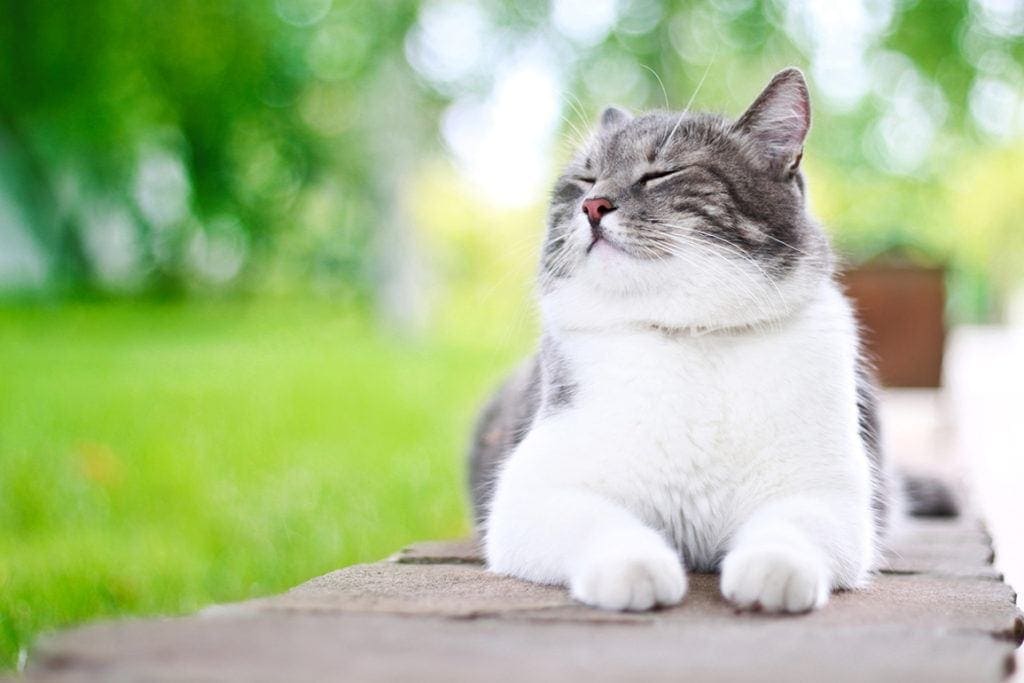
Research from the Universities of Portsmouth and Sussex has shown that cats will narrow their eyes and slowly blink them in an expression that is similar to the human smile. Cats use this action to communicate with their owners and will also have a positive response to stranger humans doing it.
The scientists found that cats were more likely to walk toward a human stranger after they offered the slow blink gesture. In a way, slowly closing their eyes is an expression of trust by making themselves vulnerable to being momentarily and voluntarily blindfolded in the presence of the other.
There’s no doubt that a smile is a welcoming expression on the human level. However, just because cats don’t have the exact same expression doesn’t mean they can not express similar emotions in their own way.
Conclusion
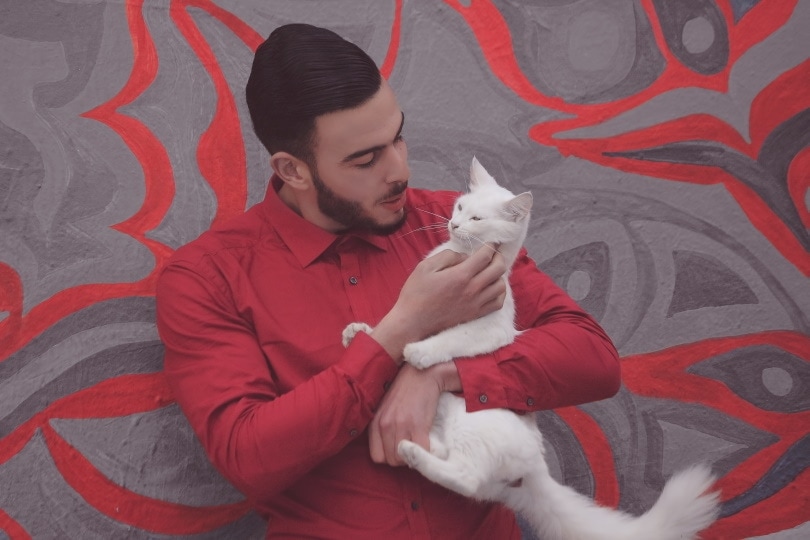
Cats are expressive animals if you take the time to learn how they communicate. It’s not that they don’t show emotions or that they can’t feel them. Evolution just took them down a different path that put the twinkle in their eyes instead of a smile on their faces. The slow blink is a more intimate gesture that shows so much love and trust if you think about it. It’s proof that cats have a tender side, too.
You might also be interested in:
Featured Image Credit: Babbeli, Pixabay
Get Hepper In Your Inbox


Pet care tips from our vets and experts, straight to your inbox.
You may opt-out at any time. View our Privacy Policy for more information.
Paola Cuevas is a veterinarian and animal behaviorist, with over 18 years of experience working with a variety of species. Her passion is animal welfare and focuses on the importance of preventive medicine. Paola has skills in the fields of nutrition, microscopy, clinical pathology, diagnostic imaging, and endoscopy as well as extensive experience in animal training through positive reinforcement. As our in-house veterinarian, Paola is very happy to share her knowledge and experience with our readers and hopes to be helpful with any issue presented by your non-human family members.
Dr. Paola is our Senior In-House Veterinarian at Hepper, and she loves sharing her knowledge and experience with our readers. Paola hopes to provide helpful information for any issue presented by your fur babies.
Her passion is animal welfare and she focuses on the importance of preventive medicine.
Education
Paola graduated from the University of Guadalajara, Mexico.
Experience
Dr. Cuevas has over 18 years of veterinary and animal behaviorist experience and has worked with a variety of species, from companion animals to exotics. She has skills in the fields of nutrition, microscopy, clinical pathology, diagnostic imaging, and endoscopy as well as extensive experience in positive reinforcement animal training.
Things You Didn't Know About Dr. Paola:
As a student, Paola received an outstanding student scholarship. She had the opportunity to travel to Canada and learn about aquaculture diagnostics and pathology.
Paola and another colleague trained gentoo penguins to recognize shapes and colors and their project achieved an international first-place award in research.
Paola has trained several species of animals to voluntarily accept medical procedures such as ultrasound examinations, X-rays, and the collection of biological samples with the goal of improving their healthcare without additional stressors or the need for physical restrain.
Join the conversation
Ask a question, share your story, or send private feedback.