Hepper blog

Search our database of over 9,984 posts with up-to-date information from our experts and veterinarians.

Hepper is reader-supported. When you buy via links on our site, we may earn an affiliate commission at no cost to you. Learn more.

What Is the Jacobson's Organ (Vomeronasal Organ) in Cats? Vet-Verified Facts

By Genevieve Dugal · Reviewed & fact-checked by Dr. Lorna WhittemoreVet Approved
Dr. Lorna Whittemore
Reviewed & Fact-Checked byDr. Lorna WhittemoreVeterinarian
Lorna is a Scottish vet who has lived, studied, and worked on three continents and has a love of travel. With 20 years of experience in small animal medicine andsurgery, both in the charity and private sector. Gaining a further qualification in feline medicine has given her a continued sense of amazement at the fabulous animals. Currently living in Cape Town, South Africa, with her family and expanding number of pets allows her to spend time in and around nature where she is at her happiest. With a love for learning, Lorna is enjoying researching, editing, and fact-checking for Hepper veterinary editorial team and truly feels that she has the best job in the world!View authorThe information is current and up-to-date in accordance with the latest veterinarian research. Read about our vets
Share
Ask us a question in the comments
What Is the Jacobson's Organ (Vomeronasal Organ) in Cats? Vet-Verified Facts

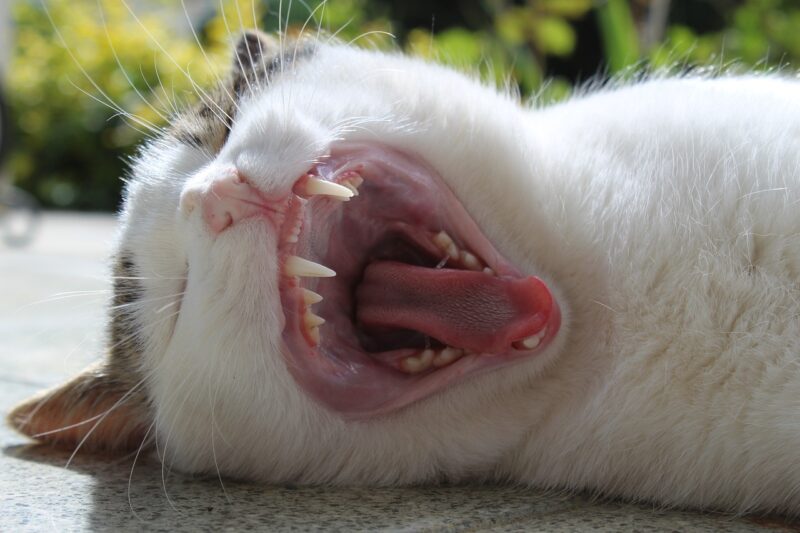
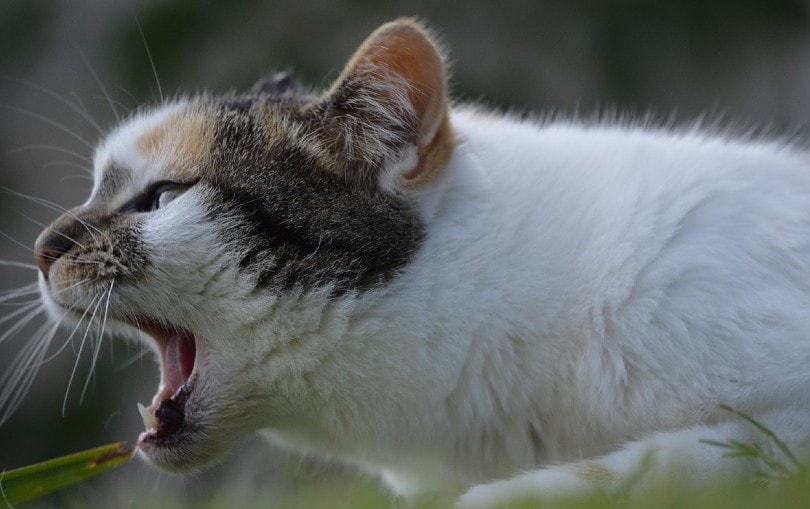
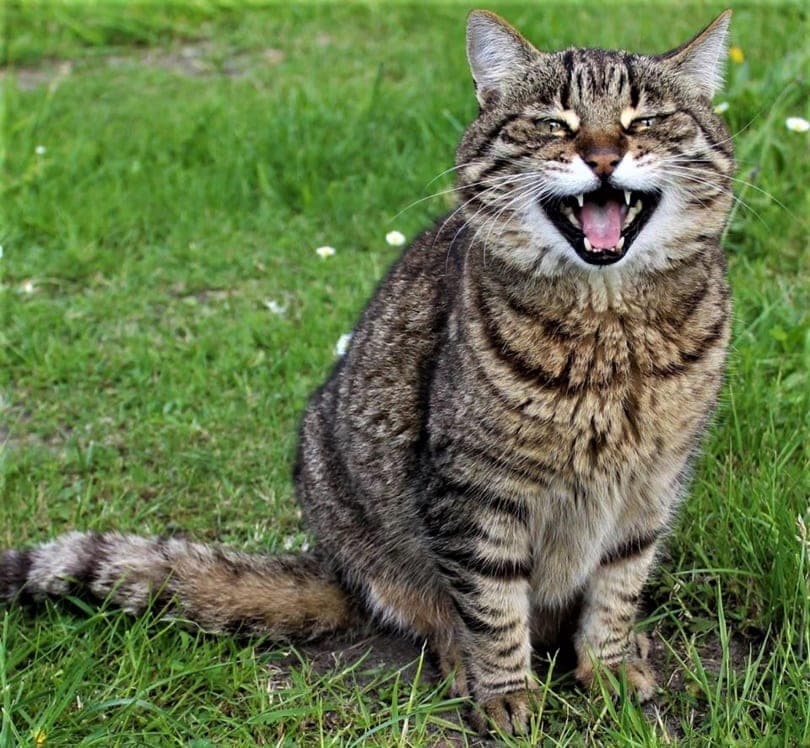
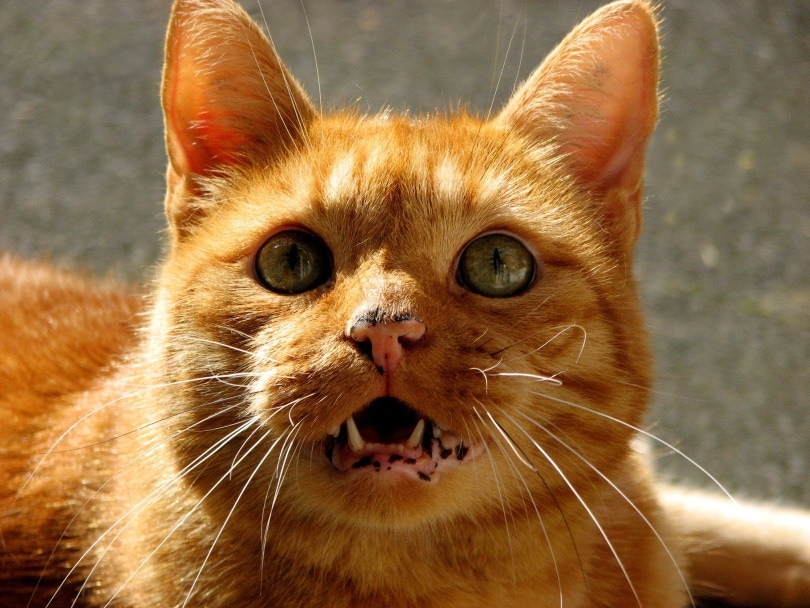
Have you ever seen cats suddenly make a funny face, as if a smell disgusts them? This may happen around other cats or near a litter box. In fact, your cat’s grimace is not related to the possible foul odor of a passing cat; instead, your feline companion is analyzing something new.

By opening their mouth and curving their upper lips, your cat is providing maximum exposure for the information to travel to a specialized sensory organ located inside the nasal cavity, just behind the upper incisors. This is Jacobson's organ, also known as the vomeronasal organ, and is used for detecting chemical signals that have no smell.

Jacobson’s Organ: How Does It Work in Cats?

The Jacobson's organ is found in some mammals (including some humans) and most reptiles and amphibians. It is part of the chemosensory system and is “a secondary olfactory system that mediates a variety of behaviors [in animals], ranging from mating to attack-fighting responses.”

The Jacobson’s organ in cats serves as an additional tool to improve their understanding of the physiological state of other cats around them. It is located inside the nasal cavity and opens into the roof of the mouth, just behind the upper incisor teeth.

This special pathway enables pheromones, chemical signals collected in the nose and mouth, to be transported to the brain. So, when cats encounter a new companion, they may open their mouths and use their tongue to send it to the vomeronasal organ, which then sends signals to the brain for interpretation.
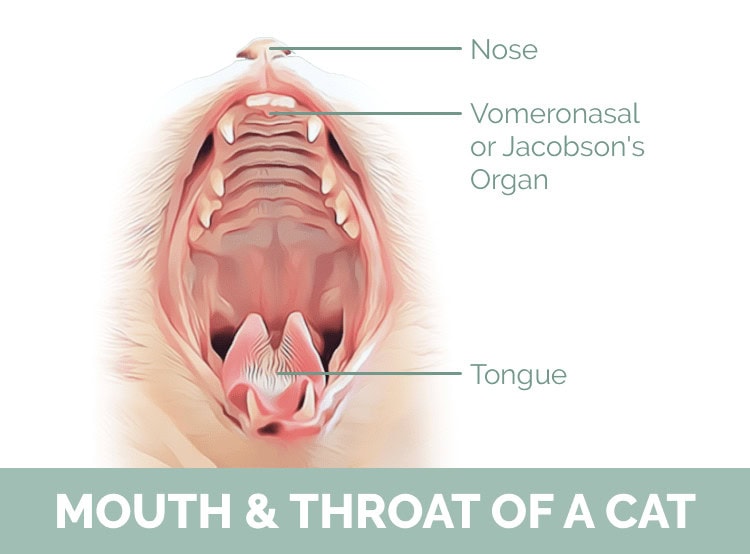
mouth and throat of a cat
You are free to use this image but we do require you to link back to Hepper.com for credit

What Is the Role of Jacobson’s Organ in Cats?

Unlike the olfactory cells in the nose used to detect smells, the receptors in Jacobson's organ are chemoreceptors. These receptors pick up chemical signals that have no scent, called pheromones. Since cats use pheromones to communicate with each other, the receptors in the Jacobson's organ help them detect these signals and react accordingly.

This organ plays a crucial role in various feline behaviors, including mating, territorial marking, and social bonding. For example, a female cat in heat releases pheromones that signal her availability to potential mates, while a male cat may use pheromones to mark his territory and warn other males.

Overall, Jacobson's organ acts as a secondary sense for cats, enabling them to analyze pheromones, communicate with other cats, and navigate their surroundings.

What Is the Flehmen Response in Cats?

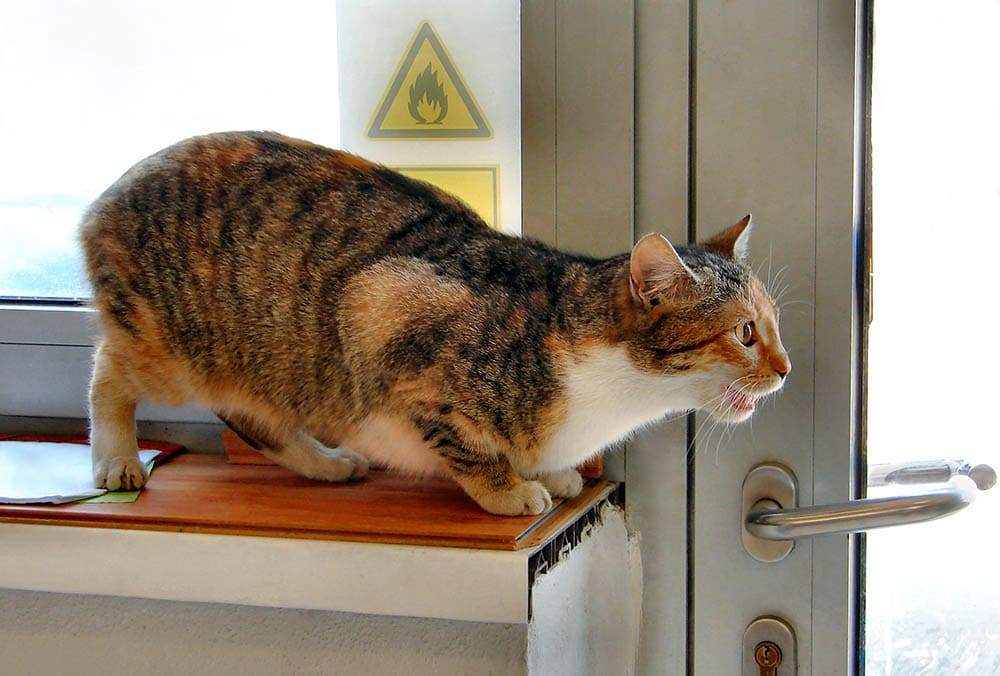
A Flehmen response is what explains the funny face that cats make when they encounter an interesting smell. They open their mouths, curl their upper lips, and flick their tongues to send air toward their Jacobson's organ. The Flehmen response enables cats to send the new scent through the vomeronasal organ for further analysis.

How Do Cats Use Pheromones to Communicate?

Cats use their glandular systems to communicate with their congeners in different ways. They do this by releasing pheromones, which are detected by receptors in Jacobson's organ and sent to the central nervous system.

Here are a few examples of how cats use pheromones to communicate:

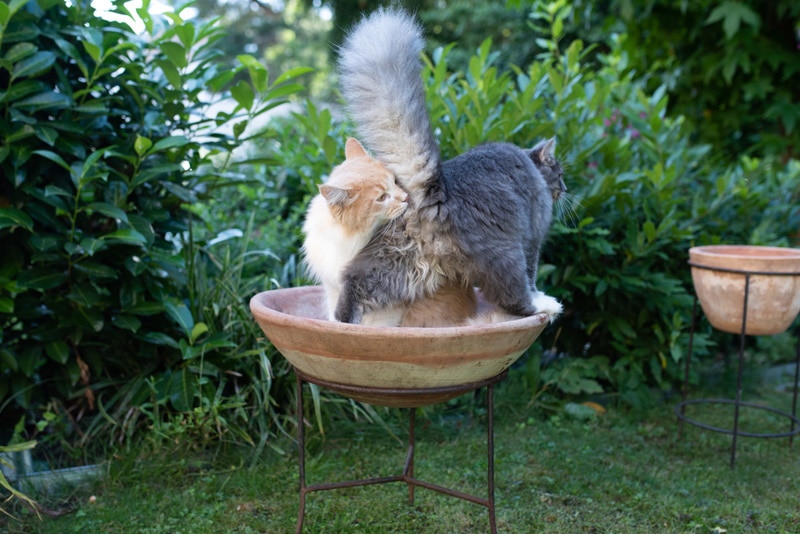
  • Territory Marking: Cats have scent glands on their cheeks, face, paws, and the base of the tail. When they rub against objects or people, they leave behind pheromones, which constitute their personal imprint and enable them, among other things, to mark their territory. This is why cats often rub their face or tails against furniture, doors, and even their favorite people!
  • Social Bonding: When cats live together under one roof, they use their sense of smell and pheromones to bond with each other. For example, mutual grooming keeps their fur clean and strengthens their bond through shared scents.
  • Mating: When a female cat is in heat, she releases pheromones that signal her availability to potential mates. Males also release pheromones to signal that they are ready to mate.
  • Stress Signals: Cats can release pheromones when they are stressed or anxious. This can happen when they are introduced to a new environment, meet a new animal, or experience a change in their routine. These chemical signals allow cats to show others that they feel stressed.

Conclusion

Jacobson's organ is a cat's extra sensory organ located on the roof of their mouth. When cats display a Flehmen response—that weird face they make when encountering new information—the signal is carried to the brain. Since smell is an extremely important sense for communication between felines, it only makes sense that they would be equipped with a special organ to take their communication diagnosis to the next level!

Sources

Featured Image Credit: Jupiter_79, Shutterstock

Get Hepper In Your Inbox

Pet care tips from our vets and experts, straight to your inbox.

List

Select all that apply.

You may opt-out at any time. View our Privacy Policy for more information.

Genevieve Dugal
Authored by

Genevieve Dugal

Join the conversation

Ask a question, share your story, or send private feedback.
Rate this post
Required to post. Only our editors see your rating.
Who should see this?

A human reviews every comment before it appears. Your email is never published.

Picked to go with this article

Flehmen Response in Cats: Vet Verified Facts

Flehmen Response in Cats: Vet Verified Facts

If you have ever seen a cat take a quick sniff of something and then pull their lips back in a grimace, you may have wondered what was happening. That second,…

Lorre Luther
By Lorre Luther ·
Why Do Cats Hold Their Mouth Open? Interesting Feline Facts

Why Do Cats Hold Their Mouth Open? Interesting Feline Facts

Let’s face it—our felines make some freakish faces sometimes that might be hard for us lesser humans to understand. When you see a cat holding their mouth open…

Ashley Bates
By Ashley Bates ·
Why Is Your Cat Suddenly Sniffing Everything: 5 Vet-Approved Reasons

Why Is Your Cat Suddenly Sniffing Everything: 5 Vet-Approved Reasons

Cats do many perplexing things, like burying their food or staring off into space at nothing. One of the mysterious behaviors we often hear about is excessive…

Chantelle Fowler
By Chantelle Fowler ·
Why Do Cats Leave Their Mouths Open After Smelling? 5 Likely Reasons

Why Do Cats Leave Their Mouths Open After Smelling? 5 Likely Reasons

Cats have many interesting behaviors that we do not always know the reason behind. One of those behaviors is when cats leave their mouth partially open after s…

Nicole Cosgrove
By Nicole Cosgrove ·

Keep reading

More stories you might like

Why Do Cats Smell Each Other's Butts? 6 Possible Reasons (Vet Reviewed)

If you're a cat owner or even a keen observer, you've probably witnessed this seemingly peculiar behavior when your feline friend approaches another cat and sn…

Nicole Cosgrove
By Nicole Cosgrove ·
Why Do Cats Smell Each Other's Butts? 6 Possible Reasons (Vet Reviewed)

Does a Cat Have Scent Glands in Their Paws? Pheromone Communication 101

The scent is an important mode of communication for a cat. Humans have between five and 20 million scent receptors within their noses, while cats have about 67…

Nicole Cosgrove
By Nicole Cosgrove ·
Does a Cat Have Scent Glands in Their Paws? Pheromone Communication 101

How Far Can Cats Sense Females in Heat? Vet-Verified Facts & FAQ

When it comes to cats, their sense of smell is incredibly sensitive. They can detect pheromones from a female in heat from around a mile away and tell when a f…

Nicole Cosgrove
By Nicole Cosgrove ·
How Far Can Cats Sense Females in Heat? Vet-Verified Facts & FAQ

Do Cats Understand Smiles? What You Need to Know!

Some of the best things about being a cat owner are the things they do that make us smile. On the occasions that we greet our favorite felines with these cheer…

Nicole Cosgrove
By Nicole Cosgrove ·
Do Cats Understand Smiles? What You Need to Know!

Can Cats Smell Human Hormones? Vet-Verified Facts

While cats are much smaller than many predators, they compensate for that with agility, flexibility, and wits. Heightened senses are another powerful tool in a…

Nicole Cosgrove
By Nicole Cosgrove ·
Can Cats Smell Human Hormones? Vet-Verified Facts

Do Cats Have Lips? Feline Anatomy Facts & FAQS

Have you ever taken a good look at your cat's face and tried to make out their different features? One thing you might've noticed is that you can't see any lip…

Nicole Cosgrove
By Nicole Cosgrove ·
Do Cats Have Lips? Feline Anatomy Facts & FAQS

How Do Cats Communicate With Each Other? Vet-Reviewed Body Language, Pheromones & Sound

Cats may not converse in a language that we understand, but that doesn’t mean that they don’t communicate with other cats. Cats have many ways to communicate w…

Kristin Hitchcock
By Kristin Hitchcock ·
How Do Cats Communicate With Each Other? Vet-Reviewed Body Language, Pheromones & Sound

Can Cats Smile? Science-Backed Facts & FAQs

We know that our cats have emotions. Their biology and behavior are living proof that this statement is true. It’s easy to know when your pet is upset or conte…

Dr. Paola Cuevas
By Dr. Paola Cuevas ·
Can Cats Smile? Science-Backed Facts & FAQs