Hepper is reader-supported. When you buy via links on our site, we may earn an affiliate commission at no cost to you. Learn more.
Do Cats Laugh? Vet Approved Facts & FAQ

In this article
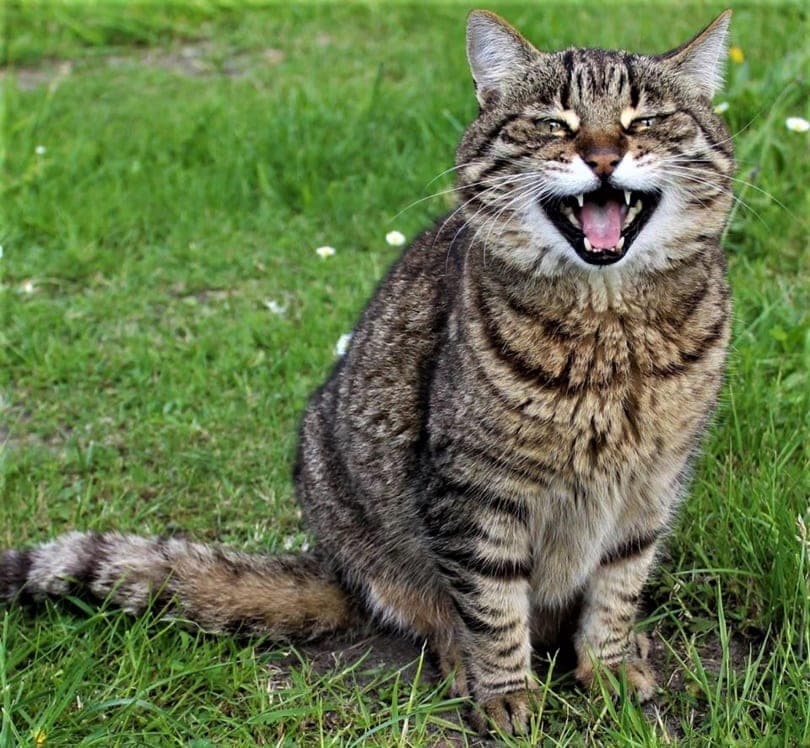
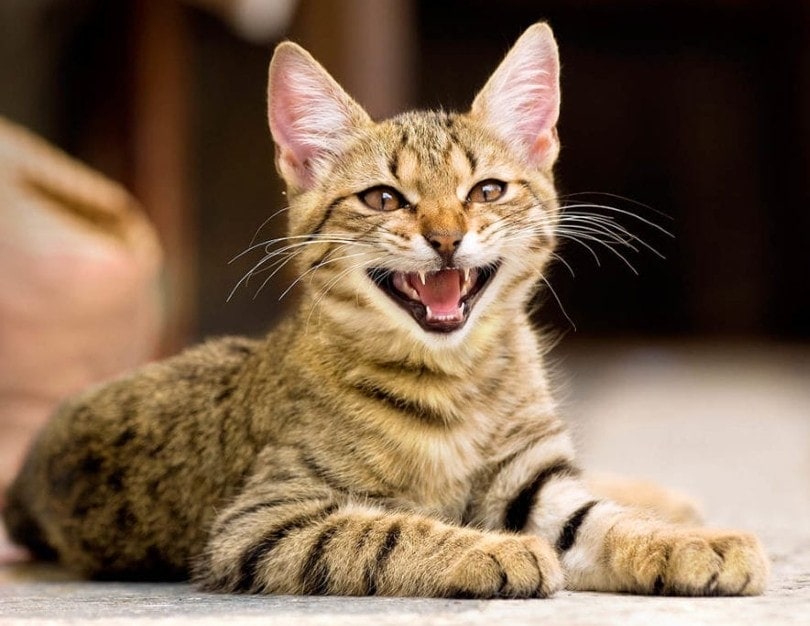
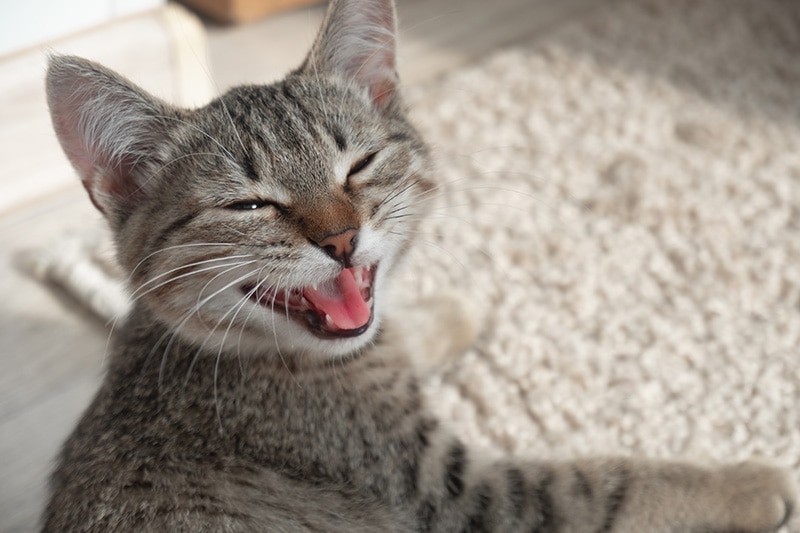
Most cat parents get more than a few good laughs from their pets’ behavior, but do cats feel the same way about humans? Do cats find human behavior funny, and are they able to laugh? While cats can experience emotions like pleasure and fear, scientists don’t know if there’s such a thing as a feline sense of humor, and there’s no evidence suggesting that cats can laugh.

What Is Laughter?
No one is entirely sure why humans laugh, but it’s a behavior everyone shares and plays an important social function. Some suggest that laughter developed to facilitate social bonding, indicating interest in being friendly and developing a deeper connection.
Laughter can be contagious, and people tend to do it more often in groups; some theories assert it’s a built-in reaction that notifies others of sudden situations where something feels out of place. People can laugh when they’re about 3 months old. The behavior likely developed before speech and language.
While laughter exists in all cultures, the situations people find humorous and the circumstances under which humor is considered appropriate vary. There also appear to be profound health benefits associated with regularly getting a good laugh. It lowers stress, releases endorphins, reduces blood pressure, and decreases muscle tension. It may also have immune system and pain control benefits.
Are There Other Animals Who Laugh?
Several animals make distinctive noises when having fun, including primates, birds, and dolphins. There are about 65 species who appear to “laugh” when having fun. Animal laughter, in contrast to human sounds of glee, is relatively quiet and understated.
Animal laughter may be a way to let others know they mean well when engaging in behavior that could otherwise be misinterpreted or escalate into a conflict. Scientists caution, however, against assuming that animals have a sense of humor as understood by humans or that the sounds they produce in fun situations (laughter) have the same meaning and function as human laughter.
Non-Human Primates
Primates such as bonobos, chimpanzees, and gorillas laugh when tickled or having fun playing games, but the sounds they produce are often closer to panting than human-like laughter. Chimpanzees are closely related to humans and produce sounds that are nearer to human laughs than those with more genetic distance, such as orangutans. However, there’s evidence to suggest that some primates have a sense of humor. A gorilla named Koko is said to have tied someone’s shoelaces together and followed up with a sign inviting the person to chase her.
Birds
Cockatoos and mynah birds can produce sounds that are uncannily like human laughter. Parrots sometimes engage in behavior that can be interpreted as teasing. Crows can use tools, engage door latches, and play pranks, but no one can say what motivates them or how they understand these interactions.
Rats
Rats often let loose high-pitched chirps of joy when roughhousing and playing. The chirps are so high that they’re undetectable to human ears. Rats make the same chirping sounds when the parts of their brains responsible for good feelings are stimulated. They also chirp when being tickled and when asking for tickles to continue.
Dolphins
Dolphins have several ways to communicate, including clicks, whistles, and buzzes. Some appear to respond with giggles to over-the-top human antics. They let out whistles followed by buzzes when playing. While dolphins can recognize themselves in mirrors and communicate, it’s unclear whether humor is part of their communication repertoire.
FAQ
Are There Ways to Tell if Cats Are Content?
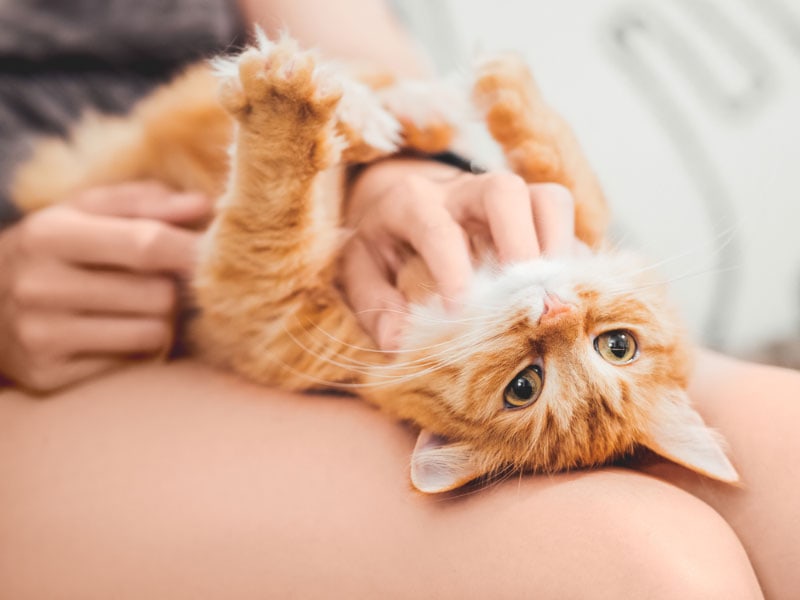
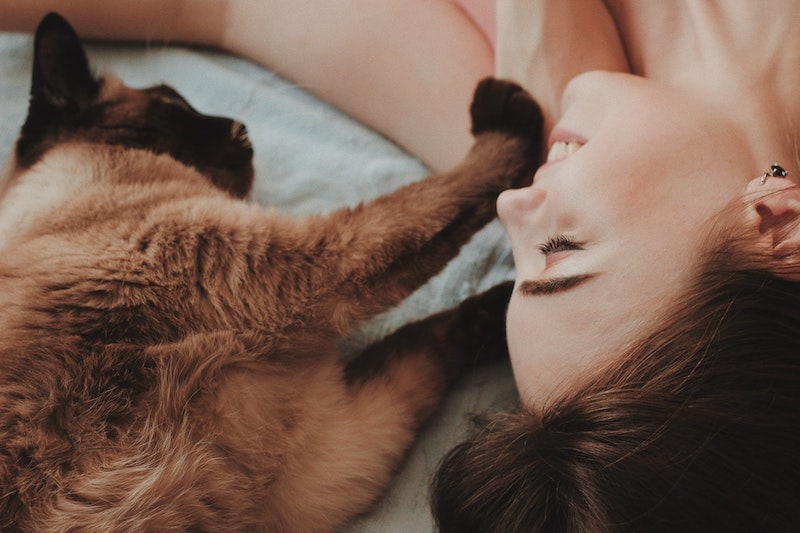
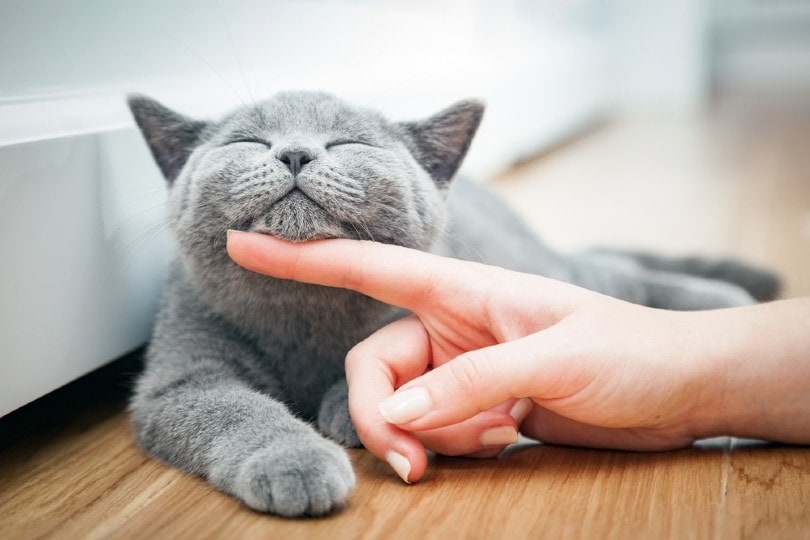
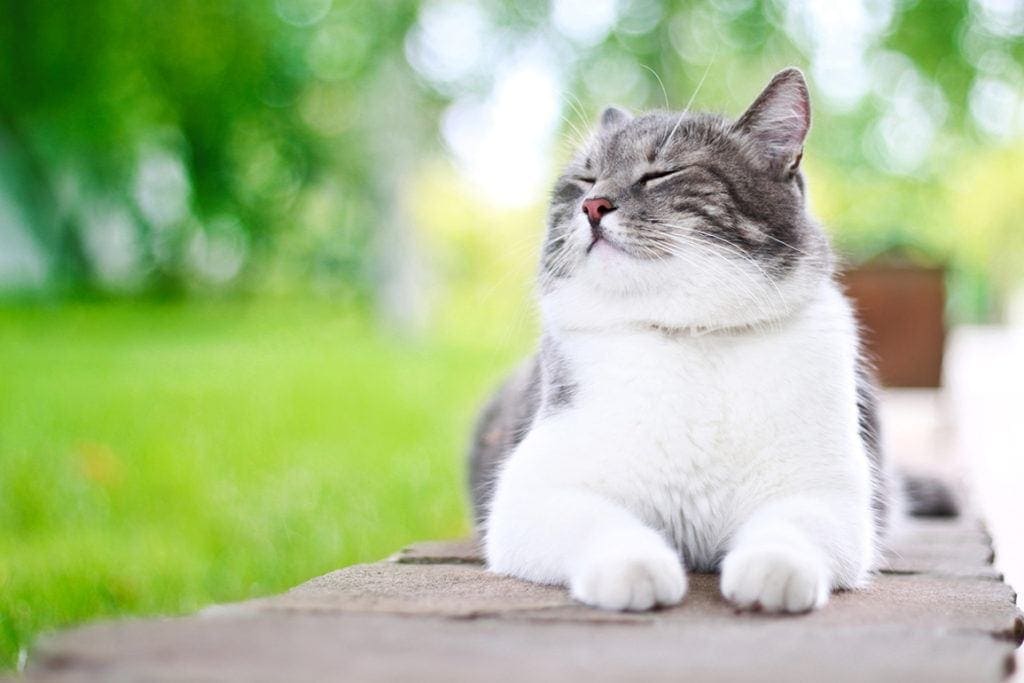
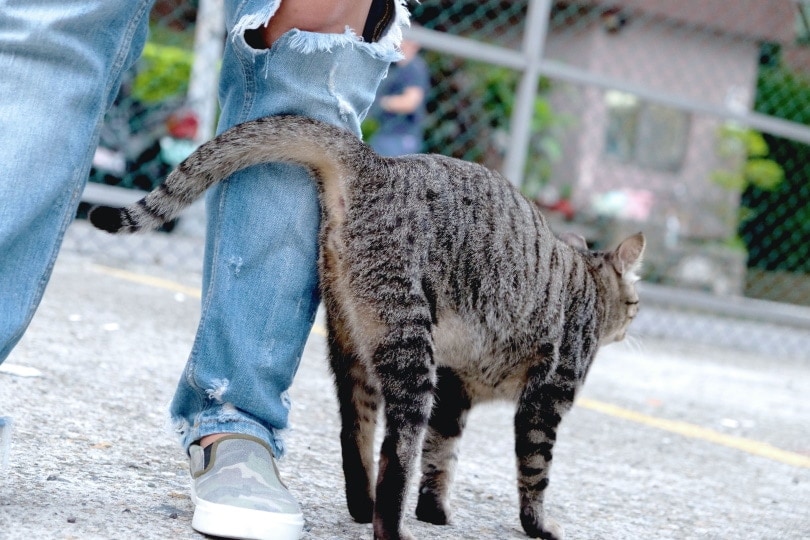
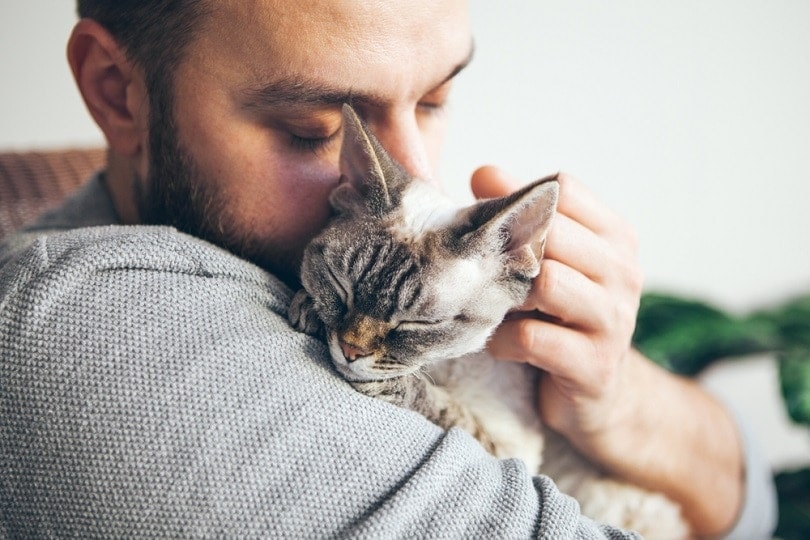
Happy cats enjoy spending time around their favorite people. They sit next to them or on their laps or even follow them around the house. Purring and kneading are other favorite happy cat activities, and it is generally a good sign when cats approach people to play and interact. Other cats show their love through slow blinks and meowing in response to questions.
What Does Body Language Say About Feline Emotions?
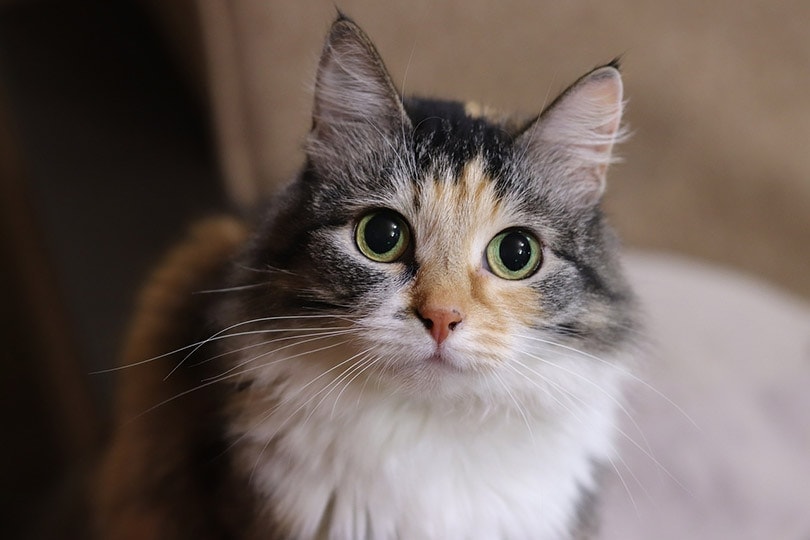
Happy cats have relaxed eyes, and their pupils are often narrow. Their ears usually stand up straight and edge forward a bit, and they hold their tails straight up and curl the very end. Cats that are stressed frequently have dilated pupils and hold their ears flat or backward, and there’s quite a bit of tail thwacking.
What About Vocalizations?
Cats often meow to say hello to their favorite people. Adult cats typically only do so with humans, but kittens meow to get their mothers’ attention. Cats can also meow when they’re bored or trying to get their person to give them something. Purring generally indicates pleasure and contentment, but it can occasionally be a sign of pain or stress, as it can also be a self-soothing activity. Trilling generally indicates pure contentment.

Conclusion
Laughter is a universal human behavior present in all societies, but what’s considered humorous is largely culturally defined. While cats provide humans with lots of love and more than a few laughs, there’s currently little evidence to support the idea that cats have a sense of humor or can laugh, but they experience basic emotions such as fear, happiness, depression, and pleasure.
Signs of feline contentment often include purring, interest in playing and interacting, trilling, and kneading. Chimpanzees, orangutans, birds, dolphins, rats, and other animals appear to make laughing noises when having fun or being tickled.
Sources
Featured Image Credit: monslay, Shutterstock
Get Hepper In Your Inbox


Pet care tips from our vets and experts, straight to your inbox.
You may opt-out at any time. View our Privacy Policy for more information.
Lorre Luther a reformed lawyer from the United States, she moved to the Netherlands to follow her dream and become a writer. Currently living in Rotterdam, Lorre enjoys traveling and reveling in the astonishing beauty of our planet. As an animal lover, Lorre is convinced that cats are smarter than humans.
Join the conversation
Ask a question, share your story, or send private feedback.