Hepper is reader-supported. When you buy via links on our site, we may earn an affiliate commission at no cost to you. Learn more.
Can Dogs Drink Alcohol? Vet-Reviewed Toxicity Facts & Safety Guide


In this article
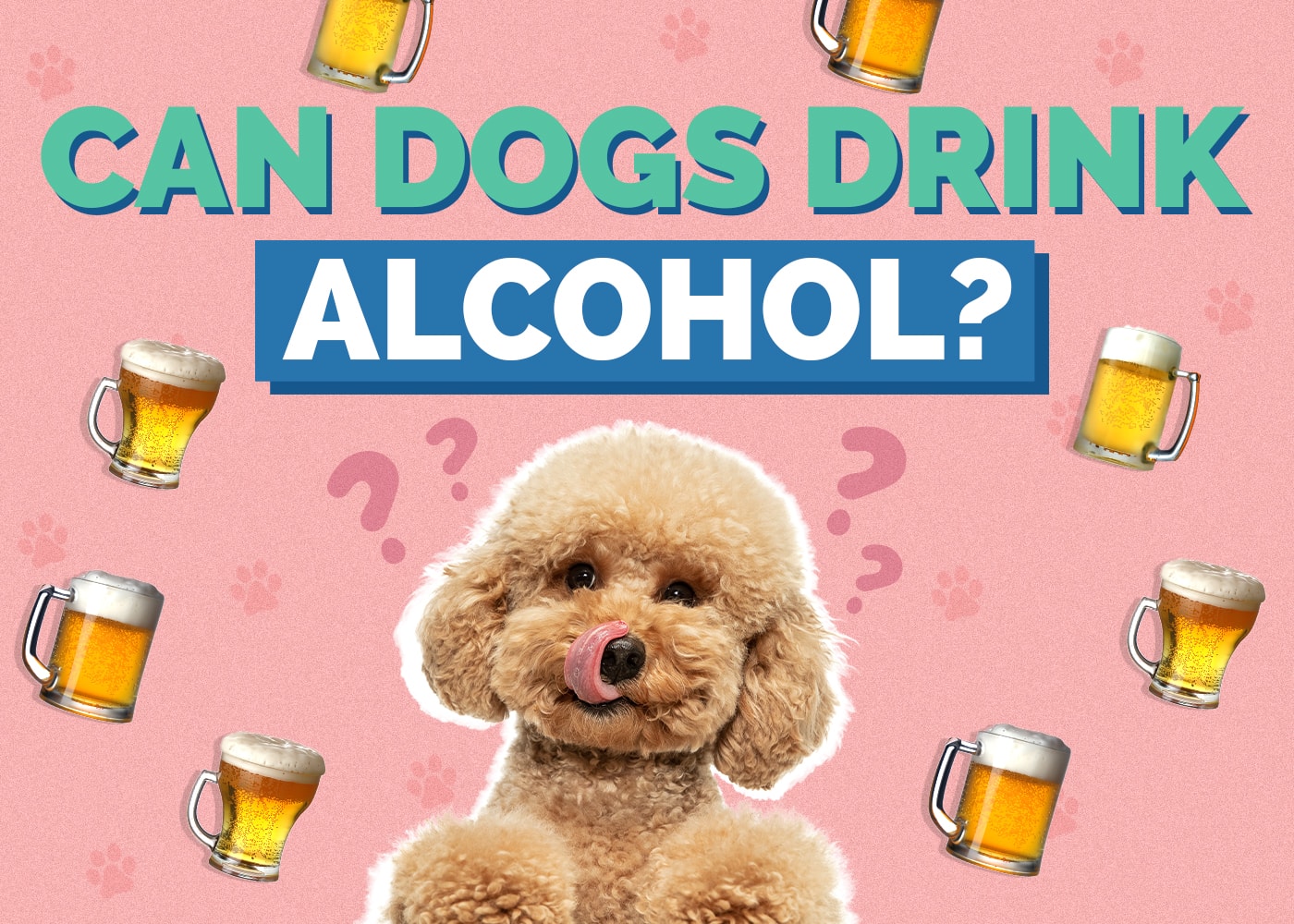
Alcohol is usually involved when there are get-togethers with family and friends. There’s nothing like firing up the grill in the summertime and sipping on a cold one. If you’re a dog parent, you’ve probably had an alcoholic beverage resting on a table to which your dog can gain access, but should you let your dog try it? Can dogs drink alcohol?
To quickly answer this question, no, dogs cannot drink alcohol. In fact, it only takes a tiny amount of alcohol to cause severe poisoning in dogs, depending on the size of your pooch.
In this article, we’ll explore why alcohol is poisonous to dogs and what to do in case your dog accidentally drinks some.

Why Can’t Dogs Drink Alcohol?
Dogs are generally not drawn to alcohol, but they are curious creatures and may accidentally drink some if they have easy access to it. There is a social component to a dog’s feeding habits. If they see you (their pack member) enjoying a beverage or meal, they would likely want to participate as well.
Alcohol can cause severe poisoning in dogs because it is rapidly absorbed in the bloodstream and can be fatal.
Are Some Alcoholic Beverages More Toxic Than Others?
When it comes to alcohol toxicity in dogs, a few factors play a role in the severity of the situation. Typically, the type of alcohol and how much was consumed determines how dire and dangerous the situation can be. Hard liquor, craft beer, and wines have a higher alcohol content than light beer.
Another factor is the size and overall health of your dog. For example, if a toy breed consumes even a small amount of alcohol, the dog is much more at risk for toxicity compared to a large or giant breed that may accidentally ingest a small amount. Please note that serious clinical signs can develop even before your pup ingests a dose large enough to be lethal and, therefore, you should always seek veterinary care promptly if your dog ingests alcohol.
Different Types of Alcohol
We know alcoholic beverages are dangerous and potentially fatal in dogs, but alcoholic beverages are not the only type of alcohol to be concerned with. Alcohol is used in many products, such as hand sanitizer, rubbing alcohol, and antifreeze—these different types of alcohol should be kept out of reach of your dog. Let’s look at the three main types of alcohol and where they’re found.
- Ethyl (ethanol) alcohol – Found in alcoholic beverages but can also be used as a fuel additive. Also found in fermenting bread dough.
- Methyl (methanol or wood alcohol) – Found in paint removers, antifreeze, and ink.
- Isopropyl (isopropanol) alcohol – Found in disinfectants, such as rubbing alcohol; it’s also found in alcohol-based flea sprays. Twice as toxic as ethanol.
It’s important to note that alcohol poisoning can occur from either consumption or absorption through the skin, making it vital to keep harmful products put away and out of reach. All types of alcohol are dangerous because they suppress the central nervous system, which damages vital organs and prevents them from functioning properly—this can result in death if left untreated.
For example, harmful products, such as household cleaners, perfumes, cologne, nail polish removers, and detergents, should be kept in a safe location in your home. Even fermenting bread dough can be dangerous; this is why you should never feed your pet raw dough.
What Are the Signs of Alcohol Poisoning?
If you suspect your dog has consumed or touched any of the three types of alcohol, it’s vital you understand the signs so you can take action. Keep in mind that signs may not occur right away, and if you suspect your dog has consumed alcohol of any kind, contact your veterinarian or the Pet Poison Helpline for help. It’s also beneficial to know what type of alcohol your dog touched or consumed to relay the information to your vet or the Pet Poison Hotline.
At any rate, here are some potential signs:
Severe signs may include:

How to Prevent Your Dog From Consuming Alcohol
Accidents happen, but when they do, it can become a life-threatening situation, especially if alcohol is involved.
Here are some tips to help prevent such an event in the first place:
Conclusion
Any type of alcohol is downright dangerous to your dog, especially toy or small breeds. However, you should never give any dog alcohol of any kind, regardless of breed or size. Being a dog parent means you have the responsibility of keeping your dog safe, and keeping dangerous items put up and out of reach is one of the most responsible acts you can do as a pet parent.
You Might Also Be Interested In:
Sources
https://www.akc.org/expert-advice/vets-corner/is-alcohol-dangerous-for-dogs/
https://www.petmd.com/dog/poisoning/alcohol-poisoning-in-dog
https://www.petpoisonhelpline.com/pet-tips/what-happens-if-my-dog-drank-alcohol
https://www.hillspet.com/dog-care/healthcare/what-happens-when-dog-drinks-alcohol?lightboxfired=true
Featured Image Credit: New Africa, Shutterstock
Get Hepper In Your Inbox


Pet care tips from our vets and experts, straight to your inbox.
You may opt-out at any time. View our Privacy Policy for more information.
Rachel Giordano is a writer and musician out of Pensacola, Florida, living there with her partner and their two dogs, Aero, a Border Collie/Sheltie mix, and Sophie, a Boston Terrier. Rachel has a Bachelor of Arts degree in communication and enjoys writing about all types of animals. When Rachel’s not dedicating her time to writing about animals, she enjoys writing thriller/suspense novels. A writer by day and a musician by night, she's passionate about educating the public about the requirements and needs of all types of animals.
Join the conversation
Ask a question, share your story, or send private feedback.