Hepper is reader-supported. When you buy via links on our site, we may earn an affiliate commission at no cost to you. Learn more.
Can Dogs Drink Coffee? Vet-Approved Toxicity Facts & Risks


In this article
Our dogs follow us everywhere. They take part in many of our daily routines and might even accompany us to the coffee shop. If your dog's ears perk up when they hear and smell the coffee brewing, you might wonder if you can indulge them beyond a delightful sniff. Unfortunately, coffee is extremely dangerous for your dog due to caffeine toxicity. If they like to join you for coffee, you can find them a pet-friendly beverage or snack they can partake in instead.

Why Coffee Is Bad for Dogs
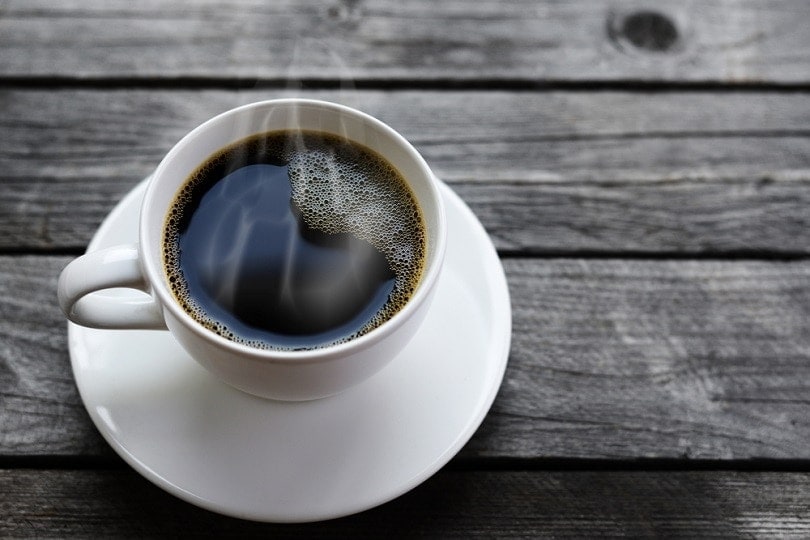
Coffee isn't safe for canines because of the caffeine, which is extremely toxic to them. Coffee elevates our mood and cognitive abilities, but an avid connoisseur is probably familiar with the negative effects of drinking a few too many cups. You might feel nervous, shaky, anxious, or even feel a little sick. Imagine those same effects but magnified in a much smaller creature.
Caffeine poisoning can cause neurological signs and digestive distress in dogs within a couple of hours of ingestion. Even if your dog only drinks a small amount that won't necessarily hurt them, coffee doesn't have any health benefits for them. There's simply no reason to risk it. Keep the brew to yourself and reap the health benefits that a cup of joe holds for humans.
Is Decaf Okay for Dogs?
Here's the truth: 100% caffeine-free coffee doesn't exist. Although decaf and caffeine-free are commonly used as synonyms, there's a subtle difference. Something that is labeled as caffeine-free never naturally contained caffeine. Since coffee beans are always naturally caffeinated, there's no such thing as caffeine-free coffee. On the other hand, decaf refers to something that was once caffeinated, but had the caffeine (mostly) removed.
Decaf coffee isn't actually caffeine-free. Unless otherwise specified, you can assume that coffee has been decaffeinated by a chemical process. This mechanism isn't completely effective, which means traces of caffeine can still linger after the wash. The FDA actually permits up to 3% residual caffeine in a cup of decaf coffee. For an 8-ounce cup, that's typically somewhere between 2–15 milligrams. While that low amount may not make most people jittery, it can potentially harm a dog—especially if they're a smaller breed. We advise you not to give your dog coffee of any kind, whether it's regular or decaf.
What to Do If Your Dog Accidentally Drinks Coffee
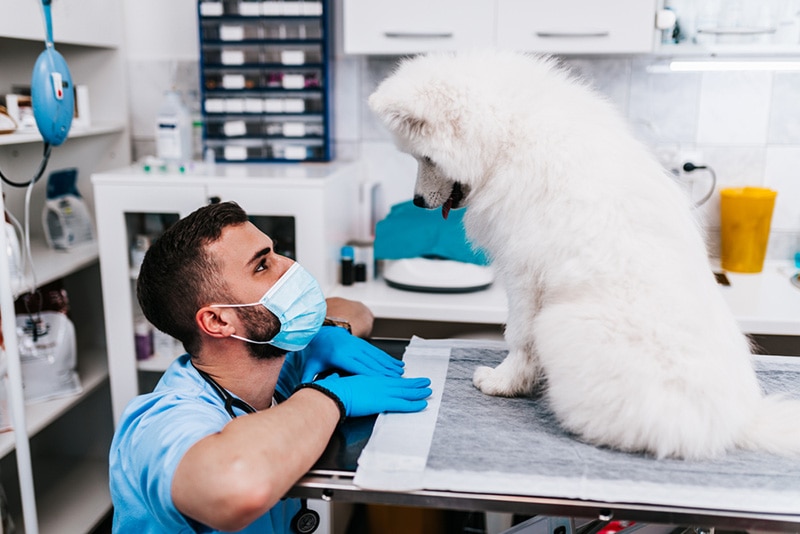
If your dog sneaks some of your coffee, call your vet or the Pet Poison Control Helpline at (855-213-6680). Note how much they drank, and whether they ingested any beans or coffee grounds. The grounds and beans contain a more concentrated amount of caffeine, so that's important information to pass on to your vet. As you talk to medical professionals, monitor your dog for any signs of caffeine poisoning such as:
- Increased heart rate
- Rapid breathing
- Hyperthermia
- Abnormal heart rhythms
- Tremors
- Vomiting
- Seizures
- Collapse
If your dog presents any of these signs, take them to the vet immediately. Adverse reactions usually happen within an hour or two after ingestion.
Pup-Friendly Coffee Alternatives
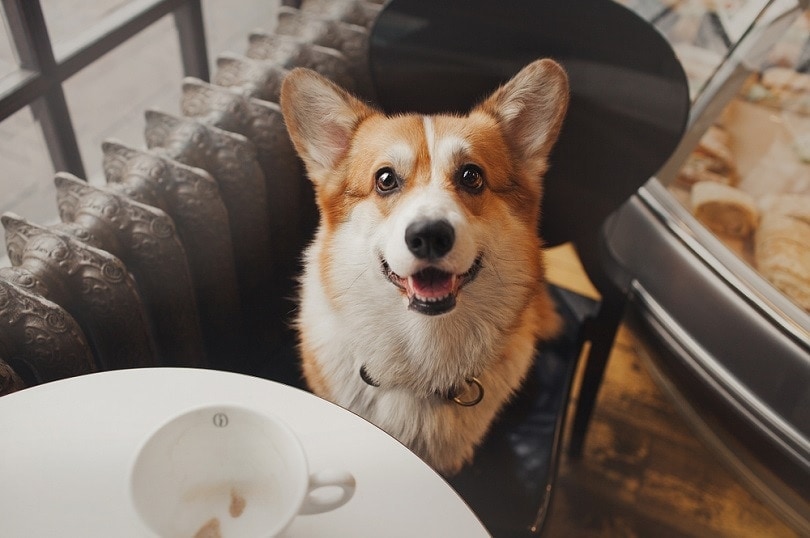
Many coffee shops offer free pup cups or “puppuccinos” to dogs. As long as they aren't lactose intolerant or allergic to dairy, your dog can safely enjoy these little cups of whipped cream while you sip your latte. Some cafes acknowledge the large percentage of dogs that can't process dairy, and might offer them a treat instead.
If you're at home, you can make your dog a milk steamer. Simply heat or froth a small amount of dairy milk or unsweetened oat milk to a comfortable temperature and pour into a bowl for your dog to drink. As milk upsets many dog’s digestive systems, you might be better treating them to something like dog safe bone broth to lap instead.
Final Thoughts
Sharing life with our dog is one of the greatest joys of pet parenthood. They're familiar with our favorite places to walk and might even share our enthusiasm for mac 'n cheese. Unfortunately, coffee is off-limits because of caffeine toxicity, but you can always give them a pup cup or other safe treat if they like to join you for coffee time. Both regular and decaf coffee contain caffeine at some level, so it's best to completely refrain from giving your dog coffee. If they do accidentally drink some or ingest the grounds or beans, call your vet immediately and monitor them for signs of poisoning. As with any toxic substance, you should also note how much they consumed and when. The sooner they can be given the care they need, the more likely they'll have a good prognosis.
You Might Also Be Interested In: Nicotine Poisoning Effects On Dogs
Sources
https://www.petpoisonhelpline.com/covid-19/top-10-most-common-pandemic-poisons/
https://www.fda.gov/consumers/consumer-updates/spilling-beans-how-much-caffeine-too-much
https://www.petpoisonhelpline.com/pet-safety-tips/is-caffeine-poisonous-to-dogs/
http://www.provet.co.uk/petfacts/healthtips/caffeinepoisoning.htm
https://vcahospitals.com/know-your-pet/caffeine-toxicity-in-pets
https://www.petpoisonhelpline.com/pet-safety-tips/is-caffeine-poisonous-to-dogs/
Featured Image Credit: VectorCreation, Shutterstock
Get Hepper In Your Inbox


Pet care tips from our vets and experts, straight to your inbox.
You may opt-out at any time. View our Privacy Policy for more information.
Brooke Bundy is a freelance writer who graduated from the University of North Georgia with a B.S. in Media Studies. She is interested in storytelling across different mediums. When she isn’t writing, Brooke loves to spend time with her dog, and three cats, in New Orleans, Louisiana. Brook enjoys gardening, cooking, brewing coffee, and making her pet's house a home.
Join the conversation
Ask a question, share your story, or send private feedback.