Hepper is reader-supported. When you buy via links on our site, we may earn an affiliate commission at no cost to you. Learn more.
Can Dogs Eat Cheese? Vet-Reviewed Nutritional Info



Few things are more satisfying and delicious than cheese for us humans. Since our dogs so often show a special interest in it, we often wonder, is cheese safe for my pooch? The short answer is, yes, cheese is safe for most dogs. But you need to make sure your dog isn’t lactose intolerant, and it needs to be offered in moderation. We’ll discuss everything you need to know about feeding your pup cheese safely below.

Should I Feed My Dog Cheese?
First, cheese is delicious, and we pretty much guarantee that your pooch will think so too. Meat and cheese are often the two kinds of food that dogs go crazy over most. Because cheese is so tasty, it can be a great treat for training or for spoiling your pup now and then. Few things motivate our dogs to listen better than cheese!
Second, cheese is full of great nutrients including healthy fat, protein, vitamins, and calcium. In moderation, it can be a wonderful occasional addition to your dog’s diet. However, not all dogs can eat cheese. Dogs that are lactose intolerant or have food allergies towards dairy products, are suffering from gastrointestinal issues, or are on a particular prescription diet, should stay away from cheese. Speak to your vet before offering your dog cheese, and remember that not all cheese is safe for dogs.
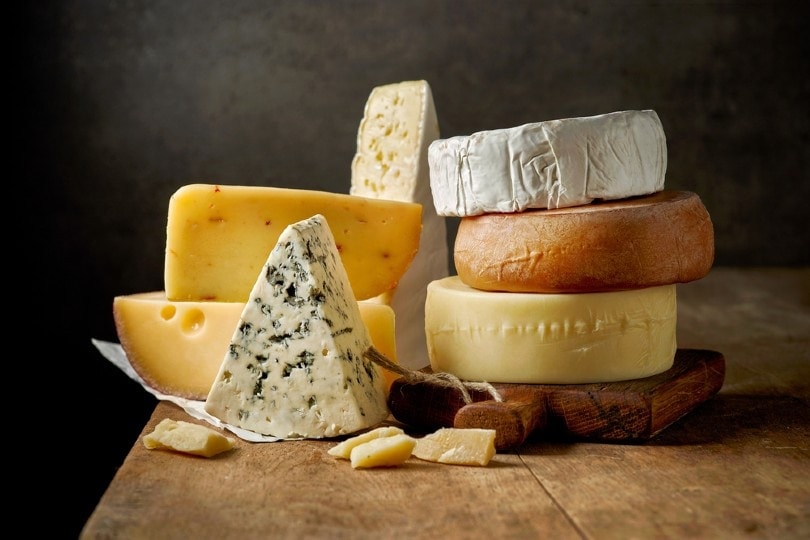
Types of cheese that you should avoid offering your pooch are those that contain herbs or spices like garlic and onions, which are toxic for dogs. Feta is quite salty, while cream cheese and brie are rich in fat, which can lead to signs of stomach upset in many dogs. Blue cheese contains mold which can also make your dog sick, and should not be given.
Let’s look into a few potential precautions to be aware of when it comes to cheese treats for dogs, but only for those dogs that are not lactose intolerant and are not suffering with dairy food allergies.
Is Cheese Too Salty for Dogs?
There are a few reasons we suggest feeding your dog cheese in moderation, and one of the potential issues is the salt content. The amount of salt in a small slice of cheese is unlikely to cause your dog any serious harm, but it’s something that should be offered in moderation. Particularly salty cheese such as feta should be avoided, as it may cause a stomach upset and increase your dog’s thirst.
Because many types of cheese have a lot of salt in them, it’s best to limit your pooch’s cheese intake to avoid complications. If you’re particularly worried about giving your dog too much salt, you can offer them cheese that is naturally lower in salt than others. Lower-sodium cheeses include cottage cheese, cheddar, parmesan, mozzarella, and swiss.
Is the Fat in Cheese Safe for Dogs?
Many people worry that the fat in cheese is unsafe for dogs. While there is quite a bit of fat in most cheeses, some fat in your dog’s diet is safe and necessary. However, excess fat can cause a stomach upset in some dogs, particularly if they have any underlying gastrointestinal issues or are suffering with pancreatitis.
Fat content is another reason cheese should only be given to your pup in moderation, as fat has more than double the calories per gram as protein and carbohydrates.1 It’s not that fat is unhealthy for your pooch, but rather it’s more calorically dense and therefore easier to cause weight gain, depending on the dog’s daily calorie intake and activity level.
For this reason, you should limit your pup to a few small pieces of cheese every few days sprinkled on their food or used as standalone treats.

Aren’t Dogs Lactose Intolerant?
Many people believe that lactose intolerance is universal in the animal world and that dogs can’t digest lactose, the natural sugar in dairy products. However, some dogs will be absolutely fine after eating cheese or other dairy products, while some will experience gastrointestinal signs. Cheese contains very little lactose in comparison to whole milk, and dogs with severe cases of lactose intolerance may experience side effects even from a small piece of cheese.
If you are concerned with how your pup will process dairy, offer them a small amount of cheese and watch for any signs of lactose intolerance which include upset stomach, vomiting, discomfort, and diarrhea.
To be extra safe you can opt for a cheese that is naturally low in lactose. These include aged cheeses such as parmesan, cheddar, and swiss. No matter which cheese you offer your pup, you should still keep a close eye on them for any signs of digestive problems and consider taking them to the vet if they do experience issues.
Some dogs may suffer from food allergies, and alongside beef, chicken, soy and wheat as most common allergens, they can also be allergic to dairy. Allergies can exhibit as gastrointestinal signs, but more commonly we see signs of skin irritation and excessive itching and scratching. If your dog is allergic to dairy products or eating a particular diet, such as a hypoallergenic or a novel protein one, do not offer them any cheese.
How Can I Serve My Dog Cheese?
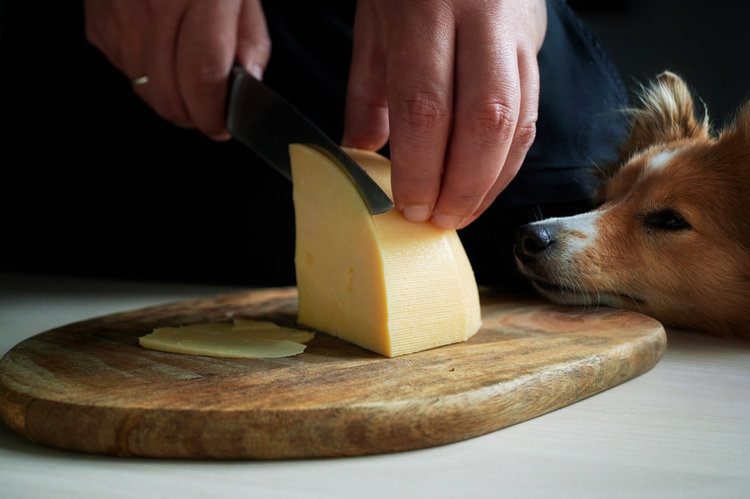
As long as you’ve confirmed with your vet or can ensure that they can process lactose, giving your dog small bits of cheese is unlikely to harm. These can be little cubes or crumbles on their food or as a treat during training. Keep portions to a minimum — your pup only needs a small taste to enjoy it!
You can also use cheese as a cover for giving your dog medicine. When it’s time for their heartworm medicine or other pills, take just enough cheese to cover the pill, and smush the cheese around it. Your pup will be so excited to be getting a cheesy treat, they likely won’t even notice you’re sneaking in their medicine!

The Bottom Line
Cheese is safe for most dogs in moderation. Some dogs are lactose intolerant, so when you do offer your pooch some cheese, you should watch for signs of an upset stomach or intestinal discomfort. If your pup processes cheese normally, feel free to give a few small bits of cheese to your furry friend occasionally as a treat. Make sure not to overfeed your dog, as cheese is very high in calories and salt. While sodium and fat aren’t a problem in moderation, too much can lead to weight gain and other health problems.
See also:
Get Hepper In Your Inbox


Pet care tips from our vets and experts, straight to your inbox.
You may opt-out at any time. View our Privacy Policy for more information.
Nicole is a lover of animals of all sizes but is especially fascinated with the feline variety. She’s the proud mom of Baby, a Burmese, and works every day so he can relax in the sunshine or by the fire. She’s always had a cat in her home and has spent countless days with others, observing behaviors and softening up even the grouchiest of the lot. Nicole wants to share her kitty expertise with you so you and your cat can live happy, healthy, and care-free.
Join the conversation
Ask a question, share your story, or send private feedback.