Hepper blog

Search our database of over 9,984 posts with up-to-date information from our experts and veterinarians.

Hepper is reader-supported. When you buy via links on our site, we may earn an affiliate commission at no cost to you. Learn more.

Can Dogs Eat Persimmons? Vet-Reviewed Nutrition Facts & Safety Guide

By Nicole Cosgrove · Reviewed & fact-checked by Dr. Maja PlatisaVet Approved
Dr. Maja Platisa
Reviewed & Fact-Checked byDr. Maja PlatisaVeterinarian
Dr. Maja has over 8 years of veterinary experience working with various animal species in the United Kingdom and the Channel Islands, from dogs, cats, rabbits, guinea pigs, to cows, goats, sheep, pigs, and poultry. Maja is very enthusiastic about veterinary volunteering work and often helps in neutering projects for stray animals in Greece. She has a wide range of skills in the fields of animal medicine and surgery, diagnostic imaging, endoscopy, microscopy and other aspects of clinical work. She is very passionate about animals and their health and loves to help our readers with any questions or issues with their four-legged family members and other animal companions. Her passion is small animal medicine and emergency work, while she also has a great interest in animal welfare. Dr. Platiša received her veterinary training and degree from the Faculty of Veterinary Medicine, University of Zagreb, Croatia, in 2015.View authorThe information is current and up-to-date in accordance with the latest veterinarian research. Read about our vets
Share
Ask us a question in the comments
Can Dogs Eat persimmons

If you’re wondering whether or not to give your dog persimmons, we have to admit you have a lucky dog. Persimmons are a wonderful treat for humans, and the fact that you want to share that with your dog makes you the kind of pet owner we know and understand. Persimmons without seeds or pits can be a great treat to give your dog when offered in moderation, but there are a few guidelines you must follow before sharing this juicy fruit with your dog.

If your dog is suffering from a health issue such as diabetes or another condition, please consult with your vet first.

In this guide, we’ll give you valuable information about persimmons, how much is suitable to offer to your dog, and any potential downsides associated with feeding them to your four-legged friend.

What Is A Persimmon?

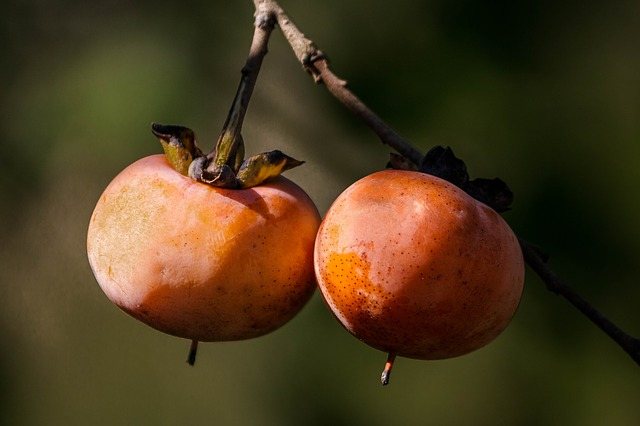
Depending on where you live, you may or may not have even heard of a persimmon. A persimmon is a berry; it can be eaten fresh, dried, or cooked. Persimmons are usually very sweet as long as they are ripe and are more commonly found in winter. Many people use persimmons in pies, but they can also be eaten right off the tree. Persimmons come in two varieties, the Fuyu and the Hachiya, with the latter being very bitter when unripe.

Persimmons
Image Credit: JamesDeMers, Pixabay

What Are The Health Benefits Of Persimmons?

Many people eat persimmons for some of their health benefits.

  • High levels of dietary fiber
  • Nutrients like beta-carotene (good for your eyes), vitamin C, and iron
  • High levels of antioxidants
  • Betulinic acid, which has been shown to help with inflammation and potentially cancer prevention based on early laboratory studies, although more research is required

Do The Health Benefits Of Persimmons Transfer To Dogs?

Your dog may gain a small nutritional benefit from treats with beta carotene and vitamin C, such as persimmons, but it’s unlikely that an occasional bite of persimmon will be a significant source of these nutrients. Persimmons should be offered to dogs in moderation and according to veterinary recommendations, and your dog’s complete and balanced diet is the one to provide them with all the nutrients they need.

How Much Persimmon Is Safe For Dogs?

If you have a small dog, you should only share a very small piece of persimmon. Since persimmons are natural laxatives, your dog may have an upset stomach if you give them more. For a large dog, one to two bites should be about right. However, we always recommend starting with a minimal amount as a test to see how your dog’s digestive system handles the treat.

It is also worth mentioning again that it is a treat. You don’t need to run to the store and pick up persimmons for your dog to eat daily. You can use a small piece of persimmon as a reward every now and then and an alternative to calorie-rich commercial treats.

How Do You Prepare a Persimmon for Your Dog?

You MUST take the pit and seeds out of the persimmon before giving it to your dog. If you do not do this, your dog may be at risk of health issues such as choking or a gastrointestinal blockage that will require urgent medical attention. If your dog likes persimmons, make sure that you store them out of your dog’s reach, so they don’t accidentally ingest the seeds.

Persimmons
Image Credit: jackmac34, Pixabay

Are There Any Dangers to Giving Your Dog Persimmons?

Yes, there are two potential dangers when it comes to giving your dog persimmons:

  • If you give your dog too many persimmons, they may have diarrhea or stomach issues. If it is a new food that you are introducing, make sure to start slow. You may want to begin with just a tiny bit of persimmon and see how your dog handles it. If they do alright, consult with your vet and decide on an appropriate amount to give your dog, but you do not want persimmons to become a significant part of their diet.
  • If you leave the seeds inside the persimmon, they can cause a blockage for your dog. If your dog ingests the seeds or the pit of a persimmon, pay close attention to ensure they are still behaving normally and have a good appetite. If you have any concerns at all, it is best to contact your vet immediately.

What Are Other Berries That Could Be Good for My Dog?

Anything with large pits or seeds is pretty dangerous for a dog. Some of the best berries you can feed your dog are blueberries, strawberries, and blackberries. Speak to your vet first before considering new treats for your dog, and avoid giving sugary treats like fruit to dogs suffering from diabetes or digestive issues.

You will want to ensure you give your dog berries in moderation since too many can cause stomach issues. Blueberries are a great treat to use for training purposes. If you are trying to teach your dog a new trick but don’t want to keep giving them treats, sometimes a few blueberries will work.

Conclusion

A piece of persimmon without the seeds or pit is a sweet treat to share with your dog. As long as your dog’s stomach is not upset by the persimmon, it can be a fairly healthy option now and then. However, if your dog accidentally eats the whole fruit, seeds, or the pit, it is best to contact a vet immediately.


Featured image credit: cywpekr, Pixabay

Get Hepper In Your Inbox

Pet care tips from our vets and experts, straight to your inbox.

List

Select all that apply.

You may opt-out at any time. View our Privacy Policy for more information.

Nicole Cosgrove
Authored by

Nicole Cosgrove

Join the conversation

Ask a question, share your story, or send private feedback.

Rate this post
Required to post. Only our editors see your rating.
Who should see this?

A human reviews every comment before it appears. Your email is never published.

Picked to go with this article

Can Dogs Eat Mulberries? Vet-Reviewed Health Benefits & FAQs

Can Dogs Eat Mulberries? Vet-Reviewed Health Benefits & FAQs

Depending on the area that you call home, mulberries may grow all over the place. They take root in the yard and quickly form bushes that can take over large c…

Nicole Cosgrove
By Nicole Cosgrove ·
Can Dogs Eat Jujube? Vet Approved Nutritional Facts & FAQ

Can Dogs Eat Jujube? Vet Approved Nutritional Facts & FAQ

Like many dog owners, you might be looking for new treats you can safely feed your dog. So, it might have crossed your mind if dogs can eat jujube fruit. Dogs…

Kerry-Ann Kerr
By Kerry-Ann Kerr ·
13 Fruits Dogs Can Eat Safely: Vet-Approved Types (With Pictures)

13 Fruits Dogs Can Eat Safely: Vet-Approved Types (With Pictures)

Fruits make a tasty, sweet treat for us to eat, and many fruits are extremely affordable. If you live near a grocery store, they are also usually widely availa…

Brooke Billingsley
By Brooke Billingsley ·
Can Dogs Eat Nectarines? Vet-Verified Nutrition & Safety Facts

Can Dogs Eat Nectarines? Vet-Verified Nutrition & Safety Facts

Nectarines are a type of fruit that is grown all around the world. These juicy, delicious stone fruits are a tasty treat for humans, and we might wonder whethe…

Grant Piper
By Grant Piper ·

Keep reading

More stories you might like

Can Dogs Eat Blackberries? Health & Nutrition Facts

If you have blackberries around your home and you are wondering if it’s ok to feed them to your dog, the short answer is yes. It is perfectly safe to feed your…

Nicole Cosgrove
By Nicole Cosgrove ·
Can Dogs Eat Blackberries? Health & Nutrition Facts

Can Dogs Eat Clementines? Vet-Verified Facts & Safety Guide

They’re small and refreshing, but can your dog eat clementines? The answer is yes and no. The flesh of the clementine is safe to be eaten in moderation and as…

Kerry-Ann Kerr
By Kerry-Ann Kerr ·
Can Dogs Eat Clementines? Vet-Verified Facts & Safety Guide

Can Dogs Eat Apricots? Vet-Approved Nutrition Facts

Even well-trained dogs can be rascals about untended food. They’ll dig into anything left on the counter, and the fruit bowl is no exception. When you find bit…

Nicole Cosgrove
By Nicole Cosgrove ·
Can Dogs Eat Apricots? Vet-Approved Nutrition Facts

Can Dogs Eat Acorn Squash? Vet-Reviewed Facts & FAQ

byThere’s nothing more difficult than resisting puppy dog eyes while you’re cooking. However, sometimes it’s hard to know if what you’re cooking — like acorn s…

Nicole Cosgrove
By Nicole Cosgrove ·
Can Dogs Eat Acorn Squash? Vet-Reviewed Facts & FAQ

Can Dogs Eat Peaches? Nutrition Facts & Benefits

Can dogs eat peaches? The short answer is yes! Peaches are not only safe but can be a tasty, healthy treat for your dog. However, before you start running to t…

Nicole Cosgrove
By Nicole Cosgrove ·
Can Dogs Eat Peaches? Nutrition Facts & Benefits

Can Dogs Eat Berries? Vet-Reviewed Nutrition Facts & Safety Guide

Your furry friends are more than just pets; they are part of the family, so their nutrition and health should be a top priority. As pet parents, it is normal t…

Nicole Cosgrove
By Nicole Cosgrove ·
Can Dogs Eat Berries? Vet-Reviewed Nutrition Facts & Safety Guide

Can Dogs Eat Oranges? Nutrition Facts & FAQ

Dogs want to do everything their humans do, which includes snacking. If you’re sitting there trying to enjoy a lovely citrus fruit all to yourself, you may not…

Nicole Cosgrove
By Nicole Cosgrove ·
Can Dogs Eat Oranges? Nutrition Facts & FAQ

Can Dogs Eat Mango? Nutrition Facts & Benefits

If you have ever wondered if dogs can eat mangoes, the short answer is yes. Dogs can safely eat mangoes and will probably enjoy it. These fruits are full of be…

Nicole Cosgrove
By Nicole Cosgrove ·
Can Dogs Eat Mango? Nutrition Facts & Benefits