Hepper blog

Search our database of over 9,984 posts with up-to-date information from our experts and veterinarians.

Hepper is reader-supported. When you buy via links on our site, we may earn an affiliate commission at no cost to you. Learn more.

Can Dogs Eat Shallots? Vet-Reviewed Concerns & FAQ

By Chris Dinesen Rogers · Reviewed & fact-checked by Dr. Karyn KanowskiVet Approved
Dr. Karyn Kanowski
Reviewed & Fact-Checked byDr. Karyn KanowskiVeterinarian
Karyn has lived in the UK for the past 10 years after moving from Queensland, Australia. In 2010, she graduated from The University of Queensland School of Veterinary Science, and also holds a Bachelor’s degree in Zoology. Karyn is passionate about using evidence, experience, and owner collaboration to provide the best solutions for pets, and believes in making reliable information about animal health accessible to all. She shares her home with 5 cats, 4 dogs, and 1 husband, and when she is not practising as a veterinary surgeon, she spends her time writing, gardening, and cleaning up pet hair!View authorThe information is current and up-to-date in accordance with the latest veterinarian research. Read about our vets
Share
Can Dogs Eat Shallots

Humans may have been enjoying the company of dogs from as early as the Neolithic period 1, brought together by shared interests in food and protection. Domestication has meant that the once primarily carnivorous canine has adapted to a more omnivorous style of diet, and 30,000 years later, they are still trying to share our meals with us. Does that mean they can eat shallots?

The answer is an emphatic no.

The physiology of dogs and people is vastly different. While we can eat many of the same things, our canine companions can’t ingest everything we can without ill effects, much as they might want to.

hepper-dog-paw-divider2

Shallot To Know About

You probably know that grapes and raisins are toxic to cats and dogs. Perhaps you know the same caution applies to onions and garlic. Shallots are part of the same genus (Allium) as these two vegetables. They may not be as intense in flavor as the others, but they can be just as lethal. All members of the Allium genus, which also includes leeks and chives, contain sulfur-containing compounds which are responsible for toxicity by having oxidizing effects on red blood cells.
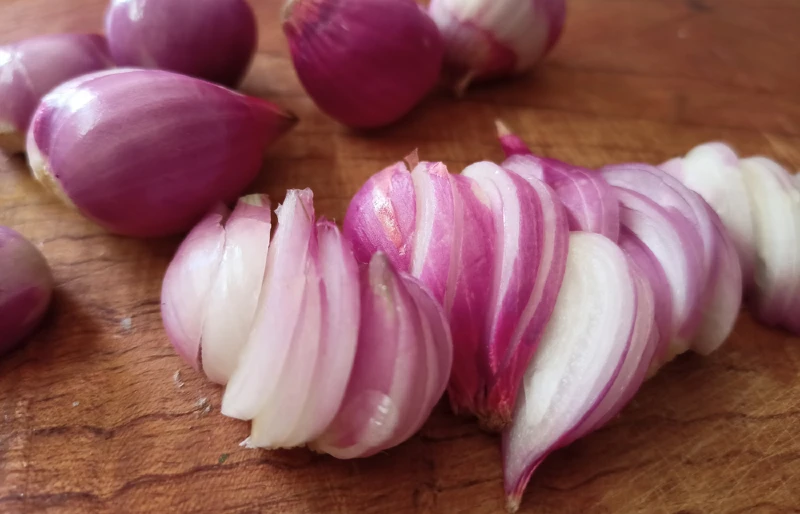
fresh sliced purple shallots on wooden chopping board
Image Credit: Tieningtyas Madjid, Shutterstock

The Trouble With Alliums

Scientists have identified aliphatic sulfides and sulfoxides as poisonous agents 2, with n-propyl disulfide being the principal one. These chemicals cause oxygen-carrying hemoglobin in the blood to denature or break apart, resulting in the formation of Heinz bodies 3, in a condition known as hemolytic anemia.

Although the toxic effects of shallot ingestion begin within 24 hours, pet owners may not notice any signs until a couple of days after their dog has eaten them. Red flags of possible poisoning include:

  • Lethargy
  • Loss of appetite
  • Exercise intolerance
  • Vomiting
  • GI distress
  • Pale mucous membranes (gums being the easiest to assess)
  • Red urine (hemoglobinuria)
  • Labored breathing
  • Weakness
  • Collapse
hepper-dog-paw-divider 5

Diagnosis and Treatment of an Accidental Poisoning

Detection of the Heinz bodies is a telltale sign of hemolytic anemia. Few other toxins can cause the formation of this uncommon clinical finding. A veterinarian will diagnose it based on the animal’s history and the presence of Heinz bodies, seen on a blood smear. A dog doesn’t have to consume a lot of shallots before showing signs of poisoning, with as little as 15 to 30 g/kg.

If your pup has recently eaten shallots, your vet may induce vomiting and administer activated charcoal. In other cases, the treatment may need to be more aggressive with a blood transfusion, intravenous fluid therapy, or oxygen; there isn’t an antidote for poisoning, and treatment primarily involves supportive care. Never attempt to make your dog vomit at home without speaking to your vet.

Treatment may be prolonged, requiring hospitalization. Of course, much depends on how much the animal ate, and the time between ingestion and diagnosis. Follow-up bloodwork is necessary to ensure the anemia, if present, is under control. Fortunately, fatalities are rare after eating shallots or any Allium species.

Any amount consumed in any form can cause this unfortunate series of events. It can include something as seemingly innocuous as leftover pizza. Therefore, we strongly urge you never to share any table scraps with your dog, especially those containing shallots, onions, garlic, or any other members of the Allium group. The best way to prevent poisoning is to give your pup only foods and treats formulated for dogs.

hepper-dog-paw-divider 3

Final Thoughts

Shallots belong high on the list of things you should never give your dog or cat. Unfortunately, it does not take a lot to trigger serious signs of poisoning. We recommend parents instruct their children not to give their pets any human foods - better to be overly cautious than to end up in the waiting room of the emergency vets. We also suggest keeping your eye on your pup when near food. Although their history of domestication has made dogs keen to share what’s on our plate, it’s up to us to protect them from foods that can cause them harm.

Sources

Get Hepper In Your Inbox

Pet care tips from our vets and experts, straight to your inbox.

List

Select all that apply.

You may opt-out at any time. View our Privacy Policy for more information.

Chris Dinesen Rogers
Authored by

Chris Dinesen Rogers

Join the conversation

Ask a question, share your story, or send private feedback.
Rate this post
Required to post. Only our editors see your rating.
Who should see this?

A human reviews every comment before it appears. Your email is never published.

Picked to go with this article

Can Dogs Eat Onions? Are Onions Safe for Dogs? Vet-Approved Facts & FAQ

Can Dogs Eat Onions? Are Onions Safe for Dogs? Vet-Approved Facts & FAQ

Onions are pervasive in human diets and can be found in all kinds of foods, so many people wonder if they’re safe for dogs. Although many vegetables are okay t…

Nicole Cosgrove
By Nicole Cosgrove ·
My Dog Ate Chilli or Spicy Food? Here's What to Do (Vet Answer)

My Dog Ate Chilli or Spicy Food? Here's What to Do (Vet Answer)

Have you got a taste for hot sauce and ever wondered if your dog might too? Spicy food comes in all sorts of forms, and as much as we all love to taste and exp…

Dr. Joanna Woodnutt
By Dr. Joanna Woodnutt ·
Garlic Toxicity in Cats: Vet Reviewed Signs & Treatments

Garlic Toxicity in Cats: Vet Reviewed Signs & Treatments

Garlic is a bulbous vegetable belonging to the Allium genus, which includes other bulbous vegetables like onions, shallots, scallions, leeks, and chives. Garli…

Rachel Giordano
By Rachel Giordano ·
Can Dogs Eat Garlic? Is Garlic Safe for Dogs? Vet Approved Facts

Can Dogs Eat Garlic? Is Garlic Safe for Dogs? Vet Approved Facts

If you’re an avid chef, then you probably keep garlic in your kitchen. After all, it just makes everything taste better. It’s only natural to want to offer som…

Nicole Cosgrove
By Nicole Cosgrove ·

Keep reading

More stories you might like

11 Human Foods That Can Be Fatal to Dogs: Vet Approved Guide

Just because you love the food on your dinner table doesn’t mean you should share it with your dog to see if they like it too. That’s because while it might be…

Adam Mann
By Adam Mann ·
11 Human Foods That Can Be Fatal to Dogs: Vet Approved Guide

Can Dogs Have Balsamic Vinegar? Vet-Reviewed Facts & Safety Guide

Balsamic vinegar is the tasty, rich, dark vinegar that is commonly used in salads, marinades, glazes, and as a sauce in many Italian-style dishes. When you hav…

Lindsey Lawson
By Lindsey Lawson ·
Can Dogs Have Balsamic Vinegar? Vet-Reviewed Facts & Safety Guide

Can Dogs Eat Burritos? Vet Reviewed Health Concerns

Who doesn't love burritos? They are one of the most popular Mexican foods out there. But have you ever wondered if your furry friend can enjoy them, too? Well,…

Hanh Duong
By Hanh Duong ·
Can Dogs Eat Burritos? Vet Reviewed Health Concerns

Can Dogs Eat Hush Puppies? Vet Reviewed Nutrition Facts & Suggestions

When you sit down to eat, you can't avoid the pleading puppy eyes your dog gives you. But just because your dog wants something doesn't mean you should give it…

Adam Mann
By Adam Mann ·
Can Dogs Eat Hush Puppies? Vet Reviewed Nutrition Facts & Suggestions

Can Dogs Eat Chorizo? Keep Your Dog Healthy!

Spicy and salty, chorizo pairs perfectly with scrambled eggs for breakfast, or rice for lunch. Traditional chorizo is a specific type of Spanish pork sausage,…

Brooke Bundy
By Brooke Bundy ·
Can Dogs Eat Chorizo? Keep Your Dog Healthy!

Can Dogs Eat Caesar Salad? Vet-Reviewed Health Facts

Every now and then, a nice chicken Caesar salad just hits the spot, and we’re sure you’ve noticed your best furry friend eyeing your meal. Salad is made of pre…

Codee Chessher
By Codee Chessher ·
Can Dogs Eat Caesar Salad? Vet-Reviewed Health Facts

Can Dogs Eat Kimchi? Vet-Reviewed Facts & Important Considerations

Sharing food with your dog is always tempting, but some treats are unsuitable for canines. Kimchi is a fermented food, and if it is one of your favorites, you…

Nicole Cosgrove
By Nicole Cosgrove ·
Can Dogs Eat Kimchi? Vet-Reviewed Facts & Important Considerations

Can Dogs Eat Cream of Wheat? Vet Approved Advice

As dog lovers, we should always be aware of what people's foods pose a risk to our beloved companions and which ones are safe for them to eat. Cream of Wheat i…

Lindsey Lawson
By Lindsey Lawson ·
Can Dogs Eat Cream of Wheat? Vet Approved Advice