Hepper is reader-supported. When you buy via links on our site, we may earn an affiliate commission at no cost to you. Learn more.
Can Dogs Eat Soybeans? Vet Approved Advice



In this article
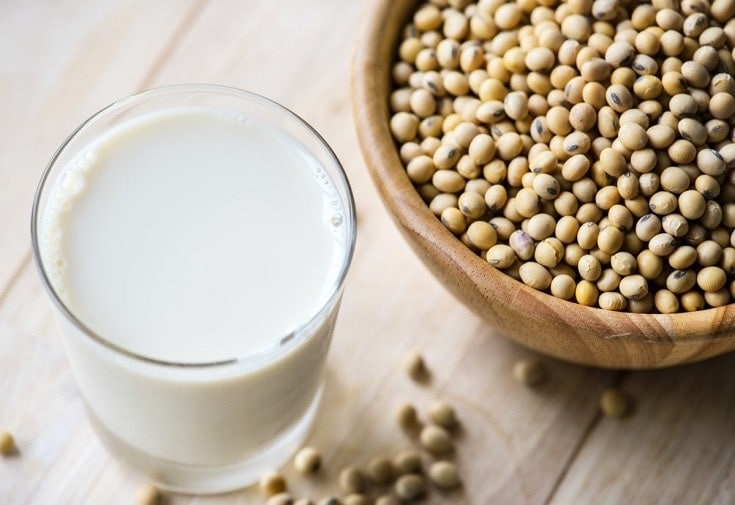
Soybeans are a popular ingredient in many dishes and are commonly eaten by vegetarians and vegans. Soybeans are high in fiber, cholesterol-free, and contain antioxidants. It's also high in protein, which is why it's often used as an alternative to meat in both human and dog food. In fact, many high-quality, premium dog foods contain soybeans in their list of ingredients. Dogs can enjoy soybeans in moderation, and it is healthy for them.
However, the answer is a bit more complicated because not all dogs should eat soybeans, and some forms of the ingredient are not recommended. Let's break down the good and the bad of feeding your dog food with soybeans listed in its ingredients.

Are Soybeans Good for Dogs?
Just as soybeans provide humans with plenty of nutrients, they also have health benefits for dogs. Here's what soybeans supply your dog's body with, along with its benefits:
- High in folic acid: Helps your dog produce red blood cells in their bone marrow.
- High in amino acids: Helps with body tissue repair, builds muscle, and breaks down foods.
- Omega fatty acids: Helps absorb vitamins in food, improve your dog's skin and coat, and support brain, heart, and joint health.
- Fiber: Helps with good digestion and bowel regularity.
- Potassium: Helps with neural function and supports bone health.
- Contains antioxidants: Helps fight diseases and allergies.
Some people have the idea that soybeans are used as cheap fillers in their dog's food, but this isn't the case. This ingredient, as you can see above, has a high nutritional value. There have also been concerns from dog owners that eating soybeans can lead to bloat in dogs because they struggle to digest it.1 This belief is also untrue, as soybeans are just as easily digested by your dog as animal proteins.
Soybean Allergy
Although dogs with food allergies are usually allergic to animal protein, such as lamb, beef, chicken, and fish, soybeans are another ingredient that dogs are commonly allergic to. That doesn't mean that all dogs with allergic reactions are allergic to soybeans; it just means that it might be the cause, or at least one of them.
Soybeans are safe for dogs to eat that don't have an allergy to them. However, dogs that have been diagnosed by a vet with a soybean allergy should avoid dog foods with this ingredient. There are some alternatives that you could chat with your vet about starting your dog on, such as a diet with hydrolyzed soy protein.
In this specialized diet, the proteins are hydrolyzed, meaning that they've been broken down into such tiny pieces that the dog's immune system doesn't identify it as a threat, try to attack it, and cause a reaction in your dog. In this way, your dog is still getting the protein they need but in a hydrolyzed form.
If your dog is allergic to soybeans, they will likely have an allergic reaction as soon as they eat dog food with that ingredient. Signs that your dog is allergic are hair loss, vomiting, diarrhea, excessive licking, and ear infections.2
Can Dogs Eat All Soy Products?
Although soybeans are safe for dogs who aren't allergic to them, not all soy products should be eaten by dogs. Before giving your dog food with soy ingredients, make sure that it hasn't been genetically modified, as a large number of soybeans in the US are GMO soybeans.3 The nutritional value of GMO soybeans is different from organic ones and can affect your dog's gut health.
Any soy product that contains spices or seasoning also isn't recommended for dogs. The seasoning used could contain garlic or onions, which are toxic to dogs. Products such as soy sauce are high in sodium, which can make your dog sick. Other soy products might contain other high-fat ingredients that could upset your dog's stomach or contribute to obesity.
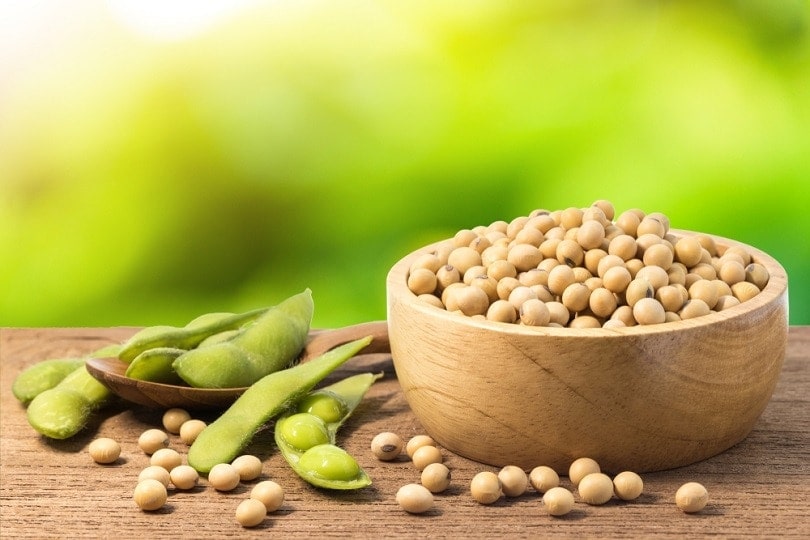
Instead, stick to plain edamame or soybeans, which are soybeans before they have fully ripened. Leave the seasoning off, as your dog doesn't need it. You can add these ingredients to your dog's kibble or give them to your dog as a treat.
What About DCM?
The FDA has been investigating a connection between Canine Dilated Cardiomyopathy (DCM) and grain-free diets containing legumes. Many dogs on these diets have developed non-hereditary DCM, and dog owners have been advised not to feed their dogs grain-free diets with legumes listed as one of the top ingredients. However, this investigation is still ongoing.
Soybeans are legumes, which has made many dog owners question whether it is safe for their pups to eat them in grain-free diets. However, the FDA is looking into non-soy legumes. Therefore, soybeans are currently considered safe to consume in these diets as there is no connection between this ingredient and DCM.

Conclusion
Dogs can eat soybeans as they contain many health benefits. They can be eaten raw, cooked, frozen, or as an ingredient within your dog's kibble. They are not cheap fillers but rather have a high nutritional value. Most dogs can digest soybeans easily, but dogs with an allergy to soybeans should avoid the ingredient to prevent an allergic reaction. However, they can try a hydrolyzed soy protein diet if approved by their vet.
Soybeans and edamame are safe soy products for your dog to enjoy, but avoid giving your dog soy products that contain other ingredients or seasoning, as these other ingredients might be toxic to your dog or hard to digest.
Get Hepper In Your Inbox


Pet care tips from our vets and experts, straight to your inbox.
You may opt-out at any time. View our Privacy Policy for more information.
Keri-Beth is from South Africa and is a freelance writer who specializes in the pet niche. She has grown up with a range of pets, volunteered at countless pet shelters, and is highly passionate about pet care. Currently, Keri-Beth is raising two dogs - Benji, the Golden Cocker Spaniel, and Gracie, the Boerboel. With so much information out there, Keri-Beth has made it her mission to make pet care as easy and straightforward as possible.
In her spare time, Keri-Beth enjoys camping, photography, and spending time with her husband, who is a professional drummer. She not only has a heart for pets but people too.
Join the conversation
Ask a question, share your story, or send private feedback.