Hepper is reader-supported. When you buy via links on our site, we may earn an affiliate commission at no cost to you. Learn more.
Can Dogs Eat Bean Sprouts? Vet-Reviewed Benefits


In this article
Bean sprouts are growing in popularity every year. Whether you grow them or pick them up from the store, you might want to share them with your neighbors or your pet! The good news is that unseasoned bean sprouts in moderation are a great addition to your dog’s diet.
Bean sprouts are a great protein and vitamin source that can be added to your dog’s food for a little extra flavor, texture, and nutrition. However, they should only be given in moderation.

What Are Bean Sprouts?
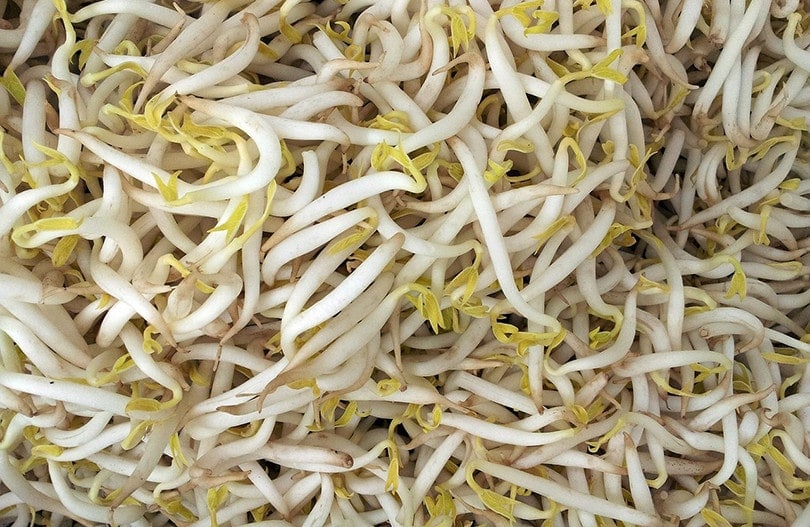
Beans are seeds, and when they are planted, little roots are the first thing to grow. Every type of bean is slightly different, but bean sprouts are usually white and slightly crunchy.
The most common kind of sprout is mung bean. Mung bean sprouts are crisp white tubers that are common in Asian cuisines. If you’ve had Pad Thai or Pho, there’s a good chance you’ve had bean sprouts. These roots are packed with nutrients, making them a great plant choice for your dog.
Benefits of Bean Sprouts
The biggest benefit of bean sprouts is the rich array of vitamins in each sprout. These crunchy sprouts are low in calories (every 1 cup/100-gram serving is only about 30 calories) and have a fair amount of protein (3 grams) and fiber (1.8 grams). They also contain some of the following vitamins, minerals, electrolytes, and other beneficial ingredients:
- Vitamin C: Unlike humans, dogs can produce their vitamin C. But a little extra Vitamin C in your pet’s diet might help with heart health and cancer prevention.
- Calcium: If you like strong bones, healthy hair, good nails, and strong teeth, you want calcium. Getting plenty of calcium will help your dog stay healthy in all sorts of ways.
- Potassium: Potassium is an electrolyte that is crucial for your dog’s normal body functions and helps them be alert and energetic.
- Magnesium: Magnesium is a mineral and electrolyte that plays a vital role in almost every metabolic process in the body and is important for bone mineralization, muscle contraction and relaxation, and transmission of signals through the nerves.
- Fiber: Fiber content from bean sprouts is very important for your dog’s digestive tract function and health, helping with normal motility of the gut and stool formation.
- Antioxidants: Antioxidants such as phenolic acids, flavonoids, caffeic acid, cinnamic acid, and more, alongside vitamins C, B and E, have an important role in reducing and neutralizing potentially harmful molecules known as free radicals in your pup’s body. These molecules can damage the cells and this damage is linked to chronic inflammation, heart disease, cancers and other diseases. So bean sprouts are important in supporting your dog’s immune system and reducing inflammation.
How to Feed Safely
Dogs can enjoy bean sprouts that are raw or cooked. Most dogs will eat bean sprouts best if they are mixed in with their food. Bean sprouts are a great way to add extra nutrients to your dog’s diet, but they aren’t a replacement for food. “Extras” like bean sprouts should make up less than ten percent of your dog’s diet.
Bean sprouts do spoil quickly, so it’s important to make sure your sprouts are fresh and free of rot because they are grown in moist, damp conditions that can breed mold and bacteria like Salmonella, E-coli, Staphylococcus, and Listeria. Like humans, dogs can get sick by eating expired food. The freshest bean sprouts make a clear snapping sound when you break them. Discard any slimy or gray bean sprouts. They spoil very quickly, so it’s best to keep them in the refrigerator. Do not add any seasoning to the bean sprouts intended for your pooch.
In addition, you should be careful not to give your dog too big of a serving of bean sprouts. Eating too much won’t hurt your dog long term, but it could make them gassy or cause a slightly upset stomach with vomiting and diarrhea due to the high fiber content. If you are in doubt about the right amount of bean sprouts you can give your dog, do speak to your vet.
If your dog has endocrine issues or hormone imbalances, you should stay away from alfalfa sprouts. Both mature and newly sprouted alfalfa contains chemicals called saponins, some of which limit the absorption of vital nutrients, leading to deficiencies. Additionally, alfalfa contains phytoestrogens, which are disruptive to the endocrine system (glands and tissues that produce hormones).
Whenever you add any new food to your dog’s meals, start with smaller servings and watch for signs of an adverse reaction.

Last Thoughts
Are you sold on bean sprouts now? Although your dog can have a healthy, balanced diet without bean sprouts, they’re a great way to add something extra to your dog’s usual food and during their training. As long as you keep servings small and prepare them safely, they’re a great choice for your dog.
Sources
Featured Photo Credit: hansbenn, Pixabay
Get Hepper In Your Inbox


Pet care tips from our vets and experts, straight to your inbox.
You may opt-out at any time. View our Privacy Policy for more information.
Chelsea Flake Mortensen is a writer with a passion for pets. She grew up around everything from cats to chameleons and loves working with all kinds of animals. Chelsea has a BA in English and Creative Writing from Brigham Young University.
Chelsea loves reading, writing, sewing, and board games. She's lived in half a dozen US states and two countries. She is currently living in New England with her husband. Her articles have been featured in various magazines and literary journals for children and adults. Her writing has been translated into over 40 languages.
Join the conversation
Ask a question, share your story, or send private feedback.