Hepper is reader-supported. When you buy via links on our site, we may earn an affiliate commission at no cost to you. Learn more.
Can Dogs Have ADHD? Our Vet Explains

In this article
Is your dog so hyperactive that you think that they might have ADHD? While ADHD does exist in dogs, this medical condition is often misdiagnosed. Dogs can indeed spontaneously manifest hyperactivity and inattention, components that are part of human ADHD. However, ADHD in dogs is rare, with only individuals of a certain age, sex, and breed being particularly prone.
In this article, you will learn what ADHD looks like in dogs, the clinical signs, the dog breeds that are most prone to it, and more.

What Is ADHD?
In humans, attention deficit hyperactivity disorder, or ADHD, is a neurodevelopmental disorder that has neurobiological causes. In dogs, ADHD is uncommon, and it is difficult to differentiate between it and hyperactivity.
A study conducted on 11,000 dogs showed that they could spontaneously show signs of human ADHD, such as hyperactivity or impulsivity and high inattention.1 High levels were more common in the following categories of dogs:
- Young dogs
- Male dogs
- Dogs that spent a great deal of time alone
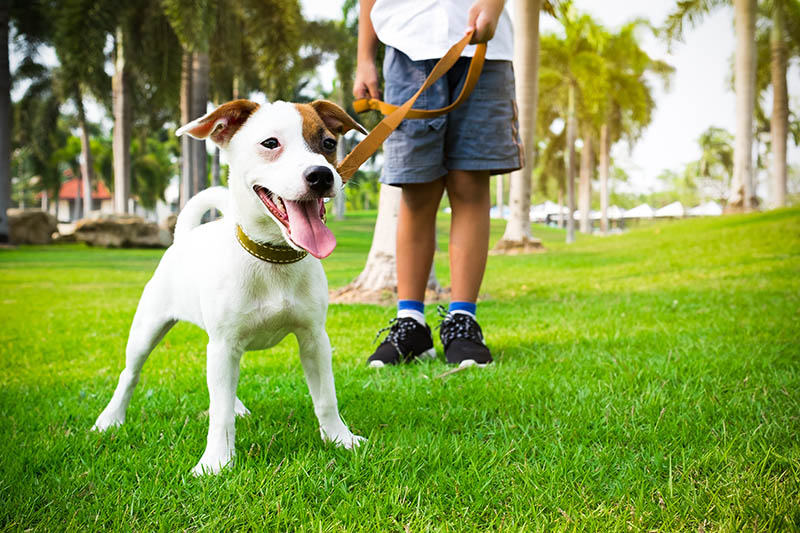
In addition, certain breeds have a substantial genetic basis for these traits, such as Dobermans, German Shepherds, and Terriers (especially the Jack Russell Terrier, Staffordshire Bull Terrier, and Cairn Terrier).

How Can You Tell If a Dog Has ADHD?
Dog owners often treat their beloved pets as family members, believing there to be many similarities between the animals’ behavior and that of small children.
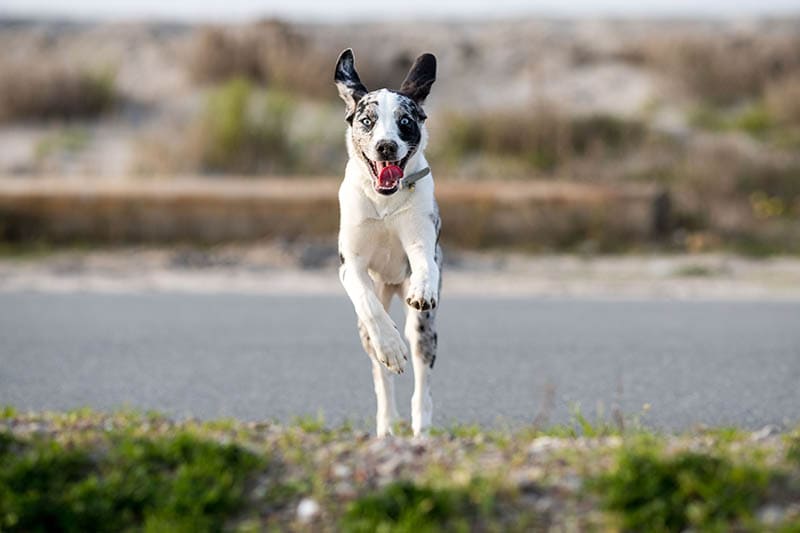
For example, some people with ADHD can be moody or suddenly become aggressive. Children with ADHD might be antisocial and have trouble concentrating at school. Dogs suffering from ADHD have short attention spans and are hyperactive. They may even appear to be timid or clingy. They can also show impulsivity and poor social behavior.
With a short attention span, dogs with ADHD are more difficult to train. They can also experience fear and sensitivity to noises and be demanding and needy.
Here are the signs of ADHD in dogs:
To help your dog, you’ll need to understand their behavior and where it comes from, regardless of how busy you are, if you are mostly away from your home, or if you have several pets.
All that said, ADHD is rarely seen in dogs. Most canines are just hyperactive. To be diagnosed with ADHD, a dog must also present an attention deficit.

How Do Vets Diagnose ADHD in Dogs?
For a dog to be diagnosed with ADHD, you and a veterinarian must answer a series of questions, such as:
- What breed is your dog? Are they a breed with naturally high energy levels? It is normal for breeds with a naturally high level of energy to be more hyperactive (e.g., Airedale Terriers, Australian Shepherds, Chihuahuas, Boxers, Beagles, etc.).
- How much exercise does your dog get daily? A lack of physical exercise can lead to unwanted behaviors and hyperactivity.
- Are you giving your dog enough enrichment activities that stimulate them mentally? As in the case of lack of physical exercise, boredom can lead to unwanted behaviors.
- Have you spent enough time training your dog? Incorrect or insufficient training can lead to ADHD-like signs.
- Does your dog respond appropriately to the stimulation of the given situation? Do they generally have a proportionate response in various circumstances?
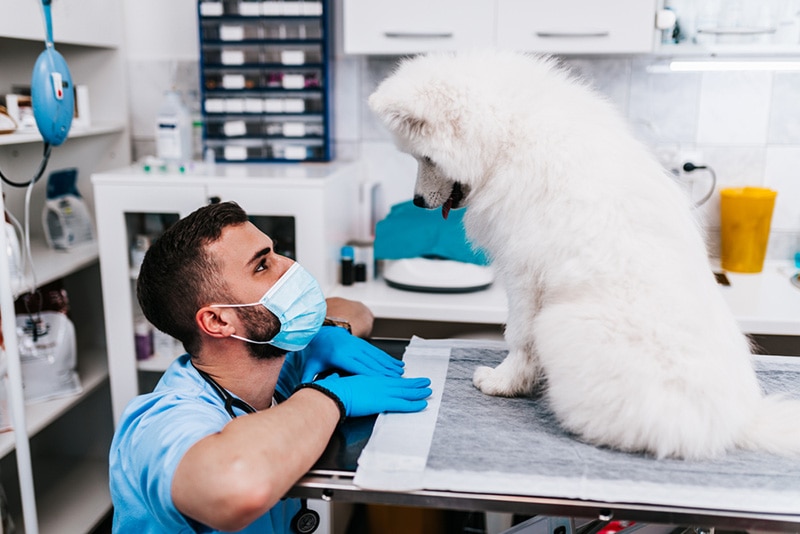
A dog might be diagnosed with ADHD when their behaviors persist even if they are stimulated and exercised appropriately. If your vet suspects ADHD, they will administer a stimulant medication and monitor your dog's heart and respiratory rate and reaction to restraint.
If they do not have ADHD, 30–120 minutes after taking the medicine, they will have an increase in activity, enthusiasm, heart rate, and breathing. They will also have a low tolerance for restraint. In the case of ADHD, however, they will show a marked decrease in energy level, excitement, and implicitly in cardiac and respiratory rhythm. They will also have a greater acceptance of restraint.
How Is ADHD in Dogs Treated?
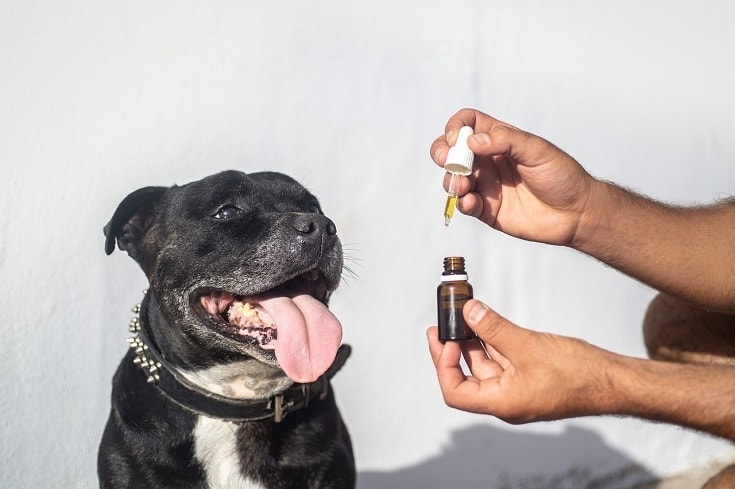
It is quite difficult to diagnose ADHD in dogs because many conditions have ADHD-like signs. However, if your dog has been diagnosed with ADHD, treatment is similar to that in humans. Your dog will be given stimulant medication, which will help them stay focused and calm.
It might sound contradictory for a stimulant drug to help an already hyperactive dog, but it increases the activity in the brain, especially in the areas that deal with the control of attention and behavior. As a result, the drug will help your dog control their behavior, be attentive, and ignore distractions.
ADHD cannot be treated but it can be controlled with medication.
How to Care For a Dog With ADHD
If your dog has been diagnosed with ADHD, follow the advice and medication prescribed by the veterinarian.
Here's what else you can do to improve your dog's condition:
Frequently Asked Questions (FAQs)
What Does a Dog With ADHD Do?
Dogs with ADHD will be hyperactive and have a short attention span. Some individuals may seem clingy, needy, or shy. They may also be fearful and sensitive to noises, have poor social behavior, and be impulsive. Due to their short attention span, these dogs are difficult to train. However, many health conditions can lead to ADHD-like signs. That is why it is recommended to take your dog to the veterinarian for a correct diagnosis.

Can Dogs Be Autistic?
Studies have concluded that dogs can have autism. However, the disease is rare, and most veterinarians prefer to refer to it as canine dysfunctional behavior. Autism in dogs is congenital (inherited from the parents), and the causes of its occurrence are unknown. Dogs with autism can present repetitive behaviors (licking, grooming, chasing the tail, etc.) and a lack of interest in social interactions with people and other pets.
Conclusion
Research suggests that dogs can indeed have ADHD. However, it is quite rare. Dogs with ADHD can present hyperactivity, short attention span, salivation, and increased heart and respiratory rate. They can also be fearful, shy, clingy, or needy and have poor social behavior. For a correct diagnosis, you must take your dog to the veterinarian because many conditions can have ADHD-like signs. ADHD in dogs cannot be cured, but it can be controlled with appropriate medication.
Featured Image Credit: PhoTonie, Shutterstock
Get Hepper In Your Inbox


Pet care tips from our vets and experts, straight to your inbox.
You may opt-out at any time. View our Privacy Policy for more information.
Iulia Mihai is a veterinarian with more than 13 years of experience in pet pathology, laboratory, and cancer. She studied at the University of Agronomical Sciences and Veterinary Medicine of Bucharest, Romania Iulia earned a master’s degree in equine and pet pathology and studied epithelial cancer for her Ph.D. Dr. Mihai's passions for internal medicine and parasitology inspired her to volunteer at the faculty’s clinic in her third year of college. She has worked in a couple of veterinary clinics over the years as an internal medicine specialist, and loves to write and educate pet parents about pet nutrition, behavior, and diseases.
Iulia is a passionate veterinarian with a strong affinity for veterinary parasitology, internal medicine, and laboratory. She is excited to share her experience and knowledge with pet owners around the world through her writing and hopes to educate people on pet nutrition, diseases, and behavior.
Education
Iulia graduated from the University of Agronomical Sciences and Veterinary Medicine, Bucharest, Romania, in 2012 and has a Master’s degree in Small Animals and Equines Pathology and is certified in HAACP food safety system implementation. Iulia started her Ph.D. in epithelial cancer in dogs and cats in 2013. Her research is published in national and international veterinary journals.
Experience
Dr. Iulia has been a veterinarian for more than 14 years. She is experienced in animal pathology and laboratory and has experience with exotic animals, such as pet rats and ferrets. She also has skills in the field of clinical pathology, laboratory, microscopy, cancer, and imaging.
Join the conversation
Ask a question, share your story, or send private feedback.