Hepper blog

Search our database of over 9,984 posts with up-to-date information from our experts and veterinarians.

Hepper is reader-supported. When you buy via links on our site, we may earn an affiliate commission at no cost to you. Learn more.

Can Humans Get Worms from Dogs? Vet-Reviewed Facts & FAQ

By Hanh Duong · Reviewed & fact-checked by Dr. Lorna WhittemoreVet Approved
Dr. Lorna Whittemore
Reviewed & Fact-Checked byDr. Lorna WhittemoreVeterinarian
Lorna is a Scottish vet who has lived, studied, and worked on three continents and has a love of travel. With 20 years of experience in small animal medicine andsurgery, both in the charity and private sector. Gaining a further qualification in feline medicine has given her a continued sense of amazement at the fabulous animals. Currently living in Cape Town, South Africa, with her family and expanding number of pets allows her to spend time in and around nature where she is at her happiest. With a love for learning, Lorna is enjoying researching, editing, and fact-checking for Hepper veterinary editorial team and truly feels that she has the best job in the world!View authorThe information is current and up-to-date in accordance with the latest veterinarian research. Read about our vets
Share
Ask us a question in the comments
young woman sitting on the floor with doberman pinscher dog

You might not consider the possibility of receiving some unwanted “visitors” when you cuddle and kiss your animal companion, but this is an unfortunate reality. Have you ever questioned whether humans could get worms from dogs? Well, unfortunately, you can.

The types of worms that can spread from pets to people,1 the illnesses they may cause, and the best ways to avoid this potential health risk are all covered in the article below.

What Worms Can Humans Get from Dogs?

Roundworms

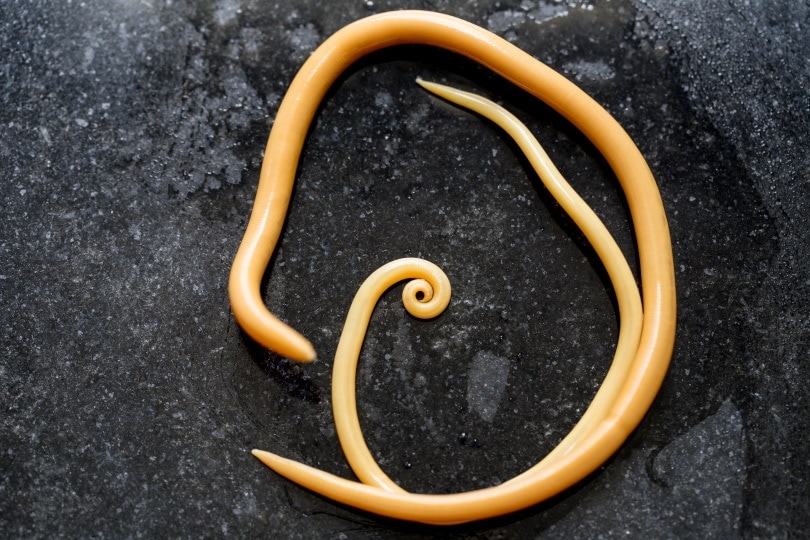
If a dog has recently been out rolling around in the dirt and gathered contaminated feces or soil on their fur, it is theoretically possible to get roundworms from petting the dog.

Ingestion of roundworms can occasionally cause a condition known as "visceral larval migrans." This occurs when the larvae of roundworms migrate through the intestinal wall into other internal organs, such as the eyes, heart, lungs, and nervous system. The condition is typically treatable and some people may experience mild headaches or fatigue, although several cases of retinal detachment and acute blindness in humans have been linked to roundworm larvae.
roundworms
Image by: Rattiya Thongdumhyu, Shutterstock

Hookworms

The skin condition known as "cutaneous larval migrans" can develop as a result of exposure to soil that has hookworm larvae. The eggs from the hookworm get into the environment through your dog's feces. Because the live larvae are migrating through the tissue, these infections can be extremely itchy. They appear as red tracks or lesions just beneath the skin's surface.

Although it's uncommon, hookworm larvae can develop into adults in a human host and survive in the intestine. This can result in sporadic and ongoing episodes of cramping and abdominal pain.

Tapeworms

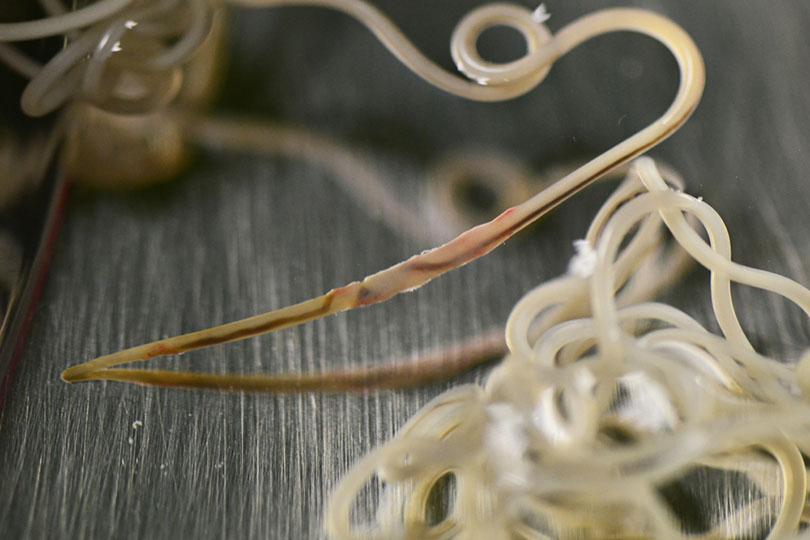
Similar to the way tapeworms are transmitted among dogs, humans can contract them by accidentally ingesting infected fleas. The tapeworm larva can attach to the intestine wall once the flea has been swallowed and absorbed in the digestive tract.
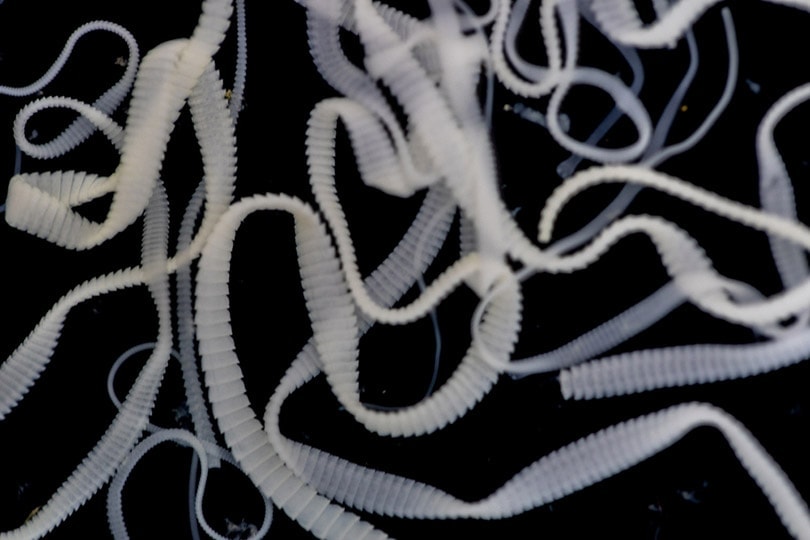
Tapeworms
Image by: Rattiya Thongdumhyu, Shutterstock

How Do Puppies Get Worms?

Roundworms and hookworms can affect dogs of any age, but young puppies are most vulnerable—puppies as young as 2–3 weeks old can have a lot of worms. The reason is that before the puppies are born, mothers frequently transmit these worms to their offspring. Sometimes they are transmitted through a mother's milk after the puppies are born. Infected dogs can contaminate an area by passing larvae or worm eggs in their feces, which may then be ingested accidentally by other dogs.

How to Tell if Your Dog Has Worms

It can be difficult to ascertain whether your dog has worms, but watch out for any or all of the following changes in your dog's appearance and general health. Some changes include:
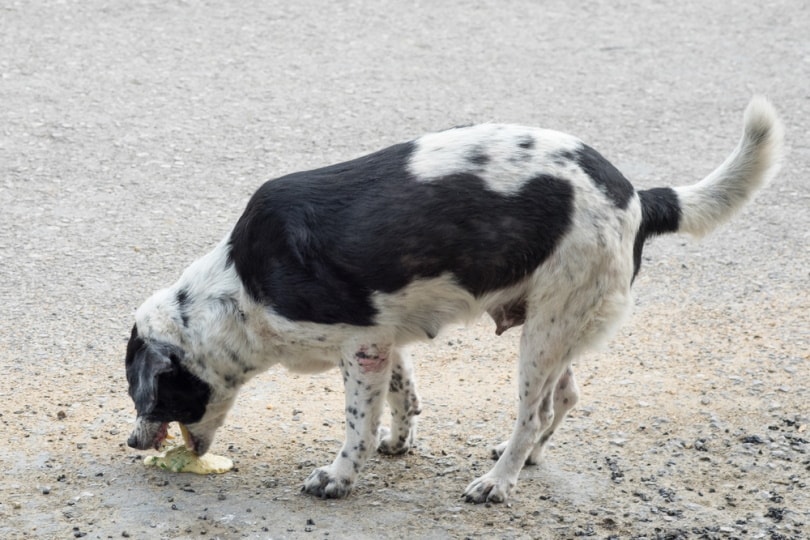
  • Vomiting, which can include adult worms.
  • Diarrhea that has blood or mucus in it sometimes.
  • A bloated stomach.
  • Weight loss, especially if your pup is an avid eater.
  • A coat that is dry and dull.
  • Excessive bottom scooting and chewing.
  • Visible segments that resemble rice grains are affixed to the fur on their tail, around their bottom, or in their feces.
dog vomiting
Image by: Mumemories, Shutterstock

What to Do If You Suspect Your Dog Has Worms

If you think your dog may have an intestinal parasite of any kind, here's what to do.

Call Your Veterinary Clinic

Make a call to your trusted veterinary clinic as soon as possible if you suspect your dog may have worms. They will be able to advise you on the best course of action.

Take a Sample of Your Dog's Stool

If you discover dry, rice-like pieces in your dog's fur or find worms in their feces, your veterinarian may ask you to provide a fresh sample of your dog's stool. Most often, collecting a teaspoon-size sample of their feces is enough. However, if you can't get it at home, the veterinary team will do so when you show up for your dog's visit. They will also examine the sample for distinct, tiny eggs if they suspect the presence of hookworms, roundworms, or whipworms.
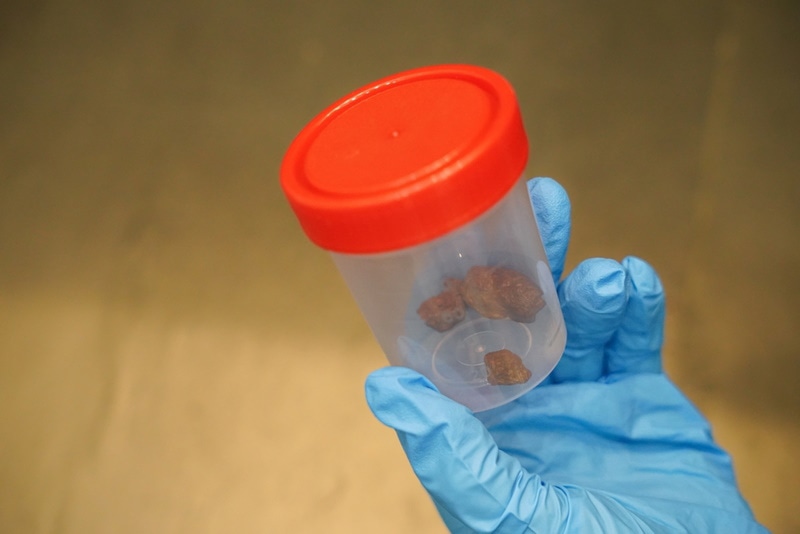
dog stool sample
Image by: Sheeyla, Shutterstock

How Can You Protect Yourself, Your Pets, and Your Family Against Worm Infections?

  • Early on, take puppies to the vet to get them dewormed. Deworming these cute canines may require multiple treatments. So, you should follow your veterinarian's guide for examinations and treatments. A common regimen is worming once monthly until 6 months of age and then 3 monthly thereafter.
  • Start or continue a program for your pets that prevents, treats, and manages worms. Your veterinarian can recommend treatments to get rid of and aid in preventing diseases.
  • After engaging in outdoor activities, interacting with dogs or other animals, and before handling or eating food, wash your hands with soap and water.
  • Pet waste should not be left in gardens, lawns, or play areas near your house.
  • Don't touch any dirt, sand, plants, or anything else that may be contaminated by an infected animal.
Female veterinarian examining Havanese puppy in clinic
Image by: BearFotos, Shutterstock

Conclusion

Worms can exist in animals that seem to be in good health or can lead to pain, disease, and even death in severe cases. Regardless of whether you believe your furry friend has worms or not, regular deworming is crucial since some of the diseases they carry can also be passed on to humans. We deworm our pets to save them from suffering, but it also lessens the risk to us and our families. It is also encouraged that we regularly deworm ourselves and families.

Sources

Featured Image Credit: gemphoto, Shutterstock

Get Hepper In Your Inbox

Pet care tips from our vets and experts, straight to your inbox.

List

Select all that apply.

You may opt-out at any time. View our Privacy Policy for more information.

Hanh Duong
Authored by

Hanh Duong

Join the conversation

Ask a question, share your story, or send private feedback.
Rate this post
Required to post. Only our editors see your rating.
Who should see this?

A human reviews every comment before it appears. Your email is never published.

Picked to go with this article

How Do Dogs Get Worms? 10 Unusual Ways (Vet Reviewed)

How Do Dogs Get Worms? 10 Unusual Ways (Vet Reviewed)

Worms can be disgusting to deal with, but most dog owners have had to deal with worms in one form or another at some point. There are a lot of types of worms t…

Brooke Billingsley
By Brooke Billingsley ·
What Is the Cost of Deworming a Dog? (2026 Update)

What Is the Cost of Deworming a Dog? (2026 Update)

Deworming a dog is an essential part of keeping them healthy. If a dog is infected with worms, it can cause serious health problems and even death. Fortunately…

Nicole Cosgrove
By Nicole Cosgrove ·
Hookworms in Dogs: Our Vet Explains Signs, Causes, & Treatment

Hookworms in Dogs: Our Vet Explains Signs, Causes, & Treatment

Hookworms are a type of intestinal parasite commonly seen in dogs. Hookworms are notorious for causing not only diarrhea, but frequently bloody diarrhea, and c…

Dr. Kim Podlecki
By Dr. Kim Podlecki ·
Can You Catch a Stomach Bug from a Dog? 14 Diseases You Can Catch

Can You Catch a Stomach Bug from a Dog? 14 Diseases You Can Catch

Your best friend follows you around the house, sleeps at your feet, and waits at the door for you to come home. A loyal dog rarely leaves your side, but should…

Nicole Cosgrove
By Nicole Cosgrove ·

Keep reading

More stories you might like

Can Dogs Get Tapeworms from Cats? Vet-Approved Pet Health Facts

A qualified veterinarian has reviewed this article for factual accuracy and completeness however it should not be relied upon as a substitute for veterinary ca…

Elizabeth Gray
By Elizabeth Gray ·
Can Dogs Get Tapeworms from Cats? Vet-Approved Pet Health Facts

My Dog Has Tapeworms, How Should I Clean My House? Vet-Approved Guide

Cleaning up after tapeworms requires several steps, including treating your pup for tapeworms, clearing up the flea infestation, and doing a deep cleaning of y…

Krysha Thayer
By Krysha Thayer ·
My Dog Has Tapeworms, How Should I Clean My House? Vet-Approved Guide

Can Dogs Get Sick from Humans? Our Vet Explains

Whenever your dog gets sick, it may be your first instinct to assume that you or your kids may have passed a “bug” to your dog. In human medicine, the influenz…

Dr. Kim Podlecki
By Dr. Kim Podlecki ·
Can Dogs Get Sick from Humans? Our Vet Explains

Can Fleas Kill a Dog? Vet-Approved Facts & FAQs

If you’ve ever had to deal with fleas, you’ll know how frustrating they can be, for both you and your dog. But fleas can be more than just an annoyance, they c…

Kerry-Ann Kerr
By Kerry-Ann Kerr ·
Can Fleas Kill a Dog? Vet-Approved Facts & FAQs

My Dog Ate Maggots: Vet Approved Facts, Risks & What to Do

Maggots on their own are not harmful for dogs to eat. However, if your dog eats rotten food and maggots, they might experience gastrointestinal issues. Either…

Kathryn Copeland
By Kathryn Copeland ·
My Dog Ate Maggots: Vet Approved Facts, Risks & What to Do

How Many Fleas on a Dog Is Considered an Infestation? Signs & FAQs

Fleas are always an unwelcome addition to any household. However, you might wonder how many fleas you'd have to see on your dog to consider it a true infestati…

Beth Crane
By Beth Crane ·
How Many Fleas on a Dog Is Considered an Infestation? Signs & FAQs

Heartworms in Dogs: Signs, Causes & Treatments (Vet Answer)

Dirofilariasis in dogs—or heartworm disease, as this condition is also known—can endanger your pet’s life if left untreated. This condition is transmitted by m…

Dr. Iulia Mihai
By Dr. Iulia Mihai ·
Heartworms in Dogs: Signs, Causes & Treatments (Vet Answer)

What Could Happen If My Dog Licks Human Blood? Vet-Reviewed Precautions & Prevention

If you've ever had an injury and found yourself bleeding, the chances are your dog has come over to investigate. Of course, not all dogs will, but some may att…

Nicole Cosgrove
By Nicole Cosgrove ·
What Could Happen If My Dog Licks Human Blood? Vet-Reviewed Precautions & Prevention