Hepper is reader-supported. When you buy via links on our site, we may earn an affiliate commission at no cost to you. Learn more.
Can Dogs Get Tapeworms from Cats? Vet-Approved Pet Health Facts



In this article
A qualified veterinarian has reviewed this article for factual accuracy and completeness however it should not be relied upon as a substitute for veterinary care. Pet owners should discuss any health concerns with their veterinarian, for advice tailored to their animal.
If your dog and cat spend their time snuggling and sharing a bed, you know they aren’t the traditional enemies they’re thought to be. However, do you need to worry about your cat sharing other things with your dog, such as tapeworms? While dogs can’t technically get tapeworms from cats, your feline friend could play a role if your pup develops the parasites.
In this article, you’ll learn how dogs are infected with tapeworms and how your cat might be involved. We’ll also cover the signs of tapeworm infection, as well as how to prevent and treat them.

What Are Tapeworms?
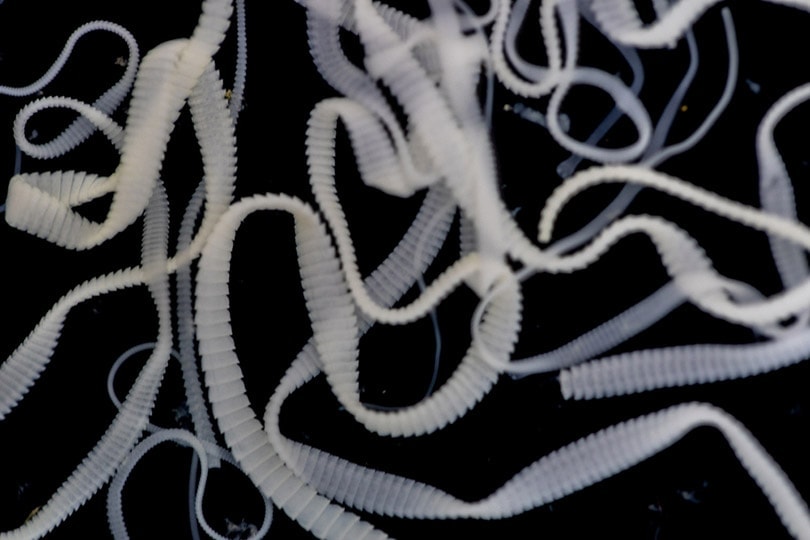
Tapeworms are the common name for several species of flat, segmented intestinal parasites that can infect dogs and cats. Although they occur frequently, tapeworms generally don’t cause as many issues for dogs as other parasites, such as hookworms.
How Are Dogs Infected with Tapeworms?
Unlike other intestinal worms, tapeworms need a little help to infect dogs (and cats). Dogs become infested with other worms when they swallow the eggs, typically by eating infected dirt or poop. With tapeworms, pets aren’t impacted by eating the eggs. Instead, tapeworms require an intermediate host to complete their lifecycle; these are insects (usually fleas) for Dipylidium caninum, or vertebrate animals for other species of tapeworm. The intermediate hosts carry the tapeworm larvae in the form of a cyst.
When a dog or cat swallows an infected flea or eats infected raw meat from an intermediate host, they can develop a tapeworm infection. They digest the cysts, leaving the larvae to grow in the pet’s intestines. Mature tapeworms shed segments of their body containing egg packets into the soil, where the intermediate hosts find them and start the cycle all over.
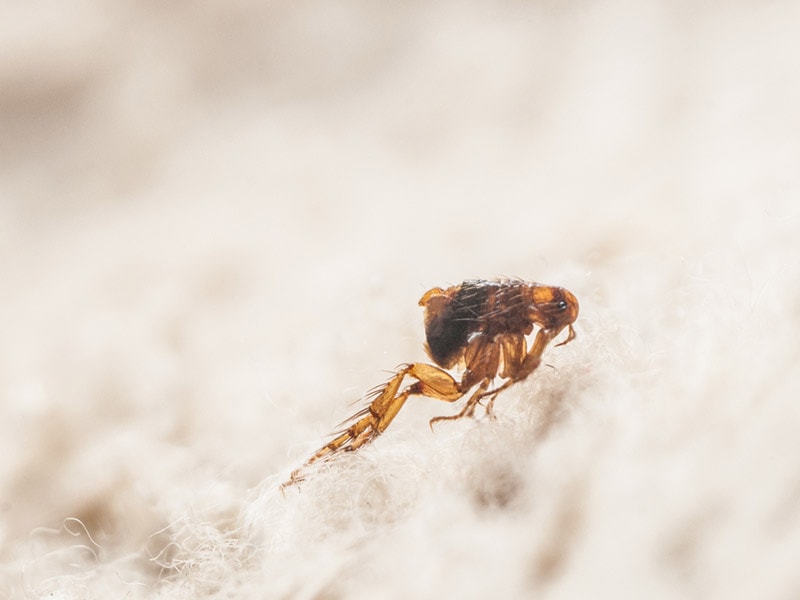
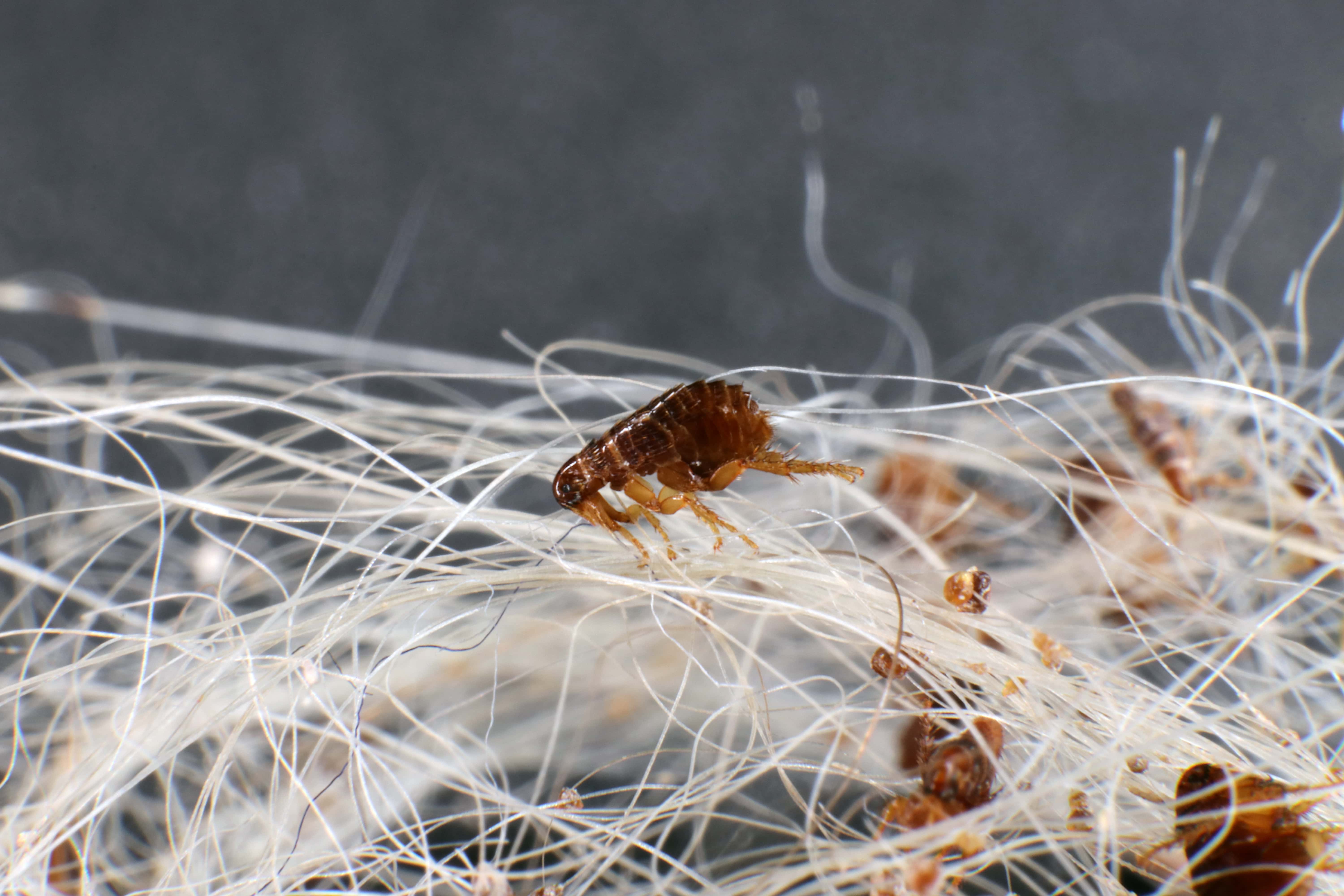
If your cat has tapeworms, they can’t pass the parasites directly to your dog. However, if your cat has fleas, they could indirectly give your dog tapeworms if they swallow an infected flea.
What Are the Signs of Tapeworm Infection in Dogs?
Unlike other intestinal worms, tapeworms generally don’t cause diarrhea or weight loss unless the dog is heavily infested. The main sign of tapeworm infection is itching around the anus. You might see your dog scooting their bottom on the ground or chewing at the area.
If you look closely, you might see tapeworm segments in your dog’s poop or around their rear. The segments look like grains of rice, except they’re frequently wiggling. Some dogs will vomit up adult tapeworms.

How to Treat and Prevent Tapeworms in Dogs
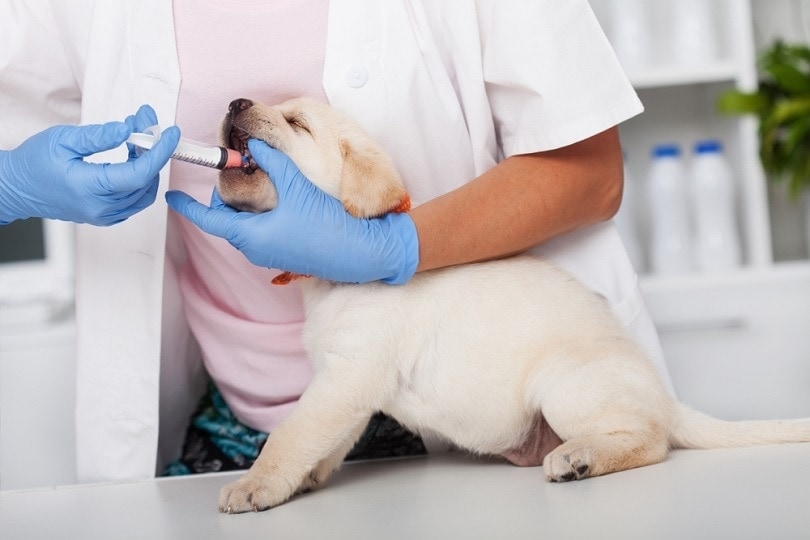
If your dog has tapeworms, you’ll need to see your veterinarian for treatment. Try to bring a stool sample for testing to confirm the diagnosis. Your dog will typically need a deworming medication, given on a specific schedule, to treat the tapeworms.
Because tapeworms are carried by fleas, preventing the pests from infesting your dog or home keeps the worms away. You can keep all pets at home (indoor or outdoor) on regular flea-prevention medication, and your vet can help you choose the best product for your pets. Reducing the intake of raw meat, or more regular deworming will also aid in preventing this parasite.
If your dog has tapeworms, your vet may suggest you treat your home and pets for fleas. Always pick up after your dog and remove poop in your yard regularly.

Conclusion
Your cat won’t give tapeworms directly to your dog, but the fleas or meat carrying the parasites can infect both pets. Humans generally aren’t at risk of tapeworm infection unless they swallow an intermediate host. Flea prevention, good hygiene and food safety precautions will keep you and your pets safe from tapeworms.
Get Hepper In Your Inbox


Pet care tips from our vets and experts, straight to your inbox.
You may opt-out at any time. View our Privacy Policy for more information.
A lifelong lover of all creatures great and small, Elizabeth got her first cat at 5 years old and at 14, she started working for her local veterinarian. After spending more than 20 years working as a veterinary nurse, Elizabeth decided to step away to become a stay-at-home parent to her daughter. Now, she is excited to share her knowledge with our pet parents. Elizabeth lives in Iowa with her family, including her two fur kids, Linnard, a husky mix and Algernon, the worldʻs most patient cat. When not writing, she enjoys reading, watching soccer, and spending time outdoors with her family.
Join the conversation
Ask a question, share your story, or send private feedback.