Hepper is reader-supported. When you buy via links on our site, we may earn an affiliate commission at no cost to you. Learn more.
Can I Leave My Dog in the Backyard While at Work? Vet-Verified Facts & FAQ


In this article
Every puppy parent has to face the inevitable decision at some point. Weeks have passed since you brought your new dog home, they’re getting comfy in the new space, and reality is slowly setting in. With the return of the work schedule, you’ll be gone for hours on end, and the question becomes, Does my dog stay inside, or do I put them outside?
While putting your dog outdoors when you’re gone might be the most convenient choice, it isn’t always the most comfortable option for them. Let’s explore the ethics and nuances of leaving your dog in the backyard while at work so you can make the wisest decision for both of you.

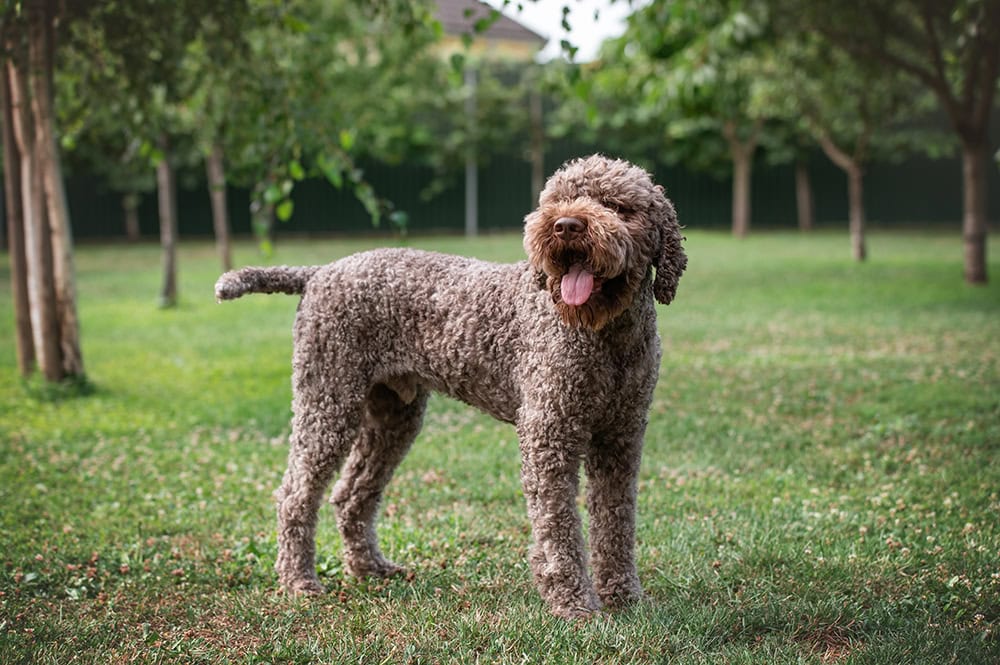
Can I Leave My Dog in the Backyard While at Work?
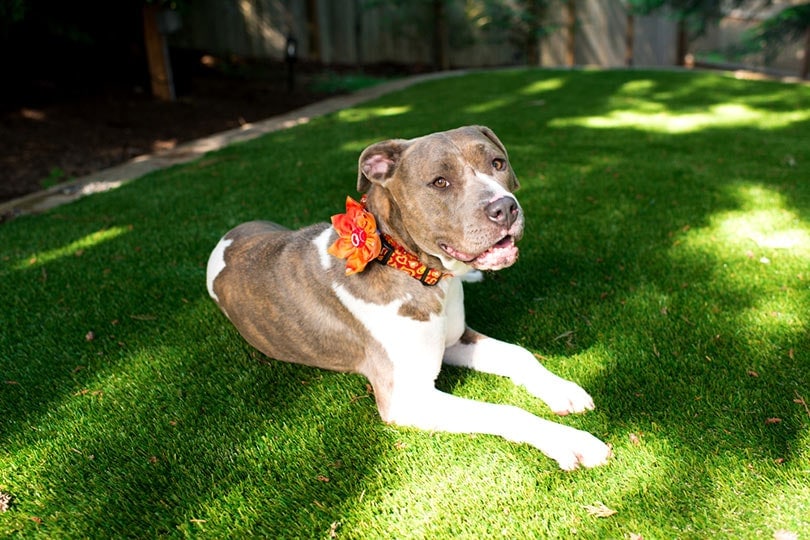
Keeping your dog outside while at work may seem sensible for several reasons. There’s no worry about accidents in the house, they have room to run, and any potential destruction will stay limited to what you leave in the yard. Give them toys, shelter, food, and water, and they should be all set, right?
In fairness, your dog may be perfectly safe and sound in certain situations with an adequate outdoor setup. But keeping your dog outside is rarely a better option for your dog than giving them a comfortable indoor environment.
The concerns you feel you’re addressing by letting your dog stay outside are easy to overcome with training. You can keep your dog safe and manage a normal work schedule by teaching them how to act inside and giving them a space to succeed.
Why Being Outside Can Be Dangerous for Unattended Dogs
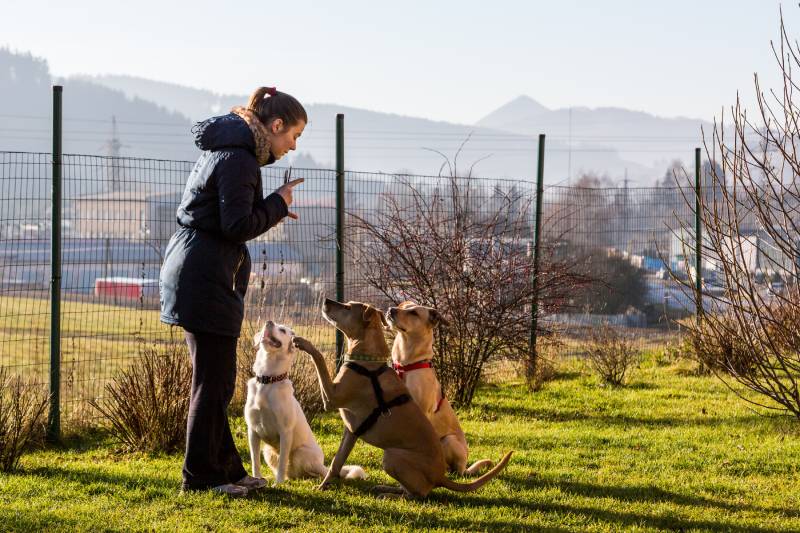
Allowing your dog outside without supervision can be a scary prospect. When you’re away at work and unaware of what is happening around your dog, you can’t properly respond to the situation. And if you don’t have complete control over the environment, plenty of emergencies can occur outdoors.
Choking and Poison Hazards
Materials that grow around the lawn, fall from trees, or float into your yard could become a new chew toy for an unsupervised outdoor dog. They can consume acorns, pinecones, grass clumps, mulch, rocks, and other potential hazards. Curiosity may lead them to toxic mushrooms and garden flowers or painful stinging insects, creating situations often requiring immediate veterinary care.
Hot and Cold Temperatures
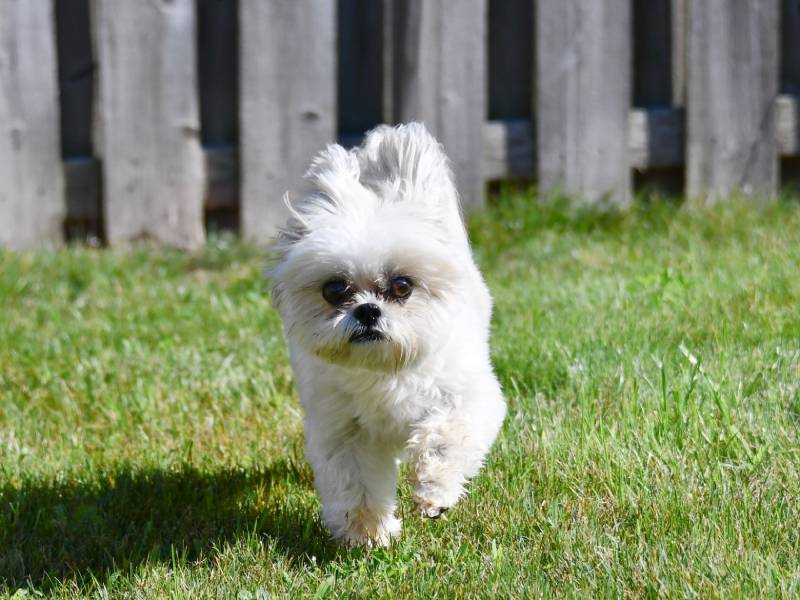
Temperature swings are an obvious issue outside. As temperatures exceed 70°–75°F, your dog will become more susceptible to heat stress. On extra hot days, the threat of heat stroke is a real risk and can endanger your dog’s life. Effects include nervous system and gastrointestinal dysfunction, bleeding, collapse, and shock. Likewise, cold weather that drops a dog’s body temperature below 99°F can cause signs of hypothermia such as lethargy, irregular breathing, and other signs leading to collapse, organ failure, and potentially death.
Obese dogs and those of certain breeds are more susceptible to heat stress than others. Brachycephalic dogs like Pugs are particularly prone to heat exhaustion, putting them at a higher risk when left outside for prolonged periods.
Unwanted Interactions
The home’s four walls do a lot to protect your dog from all kinds of undesirable stimuli. In the yard, intruders like raccoons and snakes could make for an unfortunate run-in. You’re also at risk of relentless fence fighting, another potentially dangerous situation that won’t score you any points with your neighbors.
Escape or Theft
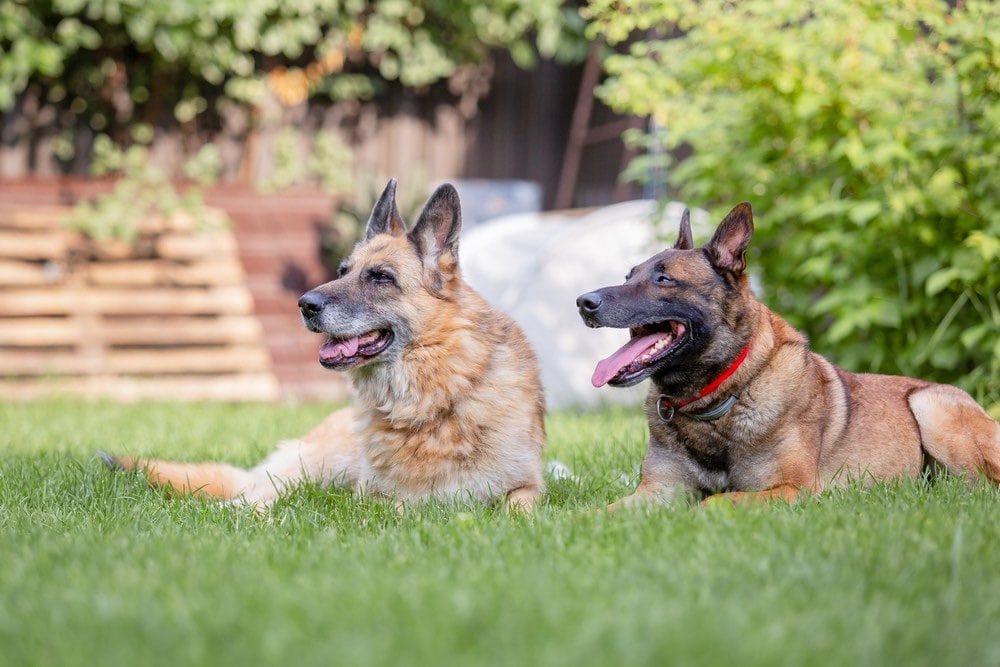
The possibility of your dog going missing is often scarier than them getting hurt. A bored dog can get agitated and destructive. When that manifests in digging behavior, there’s the chance they could escape.
If your dog doesn’t escape, there’s still the chance someone could steal them. You rarely anticipate the possibility of someone swiping your dog, but it is surprisingly common. The primary targets are purebreds that command high-dollar prices in quick, one-off sales. Thefts like these have risen dramatically in recent years, which is a critical consideration as you decide whether to leave your dog in the backyard when you go to work for several hours.
Can I Leave My Dog in an Outdoor Kennel?
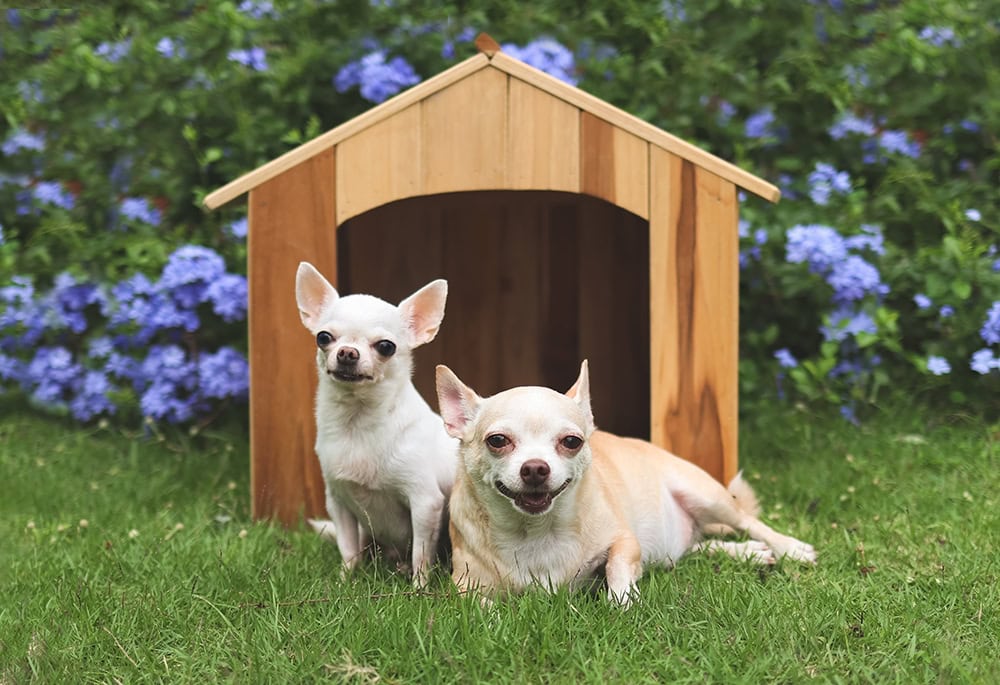
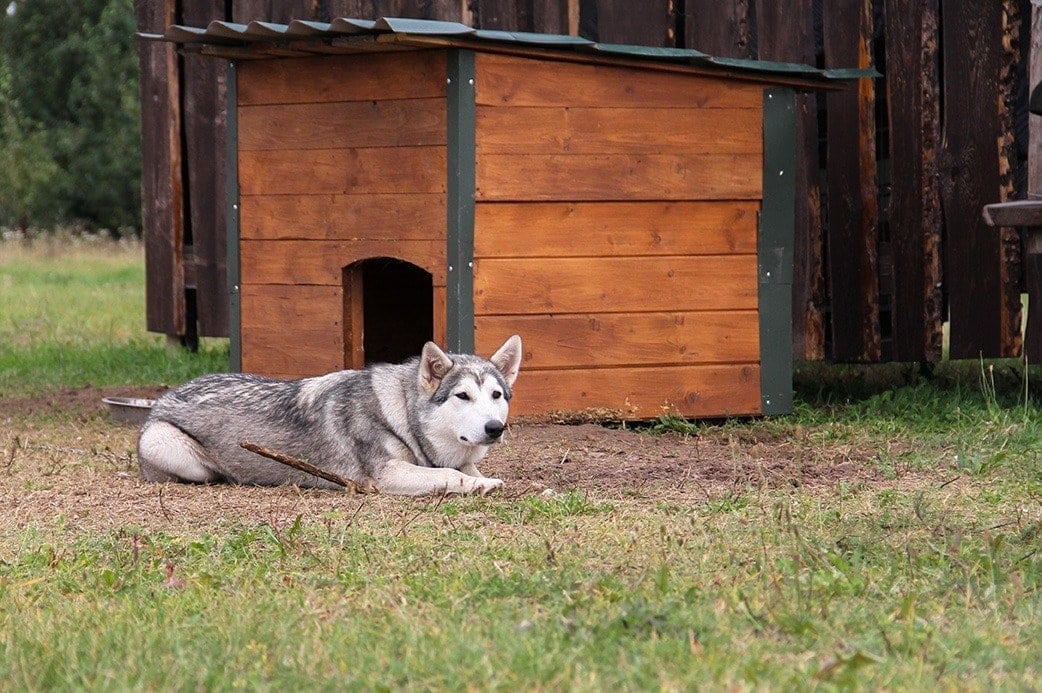
Making your dog comfortable outside is crucial if there’s no way you can leave your dog in the house when you’re gone. Shelter is fundamental to escape high heat, biting winds, and cold air. A kennel where they can stretch out is preferable to letting your dog roam the backyard, especially if you’re worried about them escaping, fence-fighting, or consuming foreign objects.
Although they may be fine outside, you must ensure your dog enjoys lots of socialization and indoor time when you are home. Being stuck outdoors can make dogs feel disconnected from their pack. Giving them attention and exercise will help your pet maintain their good behavior despite spending more time outside.
No matter how many accommodations you provide, your ability to leave your dog outside will also depend on your pet and the environment. As we have already mentioned, leaving a short-nosed dog out is not the same as leaving a dog with a less extreme anatomy; and while keeping a dog behind a low chain link enclosure is inadvisable for countless reasons, leaving your dog behind a 7-foot-tall privacy fence for a short period may be possible. Every situation is distinct, so it’s up to you to consider and account for all the potential outcomes.

Is It Legal to Leave a Dog Outside When You’re Gone?
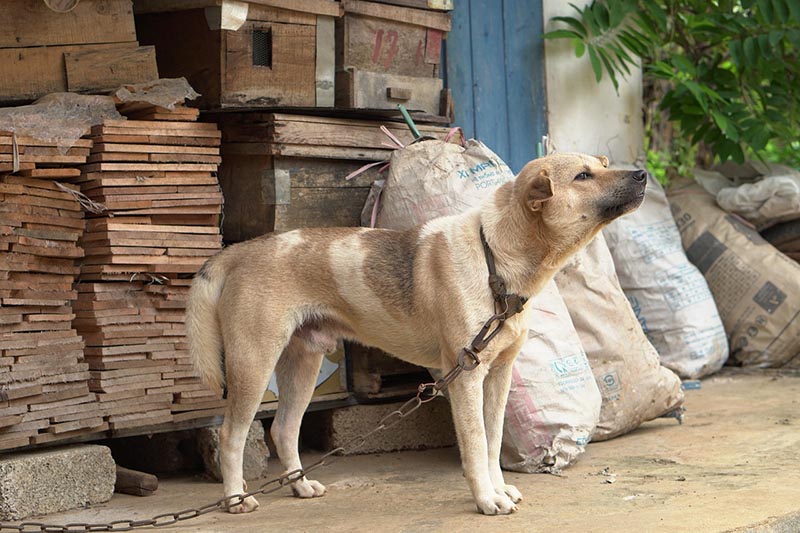
While it’s generally legal to leave your dog outside in a contained area, such as a high-fenced backyard, local laws often define reasonable limits. For example, leaving your dog tethered in an open yard is extremely dangerous and illegal in many places. As temperatures reach specific upper and lower limits, municipalities require residents to bring dogs back inside.
Keeping Your Dog Inside While at Work
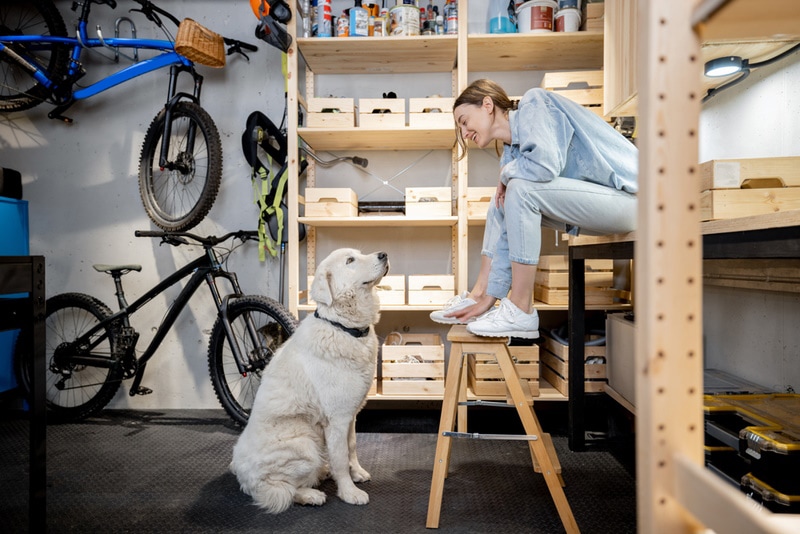
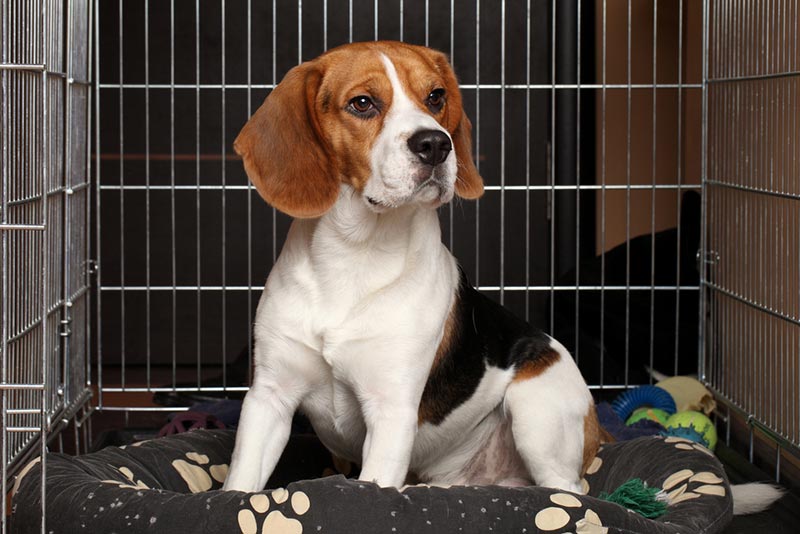
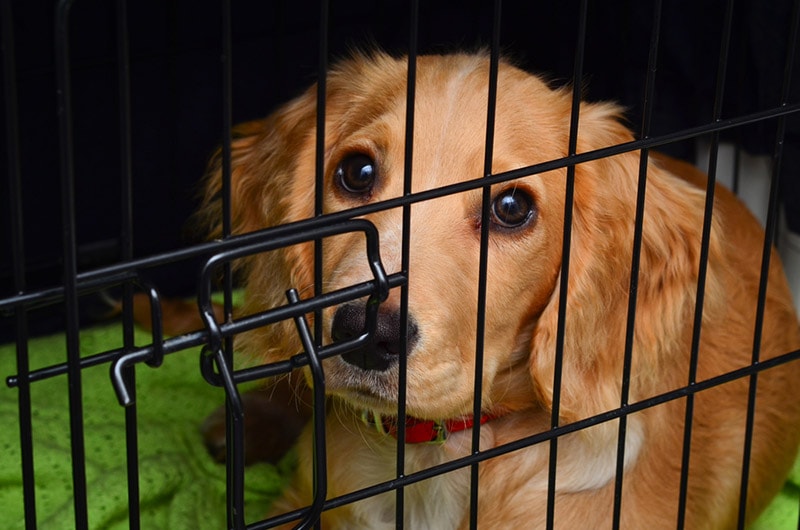
Crate training can be an option to make dogs comfortable while you’re at work, as long as it’s not for too many hours. Follow the crate training process to build positive associations with it, making it a haven your dog can be excited to use. Use the crate to build their tolerance to being away from you by leaving the room for several minutes, gradually increasing the time you’re out of sight. Eventually, your dog will be perfectly happy inside for several hours.
How to Make Your Dog Comfortable Inside
When you need to leave your dog to go to work, provide the tools they need to guarantee enjoyable, low-stress alone time.
Follow these tips to keep your dog happy and your house safe while you’re gone:
A dog door can also allow your pup to go in and out as needed. Automatic dog doors and security sensors are available to give you peace of mind against burglars while ensuring your dog can do their business in the appropriate spot. Keeping potty time outdoors is ideal. Although pads are an excellent tool while training, you don’t want to risk your dog thinking it’s okay to pee inside.
How Long Can Dogs Go Without Needing the Bathroom?
Until about 6 months old, dogs can only hold their pee for 2 to 3 hours, depending on their exact age. For instance, a 4-month-old puppy may be able to go roughly 2–3 hours before needing to go outside.
After roughly 6 months, your dog should be able to hold their pee for longer, up to 5–6 hours. Consider your dog’s age and tendencies before setting a schedule, ensuring you make extra trips home during the day when they’re a small puppy.
Conclusion
Although you can keep certain dogs in the backyard while at work, you should always keep your dog inside whenever possible. You can’t predict everything that can happen outside, and your dog has no help when disaster strikes when you're away at work. For the sake of your pet, neighbors, and yourself, make training a priority and follow our tips for setting up a safe and comfortable indoor space while you’re away.
Related Read:
Sources
Featured Image Credit: Anna Hoychuk, Shutterstock
Get Hepper In Your Inbox


Pet care tips from our vets and experts, straight to your inbox.
You may opt-out at any time. View our Privacy Policy for more information.
Nicole is a lover of animals of all sizes but is especially fascinated with the feline variety. She’s the proud mom of Baby, a Burmese, and works every day so he can relax in the sunshine or by the fire. She’s always had a cat in her home and has spent countless days with others, observing behaviors and softening up even the grouchiest of the lot. Nicole wants to share her kitty expertise with you so you and your cat can live happy, healthy, and care-free.
Join the conversation
Ask a question, share your story, or send private feedback.