Hepper is reader-supported. When you buy via links on our site, we may earn an affiliate commission at no cost to you. Learn more.
Can I Chain or Tether My Dog? 9 Vet Reviewed Reasons to Avoid the Practice



In this article
If it’s ever crossed your mind that chaining or tethering your dog for prolonged periods could be a good idea to restrain or protect them, we’re here to inform you that it’s not—no matter the circumstance. This practice isn’t limited to a chain but refers to the act of tying up any dog to a stationary object, regardless of whether it’s a rope, chain, or any other type of line.
Not only is this practice illegal in 22 states and the District of Colombia as of 2022,1 but it negatively affects dogs in a number of ways, altering their behavior and potentially causing injury to them. If you’ve never heard of this practice or never knew that it was harmful to dogs, keep reading because we’re going to discuss 13 reasons why you should avoid this practice and why it’s important to kindly inform other dog owners not to as well.

Why Do People Chain or Tether Their Dogs?
If you can’t quite understand why anyone would choose to tether their dog for prolonged periods, it’s important to remember that everyone has been raised differently or might be in a situation whereby they feel as though they have no other option.
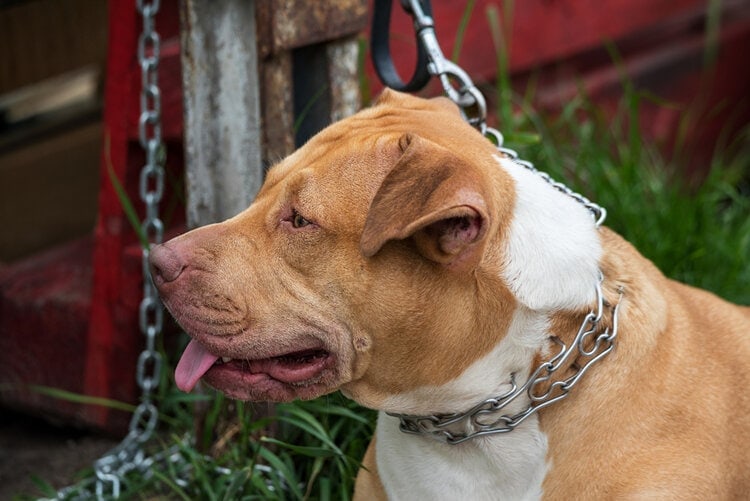
If a person has grown up with a dog that was always chained, they may not realize how detrimental the practice is, but by sharing information on the topic, you’re able to educate people and help them see the damage it causes, which is essential in putting a stop to the cycle. Over the past few years, there has already been a noticeable decline in the practice. Here are a few other reasons why people still chain or tether their dogs:
- The dog keeps escaping, and the owner has no other way of preventing them from running into the street or harassing the neighbors.
- The owner has chained the dog to protect them from something else (perhaps a vicious dog next door).
- The dog has chased or harmed other animals, and the owner is afraid it will happen again if they’re loose.
- The dog is chained while the yard fence or wall is being fixed or built.
- The yard doesn’t have a fence, and the owner doesn’t want to keep the dog inside for the safety of their children.
- The landlord won’t allow the dog to live inside the house.
- The owner’s dogs might be chained separately to prevent them from fighting and injury.
- The owner doesn’t know how to manage the dog’s high energy or aggression.
The 9 Reasons Why You Should Never Chain or Tether Your Dog
1. It Causes Neck Wounds
If a dog is continuously chained or tethered, they’re likely to develop neck wounds. Restrained dogs rarely accept their situation without resistance and are much more likely to yank and pull at their tether in an effort to escape. As a dog often moves in repetitive manners when chained, or even puts their energy into breaking free, their collar will rub into their neck and cause it to become raw. The continuous rubbing over the raw skin will break it open, and wounds will develop and worsen.
2. It Can Cause Strangulation
It’s hard to imagine the lengths a dog will go to for freedom, but it’s not awfully uncommon for dogs to twist, lunge, and jump off objects in an attempt to break their restraints. Unfortunately, many owners who have seen their dogs chew through their ropes or come close to success will try to restrain their dog with something stronger and heavier, like a chain.
There is little chance that a dog will be able to break free from a chain, and as they continue to lunge or climb and jump off objects around them, they put themselves at risk of entanglement, choking, and strangulation, which can lead to death.
3. It Causes Them to Bark Constantly
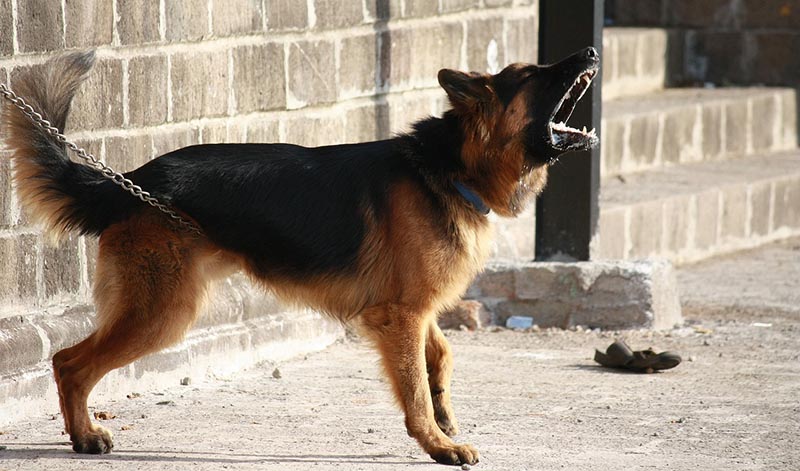
A free dog with little mental and physical stimulation will turn to digging, chewing, and barking for entertainment. Can you imagine how bored a chained dog must be, unable to run around freely, play with toys, and engage with pets and people? It’s no wonder chained, and tethered dogs are known to bark excessively.
Unfortunately, instead of understanding that this behavior is a cry for help, many restrained dogs are disciplined or treated worse due to their “annoying” barking and are blamed for behaving poorly.
4. They’re Vulnerable to Weather Extremities
Tethered dogs are often tied to a post that is strong enough to withstand their tugging and lunging. What often isn’t considered in these situations is whether the area provides the dog with adequate covering and shade. If there is no covering, the dog is exposed to the changing weather as they cannot go and find a place to hide.
Sadly, heat stroke and hypothermia are some of the biggest risks for tethered dogs.
5. They’re At Risk of Dehydration and Starvation
A restrained dog may still receive food and water daily, but it’s likely that the owner won’t be going outside throughout the day to see if it needs to be topped up. If the dog cannot get to the bowls because they accidentally moved them out of reach or knocked them over, they probably won’t be able to drink again for the rest of the day. No water, especially on a hot day, can quickly lead to dehydration.
Placing food and water outside for a tethered dog can also put a target on their back as it can draw other animals or stray dogs to them. They may eat their food and leave, but it’s more likely that the dog and animal will end up fighting over the exposed food.
6. They’re At Risk of Being Attacked
Dogs that are tied to a post have no way of running away from danger, which leaves them vulnerable. It may even put them in a position that forces them to fight back to defend themselves, which may escalate the situation and lead to a more devastating outcome.
Predators can come in many different sizes and forms. Your dog may encounter a wild animal or a vicious dog.

7. They Don’t Get the Exercise They Need
Dogs need between 30 minutes to 2 hours of exercise every day to remain healthy and content. Unfortunately, owners that leave their dogs chained often do so because they see their dog as a problem that they don’t have a solution for and are not likely to give up time from their day to give them the exercise they need. However, this isn’t always the case.
Regardless, dogs on chains don’t have the freedom to run and play around their yard to release their energy and are often tethered to a short rope, chain, or wire that restricts them to a small area.
8. It Isolates the Dog
If you’ve ever had a dog, you’ll know that nothing makes them happier than cuddling up to you, going on car rides or walks with you, playing a game with you, or having a “conversation” with you. Do you see what all these activities have in common? They involve you. Dogs are social animals that enjoy being around the people they trust and love, as well as other dogs and pets when they’ve been introduced properly.
The problem with chaining up a dog outside is that they miss out on daily social activities, which starves them of attention and isolates them. Chained or tethered dogs don’t get the interaction they need which leaves them depressed, anxious, and unhappy.
9. It’s Inhumane
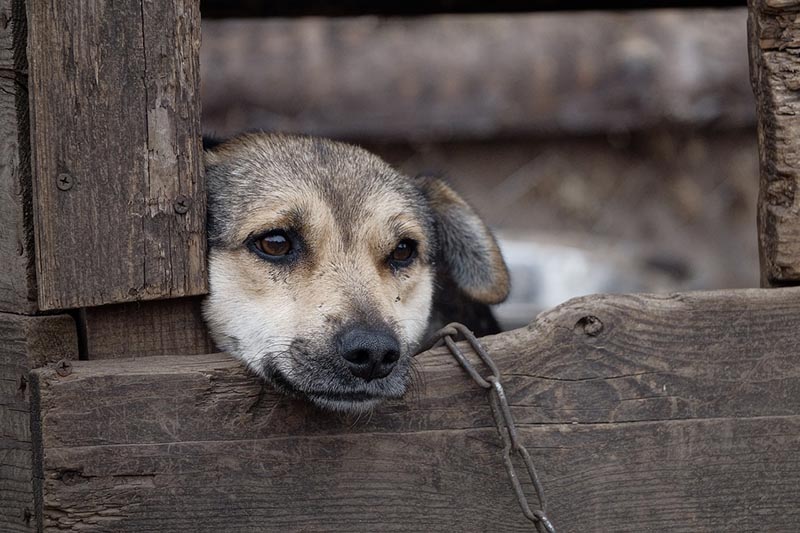
Dogs aren’t meant to be tied up; they’re meant to run freely and be a part of a pack. When a dog has to live in a way that goes against their natural instinct, it affects them psychologically. Confining a dog to a rope and pole to live a life of restraint and solitary is inhumane. Not only does it create a physically and psychologically abused animal, but it increases the risk of dog attacks on people and other animals.
Is It Illegal to Tether a Dog for a Short Period?
Different states have different laws around tethering dogs. The illegal aspect of this practice is leaving your dog tethered outside for prolonged periods of time, which is neglect of an animal.
Quickly tethering your dog to a post for a few minutes while you run into a store to get something or while you fix a hole in your fence to keep them safe isn’t the same as leaving your dog tethered outside for hours or days or months at a time.
Ensure that your dog’s needs are met when having to tether them for a brief period, providing them with food, water, and shade. If the temperature is too hot or cold for you, your dog shouldn’t be outside at all.
In Conclusion
Chaining or tethering dogs for prolonged periods is illegal in many states across the USA. It is also considered as inhumane as it causes a dog physical and psychological distress and can alter their behavior, making them more difficult and aggressive. It also leaves the dog helpless to predators and extreme weather.
Although some people tether their dogs out of a lack of understanding, the practice cannot be excused, and their wrongs need to be corrected for the sake of the dog. If you see a dog that has been neglected or mistreated, call your local animal control agency to come out and investigate the situation.
Sources
Featured Image Credit: A_possitive_guy, Pixabay
Get Hepper In Your Inbox


Pet care tips from our vets and experts, straight to your inbox.
You may opt-out at any time. View our Privacy Policy for more information.
Keri-Beth is from South Africa and is a freelance writer who specializes in the pet niche. She has grown up with a range of pets, volunteered at countless pet shelters, and is highly passionate about pet care. Currently, Keri-Beth is raising two dogs - Benji, the Golden Cocker Spaniel, and Gracie, the Boerboel. With so much information out there, Keri-Beth has made it her mission to make pet care as easy and straightforward as possible.
In her spare time, Keri-Beth enjoys camping, photography, and spending time with her husband, who is a professional drummer. She not only has a heart for pets but people too.
Join the conversation
Ask a question, share your story, or send private feedback.