Hepper is reader-supported. When you buy via links on our site, we may earn an affiliate commission at no cost to you. Learn more.
How to Care for My Puppy While Working Full-Time: 8 Expert Tips
Adding a new puppy to the family is an exciting time, but raising a new puppy can be challenging when you work full-time. Some people may tell you that it's impossible to raise a new puppy while you're usually away at work, but it can be done successfully as long as you're willing to make sacrifices and rise to the challenge.
The puppy stage is critical in eliminating behavioral problems down the road—this stage can also be stressful if your puppy destroys something in the home while you're gone. In this post, we'll explain how to care for your puppy while working full-time, along with eight expert tips on how to do it properly, successfully, and safely.

The 8 Tips on How to Care for My Puppy While Working Full-Time
1. Create a Safe Environment
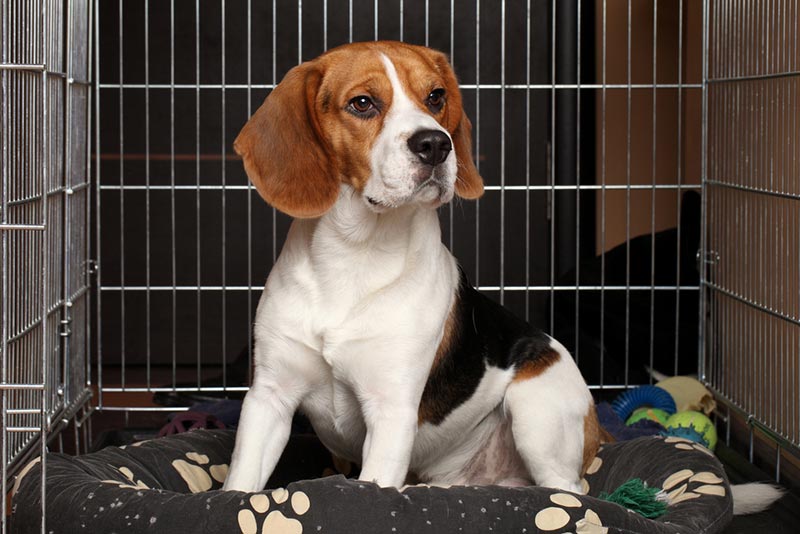
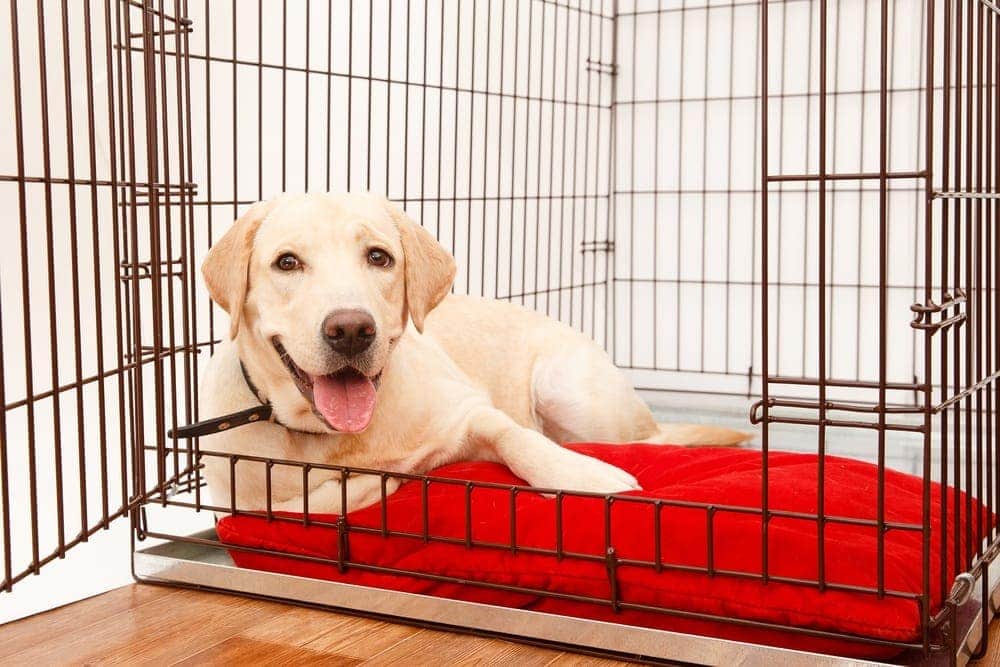
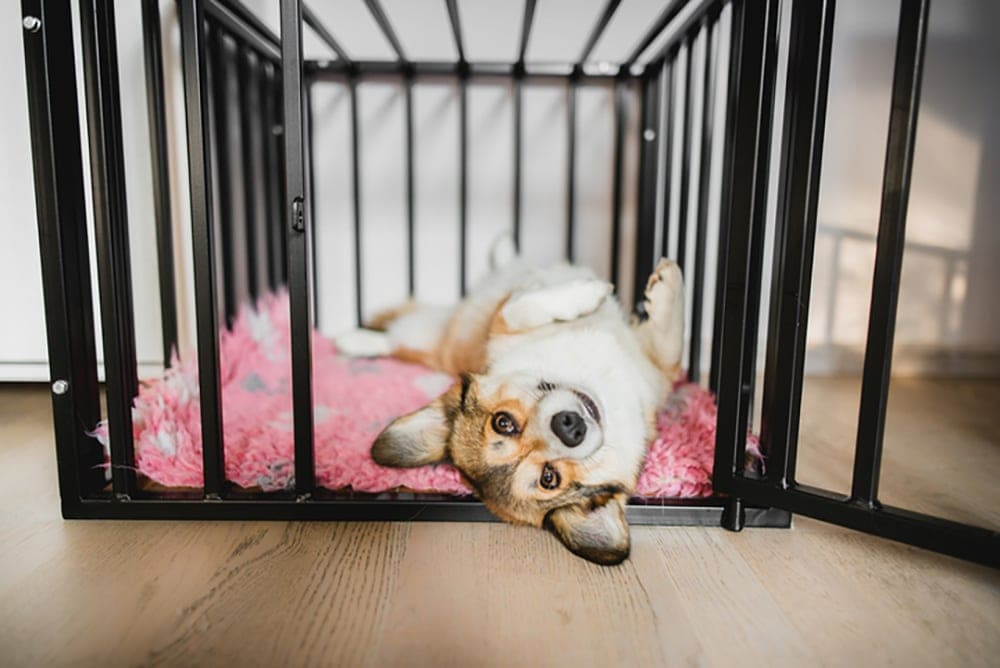
Creating a safe environment while you’re away at work is vital to the development of your new puppy. Crate training is an excellent way to achieve a safe environment for your pup. However, you may consider a puppy pen rather than a crate during the first stages so your puppy can stretch its legs and not be confined.
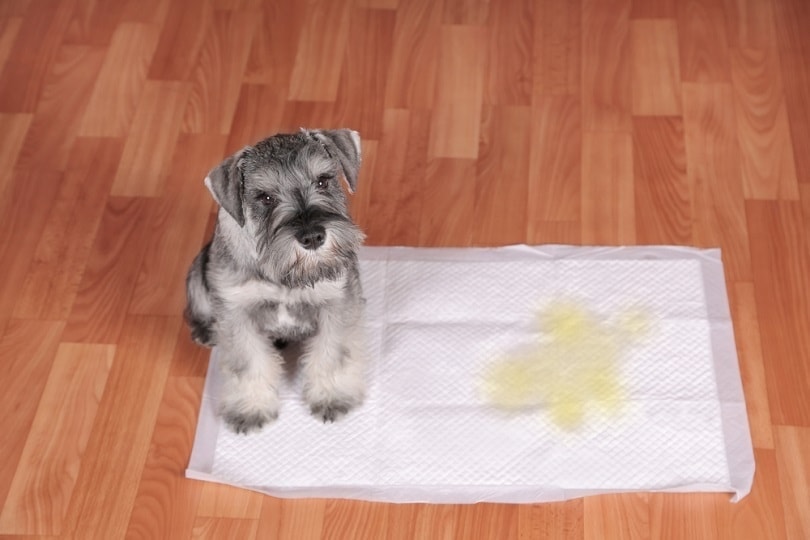
You can place puppy pads in the pen to catch accidents if you plan to be gone for more than 4 hours.
2. Start Slow
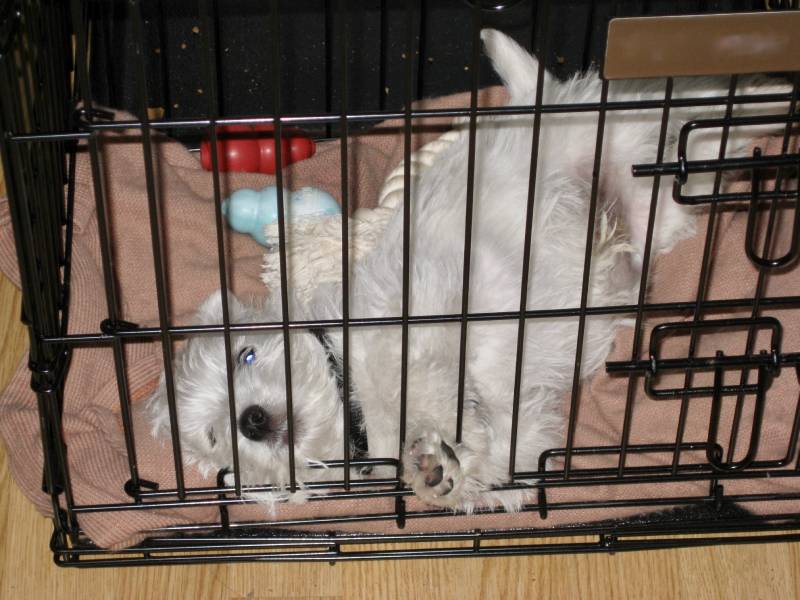
Before leaving your new puppy for the first time, ease into the process. For example, try leaving your puppy for 10 minutes here and there throughout the day in a crate or puppy playpen when you’re not working. Before walking out the door, give your pup a treat and quietly slip out—this will help your puppy associate rewards in your absence. If your pup is destructive during that time period, shorten the amount of time you’re gone.
3. Tire Your Puppy Out
Playing with your puppy before you leave for work will tire your pup out and allow for more sleep time while you’re gone. However, ensure you’re not overdoing it, as puppies cannot handle vigorous exercise in the early puppy stages. Aim for a short 5-minute play session by playing fetch in the yard or a brisk walk before leaving. You can also seek your vet’s advice on how much exercise is appropriate for your puppy’s breed and size.
4. Get Help From Family or Friends
If you have a job where it’s not feasible to leave and come home during a break or lunch, consider asking a family member or friend to pop in on your pup once or twice a day for potty breaks and a little playtime. Your puppy will appreciate the company, and your puppy’s bladder will too!
5. Consider Doggie Daycare
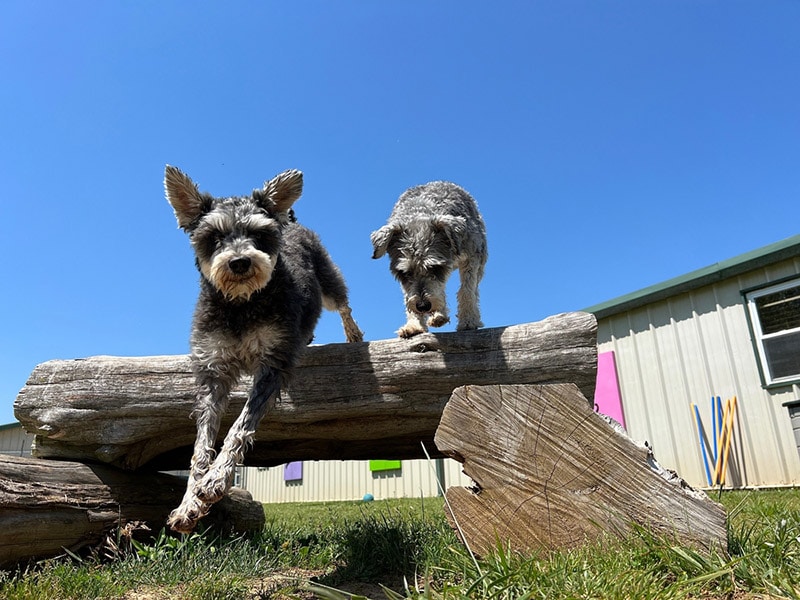
Doggie daycares are an excellent way to have peace of mind that your new puppy is safe and well taken care of while you’re busy at work. In addition to your new puppy being taken care of, a doggie daycare also aids with sharpening socialization, and your puppy will make new friends and have a great time. However, do your homework and research before settling on a particular daycare to ensure the facility will meet your needs.
6. Go Home for Lunch
As mentioned, going home during your lunch break may not be feasible for some, but if you can, going home for lunch allows your new puppy to go potty and hang with you for a bit. It’s also an excellent time to play with your puppy to tire him out before getting home for the evening.
7. Hire a Pet Sitter or Dog Walker
A pet sitter or professional dog walker may be a good option in case a family member or friend cannot be there to help. A professional dog walker or pet sitter will be reliable, therefore, eliminating stress on your end. However, it’s important to find a credible pet sitter or dog walker with credentials. Pet sitters or professional dog walkers can also come in handy in case you get stuck in traffic or are called into a last-minute meeting at the end of the day.
8. Play Background Noise
Playing some sort of background noise will help your new puppy feel less lonely while you’re away. The background noise can be the television, radio, white noise, or any other soothing sound. Providing background noise can also help drown out other noises that may make your puppy anxious, such as a neighbor dog barking or some other unfamiliar noise.
9. Provide Safe Toys
We’re a little skeptical about giving this advice because any toy you provide unsupervised must be as safe as possible. Avoid giving your puppy anything that can be a choking hazard, such as toys with strings or tags. While no dog toy is indestructible, Kongs are tough and durable. You can apply some peanut butter inside (avoid peanut butter made with xylitol) to make your puppy work for it!

How Long Can You Leave Your Puppy Alone?
It’s wise and beneficial to ease your new puppy into being alone before the first time you have to leave your puppy alone for any length of time. Most experts believe that the amount of time you can leave a puppy alone depends on the age. For example, puppies can only hold their bladders for one hour per every month of age—a 2-month-old puppy should be able to hold its bladder for roughly 3 hours. A general rule is not to leave your puppy for more than 4 hours at a time.
Final Thoughts
Remember that the puppy stage is not forever, and if you can take measures to keep your puppy safe while you’re at work, there’s no reason to believe you cannot raise a puppy successfully when you work full-time.
Spend as much time with your puppy when you’re home and help him ease into the idea of being alone for certain periods of the day. Dogs are smart, and your puppy will eventually acclimate to your routine. Remember to never yell at your puppy if he does something destructive while you’re away, and assess the situation to determine if you need help with obedience training.
Sources
https://www.labradortraininghq.com/labrador-puppies/how-to-raise-a-puppy-if-you-work-full-time/
https://furbo.com/blog/en/article/raising-a-puppy-while-working-full-time
https://www.akc.org/expert-advice/health/puppies-how-much-exercise/
https://www.humanesociety.org/resources/how-choose-reliable-pet-sitter
Featured Image Credit: natali.lymarenko, Shutterstock
Get Hepper In Your Inbox


Pet care tips from our vets and experts, straight to your inbox.
You may opt-out at any time. View our Privacy Policy for more information.

Rachel Giordano is a writer and musician out of Pensacola, Florida, living there with her partner and their two dogs, Aero, a Border Collie/Sheltie mix, and Sophie, a Boston Terrier. Rachel has a Bachelor of Arts degree in communication and enjoys writing about all types of animals. When Rachel’s not dedicating her time to writing about animals, she enjoys writing thriller/suspense novels. A writer by day and a musician by night, she's passionate about educating the public about the requirements and needs of all types of animals.
Join the conversation
Ask a question, share your story, or send private feedback.