Hepper is reader-supported. When you buy via links on our site, we may earn an affiliate commission at no cost to you. Learn more.
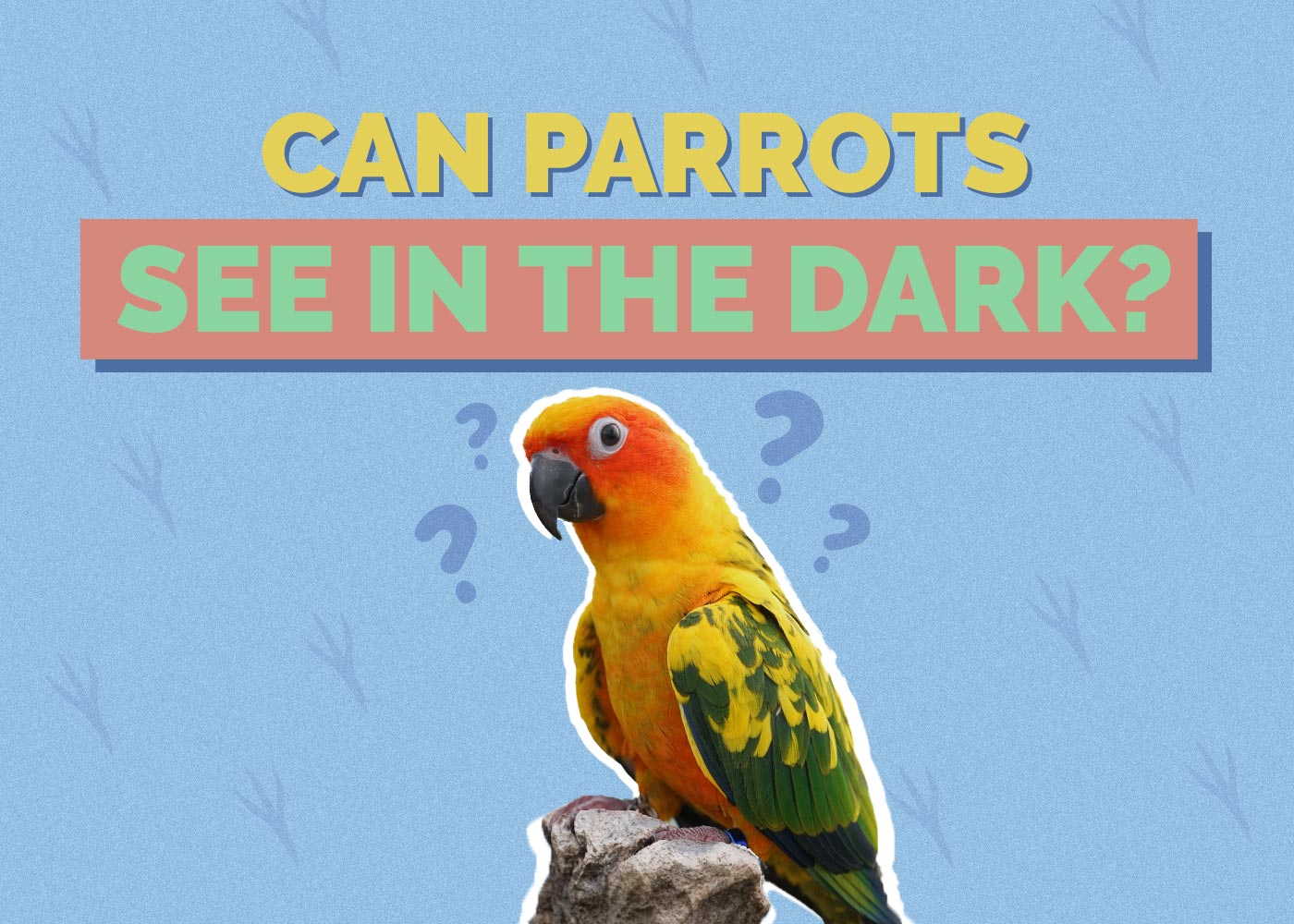
Can Parrots See in the Dark? Vet-Approved Facts & Explanation


In this article
Vision is an important sense for all birds, as they rely on good vision to assist with flying and navigating. Well-functioning eyesight is also needed to source and locate food and to recognize threats quickly and easily. Parrots are birds that are more active during the day than at night. With their peripheral vision and perception of depth superseding that of human vision, along with the ability to see more colors than people, one might expect these exotic birds to see just as clearly in the dark and possess nocturnal vision. Unfortunately, that’s not true. Parrots cannot see well in the dark.
Parrot is a broad term for over 400 species of bird and so we are talking in general terms for this article. These intelligent birds cannot see well in the dark or in low-light environments, and if you have a parrot as a domestic pet, read on to find out how to help your parrot during the night hours to keep them safe and, at the very least, prevent them from having accidents due to their limited and restricted eyesight.

The Parrot’s Eyes
Parrots, like many birds and animals who are prey, have their eyes positioned on the sides of their head. This is to allow as wide a vision range as possible to detect threats and impending danger from predatory animals. In fact, parrots have a staggering 300-degree range of vision, providing superior eyesight during the day.
Parrots have monocular vision, meaning each eye can focus on a different object at the same time. This helps them to identify threats faster and scan a greater area. A parrot’s eyes also don’t move around very much. This means they have to move their head in order to move their eyes. To compensate for this, you will see them bobbing their heads back and forth. These maneuvers aid their vision by helping them to see more at once.
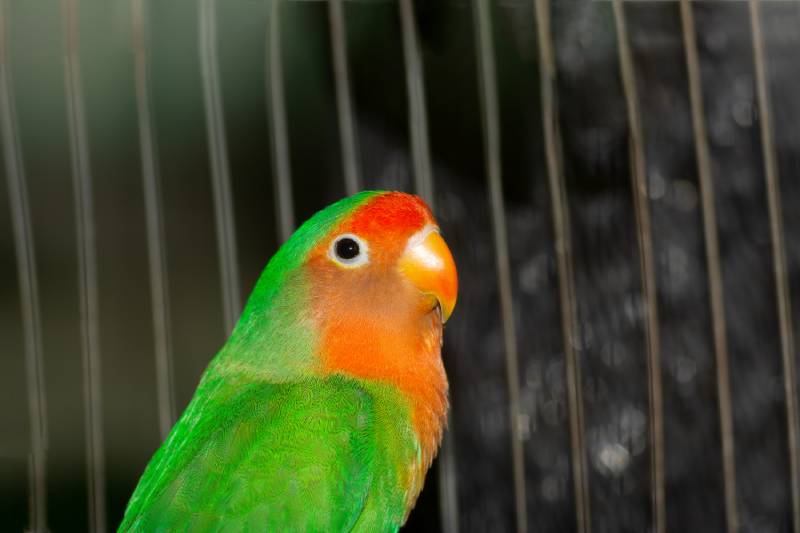
Can Parrots See in the Dark?
Yes, but not very well. Within each eye is a structure called the retina. Within the retina are cells called rods and cones. Rods are responsible for detecting small quantities of light to aid in night vision or sight in low-level lighting. Cones are responsible for seeing colors.
Depending on the number of rods and cones, and the ratio of each of these to each other, this will dictate whether an animal can see better in the day or night. Cats, for example, have more rods than parrots and humans, and so have better low-light vision. Parrots have relatively fewer rods, and this is the reason for their poor sight in the dark. Even in low lighting, they won’t be able to identify objects or threats or see their path in front of them as clearly as they would during the day.
This lack of night vision can lead parrots to stumble into items or feel insecure, particularly if they're allowed to wander around or if their cage door is left open.
Are Parrots Afraid of the Dark?
Due to their poor low-light vision, the change from day to night can be stressful for a parrot. Loud, strange, or new noises in their environment can also be distressing. If you have recently moved, they have a new cage or their surroundings have changed, your parrot may experience stress or other difficulties at night or in low light.
Oddly enough, providing a night light, which one may assume would help them, doesn’t actually. It can disturb their sleep instead.
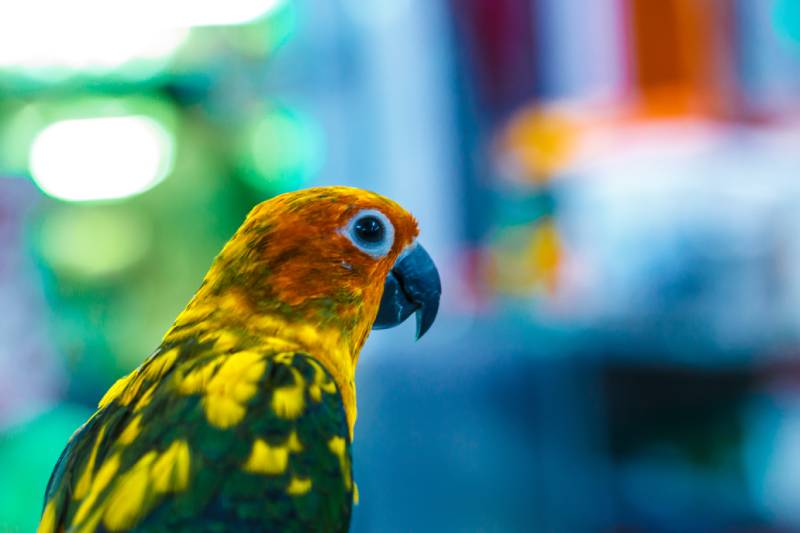
How to Help Your Parrot at Night
- As darkness falls, switch off all lights around their cage. If lights are kept on, it can cause distractions and hamper their normal sleep schedule.
- Keep them in their normal cage with their cage door closed. This prevents your parrot from being able to wander off, which can lead to injuries or accidents. They need to remain where they feel the safest, and in the case of pet parrots, this is often in their cage.
- Ensure enough food and water are present and that your parrot has a stock of familiar toys, stimulation, and other favorite items around them in their cage. Although these items should be available to them at all times, if they wake up during the night, this helps to comfort them.
- Should you need to be up when your bird is sleeping, don’t turn on the lights, move quietly, and avoid any sudden noises, if possible.
- There is conflicting talk and advice about covering your parrot’s cage at night. It is understood that this is not necessary, but if you are unsure or wish to discuss this further, direct this question to a parrot specialist or your veterinarian who will be able to help.
Conclusion
Parrots in general have a low number of rods in their eyes, which are required for seeing in low-light. This means they have poor vision in the dark or in low lighting as compared to their vision in the daylight. They can see a little or with blurred vision, but not very well. Hopefully, the tips provided here will help you and your parrot navigate the nighttime hours.
Sources
Parrots-cant-see-well-in-the-dark-why-you-still-need-a-cage-cover
https://simply.science/index.php/bird-s-vision/9213-receptors-in-birds
https://archives.evergreen.edu/webpages/curricular/2011-2012/m2o1112/web/birds.html
https://news.yale.edu/2011/06/22/birds-eye-view-far-more-colorful-our-own
https://www.audubon.org/magazine/may-june-2013/what-makes-bird-vision-so-cool
Featured Image Credit By: Tanu4869, Shutterstock
Get Hepper In Your Inbox


Pet care tips from our vets and experts, straight to your inbox.
You may opt-out at any time. View our Privacy Policy for more information.
Annaliese began her career as a veterinary nurse in Edinburgh, later advancing her qualifications with a diploma in advanced veterinary nursing in surgery from London. Her work in small and mixed veterinary practices led her to become a head nurse, where she trained other veterinary nurses, managed the nursing department, conducted nurse clinics, and developed new patient care protocols.
Throughout her career, Annaliese has cared for thousands of patients and their owners, setting higher standards in nursing regimes with a focus on surgery and anesthesia. She co-authored multiple veterinary nursing textbooks and contributed to various mainstream publications in the UK and USA. After more than twenty years in the veterinary and pet care professions, she retired from clinical practice to pursue full-time writing. Having cared for thousands of patients and owners, Annaliese specialized in surgery and anesthesia. She was asked to co-author several veterinary nursing textbooks and contributed to a number of other publications in the UK and USA. After more than two decades in the veterinary and pet care industries, she retired her scrub suit and now works as a full-time writer.
Annaliese Morgan has been a dedicated veterinary nurse for over two decades, having completed a diploma in advanced veterinary nursing in surgery from London and qualifying from Edinburgh. Her professional experience includes managing a nursing department, training other veterinary nurses, providing patient care, and running nurse clinics in both small and mixed veterinary practices.
As an expert in surgery and anesthesia, Annaliese has treated thousands of patients and owners. In addition to being asked to co-author multiple veterinary nursing textbooks, she has written for a variety of publications in the UK and USA. After a long and successful career in the veterinary and pet care professions, Annaliese now dedicates her time to writing full-time. You can find out more about her work at www.annaliesemorgan.com.
Join the conversation
Ask a question, share your story, or send private feedback.