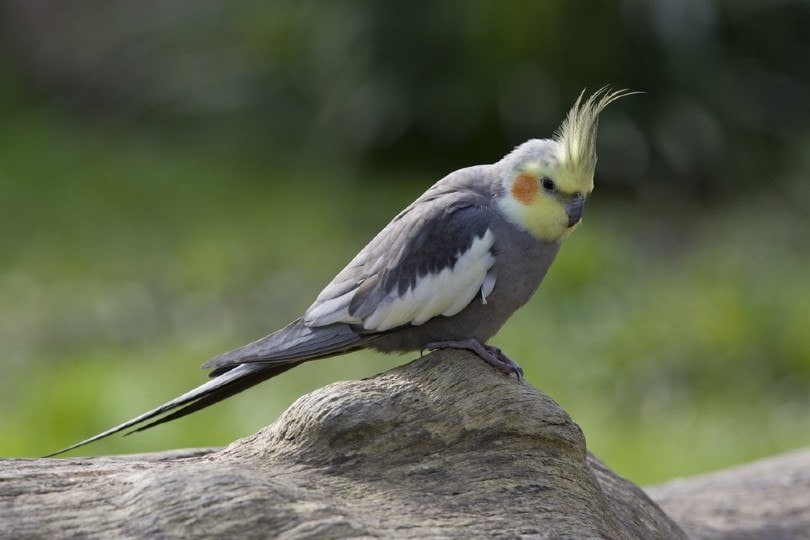
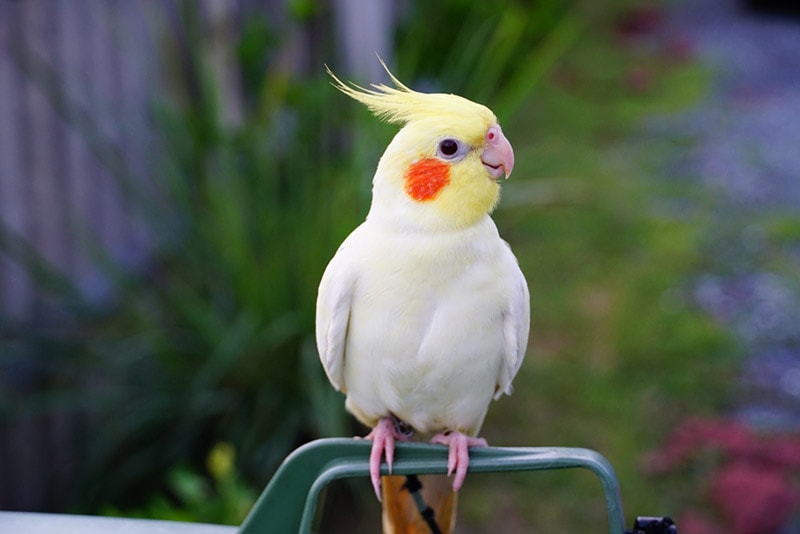
Hepper is reader-supported. When you buy via links on our site, we may earn an affiliate commission at no cost to you. Learn more.
Can Cockatiels See in the Dark? Vet-Approved Science & Information


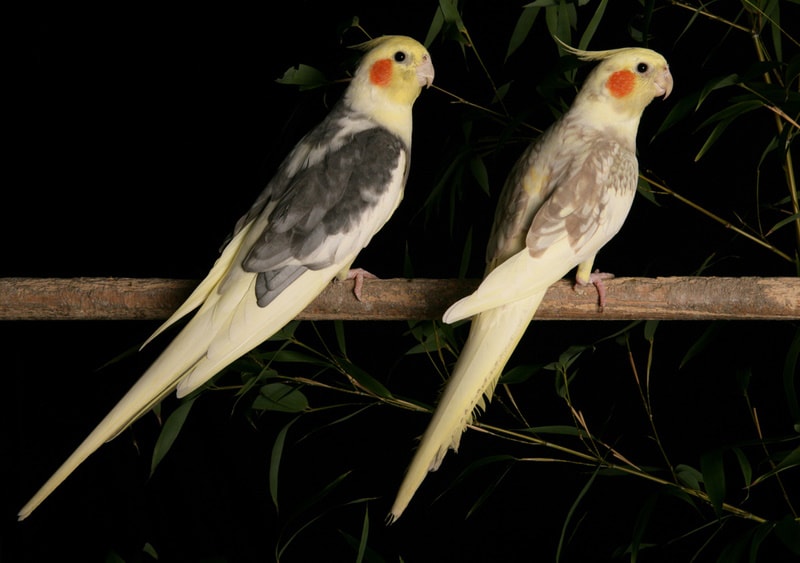
As with humans, birds like cockatiels rely on their eyesight to survey and perceive their world. Because they are diurnal (active during the daytime), cockatiels have very strong daylight vision.
But how does their night vision rank? Can they see in the dark? A cockatiel’s eye structure doesn’t lend itself to seeing very well in dim lighting, which is why they spend the night sleeping.
Read on to learn more about cockatiel's vision capabilities.

Can Cockatiels See at Night?
No, cockatiels cannot see well at night.
Any person that's owned a cockatiel for any length of time can vouch for their bird's inability to see well in the dark. Unfortunately, many owners find this out the hard way, as cockatiels are particularly prone to night frights.
Night frights cause a bird to be easily spooked or unnerved when in darkness. Any kind of disturbance, be it a noise or flicker of light, can send a cockatiel into a frenzy. This is not only terrifying for the bird but also dangerous, as such a panic can put them in harm's way. For example, a frightened bird may thrash around wildly in its cage, hurting itself in the process.
Why Is a Cockatiel's Night Vision So Bad?
Cockatiels have very poor night vision simply because of the way their eyes are designed. The ability to see in dim light depends on the distance between the lens of the eye and the retina, the part of the eye that captures incoming light.
Like many other diurnal birds, the eyes of a cockatiel are just too small and do not have enough distance between the lens and the retina to work efficiently in dim lighting. This effectively means they are forced to sleep at night, as their eyes don’t function well at night, and if they were to attempt flight during the nighttime, they would bump into many obstacles. In effect, pet owners who’ve experienced their parrots having night frights are actually witnessing this phenomenon play out.
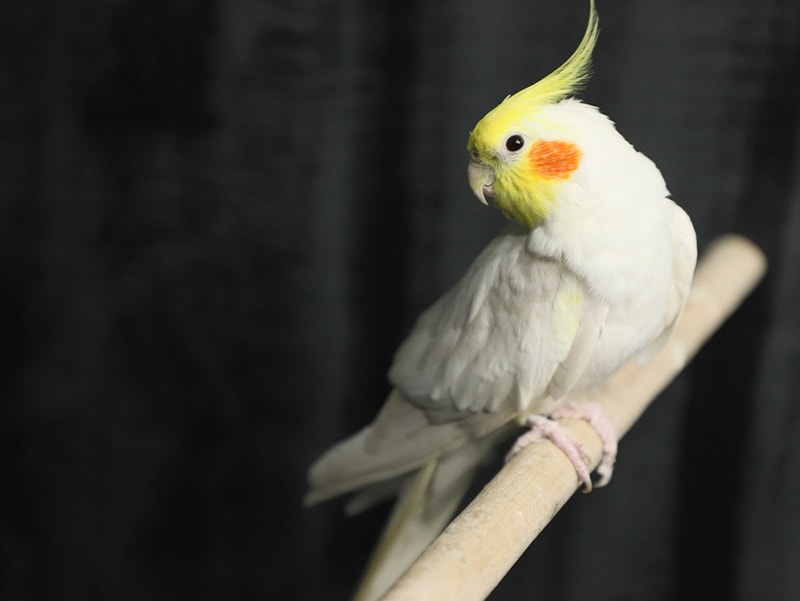
How Do Cockatiels See?
A human's vision and a cockatiel's vision vary in several ways.
Cones are photoreceptor cells in the eye's retina that provide us with color vision. Humans have three kinds of cones that allow us to see three primary colors (red, green, and blue). Cockatiels, however, have five different types of cones. Four of these are single cones, which allow birds to perceive various colors. The last one is termed a “double cone” and is thought to help birds perceive objects with no color hues.
In addition to seeing the three primary colors we see, cockatiels can also see ultraviolet. Ultraviolet is undetectable by the human eye, meaning cockatiels can see colors that we cannot.
Like most birds, cockatiels have a much wider field of vision than we do. Because their eyes are on the sides of their heads, they can see roughly 350 degrees versus our field of vision, which is just over 180 degrees, allowing them to see in almost every direction without having to move their heads.
A cockatiel's blind spot is directly behind their head. Though they can see objects in front of them, their field of visual overlap is very minimal. Cockatiels are near-sighted (like many other diurnal birds), meaning that objects far away seem blurry to them.
How Can I Keep My Pet Cockatiel Safe at Night?
The best thing you can do to prevent a case of night frights is to not disturb your pet at night and let them sleep in peace. It is important to ensure that nothing wakes them from their slumber; remember that sleep plays a very important role in your pet’s health.
You could also pin the curtains in your cockatiel’s room together at night to keep out any exterior lights, like those from passing cars. Some bird owners find that a breathable cage cover also works great for preventing night frights.
Should I Use a Night Light for My Cockatiel?
Some people prefer to leave a night light on for their cockatiel so that they won’t get spooked while asleep. Though well intentioned, this is actually quite bad for their health. Many of a bird’s hormonal and physiological processes depend on light.
If a cockatiel is exposed to excessive amounts of light, the main consequence of this would be irregular breeding cycles, and parrots may start reproducing and at times begin laying more eggs before a clutch of hatchlings has even left their nest. This puts tremendous stress on the breeding birds.
Please note that female cockatiels are capable of laying eggs in the absence of a male. Night lights may also overly stimulate a male bird (even in the absence of a female) and lead to behavioral issues. Therefore, current veterinary practices caution against night lights for cockatiels and other pet birds.
Final Thoughts
Cockatiels cannot see well at night because they are a diurnal species. Unlike bird species like owls, cockatiels spend their nights asleep and have never needed to evolve to see in the dark — their eye structure simply doesn’t allow proper low-light vision.
The importance of sleep is often overlooked for pet cockatiels. It is important to ensure that your pet gets enough sleep every night in an undisturbed environment free from excess noise or lights, which may lead to episodes of unfortunate night terrors.
See Also:
Featured Image Credit: chrisbrignell, Shutterstock
Get Hepper In Your Inbox


Pet care tips from our vets and experts, straight to your inbox.
You may opt-out at any time. View our Privacy Policy for more information.
Chantelle's life revolves around two passions: writing and animals. Raised on the prairies of Canada amidst a menagerie of pets, she now lives with five cats, two guinea pigs, and a bearded dragon. Together with her husband and child, Chantelle delights in being an exemplary animal parent, going as far as installing wall-mounted cat shelves to give their cats an indoor playground. When she's not cozying up with her cats or snapping their amusing antics, she enjoys venturing into the Rocky Mountains, binge-watching her favorite Netflix shows, and indulging in spontaneous reading adventures.
Join the conversation
Ask a question, share your story, or send private feedback.