Hepper is reader-supported. When you buy via links on our site, we may earn an affiliate commission at no cost to you. Learn more.
Can Pet Birds Make You Sick? 5 Diseases That Pet Birds Carry (Vet Answer)
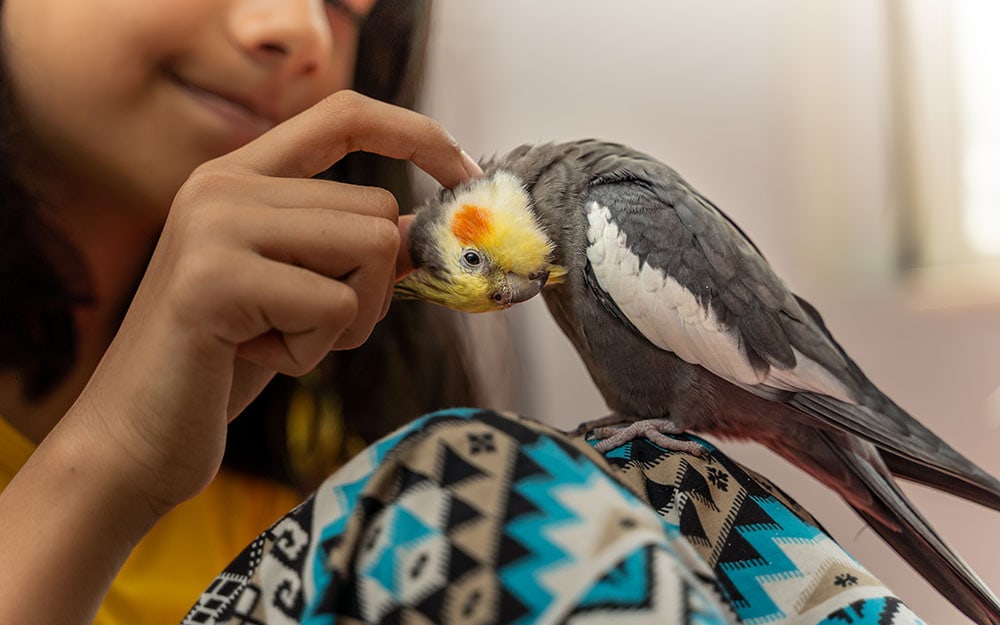
Birds make great pets, but sometimes they can get sick and then make us sick too. Pet birds can transmit bacteria and fungi, with some causing severe illnesses like psittacosis or salmonellosis. Other diseases that pet birds can transmit are histoplasmosis, colibacillosis, and cryptococcosis.
For this reason, you should know the dangers of these diseases, their clinical signs, and the preventive measures that you can take.

The 5 Diseases That You Can Catch From Pet Birds
1. Psittacosis or Parrot Fever
Psittacosis (or ornithosis) is a disease caused by a bacterium, Chlamydia psittaci, hence the name. It is a rare disease that can also be transmitted to humans.
In the U.S.A., one person per year dies from this bacterium, and around 100 individuals get sick.1 People get sick when they inhale infected dust from bird feces or respiratory secretions. In rare cases, people can get sick when they are bitten by their pet parrot or through beak-to-mouth contact.
Clinical signs and symptoms in humans include:
In parrots, psittacosis manifests as follows:
In some cases, infected birds will not show any clinical signs but can still transmit the disease.
In humans, the disease is treated with antibiotics for 3 weeks, and only those who neglect it or are at higher risk are in danger.
The categories of people with an increased risk are:

2. Histoplasmosis
Histoplasmosis is a disease caused by a fungus, Histoplasma capsulatum, which generally populates soils with a rich organic content. The most contaminated soils are those where bats and birds live. Birds cannot become infected with this fungus or transmit it, but their excretions contaminate the soil and make it suitable for the development of Histoplasma mycelia, from which people can get sick. In the case of pet birds, people can get sick if this fungus grows in the environment where the bird lives.
The most prone to illness are people with weak/compromised immune systems, the elderly, and infants. In humans, clinical symptoms and signs occur 3–17 days after exposure and include:
- Fever
- Fatigue
- Coughing
- Skin rash
- Generalized pain
- Chills
Depending on the severity of the condition and how weak the immune system is, the disease can go away on its own or may require treatment with antifungal drugs. The treatment can last between 3 months and 1 year.
3. Salmonellosis
Salmonellosis is a disease caused by a bacterium, Salmonella spp. This bacterium is transmitted to humans through the feces of infected birds.
Common clinical signs for humans and pet birds include:
Young or very old birds can die from salmonellosis. In humans, the disease is treated with antibiotics and drinks rich in electrolytes to combat dehydration.
Salmonella is a widespread bacterium, and you can get sick in other ways, such as eating unwashed fruits and vegetables, putting your dirty hands in your mouth, not cooking chicken well enough, etc.
4. Colibacillosis
Colibacillosis is a disease caused by the bacterium E. coli, which lives in the digestive tract of most mammals. Usually, we coexist without problems with these bacteria, but under conditions of stress, other diseases, and low immunity, E. coli can multiply and make their presence felt through diarrhea.
Birds with this disease may show the following clinical signs:
In humans, the bacterium is transmitted through contact with infected feces, and the clinical signs are similar to those in birds. Colibacillosis can be treated with antibiotics and nutrient fluids.
5. Cryptococcosis
Cryptococcosis is an infection caused by the fungus Cryptococcus neoformans, found in soil or bird feces. Spores circulating in the air reach the lungs through inhalation, triggering asymptomatic or subclinical lung infections. When the infected person has a weakened immune system, the infection will tend to spread to the central nervous system, but the skin, bone system, or other organs can also be involved.
People with weakened immune systems should avoid as much as possible exposure to areas contaminated with bird droppings and even contact with birds.
Birds affected by this fungus rarely develop clinical signs.
In humans, the symptoms and signs may include:
Some infections do not require treatment. However, in cases it’s required, an administration of antifungal drugs is resorted to for a period of at least 6 months.


How to Prevent the Diseases That Pet Birds Can Transmit
Here are a few tips that will help you prevent infections transmitted by pet birds:
- Wash your hands every time you have contact with birds.
- Do not allow birds access to places where food is prepared for people.
- Clean and disinfect your bird's cage and food and water bowls regularly.
- Do not clean the objects that belong to your bird in the kitchen or bathroom sink.
- Vaccinate your bird every time your veterinarian advises you to do so.
- Take your bird to the vet periodically, especially at the first sign of illness.
- Any newly purchased bird should be taken to the vet for a general consultation to make sure they are healthy.
- Birds exposed to stress are more susceptible to disease, so it is necessary to create optimal living conditions for them; in this way, you also protect yourself.
- Make sure all family members know how to care for and treat the bird and the hygiene measures that they must adopt.
- Sick birds must be kept in quarantine for a while. Any dead bird must be examined by a vet to determine the cause of death. The vet can also establish what measures to take to prevent further infections, in case your bird died due to infection.
Conclusion
Birds can transmit certain infections to humans, including salmonellosis, colibacillosis, psittacosis, cryptococcosis, and histoplasmosis. Although these diseases are rare and generally affect people who have a weak immune system and/or are elderly, young, or pregnant, it is still recommended to be aware of them and know the risks that you are exposing yourself to in order to protect yourself.
Related reads:
Sources
Featured Image Credit: binoyphotofolio, Shutterstock
Get Hepper In Your Inbox


Pet care tips from our vets and experts, straight to your inbox.
You may opt-out at any time. View our Privacy Policy for more information.

Iulia Mihai is a veterinarian with more than 13 years of experience in pet pathology, laboratory, and cancer. She studied at the University of Agronomical Sciences and Veterinary Medicine of Bucharest, Romania Iulia earned a master’s degree in equine and pet pathology and studied epithelial cancer for her Ph.D. Dr. Mihai's passions for internal medicine and parasitology inspired her to volunteer at the faculty’s clinic in her third year of college. She has worked in a couple of veterinary clinics over the years as an internal medicine specialist, and loves to write and educate pet parents about pet nutrition, behavior, and diseases.
Iulia is a passionate veterinarian with a strong affinity for veterinary parasitology, internal medicine, and laboratory. She is excited to share her experience and knowledge with pet owners around the world through her writing and hopes to educate people on pet nutrition, diseases, and behavior.
Education
Iulia graduated from the University of Agronomical Sciences and Veterinary Medicine, Bucharest, Romania, in 2012 and has a Master’s degree in Small Animals and Equines Pathology and is certified in HAACP food safety system implementation. Iulia started her Ph.D. in epithelial cancer in dogs and cats in 2013. Her research is published in national and international veterinary journals.
Experience
Dr. Iulia has been a veterinarian for more than 14 years. She is experienced in animal pathology and laboratory and has experience with exotic animals, such as pet rats and ferrets. She also has skills in the field of clinical pathology, laboratory, microscopy, cancer, and imaging.
Join the conversation
Ask a question, share your story, or send private feedback.