Hepper is reader-supported. When you buy via links on our site, we may earn an affiliate commission at no cost to you. Learn more.
Can You Get Salmonella From Turtles? Vet-Approved Facts & FAQ


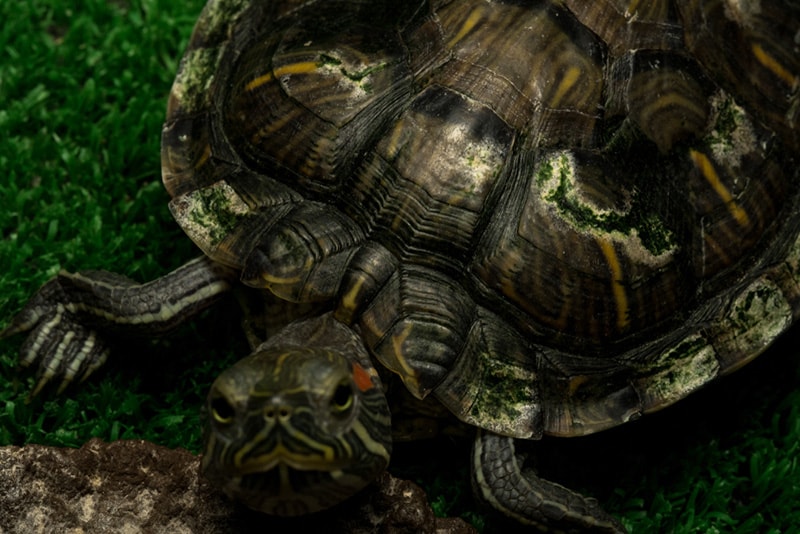
The reptile world is unique, with interesting animal species like lizards and turtles. These reptiles can be kept as pets, but they may pose a health risk to you and your loved ones.
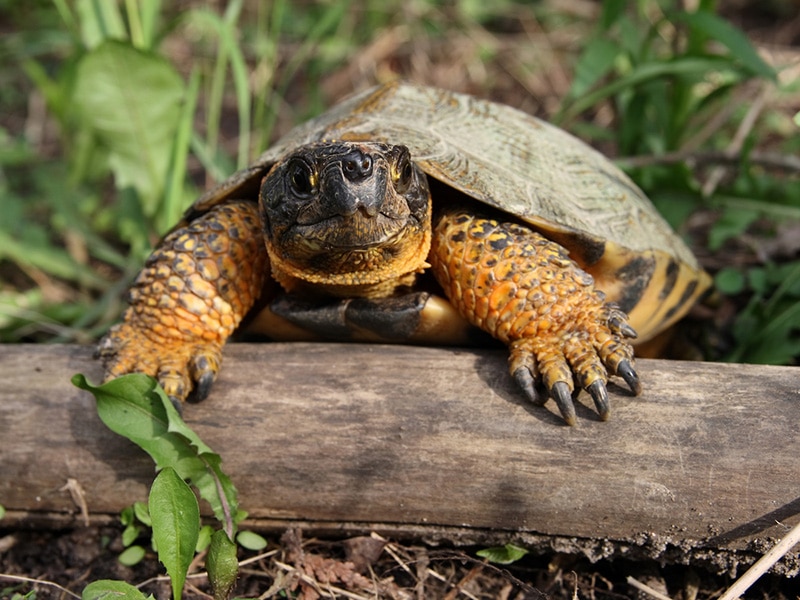
Turtles are common pets, but they're also associated with transferring various diseases to humans. For example, a question from people without much knowledge of these reptiles is: Can you get Salmonella from turtles?
The short answer is yes, you can get Salmonella from turtles.
That said, there are many important things to know about turtles and this disease, including how you can get Salmonella from turtles and how to prevent infections.
In this article

What Is Salmonella?
Salmonella is a bacterium that typically lives inside animal and human intestines. It's shed through feces and causes infections known as Salmonella infections or salmonellosis.
Although this infection may seem harmless to some, there are around 1.35 million Salmonella infections yearly in the U.S.A., and out of those cases, around 26,500 people with this infection require hospitalization, and around 420 people die.
Salmonella also represents one of the most common bacterial illnesses related to food poisoning in the U.S.A., which can be worrisome.
In humans, Salmonella infections can occur due to various reasons:
- Consuming contaminated food
- Drinking contaminated water
- Contact with infected animals
- Cross-contamination
- Practicing poor hygiene
- Travel-related infections
- Person-to-person transmission
While it's more common to get this infection from consuming contaminated water or food, you could also get it from being in contact with contaminated animals, including turtles.
The Symptoms of Salmonellosis in Humans
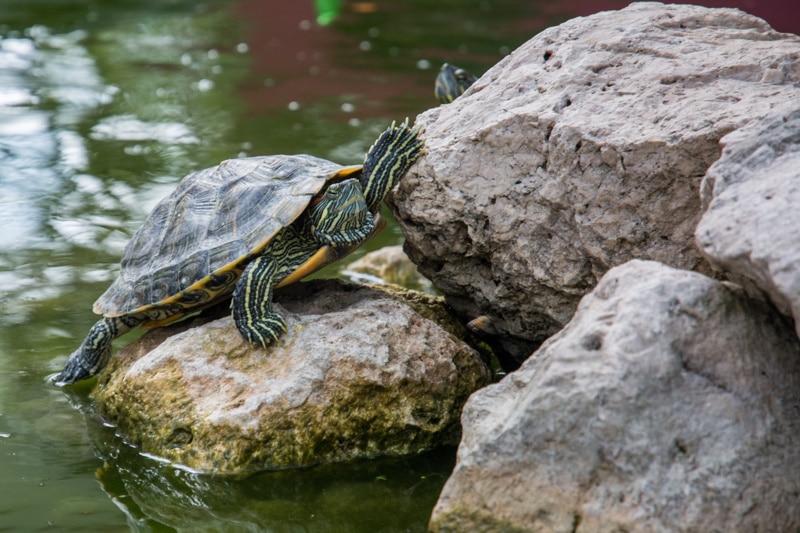
If you’re considering getting a pet turtle or want to explore turtles in nature, you need to know about Salmonella and the symptoms of the infection. Learning more about turtles and this health problem is the only way to minimize the risk of getting a Salmonella infection yourself.
Here’s a list of the symptoms that can be associated with salmonellosis in humans:
- Diarrhea
- Nausea
- Vomiting
- Chills
- Bloody stools
- Headache
- Fever
- Stomach cramps
- Severe dehydration
Most people with salmonellosis experience mild symptoms like diarrhea and nausea, though in some cases, it’s possible for people to suffer severe dehydration and require hospitalization. The incubation period of the Salmonella bacteria is usually between 8 and 72 hours after infection, which is when the first symptoms tend to show up.
Where Do Turtles Get Salmonella?
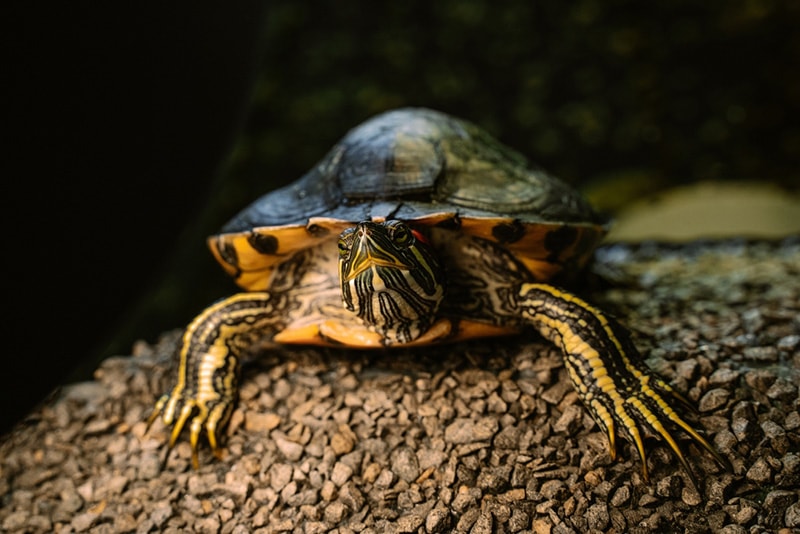
Most reptiles, including turtles, carry the Salmonella bacteria inside of their gut but this bacteria doesn't usually make them sick. These reptiles can live normal lives with this bacteria in their intestinal tract.
Turtles can shed Salmonella through their feces and pass the bacteria onto their environment. This means they contaminate their bodies, surroundings, and almost anything they touch with the Salmonella bacteria. If a turtle is stressed it can increase the shedding of Salmonella in their feces, even if they do not become unwell. Healthy turtles living in proper environments are less likely to shed Salmonella
However, just because Salmonella doesn’t harm turtles doesn’t mean it’s safe for you! Humans are incredibly susceptible to this bacteria and to Salmonella infections, which is why it’s crucial to consider this disease before purchasing or handling a turtle, as the risks might be severe.
How Can Turtles Transmit Salmonella Infection to Humans?
Turtle-associated salmonellosis is more common than you might expect. In the U.S.A. there have been around 15 multistate outbreaks from 2006 to 2014.
The biggest reason for such large numbers of turtle-associated salmonellosis in humans is the way that turtles transmit this infection to humans. Turtles contain this bacteria inside their gut, and they shed it through their feces. This means they can unintentionally spread the bacteria onto their bodies, tank, surroundings, and anything within their reach. The Salmonella bacteria spread quite quickly, which is why turtles can transmit it to you through direct contact or through contact with infected surfaces, food, or water.
Tiny turtles have been found to be especially risky when Salmonella outbreaks have been investigated. This is because although any turtle can carry this bacteria, small turtles are more likely to be owned and handled by children and make them sick. For this reason, the sale of turtles less than 4 inches long has been banned in the US since 1975.
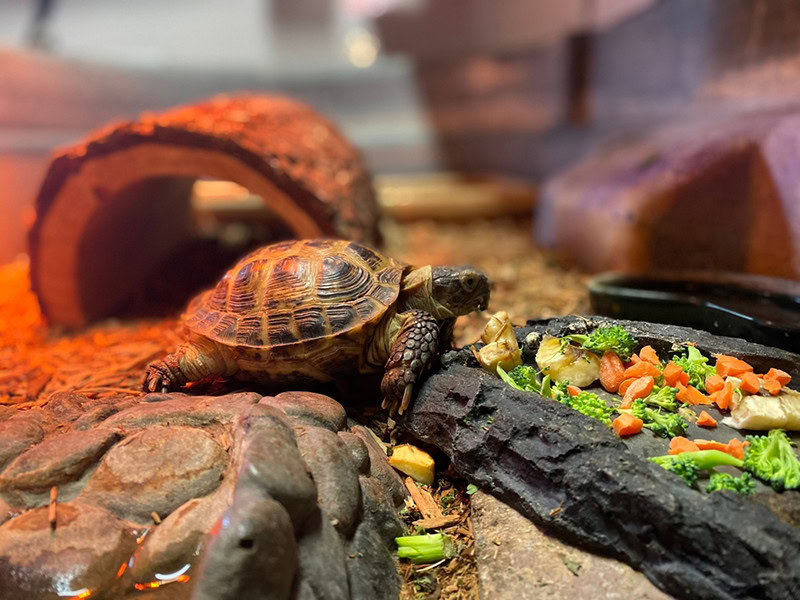
However, even if you don’t ever touch your turtle, you must touch their food and water containers and clean their tank, which means there’s still a risk of getting sick and ending up with salmonellosis.
Who Is at the Biggest Risk of Salmonella Infections?
If you own a pet turtle, you, your whole family, and anyone else who handles the pet can get sick with this bacteria and suffer from salmonellosis. However, while everyone’s at risk, there are specific categories of people who are at higher risk than others.
- People who own turtles and interact with them on a daily basis
- People with a weak immune system
- Pregnant people
- People suffering from inflammatory bowel disease
- People taking medications or antibiotics
- People with severe illnesses
- Kids under the age of 5
- Adults older than 50 who are currently suffering from a particular medical issue
- Seniors over 65 years old
Frequently Asked Questions (FAQ)
How Can Turtle Owners Prevent Salmonella Infections?
It’s best to assume that any turtle that you interact with is positive for Salmonella. That way, you’ll prevent infections, be extra cautious, and stick to the guidelines for safe turtle handling.
Here’s a list of tips for preventing Salmonella infections when handling turtles or keeping them as pets:
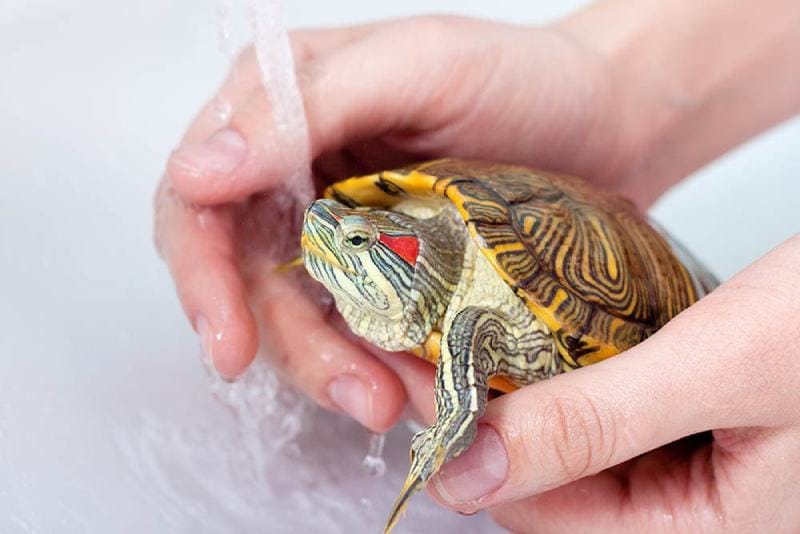
- Always wash your hands before and after handling the turtle to prevent bacterial transmissions.
- Always practice good hygiene and keep your turtle and their surroundings and equipment clean.
- Regularly and properly dispose of turtle feces.
- Never clean turtle supplies in the kitchen sink.
- Do not let your turtle roam freely around your home.
- Perform regular water changes inside your turtle’s tank.
- Do not kiss or lick your pet turtle under any circumstances.
- Do not share food with your reptile
- Do not use any turtle equipment for other pets or other household tasks.
- Do not allow children to handle turtles.
- Households with children less than one year of age should not own turtles.
Can Turtles Transmit Other Diseases to Humans?
Salmonella is among the most common turtle-associated human infections, but turtles can transmit other diseases to humans. Other diseases that reptiles like turtles can transfer to humans include:
- Botulism
- Leptospirosis
- Campylobacteriosis
These diseases may be less common than Salmonella, but there’s still a risk of getting them, so be sure to consider that before becoming a turtle or a reptile owner.

Final Thoughts
You can get Salmonella from turtles, which is why it’s extremely important to know how to care for these animals and lower the chances of this bacteria spreading to people. It’s best to assume that all turtles have this bacteria inside their gut and follow our tips on safe turtle handling to avoid these problems and stay healthy.
Sources
Featured Image Credit: Safarov Nariman, Shutterstock
Get Hepper In Your Inbox


Pet care tips from our vets and experts, straight to your inbox.
You may opt-out at any time. View our Privacy Policy for more information.
Visnja is a content writer that covers various topics such as DIY, pets, home improvement, travel, gardening, and more.
She is a young mom and a college student, who didn’t have enough time to balance her personal and work life, so after multiple years of working a regular 9 to 5 job, she decided to pursue her passion and make a living out of it. She has been writing for a couple of years, helping people find valuable and interesting information online.
Join the conversation
Ask a question, share your story, or send private feedback.