Hepper is reader-supported. When you buy via links on our site, we may earn an affiliate commission at no cost to you. Learn more.
Can Turtles Eat Carrots? Our Vet Answers & Explains

In this article
There are hundreds of species of turtles, including both aquatic and terrestrial turtles. Tortoises are classified as turtles, and so too are terrapins. While turtle species’ diets depend on several factors, including their habitat and what food is generally available to them, most consume a diet consisting primarily of insects and vertebrates, as well as bugs like slugs and snails and some small water-based animals.
They will also eat some vegetation, and owners are encouraged to try to replicate their wild diet even when living in captivity. As such, carrots are generally considered safe for turtles, though they should only really be fed as occasional treats or given in small volumes with their main meal.

Turtle Diet
Please Note
Most turtles are classified as omnivores, which means that they eat both meat and plants as part of their diet. Depending on the species, a pet turtle might eat creatures like slugs and snails, crickets, and even roaches. They can also eat fruit like melons and a good variety of leafy greens. It is also possible to buy commercial food for certain turtles.
Despite their acceptance of various foods, most omnivorous turtles have a dietary bias depending on their age. As juveniles, they tend to be more carnivorous, and as adults, they tend to be more herbivorous.
Can Turtles Eat Carrots?

Carrots are considered safe additions to a turtle’s diet, though they are usually given as occasional treats or in small quantities as part of a main meal. Also, the whole of the carrot, including the carrot top and flowers, is edible and can provide some benefits to pet turtles.
Health Benefits of Carrots
Carrots can offer nutritional benefits to your turtle. Their nutritional analysis is as follows:1
Key Nutritional Information of Mature Raw Carrots, per 100 Grams (3.5 oz.)
Baby carrots have similar nutritional benefits:
Key Nutritional Information of Raw Baby Carrots, per 100 Grams (3.5 oz.)
Carrots are perhaps best known for having high amounts of vitamin A.2 Vitamin A is usually present in plants in various forms known as carotenes. Of these, beta-carotene (also known as β-carotene) is the most relevant for most turtles. Generally speaking, carrots have among the highest amounts of vitamin A of all fruits and vegetables.
Risks of Carrots to Turtles
Despite all their benefits, carrots have possible health risks. These outweigh the benefits, which is why carrots should be only considered treats for your turtle.
Calcium-to-Phosphorus Ratio
The calcium-to-phosphorus ratio of carrots is not ideal for a turtle, as the phosphorus is higher than the calcium. This is suboptimal because, within a turtle’s body, phosphorus naturally binds to calcium. If a food contains more phosphorus than calcium, a turtle’s body will respond by releasing calcium (stored primarily in bones) to compensate for this phenomenon and correct it. Interestingly, the calcium-to-phosphorus ratio of baby carrots is better than that of regular carrots. However, it is still somewhat suboptimal. The ideal ratio of calcium to phosphorus for turtles is around 1.5:1 or 2:1 (that is, calcium should be twice as high as phosphorus).
Sugar
Carrots contain a moderate amount of naturally occurring sugars, meaning they can’t justify their placement as a major component of a turtle’s diet.
Oxalates
Perhaps carrots’ biggest downside is that they are high in oxalates, with ½ of a large carrot containing approximately 10 milligrams of oxalates. These are detrimental to a turtle’s health in large quantities because they bind with calcium within the body, thus preventing its absorption. This further deprives a turtle of calcium in their diet.
How Much and How Often to Feed Carrots to Turtles

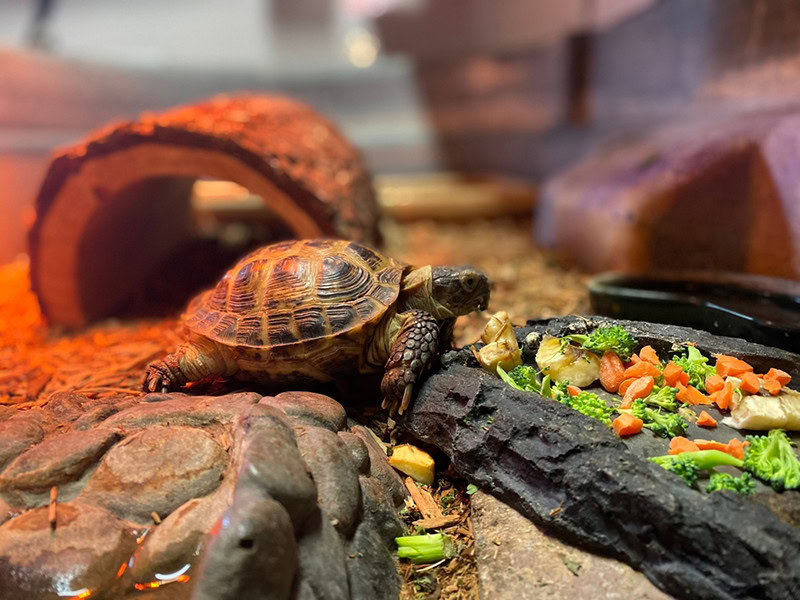
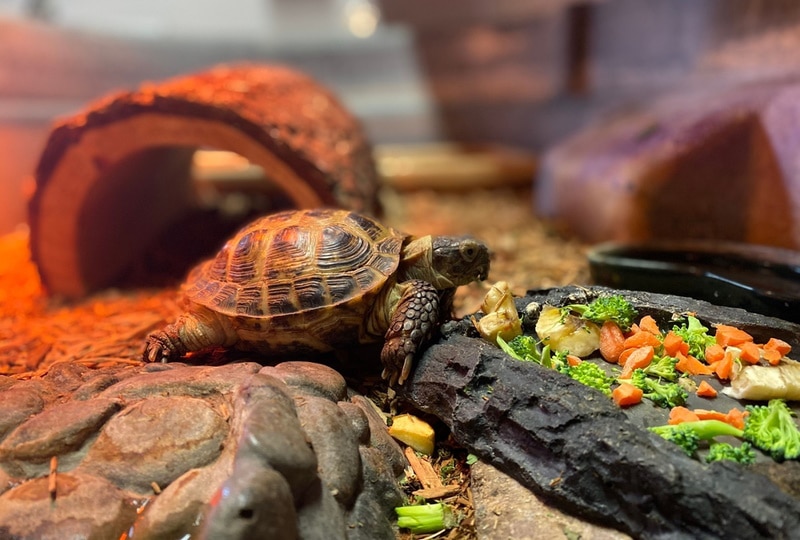
Turtles can (and should) eat carrots raw, and they can eat the carrot tops and flowers, as well as the carrots themselves. As a general rule, all produce that you give to your pet should be fresh and thoroughly washed.
Chop the carrot up into slices, and offer a few slices to start. Some turtles will love the texture and the taste and will willingly eat them. Others may not like them at all. If your turtle doesn’t care for carrots, it isn’t a big deal, because carrots have far more nutritional risks than benefits. You can consider offering other foods to your turtle.
Other Food to Give Your Turtles
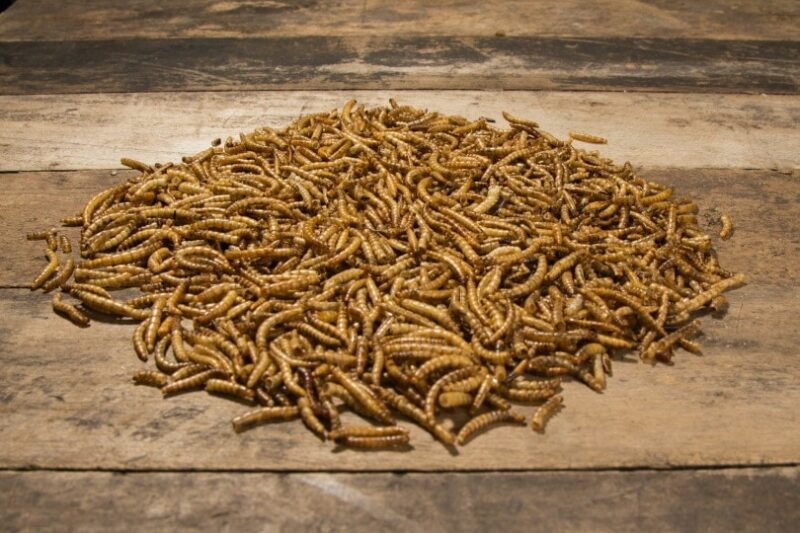
Turtles do benefit from a varied diet. You can purchase animal-based proteins like mealworms and waxworms, as well as crickets and sardines. Leafy greens are also good and healthy additions to their diet (if they are omnivores). Aquatic turtles will benefit from being given aquatic plants like duckweed and water lettuce. However, as the nutrition of pet turtles is a complex topic and is influenced by many factors, you should consult your veterinarian to ensure that you’re feeding your pet the appropriate food.
Conclusion
Turtles can make great pets. Part of ensuring a fulfilling experience with your pet is making sure they eat the right kinds of foods. Most omnivorous turtles can safely consume carrots. However, as carrots have some nutritional risks, they should be only offered in moderation.
Always remember that your first point of contact to formulate a nutrition plan for your pet should be your veterinarian, as there are many factors that play a part in your turtle’s nutritional requirements.
Related Reads:
Sources
Featured Image Credit By: Carlos G. Lopez, Shutterstock
Get Hepper In Your Inbox


Pet care tips from our vets and experts, straight to your inbox.
You may opt-out at any time. View our Privacy Policy for more information.
Dr. Luqman grew up with an extreme fondness for animals and turned a childhood dream into reality by becoming a veterinarian. His goals are now focused on helping pet owners understand their pets better in order to ensure the best quality of life for all pets globally. He is passionate about wildlife, exotic pets, pet owner education, and animal welfare. Luqman has 3 years of professional experience working with a variety of animal species. He has skills in demonstrating proper animal husbandry and training some exotic species, such as parrots. Additionally, he has decades of personal experience with keeping many exotic pets: freshwater fish, parrots, songbirds, chickens, ducks, turtles, and hamsters.
Dr. Luqman grew up with an extreme fondness for animals and turned a childhood dream into reality by becoming a veterinarian. His goals are now focused on helping pet owners understand their pets better in order to ensure the best quality of life for pets all around the world. His passions are wildlife, exotic pets, pet owner education, and animal welfare.
Education
Luqman received his degree from Universiti Putra Malaysia.
Experience
Luqman has 3 years of professional experience working with a variety of animal species. He has skills in demonstrating proper animal husbandry and training some exotic species, such as parrots. Additionally, he has decades of personal experience with keeping many exotic pets: freshwater fish, parrots, songbirds, chickens, ducks, turtles, and hamsters.
Join the conversation
Ask a question, share your story, or send private feedback.