Hepper blog

Search our database of over 9,984 posts with up-to-date information from our experts and veterinarians.

Hepper is reader-supported. When you buy via links on our site, we may earn an affiliate commission at no cost to you. Learn more.

Can You Pet a Cat After Flea Treatment? What You Need To Know!

By Nicole Cosgrove · Reviewed & fact-checked by Dr. Maxbetter VizelbergVet Approved
Dr. Maxbetter Vizelberg
Reviewed & Fact-Checked byDr. Maxbetter VizelbergVeterinarian
Maxbetter grew up in New Orleans, Louisiana, and has been interested in veterinary medicine since childhood. Being read Russian children’s stories about “Doctor Aybolit” by his grandmother, interning at the Israeli Wildlife Hospital, and working at numerous small animal hospitals have all been part of his lifelong love of animals. Maxbetter currently practices in New York City, and enjoys educating others to help them give their animals the best possible lives. He always strives to provide excellent medical care to his patients. Outside the clinic, he can be found playing basketball and soccer, performing his rap songs at open mics, and going on hikes with family and friends.View authorThe information is current and up-to-date in accordance with the latest veterinarian research. Read about our vets
Share
Ask us a question in the comments
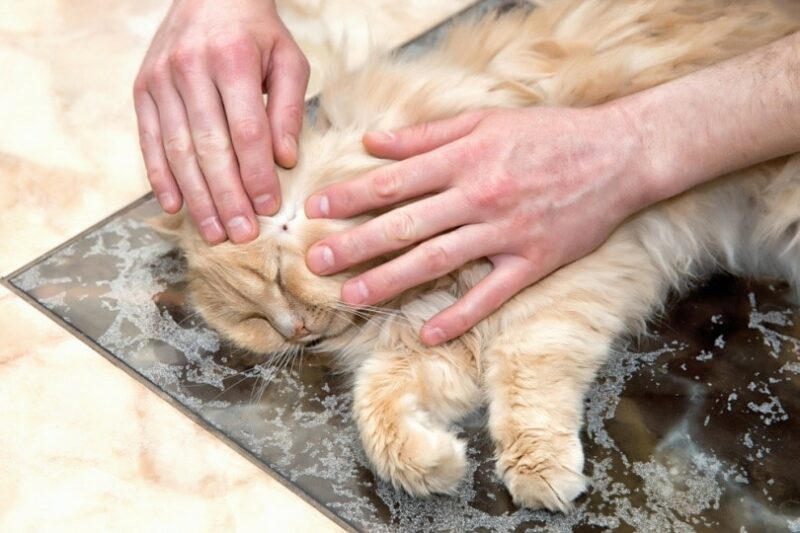
cat having flea treatment

You may be wondering if it's safe to pet your cat after you have treated them for fleas. The answer is yes, you can pet your cat after flea treatment, but there are a few things you should keep in mind. In this blog post, we will discuss the safety of petting cats after flea treatment and provide some tips on how to make sure your cat stays healthy and pest-free!

Before We Begin

As always, consult with your veterinarian before starting any flea treatment regimen to make sure it's safe for your cat and will not interact with any other medications they may be taking.

cat and vet
Image Credit: Stock-Asso, Shutterstock

How Long After Applying a Flea Treatment Can You Pet Your Cat?

How soon you can pet your cat after applying flea treatment depends on the type of treatment. With topical flea treatments, it’s best to wait 24-48 hours before petting your cat so that you don’t interfere with the medication.

For oral flea treatments, you can pet your cat immediately after your cat ingests the medicine. For flea shampoos, it is safe to pet your cat as soon as the shampoo is rinsed out.

How Do You Apply Flea Treatment to a Cat?

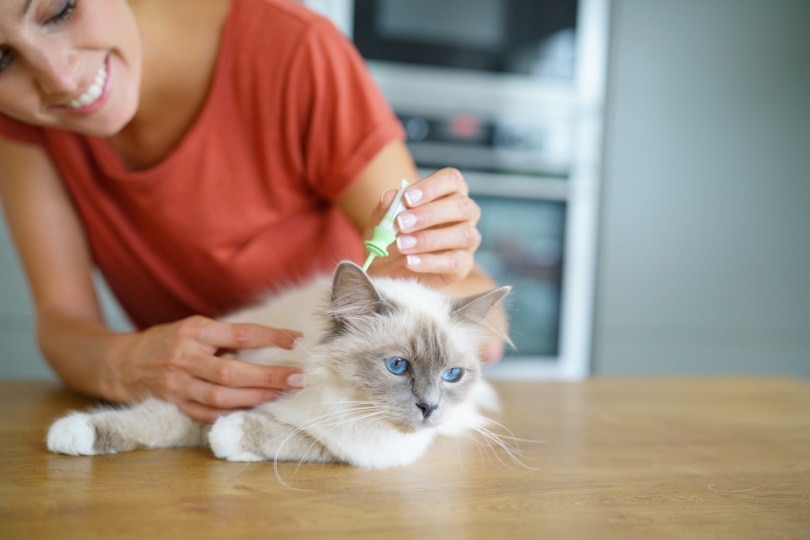
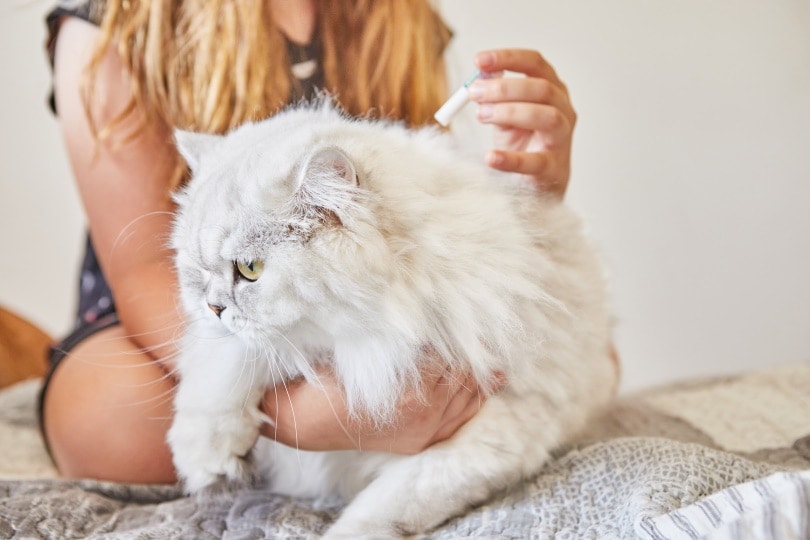
Many flea treatments are applied topically, which means they are applied to the skin and fur of your cat. It is important to follow the instructions on the package carefully and make sure that you do not get the drug on yourself or other members of your household, as it can be harmful if ingested or if it comes into contact with mucous membranes, such as the nose or mouth.

applying flea treatment to cat
Image Credit: Csaba Deli, Shutterstock

How Do Flea Treatments Work?

Flea treatments work by either killing fleas on contact or preventing them from reproducing. Some treatments, particularly oral treatments, also repel fleas, which can help to keep them away from your cat in the first place.

What Are the Side Effects of Flea Treatments?

The most common side effect of flea treatment is irritation at the site of application. This can cause redness, itchiness, and even hair loss. If you notice any of these signs, stop using the treatment and consult with your veterinarian. In rare cases, more serious side effects have been reported, such as seizures and vomiting. If your cat experiences any of these symptoms after being treated for fleas, call your vet immediately.

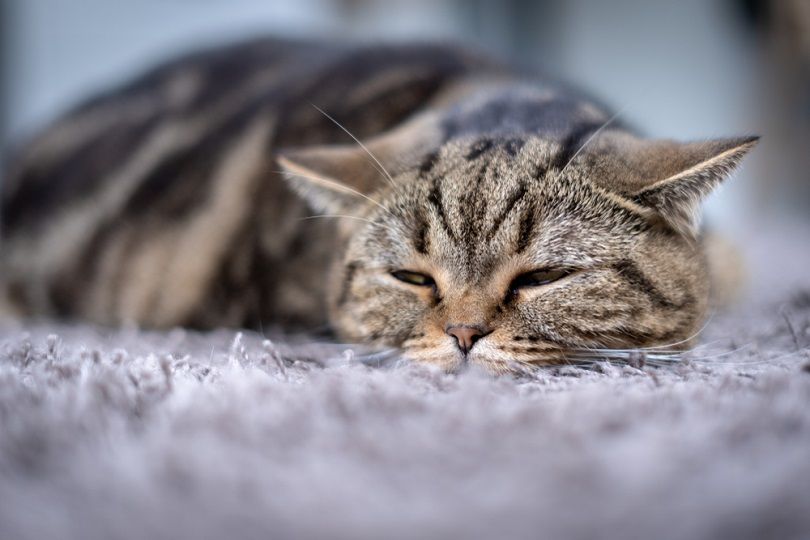
Cat scratching behind ears
Image Credit: FOX, Pexels

Flea Treatment Buying Guide

When it comes to flea treatment, there are a lot of products on the market. How do you know which one is right for your cat? In this blog post, we will give you a few things to consider when purchasing flea treatment for your cat.

  • Type of Treatment: There are two main types of flea treatments: oral and topical. Oral treatments are taken by mouth and work systemically, meaning they circulate through the bloodstream and kill fleas from the inside out. Topical treatments are applied directly to the skin and work by killing fleas on contact. Both types of treatments are effective, but some people prefer one over the other.
  • Your Cat's Age and Health: When choosing a flea treatment, it is important to consider your cat's age and health. Kittens and senior cats are more sensitive to the side effects of flea treatment, so it is important to choose a product that is specifically designed for them. If your cat has any health conditions, you should consult with your veterinarian before starting any flea treatment regimen.
  • Ease of Use: Some flea treatments are easier to apply than others. Topical treatments can be tricky to apply evenly, especially if your cat has a lot of fur. Oral treatments are easy to give, but some cats don't like taking pills. Consider how easy the treatment will be to use before making your purchase.
  • Price: Flea treatments can range in price from a few dollars to over $100. When choosing a treatment, it is important to find one that is effective and fits within your budget. There are a lot of great products on the market, so you should be able to find one that meets your needs without breaking the bank.
man holding flea and tick medicine
Image Credit: Dmitriev Mikhail, Shutterstock

Active Ingredients in Flea Medications

There are a few different active ingredients that are commonly used in flea medications, including:

  • Fipronil: This is a non-pyrethroid insecticide that is commonly used in oral and topical flea treatments. It works by disrupting the nervous system of insects, which causes them to die.
  • Pyrethroids: These are synthetic versions of pyrethrins, which are naturally occurring pesticides. Pyrethroids are the most common type of active ingredient found in flea treatments.
  • Permethrins: This is a type of pyrethroid that is commonly used in topical flea treatments. It is effective at killing fleas and ticks on contact.
  • Imidacloprid: This is a neonicotinoid insecticide that is commonly used in oral and topical flea treatments. It works by interfering with the nervous system of insects, which causes them to die. There are a few other active ingredients that are sometimes used in flea treatments, but these are the most common. When choosing a treatment for your cat, be sure to read the label carefully to make sure it contains an ingredient that is effective against fleas. Please note that pyrethroids, permethrins, and imidacloprid are NOT safe for use in cats and can actually be fatal if given to them. Due to cats’ inability to metabolize these drugs efficiently, it is safest to not give any topical product that is labeled for dogs to cats.
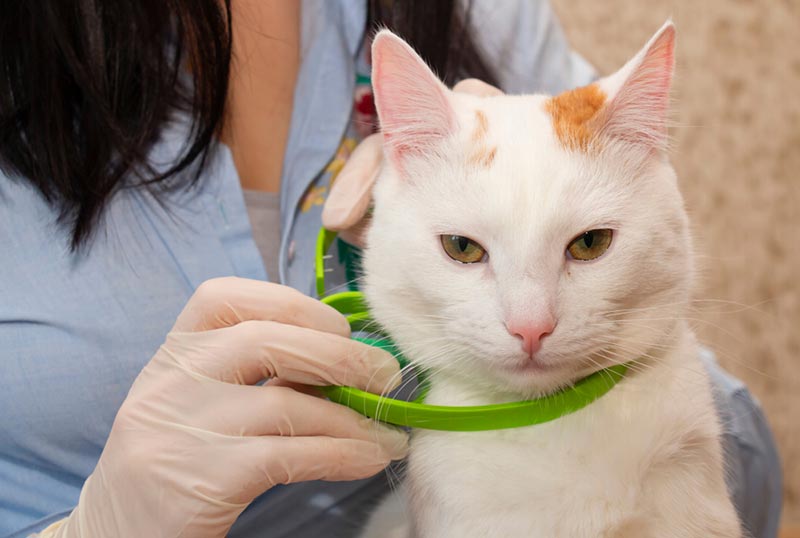
cat flea treatment
Image Credit: AlexDonin, Shutterstock

Are These Ingredients Safe for Humans?

All of the active ingredients that are commonly used in flea treatments are safe for humans when used as directed. However, it is important to avoid contact with the treatment while it is wet, as it can cause skin irritation. If you accidentally get some of the treatment on your skin, be sure to wash it off immediately with soap and water.

Final Thoughts

In conclusion, can you pet a cat after flea treatment? The answer is yes! Just be sure to follow the directions on the label and keep an eye out for any signs of irritation. If you notice your cat scratching more than usual, or if they seem uncomfortable, stop using the flea treatment and consult with your veterinarian. By following these simple tips, you can help keep your cat healthy and free of fleas without sacrificing any of your precious snuggle time!


Featured Image Credit: goodluz, Shutterstock

Get Hepper In Your Inbox

Pet care tips from our vets and experts, straight to your inbox.

List

Select all that apply.

You may opt-out at any time. View our Privacy Policy for more information.

Nicole Cosgrove
Authored by

Nicole Cosgrove

Join the conversation

Ask a question, share your story, or send private feedback.

Rate this post
Required to post. Only our editors see your rating.
Who should see this?

A human reviews every comment before it appears. Your email is never published.

Picked to go with this article

How Does Cat Flea Medicine Work? Vet-Verified Explanation

How Does Cat Flea Medicine Work? Vet-Verified Explanation

When you go to the vet with your cat, a daunting prospect in many cases, they will often suggest putting your cat on some sort of flea medicine. Flea medicines…

Grant Piper
By Grant Piper ·
How Do Vets Get Rid Of Fleas On Cats? Our Vets Answers

How Do Vets Get Rid Of Fleas On Cats? Our Vets Answers

There’s no use denying it – when we share our lives with pets, we also risk offering up our homes to all sorts of tiny squatters in the form of fleas, worms, a…

Dr. Joanna Woodnutt
By Dr. Joanna Woodnutt ·
What Happens If a Cat Licks Flea Medicine? Our Vet Answers

What Happens If a Cat Licks Flea Medicine? Our Vet Answers

Flea control is an important part of preventive healthcare for cats, particularly if they spend time outdoors. Many of the products available are applied topic…

Dr. Sharon Butzke
By Dr. Sharon Butzke ·
Is a Flea Collar Safe for a Cat? Science-Based Facts

Is a Flea Collar Safe for a Cat? Science-Based Facts

Fleas are common external parasites that can be quite bothersome to deal with, which is why pet owners go to great lengths and expenses to keep these pesky ins…

Lindsey Lawson
By Lindsey Lawson ·

Keep reading

More stories you might like

How Long Does Flea Medicine Take to Dry? Vet-Approved Facts & Tips

Flea medication is a necessary part of life when owning a pet. There are various different types of flea medications, ranging from oral medications to topicals…

Grant Piper
By Grant Piper ·
How Long Does Flea Medicine Take to Dry? Vet-Approved Facts & Tips

Found a Dead Tick on Your Cat? Vet-Approved Next Steps & Tips

We all love our cats, but sometimes they bring unwelcome visitors into our homes. Ticks can attach themselves to cats and cause an array of health issues, incl…

Nicole Cosgrove
By Nicole Cosgrove ·
Found a Dead Tick on Your Cat? Vet-Approved Next Steps & Tips

How to Give a Cat a Flea Bath in 6 Easy Steps (With Pictures)

If your cat has a flea infestation, it can be a harrowing problem to fix. A flea life cycle consists of four parts: egg, larva, pupa, and adult. These life cyc…

Nicole Cosgrove
By Nicole Cosgrove ·
How to Give a Cat a Flea Bath in 6 Easy Steps (With Pictures)

How to Eliminate & Prevent Fleas on Cats: 9 Vet-Approved Methods

If your cat has fleas, you know it can be quite challenging to get rid of them. They multiply quickly and can spread throughout your home in a matter of days.…

Ed Malaker
By Ed Malaker ·
How to Eliminate & Prevent Fleas on Cats: 9 Vet-Approved Methods

Can My Cat Get Fleas in the Winter? Vet Approved Facts & Advice

Fleas are a common problem in felines. They can easily spread in your home and are particularly hard to get rid of. While most pests cannot survive the harsh w…

Nicole Cosgrove
By Nicole Cosgrove ·
Can My Cat Get Fleas in the Winter? Vet Approved Facts & Advice

Cat Lice vs. Fleas: What Does My Cat Have? What Are the Differences

Lice and fleas are tiny creatures that are every pet owner's nightmare. Finding them on the skin and coat of your kitty is a disgusting experience. Fortunately…

Genevieve Dugal
By Genevieve Dugal ·
Cat Lice vs. Fleas: What Does My Cat Have? What Are the Differences

8 Natural Home Remedies & Treatments for Cat Fleas: Vet-Reviewed Recipes & Ideas

When fleas1 infest your home, your pet and family are thrown into turmoil. Fleas multiply rapidly, and their eggs can lay dormant for months, making removal ex…

Nicole Cosgrove
By Nicole Cosgrove ·
8 Natural Home Remedies & Treatments for Cat Fleas: Vet-Reviewed Recipes & Ideas

Can You Use Dog Shampoo on Cats? Vet-Verified Toxicity Facts and Safe Options

Pet parents who have multi-pet households might wonder if they can use their dog's shampoo on their cats. But this gambit can have potentially fatal consequenc…

Luxifa Le
By Luxifa Le ·
Can You Use Dog Shampoo on Cats? Vet-Verified Toxicity Facts and Safe Options