Hepper is reader-supported. When you buy via links on our site, we may earn an affiliate commission at no cost to you. Learn more.
How Long Does Flea Medicine Take to Dry? Vet-Approved Facts & Tips


In this article
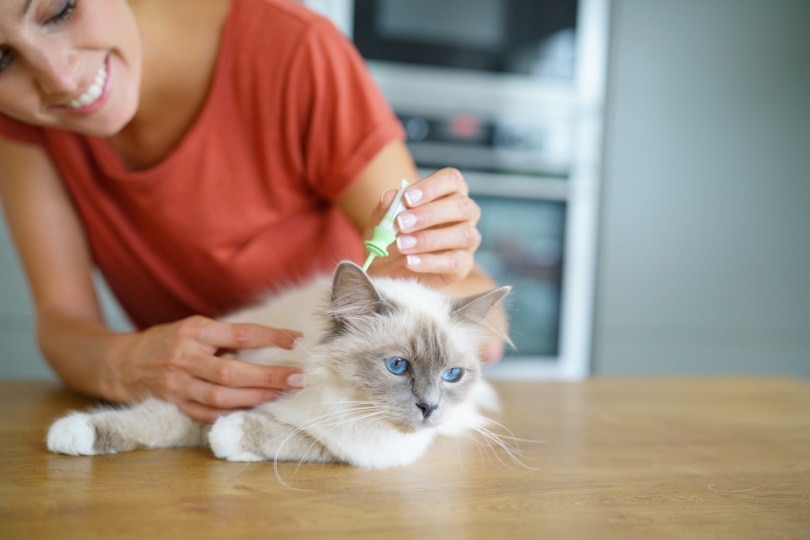
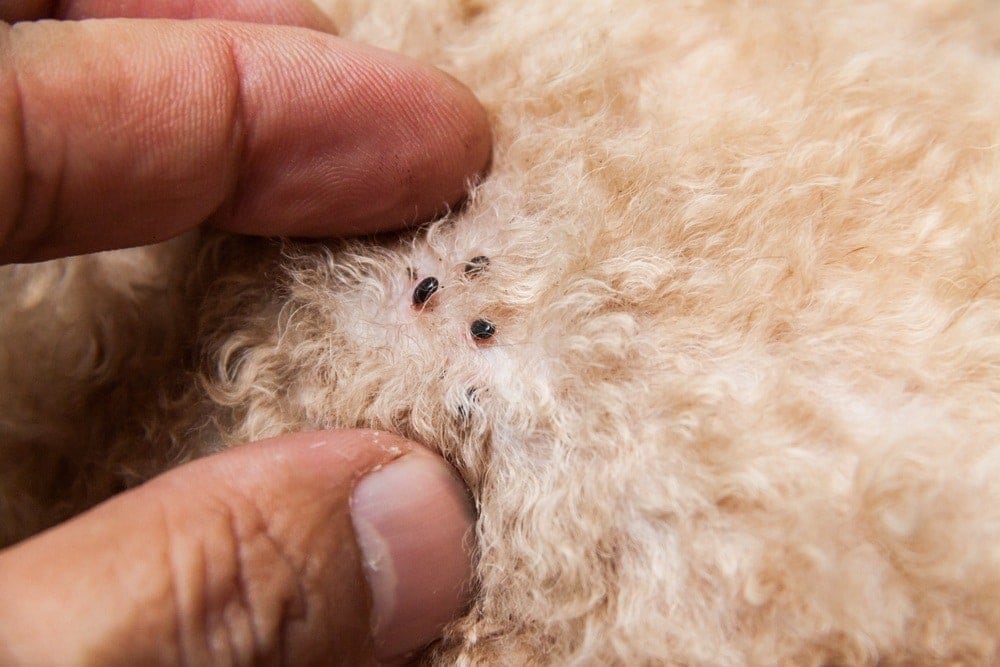
Flea medication is a necessary part of life when owning a pet. There are various different types of flea medications, ranging from oral medications to topicals. Flea medications that you put on the fur or skin take time to dry. These types include spot on and spray medications.
When you put these medications on your animals, it will take time to dry. During this time, you do not want to touch your pet or let them rub up against you or your kids. So, how long does it take for flea medicines to completely dry? It depends, but it usually takes anywhere from 2 hours to 48 hours. Here is what you need to know about the drying times for common flea medications.

Flea Medicine Drying Times
Some flea medications can dry quickly. The fastest flea medications dry after about 2 hours. Other medications may take a few hours to be dry to the touch. However, being dry to the touch does not mean you can assume all the medication has been absorbed. Nor should you go out of your way to touch the medication or bathe your pet.
Just to Be Safe
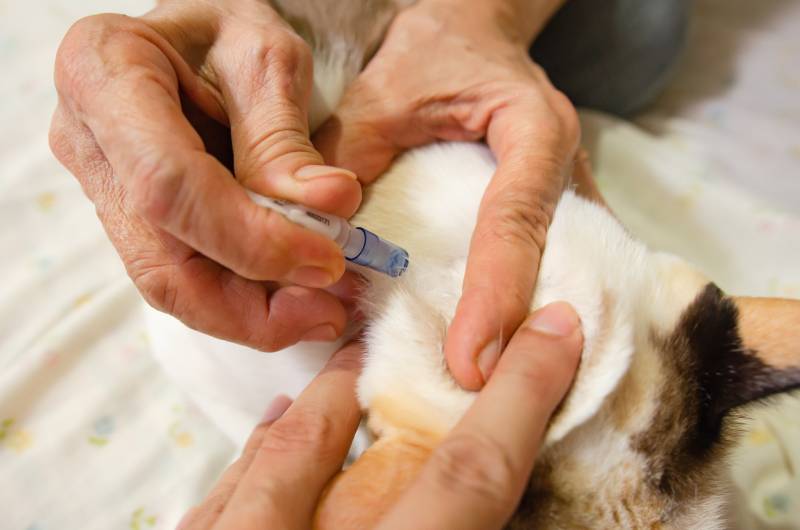
The recommendation by experts is to wait 48 hours after putting flea medication on a cat or a dog before you consider them to be completely dry. After 48 hours, all flea medications should be dry to the touch. If you are worried about your flea medication, you should wait 48 hours before petting or touching your animals where the product was applied.
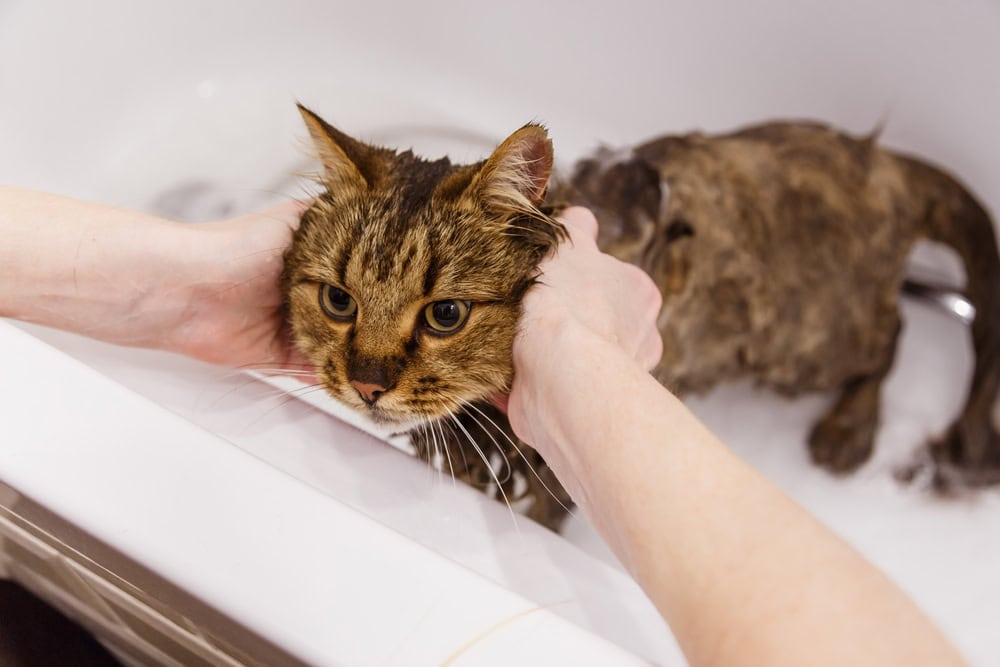
In addition to drying time, medications need time to be absorbed by your pet and you need to avoid washing them during this period. Generally, don’t wash your pet or let them get wet 2-3 days after applying topical flea medications, however, this will vary between different products and it’s a good idea to check the information inside the box for specific instructions.

Always Read the Label
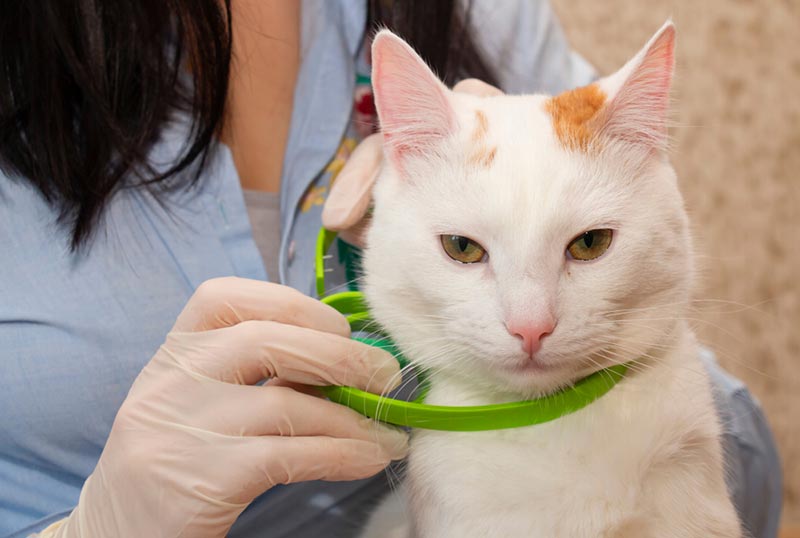
When in doubt, always read the label. All flea medications come with extensive safety information and instructions on the packaging that tell you how to apply the medicine. These instructions should also mention how long it takes the medication to dry to safe levels and when you can wash your pet. Each manufacturer will have different recommendations and instructions. Not all flea medications are the same.
If you are unsure about the drying time of a particular flea medication, read the label or look up the information on the manufacturer’s website to get the information straight from the source.

Spot-On Treatment vs. Spray-On Treatment
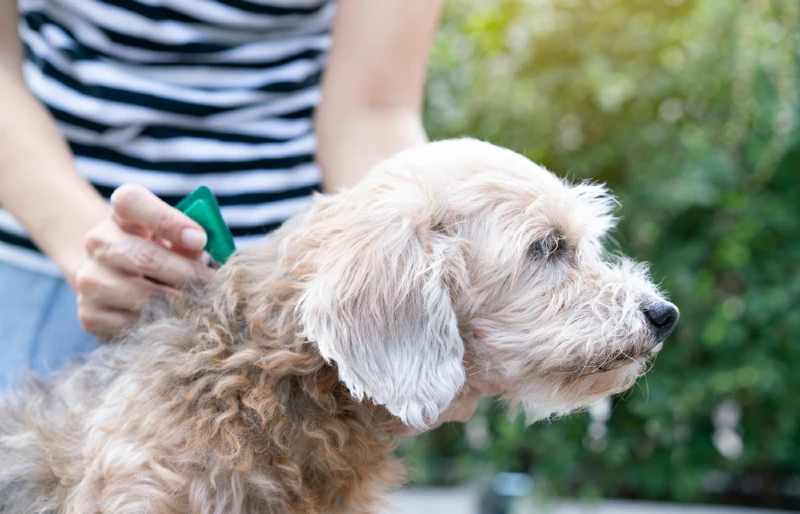
The two main types of flea medication that require time to dry are spot-on treatments and spray-on treatments. Spot-on treatments are topical medications that you put onto the skin of your cat or dog. These medicines usually get placed at the back of the neck to avoid your pet licking it off. Spot-on medications can dry as quickly as 2 hours, but most spot-on treatments come with the recommendation to wait at least 48 hours before considering your pet completely dry.
Spray-on treatments are anti-flea medications that come in spray bottles. Some spray-on medications can last weeks or even months. Spray-on medications take 30 minutes to a few hours to dry. Spray-on treatments do not often require the 24-hour waiting period that topical treatments recommend for the best results, but again check the manufacturer's instructions.
Why It Is Important to Be Careful With Flea Medicine
It is important to be careful with flea medications for a number of reasons. You do not want to get flea medication on your hands, especially concentrated topical medications. Flea medications can cause skin irritation. Some flea medications can also cause unwanted side effects like gastrointestinal upset and even drowsiness or sleepiness. If you get flea medication on your skin accidentally, you should wash the area thoroughly and immediately. It is for this reason that it is critical to wait until flea medication dries before touching your pet. It is also advisable to keep children away from pets that have topical flea medication actively on the skin.
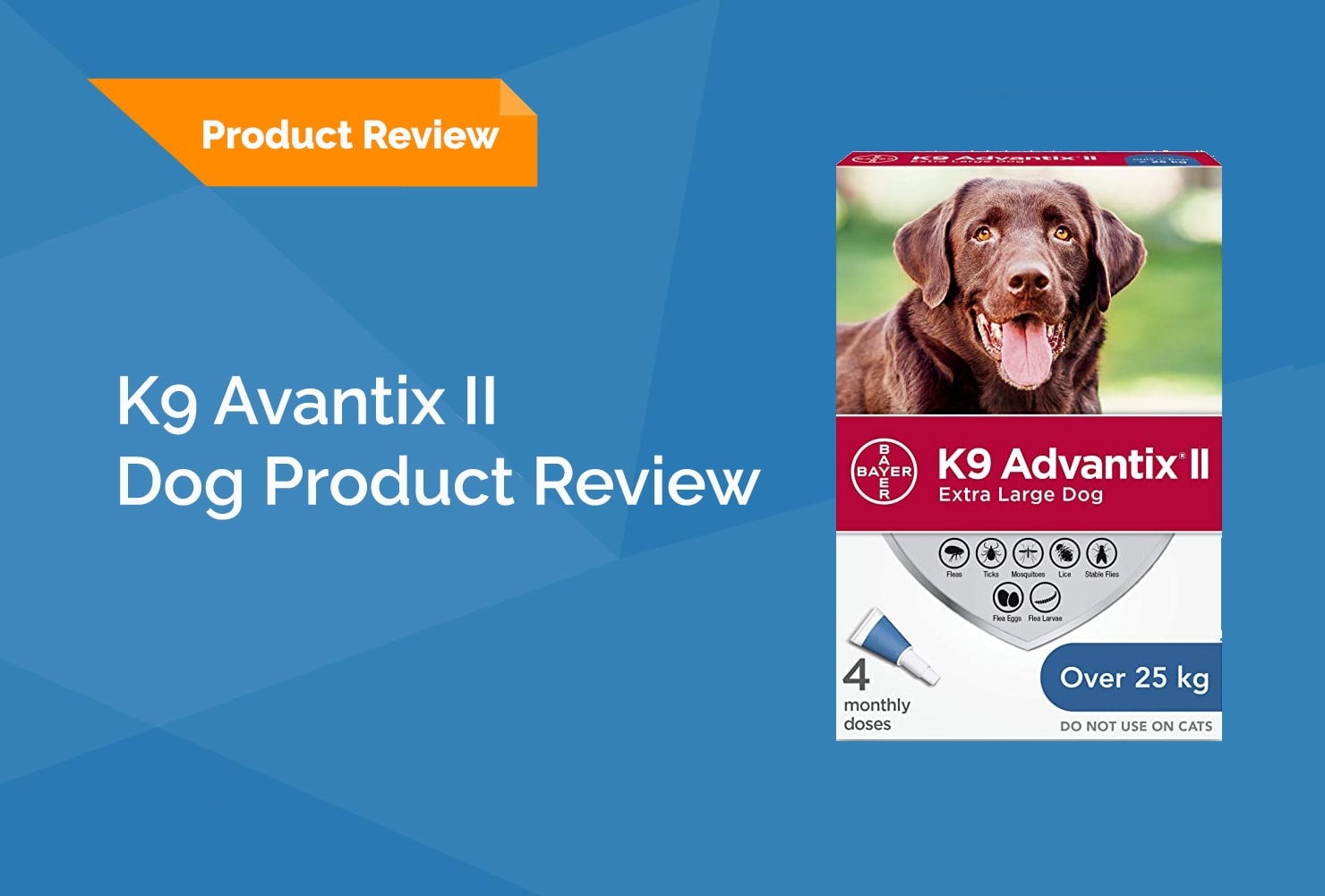
Another concern is the fact that some flea medications for dogs can be dangerous and even fatal to cats. Some dog flea medications contain a chemical called permethrin. Permethrin can be fatal to cats if they come in contact with it. You should always separate your dogs and cats when you treat them with topical flea medication to prevent this kind of accidental contamination. Some manufacturers recommend separating them for 48 hours. If you suspect that your cat has come in contact with permethrin, you need to contact your veterinarian or the Pet Poison helpline.
Conclusion
Flea medications usually take between 2 and 48 hours to dry. The best course of action is to check the specific instructions for the product you are using; you can find these instructions inside the box or on the manufacturer's website. There may be separate instructions for when you can safely bathe your pet without interfering with the flea treatment. Make sure the medication is dry before you touch the application site or let your pet out to play.
Sources
Featured Image Credit: Chutima Chaochaiya, Shutterstock
Get Hepper In Your Inbox


Pet care tips from our vets and experts, straight to your inbox.
You may opt-out at any time. View our Privacy Policy for more information.
Grant is a freelance writer with years of experience writing about a diverse range of topics. His days are spent writing and caring for eight animals (two horses, two donkeys, two goats, and two dogs). In his free time he enjoys slowly carving out a quaint hobby farm from the Southern scrub. He currently lives in his native Florida with his wife and son.
Join the conversation
Ask a question, share your story, or send private feedback.