Hepper is reader-supported. When you buy via links on our site, we may earn an affiliate commission at no cost to you. Learn more.
Cane Corso vs Doberman: How Do They Compare? (With Pictures)


In this article
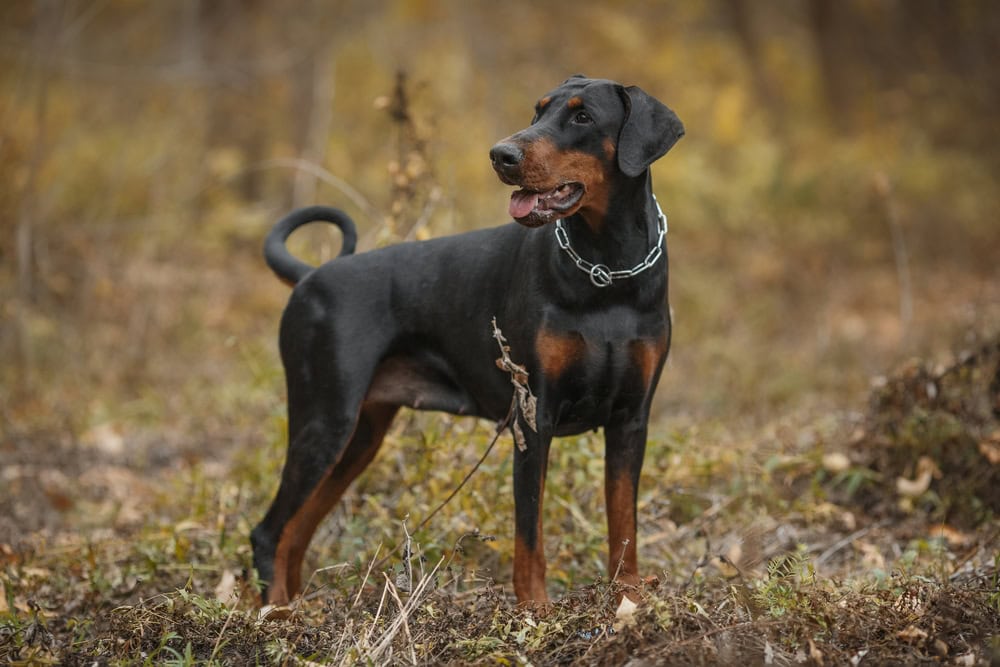
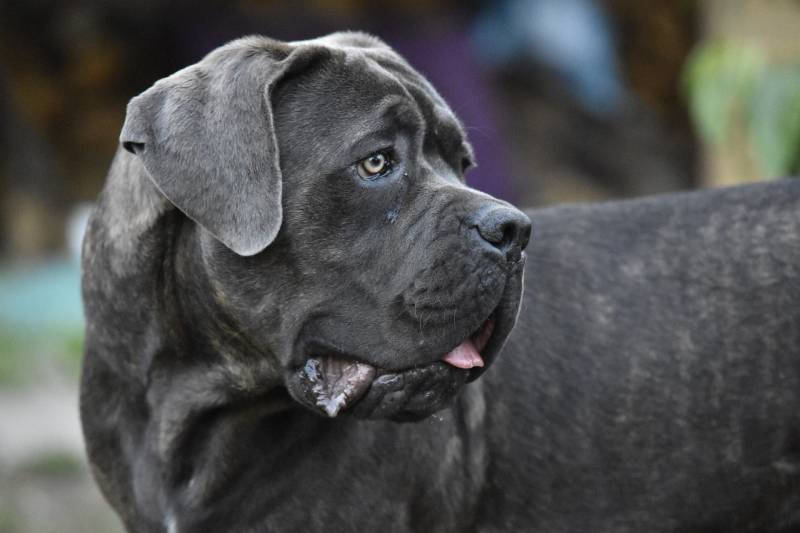
If you have been on the hunt for a watchdog, chances are you may have narrowed your search down to the Cane Corso and the Doberman Pinscher. Both breeds are large dogs with vigilant natures, and they’re always looking to protect their families. They are majestic, sleek canines with athletic builds and plenty of power.
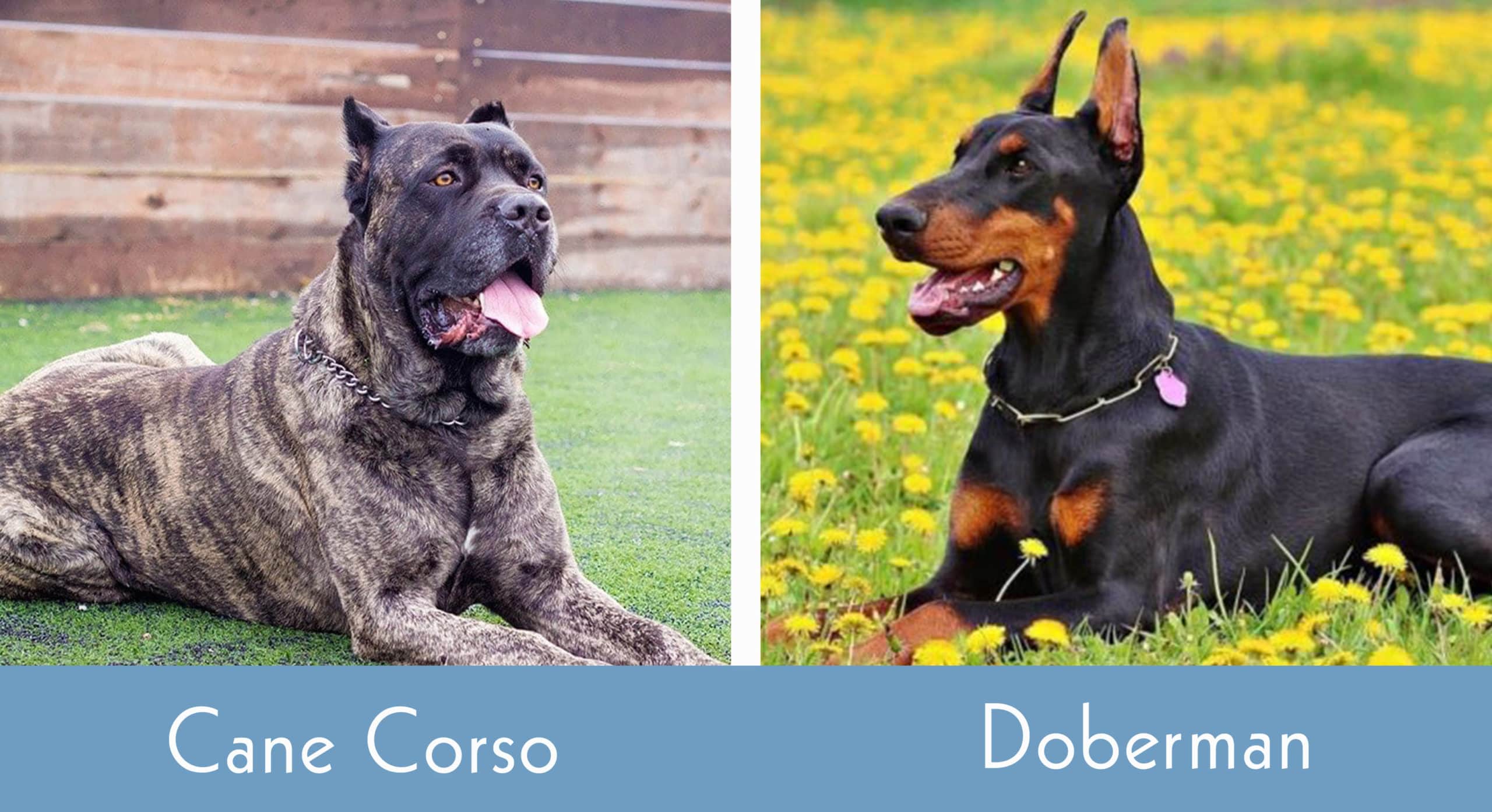
While similarities exist between the two breeds, some features make them stand out. There is plenty of variation between the Cane Corso and the Doberman in terms of personality, physical appearance, and trainability.
If you want to know more about these breeds to determine which of them is most suitable for you, keep reading.

Visual Differences
At a Glance

Cane Corso Overview

Personality / Character
Cane Corsos are known to be affectionate with their families, though they are somewhat less patient with younger children. Still, they have laid-back temperaments and are not overly vocal.
When trained well, the Cane Corso can be amiable and loyal. However, if not handled properly, a more willful streak can develop. In these instances, a Cane Corso may act as though they are in charge of the household. As long as correct measures are taken to train and socialize, the Cane Corso will be well-behaved and eager to please.
Exercise
With such an athletic build, it is only natural that the Cane Corso needs plenty of exercise. One walk or run in the morning and evening will be adequate to burn some energy and maintain healthy musculature.
Cane Corsos are working dogs and have the energy to spare. They require a lot of physical and mental stimulation to be content and healthy, and it is crucial not to ignore your dog’s need for activity. If it is not given enough opportunities to release its pent-up energy, unwanted behavior will likely appear.
Training
Training is essential to the management and development of any dog, but for a dog as large as the Cane Corso, it is vital. Obedience training will ensure that your Cane Corso does not view itself as the leader of the home. Since Cane Corsos are protective of their families, your dog must know that you are in charge and that you need to be obeyed, or else there could be an accident.
However, training a Cane Corso is generally very simple. They are intelligent and eager to please, responding much better to rewards than harsh words or punishments.
Health & Care
Overall, the Cane Corso is a healthy breed. There are some health complications that they may be at higher risk for, so it is essential to learn the warning signs of these conditions.
Hip dysplasia, or the abnormal development of the hip, commonly affects larger dog breeds. The same can be said for bloat, which is a life-threatening condition with a rapid onset. Other potential concerns include idiopathic epilepsy and eyelid abnormalities.
Like any dog, preventative measures should be taken to ensure your Cane Corso’s health. Its ears should be checked frequently for infection, its teeth should be brushed regularly to prevent dental disease, and its nails should be trimmed to avoid painful splits.
The Cane Corso has a double coat, which will shed more during different seasons. Weekly brushing is sufficient during normal seasons, but a Cane Corso should be brushed daily during heavy shedding periods.
Suitable for:
Cane Corsos are excellent dogs for someone prepared to handle a large breed dog. Lifelong training will be necessary for this breed, as they are liable to act on instinct if they do not know what is expected of them.
Anyone thinking of bringing a Cane Corso into the home will want to make sure that they can meet the breed’s high activity needs. This breed will not be the right fit if you want a lazy lapdog. However, Cane Corsos are loving, affectionate dogs who can become ideal companions.

Doberman Overview

Personality / Character
The Doberman Pinscher is a loyal and fearless watchdog. Although they are vigilant and protective, the breed is also known to be welcoming to strangers. They are extremely affectionate with their family members, though they are initially somewhat wary of other pets. When it comes to young children, they are extremely patient.
Dobermans are playful and energetic, but they may not want to roughhouse. They can be a sensitive breed and are more likely to want to play games than to wrestle. Dobermans are also highly adaptable to change, so new homes or new family members will be accepted much easier than some other breeds.
Exercise
Dobermans are lively. Exercise will be necessary to keep them out of trouble; if they are not given an adequate release of their energy, they may become destructive. Likewise, they require plenty of mental stimulation to help them behave.
Long walks are great for Dobermans, and an open space to run is necessary. These dogs are not well-suited to apartment living because of their activity needs and large size.
Training
Dobermans are a relatively easy breed to train. They are intelligent, can learn new tasks quickly, and are eager to please. However, a Doberman can quickly become challenging to manage if they are not trained and socialized properly. This breed is large and muscular, making them almost impossible to rein in without suitable training. Socialization and obedience training are vital during a Doberman’s puppyhood.
Health & Care
Dobermans are generally a healthy breed. Still, there are some health concerns that they are prone to. Much like the Cane Corso, there are some conditions that the Doberman is at higher risk for because it is a large breed. These include bloat and hip dysplasia but also dilated cardiomyopathy and von Willebrand's disease. Hypothyroidism is another condition that Dobermans are at a higher risk for.
When it comes to grooming, the Doberman is relatively low maintenance. Routine grooming is still needed to keep this breed looking fresh and feeling good, such as regular brushing and teeth cleaning, but other grooming does not need to be done quite as often. Bathing does not need to be frequent, and nail trimming should only be done monthly (or as necessary). However, a Doberman’s ears should be cleaned every few days.
Suitable for:
A Doberman is a great dog for anyone familiar with large-breed dogs. Those inexperienced with large breed dogs may find themselves quickly overwhelmed trying to keep up with the activity needs of this breed. Anyone planning on bringing a Doberman into the home must ensure that they can provide plenty of outlets for their dog’s energy.
For families, Dobermans are a great choice. They are vigilant watchdogs who have a lot of affection for their loved ones. They also tolerate the antics of younger children.

Which Breed Is Right for You?
Cane Corsos and Dobermans are relatively similar. They are large watchdogs with keen intelligence, and they are willing to be trained and eager to please, but if their training is neglected, they can soon take over as the bosses of the household. They are affectionate with their families and are overall healthy.
With either breed, it will be important that you provide activity outlets and lots of space. Likewise, you will need to be confident in training a large breed dog.
If you struggle to decide which breed is best for you, that is understandable. These canines are so similar that deciding which is the right fit can be difficult. Ultimately, your choice may simply come down to personal preference for one breed over the other.
See Also:
Sources
https://www.thefarmersdog.com/digest/doberman-pinscher-care-guide-personality-history-food/
https://www.thefarmersdog.com/digest/the-cane-corso-guide-history-personality-care-food-and-more/
https://www.petmd.com/dog/conditions/musculoskeletal/c_dg_hip_dysplasia
https://www.petmd.com/dog/conditions/digestive/signs-and-symptoms-bloat-dogs
https://www.merckvetmanual.com/dog-owners/eye-disorders-of-dogs/disorders-of-the-eyelids-in-dogs
https://vcahospitals.com/know-your-pet/von-willebrands-disease-in-dogs
https://vcahospitals.com/know-your-pet/hypothyroidism-in-dogs
Featured Image Credit: (L) Babeshkin, Shutterstock | (R) Dyrefotografi, Shutterstock
Get Hepper In Your Inbox


Pet care tips from our vets and experts, straight to your inbox.
You may opt-out at any time. View our Privacy Policy for more information.
Pets are Jordyn’s passion, cats especially. Whenever she has the opportunity, she loves to learn about them and share her knowledge with everyone. She is devoted to her tabby cat named Jack and works hard to buy him his favorite treats and toys. Discovering new ways to better care for her pet is always on her to-do list, and she is eager to help pet parents everywhere who have similar pursuits. In her spare time, she loves to read, write, and take long walks. She has a creative spirit, which often helps her to come up with funny cat names.
Join the conversation
Ask a question, share your story, or send private feedback.