Hepper is reader-supported. When you buy via links on our site, we may earn an affiliate commission at no cost to you. Learn more.
Cleaning Products That Are Safe for Cats: 7 Vet-Approved Household Items


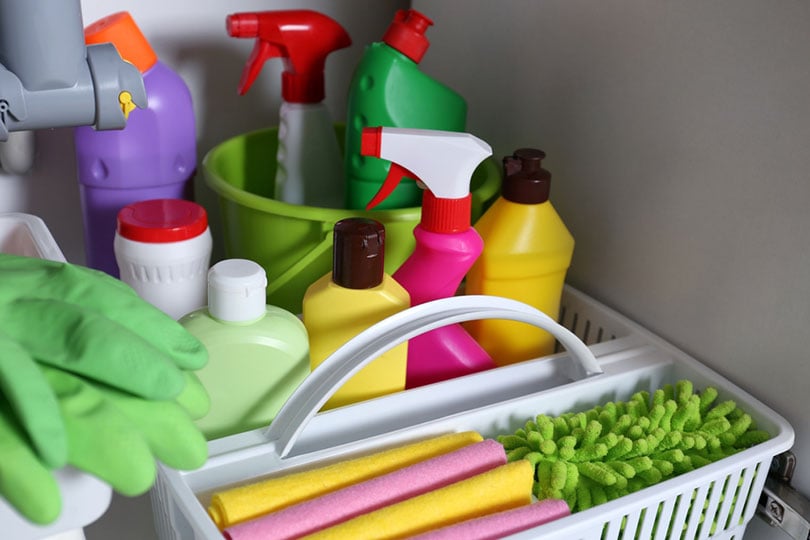
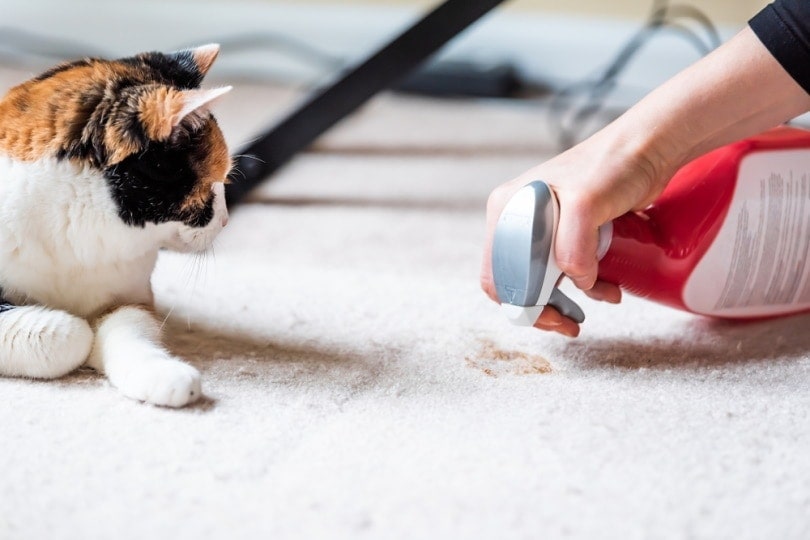
As a cat owner, you're probably quite used to messes, spills, and urine stains. There are many pet-friendly products on the market that you can spray straight onto your cat's mess and wipe up, but occasionally, these products run out right before an accident happens. If the pet stores are closed or you want to opt for a cleaning product that you already have in your cupboard, it's important to know which ones are safe to use around your cat and which aren't.
Before washing down your windows, walls, and floors, go through your household products and look through the ingredients. Any products containing questionable ingredients could cause an adverse reaction in your cat and should either be put to the side or thrown out.
To help you through the process, we've listed some pet-safe cleaning products as well as some common cleaning ingredients that most people have on hand.

Can Household Cleaning Products Make My Cat Sick?
Many cleaning products contain harmful ingredients that do a great job at killing bacteria and viruses but a bad job at keeping your cat safe. Cats walk, sleep, and eat out of bowls that are close to the ground and may come in contact with or breathe in these products.
Although bleach is a commonly used cleaning product in most homes, it is not safe for cats1. However, it is not the only product that should be avoided. Any cleaning product that contains ingredients such as phenols, phthalates, ammonia, alcohol, essential oils, formaldehyde, and chlorine are off-limits when it comes to your cat. These ingredients are found in many disinfectants, toilet bowl cleaners, mildew removers, and stain removers.
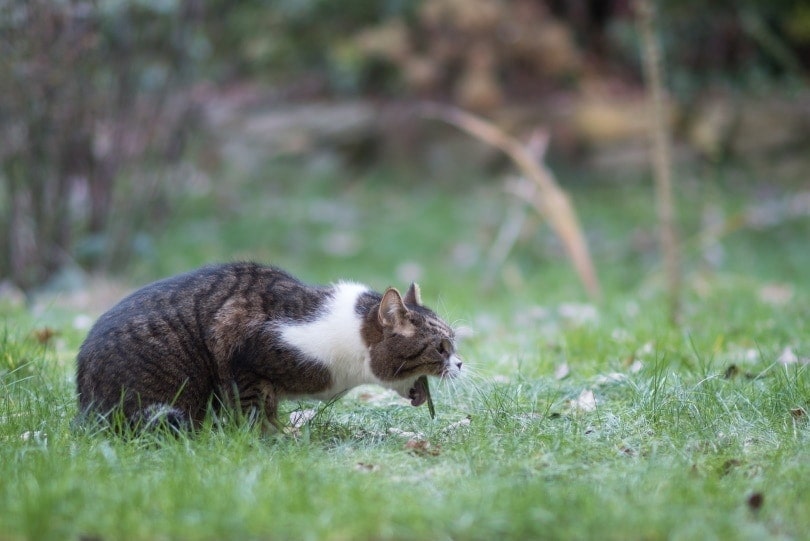
If your cat has been exposed to these ingredients, they have the potential to cause ulcers on your cat's paws and in their mouth. They can cause your cat to cough, collapse, become lethargic, drool, foam at the mouth, vomit, have diarrhea, and develop swelling on their skin.
These symptoms can be serious, and a cat that has ingested or inhaled these ingredients needs to be seen by their vet. You'll need to tell your vet what product your cat was exposed to and when so that they have as much information as possible to best treat your cat.
What Types of Household Cleaning Products Can I Use Around Cats?
The good news is that many "safe" cleaning products do the job just as well. Cleaning products that you want in your cupboard are those with labels that say "all-natural" or "holistic" with a list of ingredients that back up their claims. If the cleaning product contains any of the ingredients listed above, the product is dangerous to your cat and should be avoided. If you have any questions about the safety of your cleaning products, speak to your veterinarian.
The 7 Cleaning Products That Are Safe for Cats
1. Dish Soap
Dish soap is used just about every day, so it's important to have one that is safe to use around your cats. Dawn dish soap is an excellent option and is even safe to use on your cat instead of cat shampoo in a pinch. Just don’t make a habit out of using it as a shampoo and make sure to thoroughly rinse it out, as it can dry out their skin.
Although there are several ingredients in Dawn dish soap, they are derived from natural sources, making it a safe option to use on your dishes as well as in your cat's environment.
2. Enzyme Cleaner
Instead of using stain removers that contain ammonia, opt for an enzyme cleaner. They are just as effective, easy to use, and, most importantly, safe. Everyone with a cat needs an enzyme cleaner to tackle tough stains and smells on just about any surface.
Enzyme Sprays are effective and safe to use on carpets, floors, litter boxes, and cat toys. Although it smells good, the fragrance isn't harmful to cats. It is the ideal product to rid your home of urine, vomit, or poop stains. It doesn't contain bleach, phthalates, sulfates, peroxide, or parabens.
Our favorite enzyme cleaner for eliminating pet smells and stains is our very own Hepper Advanced Bio-Enzyme Pet Stain & Odor Eliminator Spray. It makes clean-up a breeze because it permanently removes even the very worst smells and stains (urine, feces, vomit, you name it!) from basically any surface you can imagine.

- ADVANCED ENZYMATIC CLEANER - Penetrates the most stubborn smells and stains at the deepest molecular levels to dissolve any pet mess you encounter and lift it away at the source.
- FOR ANY MESS, ON ANY SURFACE - This pet odor eliminator cleans your carpets, floors, furniture, fabrics, and more. Whether it's urine, feces, vomit, or drool, you can erase all foul spots and smells!
- FRESH, NATURAL ODOR - Our unique formulation doesn't rely on dangerous or unpleasant chemical fragrances to get the job done. We eradicate smells and stains, not just cover them up.
3. Floor Cleaner
What you use on your floors matters because it is where your cat's paws are going to be. Your cat may also lick your wet floors or eat spilled kibble off them. Phenol is an ingredient often found in floor cleaners, which can hurt your cat's skin and eyes, as well as their lungs if they breathe it in. If ingested, phenols can lead to liver damage and neurological problems.
A safe option that you can use in a cat household is Aunt Fannie's Vinegar Wash. It is all-natural and effective at breaking down the dirt, food, and grime on your floors. You can use it on a variety of floor surfaces, and your floors don't need to be rinsed after you use this product.
4. Laundry Detergent
Although cats are excellent groomers, they aren't great at keeping their beds clean. You'll need to regularly wash their bedding to remove hairs, dead skin, dirt, and possibly even parasites. However, residue from your laundry detergent can get left behind on their bed and the blankets they like to curl up on around your home. Chlorine and formaldehyde can be found in laundry detergent, so opt for options without them.
Tide Free & Gentle Laundry Detergent is free from chloride and formaldehyde and is effective at getting rid of tough stains and odors from your laundry. It is unscented, free of dyes, residue-free, and gentle on pets.
5. Sink and Toilet Cleaner
Although it might be a bad habit, some cats enjoy drinking out of the toilet or the sink. If your cat loves to drink out of anything but their water bowl, you've got to be extra careful with the products you use to clean your toilets and sinks.
You may have used bleach (or chloride) before, but this product is strong smelling for people and even more intense for cats. Not only is it not great for a cat to breathe in, it can also cause skin and eye irritation. Other toilet cleaners contain ammonia. Both these ingredients can cause respiratory problems in your cat.
Naturally it's clean toilet cleaner is a plant-based product that is non-toxic, natural, and vegan. It doesn't leave harsh fumes like bleach does and can safely be used around your pets.
6. Multi-Surface Cleaner
Always check the ingredients in your multi-surface cleaner because many contain ammonia, which can cause damage to your cat's respiratory system or burn inside your cat's mouth.
Instead, consider Puracy Green Tea & Lime Natural Multi-Surface Cleaner, which can be used on many different types of surfaces, including those your cat loves to curl up on. It is a safe product because it is made up of plants and water. It is also vegan, non-toxic, and hypoallergenic. It also smells good without the use of harmful essential oils.
7. Carpet Deodorizer
Many carpet deodorizers are loaded with harmful substances that can be detrimental to your cat's health. Aunt Fannie's Carpet Refresher Lavender Deodorizer is a gentle deodorizer that isn't harmful to your cat because it is non-toxic and contains natural ingredients such as baking soda and silica.
You can use this product on carpets, rugs, and sofas. One of the best features of this product is its clean-smelling fragrance. Remember to vacuum up this product after 15 minutes.
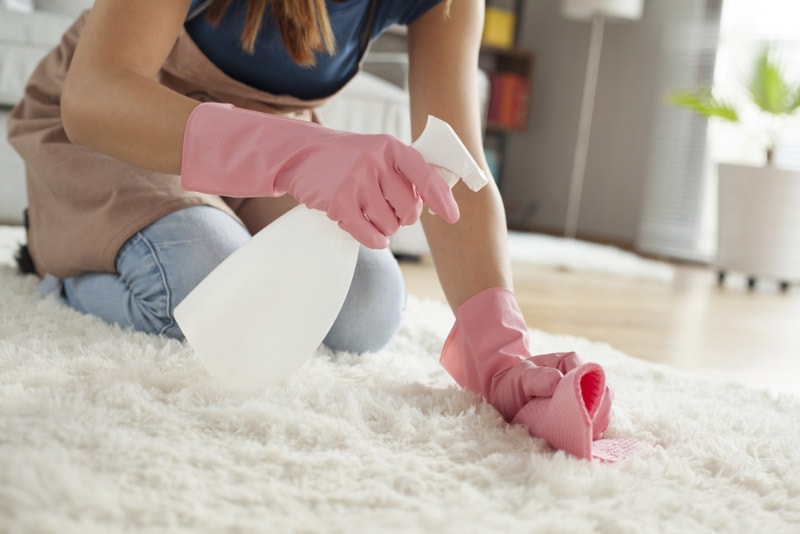
What Natural Products Can I Use?
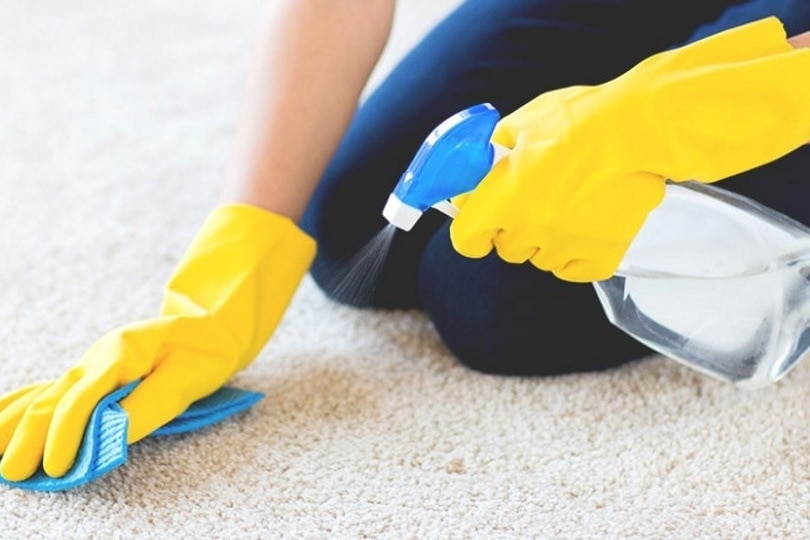
If you want to use safe products and ones that you already likely have in your cupboard at home, opt for natural cleaning products like vinegar, baking soda, and lemon juice.
- Baking soda is wonderful at absorbing odors and removing stains. It can unclog drains, be used as a scrub for grimy surfaces, brighten laundry, and clean toilets. It can be used as a paste when mixed with a bit of water, or it can be mixed with vinegar to add a powerful shine.
- Vinegar can be used to wash your clothes, clean your floors, remove stains, soften fabrics, wash your windows, and remove odors. You can also mix in lemon juice for a fresh scent in your home.
- Lemons and lemon juice can be used to get rid of unwanted smells, shine up taps and pots, deter insects from your home, remove rust, clean glass and mirrors, and clean your toilet. Just remember that cats might not like the scent, so be sure there’s good ventilation when you use lemon juice and consider keeping your cat out of the room until the smell has dissipated. With these three natural products, you can safely clean your whole home.
Conclusion
Many cleaning products contain harmful ingredients that can leave your cat sick with respiratory issues, ulcers, swelling, and vomiting or worse. If you are a cat owner, swap out your strong-smelling, harmful products for cleaning products that are all-natural and safe for your cat.
Always check the ingredients listed on the back of the product, and if there are any questionable ingredients, move on to something else. If you'd rather use natural products that you likely already have in your cupboard, you can use baking soda, vinegar, and lemon juice to clean your laundry, floors, windows, surfaces, sinks, and toilet bowls.
Sources
https://www.healthline.com/health/vinegar-in-laundry#deodorize
https://www.southernliving.com/things-to-clean-with-baking-soda-7098169
https://blancliving.co/blogs/news/7-clever-ways-to-clean-with-lemons
https://www.akcpetinsurance.com/blog/8-common-household-dangers-for-cats
https://www.ethosvet.com/blog-post/household-cleaners-and-keeping-your-pets-safe/
https://www.preventivevet.com/pets/pet-safe-home-cleaning-products
Featured Image Credit: New Africa, Shutterstock
Get Hepper In Your Inbox


Pet care tips from our vets and experts, straight to your inbox.
You may opt-out at any time. View our Privacy Policy for more information.
Keri-Beth is from South Africa and is a freelance writer who specializes in the pet niche. She has grown up with a range of pets, volunteered at countless pet shelters, and is highly passionate about pet care. Currently, Keri-Beth is raising two dogs - Benji, the Golden Cocker Spaniel, and Gracie, the Boerboel. With so much information out there, Keri-Beth has made it her mission to make pet care as easy and straightforward as possible.
In her spare time, Keri-Beth enjoys camping, photography, and spending time with her husband, who is a professional drummer. She not only has a heart for pets but people too.
Join the conversation
Ask a question, share your story, or send private feedback.