Hepper is reader-supported. When you buy via links on our site, we may earn an affiliate commission at no cost to you. Learn more.
8 Common Corgi Health Problems - What to Consider When Choosing a Breeder!



In this article
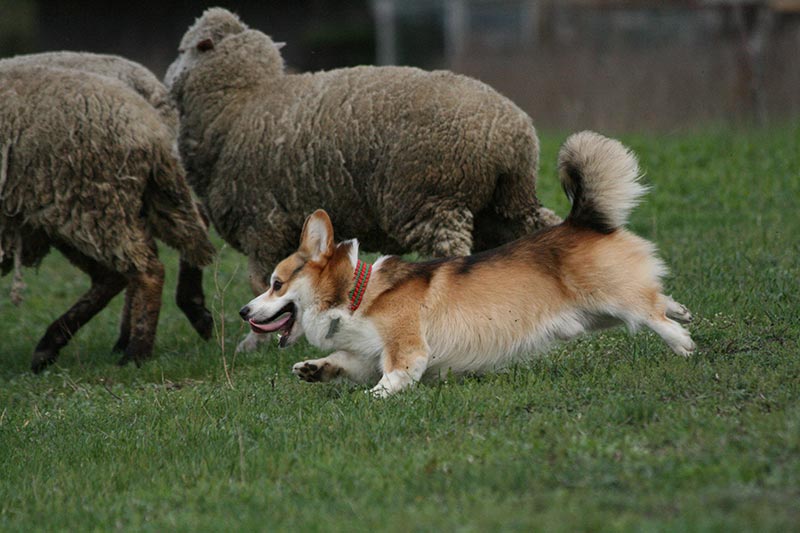
Short-legged Corgis come in two distinct types: Pembroke and Cardigan. The quick way to distinguish between the two is that the Cardigan has a long tail, and the Pembroke has a very short one.
Besides that, there are some other physical differences, but both Corgis can inherit similar health issues. Here are eight common Corgi health problems, what to do about them, and how to pick a breeder so you can hopefully avoid many of them.

The 8 Most Common Corgi Health Problems
1. Hip Dysplasia
| Type of health problem: | Bone and joint |
| How it’s treated: | Surgery, medications |
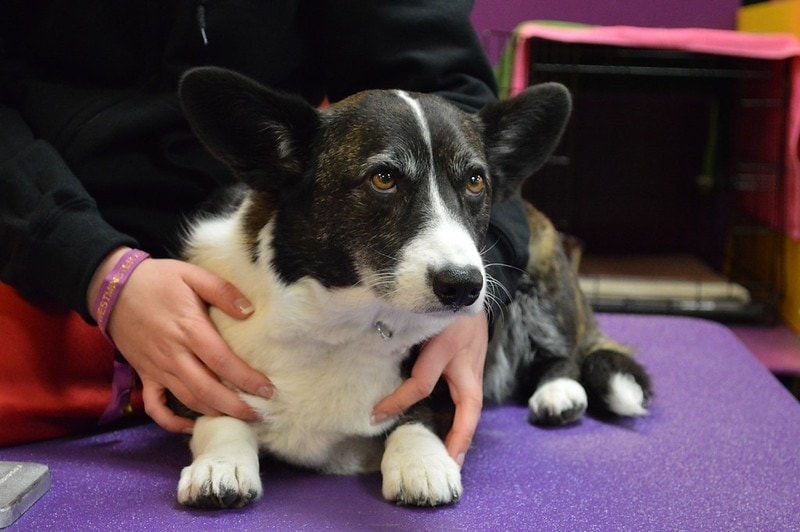
Hip dysplasia is a common, painful, inherited joint issue in many breeds, including Corgis. In this condition, the ball of the dog’s femur (largest hind leg bone) doesn’t fit properly into the hip joint socket. Symptoms include limping and decreased activity levels.
Your vet will probably suggest taking an X-ray and asking about your Corgi’s family history if they suspect hip dysplasia is causing your dog’s lameness. Severe cases of hip dysplasia may need to be treated with surgery. Others can be managed with joint supplements and pain medications. Corgis with hip dysplasia are also more likely to develop arthritis as they age.
2. Progressive Retinal Atrophy

| Type of health problem: | Eye |
| How it’s treated: | No cure or treatment |
Progressive retinal atrophy (PRA) is an inherited eye condition that may not be detected until a Corgi is older. With PRA, a Corgi’s retina, the part of the eye that detects light, gradually starts to degenerate.
As this happens, the dog loses their vision and eventually goes completely blind. Dogs typically lose their night vision first, so you may notice your Corgi hesitating to go up and down stairs in the dark, for example. Your vet will check your dog’s eyes and ask about its family history.
Sometimes, they may suggest visiting a veterinary eye specialist to diagnose PRA. There is no cure for this condition. Thankfully, PRA is not painful, and dogs typically adapt well to vision loss because they don’t rely on the senses as much as humans. Your vet can suggest resources to help you learn to live with a blind dog and how to help them adjust.
3. Cataracts

| Type of health problem: | Eye |
| How it’s treated: | Medications, surgery |
Cataracts can be an inherited eye issue or result from a disease, most commonly diabetes. In this condition, the lens of the dog’s eye becomes cloudy, eventually leading to vision loss as it progresses.
However, cataracts may progress slowly and never even get to where they cause your Corgi to have trouble seeing. Your vet or a veterinary eye specialist will be able to diagnose cataracts using a specialized eye exam.
Depending on the cataracts’ severity, your vet may prescribe eye drops to decrease inflammation and improve comfort. Once cataracts progress to a certain point, you may have the option of surgery to remove them. A veterinary ophthalmologist must perform this procedure.
4. Degenerative Myelopathy
| Type of health problem: | Spine/nervous system |
| How it’s treated: | No treatment or cure |
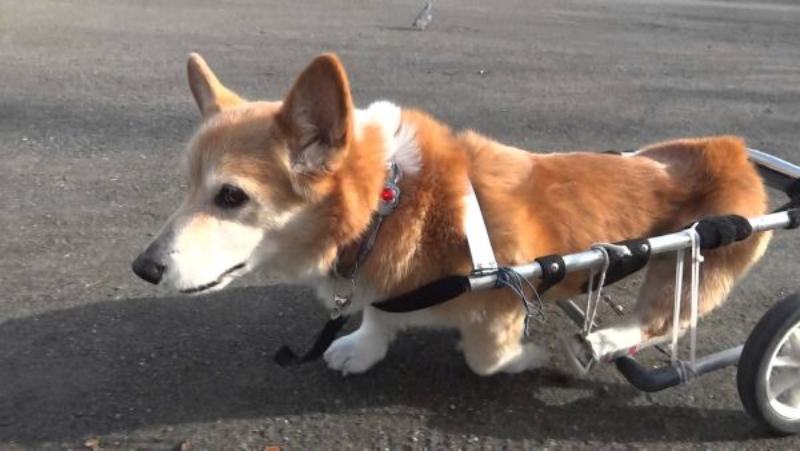
Degenerative myelopathy (DM) is a mysterious spinal condition linked to a genetic mutation. Certain breeds are more at risk of the disease, including both types of Corgis.
With degenerative myelopathy, part of the dog’s spinal cord degenerates, leading to trouble walking. Eventually, the dog’s hind legs will become completely paralyzed. Signs of DM don’t typically occur until the dog is middle-aged, usually after about 8 years of age.
The early signs include wobbling and weakness when walking, as well as difficulty standing up. It can be hard to diagnose DM because the early signs are similar to many other conditions. If DM is suspected, there is a blood test that can detect the mutated gene. Once diagnosed, there is no cure or treatment for the condition.
5. Von Willebrand’s Disease
| Type of health problem: | Blood |
| How it’s treated: | Symptomatic care, lifestyle changes |
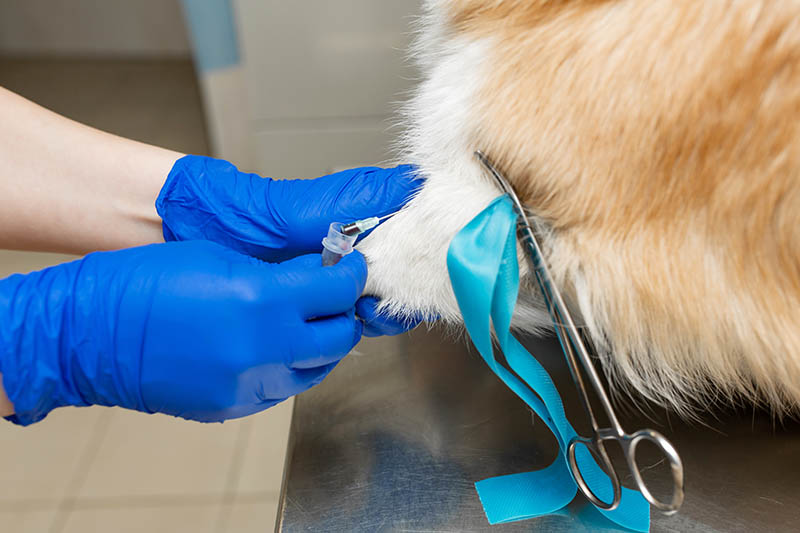
Von Willebrand’s disease is an inherited condition where the dog doesn’t produce enough of one of the proteins that help blood clot correctly. Because of this, the dog is at risk of uncontrolled bleeding if they suffer an injury. Corgis with this disease may not show symptoms, or you may notice bruising and possibly nose bleeds.
Often, Von Willebrand’s is not diagnosed until a dog needs surgery. If your vet suspects the disease, they may recommend a specific blood test to diagnose it.
There is no cure for von Willebrand’s, but you’ll need to be more cautious about allowing your dog to engage in activities where they could be injured. Your vet will also need to take precautions for surgery or when taking blood samples from your dog.
6. Patent Ductus Arteriosis

| Type of health problem: | Heart |
| How it’s treated: | Surgery |
Patent ductus arteriosis (PDA) is a heart condition that develops while the Corgi puppy is in the womb and remains after birth. Before birth, a puppy doesn’t use their lungs, so a special opening in the heart directs blood away from them.
Normally, this opening closes before the puppy is born, allowing full blood flow to the lungs. With PDA, the opening doesn’t close all the way. Because the puppy’s blood can’t fully access the lungs, it doesn’t carry enough oxygen as it pumps through the body. Your vet may hear changes to your puppy’s heart rhythm with PDA.
Other signs include coughing, trouble breathing, weakness, and exercise intolerance. If your vet suspects PDA, they will likely refer you to a dog cardiologist for care. PDA can usually be repaired with surgery.
7. Spinal Disk Disease
| Type of health problem: | Spinal/nervous system |
| How it’s treated: | Surgery, medications, rest |
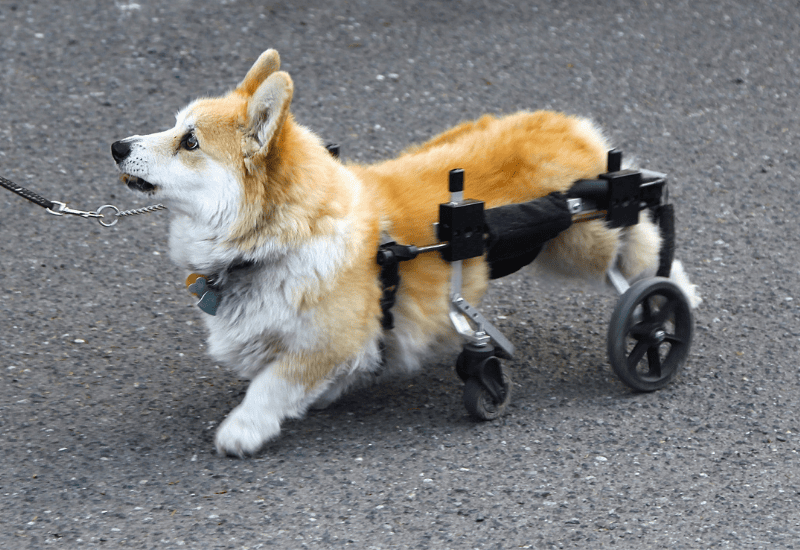
Corgis share a similar body type with Dachshunds and Bassett Hounds which puts them at risk of developing back and neck problems. With spinal disk disease, the soft pads, or disks, between the bones of the dog’s spine harden over time and stop doing their job properly.
They may slip out of place, putting pressure on the Corgi’s spinal cord. This can lead to pain, trouble walking, and issues controlling peeing and pooping. Severe forms of the disease can lead to the dog becoming paralyzed. Depending on how impacted your Corgi is, spinal disk disease can be treated with rest and pain medications or require surgery.
8. Epilepsy

| Type of health problem: | Brain/nervous system |
| How it’s treated: | Medication |
Epilepsy is a seizure disorder inherited in many breeds, including Corgis. The exact cause of epilepsy is not known, however. Dogs can have seizures for many reasons, and epilepsy is typically diagnosed by first ruling out other causes. Signs of epilepsy usually first occur in young adult dogs. You likely won’t notice any symptoms other than the seizure activity, which may include shaking, tremors, or full-body convulsions.
However, if you don’t witness your dog’s seizure, you may notice them drooling and acting confused afterward. There is no cure for epilepsy, but it can generally be controlled with medications.
Most dogs need to stay on these medications for life, and it’s essential to work closely with your vet to make adjustments to minimize your dog’s seizures.
Choosing a Corgi Breeder
Because these health conditions all tend to be inherited or are suspected to be genetic, choosing a breeder dedicated to producing the healthiest dogs possible is crucial. Corgis with many of the conditions we listed shouldn’t be used for breeding.
In America, the Corgi breed clubs recommend that several screening tests be performed on potential breeding dogs. These tests include:
- X-rays for hip dysplasia
- Eye check and blood test for PRA
- Blood test for the DM genetic mutation
Experienced breeders may also check for von Willebrand’s disease. When looking for a Corgi breeder, ask to see the documentation that they’ve performed these screening checks on their dogs.
Responsible breeders should be transparent about any health issues in their dog’s family tree, including epilepsy and cancer. Avoid any breeder who can’t provide proof of the screening tests we mentioned or who doesn’t want to answer all your questions about your potential puppy’s family health history.
Summary
Although you need to be aware of these eight common Corgi health problems, don’t let them scare you away from the breed. Corgis are considered relatively healthy in general, and choosing a responsible breeder can increase your chances of getting a healthy puppy.
Regular checkups with your vet can help you catch many of these problems early. Although not all of them can be treated, early detection is generally best for those that can.
Sources
Featured Image Credit: Andrii Medvednikov, Shutterstock
Get Hepper In Your Inbox


Pet care tips from our vets and experts, straight to your inbox.
You may opt-out at any time. View our Privacy Policy for more information.
A lifelong lover of all creatures great and small, Elizabeth got her first cat at 5 years old and at 14, she started working for her local veterinarian. After spending more than 20 years working as a veterinary nurse, Elizabeth decided to step away to become a stay-at-home parent to her daughter. Now, she is excited to share her knowledge with our pet parents. Elizabeth lives in Iowa with her family, including her two fur kids, Linnard, a husky mix and Algernon, the worldʻs most patient cat. When not writing, she enjoys reading, watching soccer, and spending time outdoors with her family.
Join the conversation
Ask a question, share your story, or send private feedback.