Hepper is reader-supported. When you buy via links on our site, we may earn an affiliate commission at no cost to you. Learn more.
How to Prevent Corgi Back Problems: 7 Expert Tips


We want our pets to be happy and healthy, but sometimes, they are prone to certain health issues that make it challenging to keep them in the best of health. Take Corgis, for example. These adorable pups are prone to back problems (particularly intervertebral disc disease) due to their short legs and long backs.
So, how can you help your Corgi avoid back issues? Well, you can do a few important things to prevent back problems in Corgis, such as using the tips below, and the risk of back problems should be much less for your pet!

Causes and Symptoms of Back Problems
Though Corgis are most prone to developing intervertebral disc disease (IVDD), there are other health problems that could cause them to have back pain. Some of these underlying issues include:
- Discs that are infected
- Spine infection
- Spin inflammation
- Degenerative discs
- Injuries to soft tissue
- Fractures or dislocation
- Cancer
And if your Corgi has developed a back problem of some kind, how will you be able to tell? You’ll see very noticeable symptoms (though some may seem as if they are unrelated to the back), such as:
- Lethargy
- Fever
- Posture changing
- Bruising or swelling along the spine
- Unable or unwilling to move the head
- Unable or reluctant to move around
- Pain response when touched around the back or neck
The 7 Tips to Prevent Corgi Back Problems
Here are seven excellent tips that will help your Corgi stay healthy and strong!
1. Avoid surfaces that are slippery
Particularly for dogs prone to back problems, like Corgis, you want to avoid having them running or walking on slippery surfaces to prevent a fall and injury to the back. If you have slippery floors at home, it would be a good idea to invest in some rugs or even rubber mats to help your four-legged friend get around. You can also get your pup traction socks so it has a better grip on the ground while walking and playing. Plus, keeping your dog’s nails trimmed, so they aren’t overly long will help your pet with stability.

2. Skip tug-of-war games
Believe it or not, playing tug-of-war with your dog can actually put a lot of stress on its back. Not only is your dog trying to yank the tug-of-war toy back towards itself during play, but it’s also likely turning, twisting, or jumping around—all of which can strain a dog’s back. So, as much fun as tug-of-war can be, it’s best to stick to other games with your Corgi, such as fetch.
3. Keep your dog from jumping
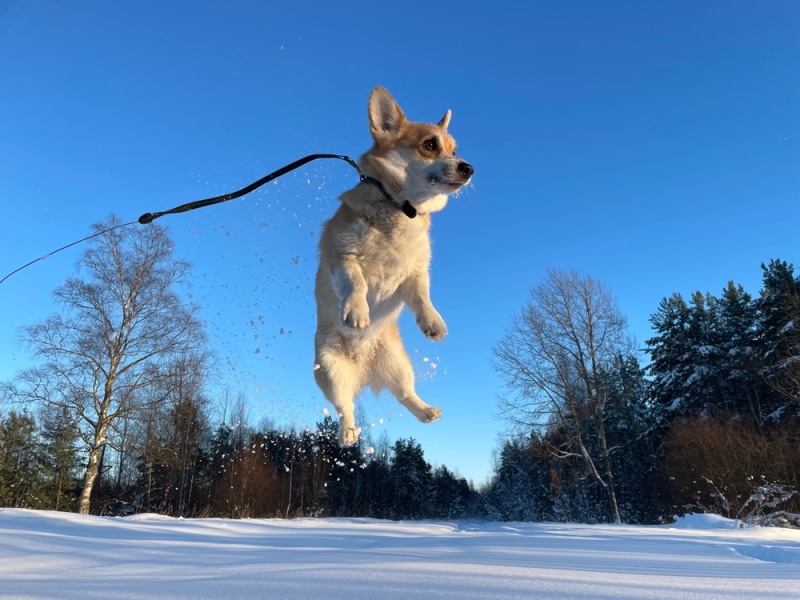
This could be a difficult endeavor depending on how excitable your Corgi is, but you really should keep your pet from jumping as much as possible. Jumping around or on and off things can be uncomfortable for Corgis and raise the risk of a back injury. That means no jumping on or off the sofa! Instead, try investing in a few ramps for your pet, so it has a simpler time getting up and down from furniture. Just be sure to avoid pet stairs, as stairs can also be a problem for dogs prone to back issues.
4. Daily exercise
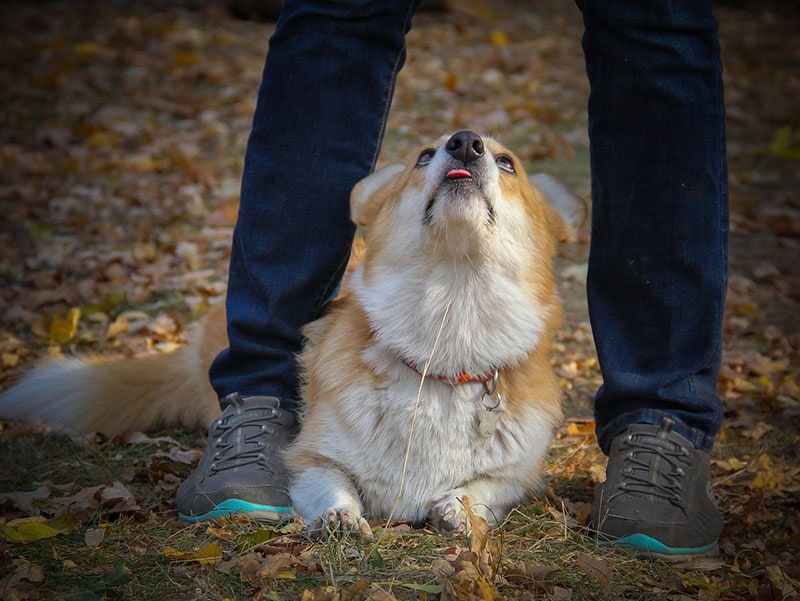
Though you want to avoid jumping as much as possible, your Corgi still needs exercise every day. Not only is it necessary to get rid of excess energy and keep pets from being bored, but daily exercise helps strengthen important muscles in your dog’s back and legs. Strengthening those muscles results in better posture for your Corgi, which can reduce the risk of back problems. Most dogs do well with 30–60 minutes of exercise a day, but all dogs are different, so yours may need less.
5. Weight management
Extra weight on your Corgi’s body means extra strain on your dog’s spine and intervertebral discs, which can quickly lead to back problems. So, it’s vital to watch your pup’s weight and ensure it’s within reasonable ranges. A good way to tell if your dog is within its optimal weight range is by looking down on your pet from above and observing how its body is shaped¹. If you’re unsure how much your Corgi should be eating daily, speak with your vet. And remember that the daily exercise mentioned above will also go a long way in helping maintain your pup’s weight!

6. Invest in a good harness
A good harness makes it easier for you to help your pet up when it needs a hand and can offer extra support for your dog’s back. If you get a harness with handles, like the Help ‘Em Up Harness, you can easily assist your Corgi in getting up and down from furniture or into the car without putting more strain on them. And having a better harness for daily walks will help support your dog as it trots along beside you.
7. Careful how you lift them
If you’re the type of dog parent who enjoys picking up your Corgi and carrying it around, you’ll want to be careful how you’re lifting and carrying it. The best way to prevent back problems is by keeping the spine straight with a hand on the abdomen and a hand under the chest. Lifting and carrying your dog this way will help reduce strain and stress on the spine, so you can continue keeping your little buddy by your side at all times.

Conclusion
Just because Corgis are prone to back problems such as IVDD, it doesn’t mean there aren’t ways to help prevent these issues. With the above tips, you can reduce your dog's risk of injuring its back or spine. Use one or two, or use them all; whichever way you incorporate these tips, they will help your dog stay healthier.
Featured Image Credit: David Raihelgauz, Shutterstock
Get Hepper In Your Inbox


Pet care tips from our vets and experts, straight to your inbox.
You may opt-out at any time. View our Privacy Policy for more information.
Misty Layne lives out in the woods in small-town Alabama with her two Siamese—Serafina and Jasper. She also has an array of stray cats, raccoons, and possums who like to call her front porch home. When she’s not writing about animals, you’ll find her writing poetry, stories, and film reviews (the animals are, by far, her favorite writing topic, though!). In her free time, Misty enjoys chilling with her cats, playing piano, watching indie and foreign films, photographing abandoned places, and catching up on her never-ending TBR list.
Join the conversation
Ask a question, share your story, or send private feedback.