Hepper is reader-supported. When you buy via links on our site, we may earn an affiliate commission at no cost to you. Learn more.
Conure vs Parakeet: Vet-Reviewed Differences (With Pictures)


In this article
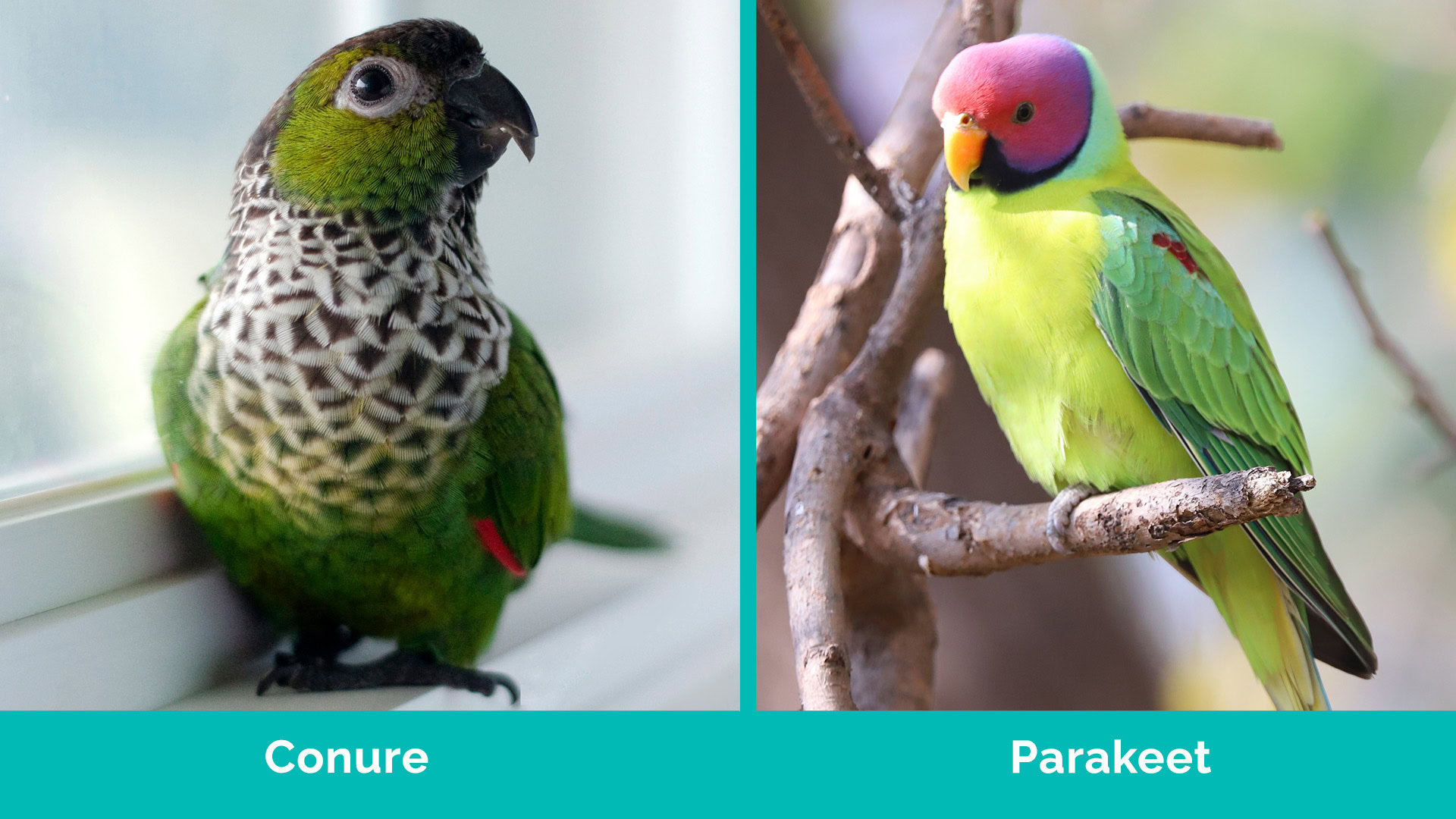
Parakeets and conures are two of the most popular species of pet parrots. They are considered good birds for beginners, are small enough that they can be kept in most homes, and are said to enjoy the company of humans.
The term ‘parakeet’ actually describes several small parrot species, but often, people use the word to refer to one specific parakeet species, the budgerigar (Melopsittacus undulatus), and this is the species we will be talking about here.
As well as many similarities between parakeets and conures, there are differences between the two species, too. For one, conures are parrots, while parakeets are, well, parakeets! Both belong to the parrot family Psittacidae, and the budgerigar is included in a group of parrots that tend to be small and slender with an elongated tail. Although both are sociable birds that do better with company, parakeets can be kept in small groups, while conures tend to prefer being kept in pairs. Parakeets, although lively and alert, are not as energetic and busy as conures. Conures require a lot of attention and need to be given the opportunity to play and explore.
Below, we look at these two intriguing species, including their differences, to help you decide which will make the best pet for you and your family.

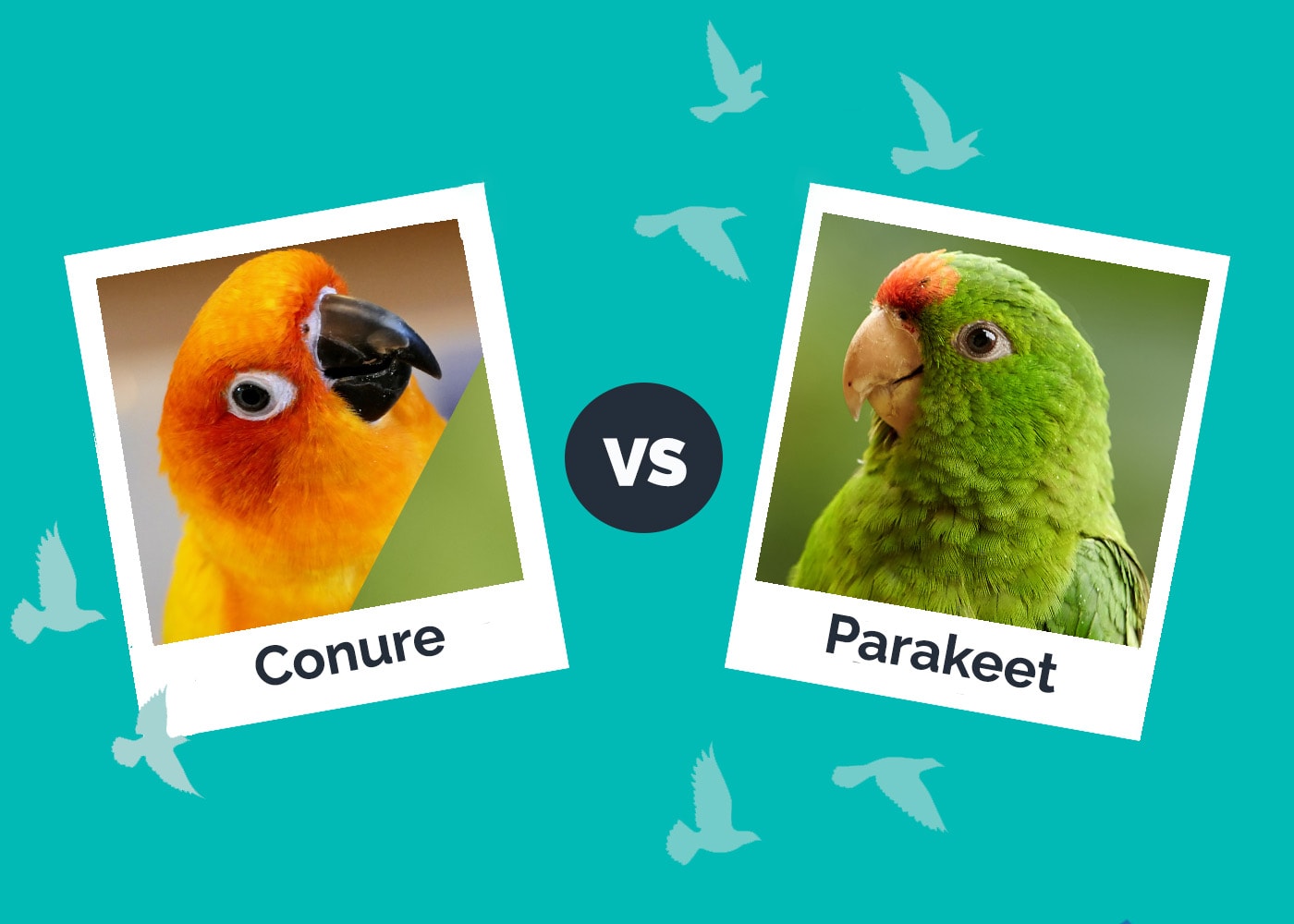
Visual Differences
At a Glance
Conure Overview
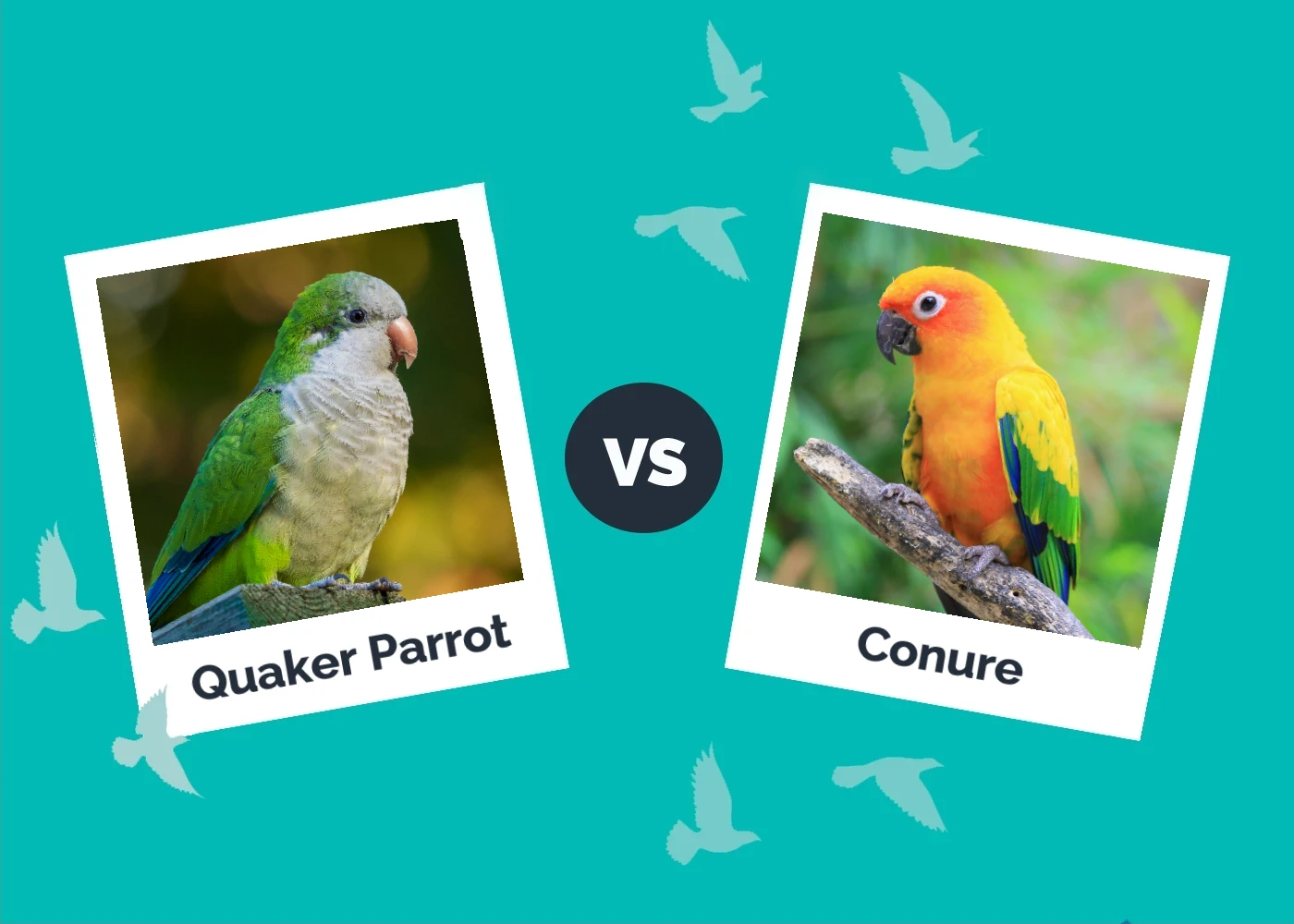
Conures are small to medium-sized parrots. They can be very colorful, although the exact colors will depend on the exact species of conure, as well as the individual bird. They like people and can be kept in pairs. And they especially enjoy games and activities. Although relatively easy to care for, they do require a lot of attention so may not be suitable if you don’t have time to dedicate to handling and training.
Appearance
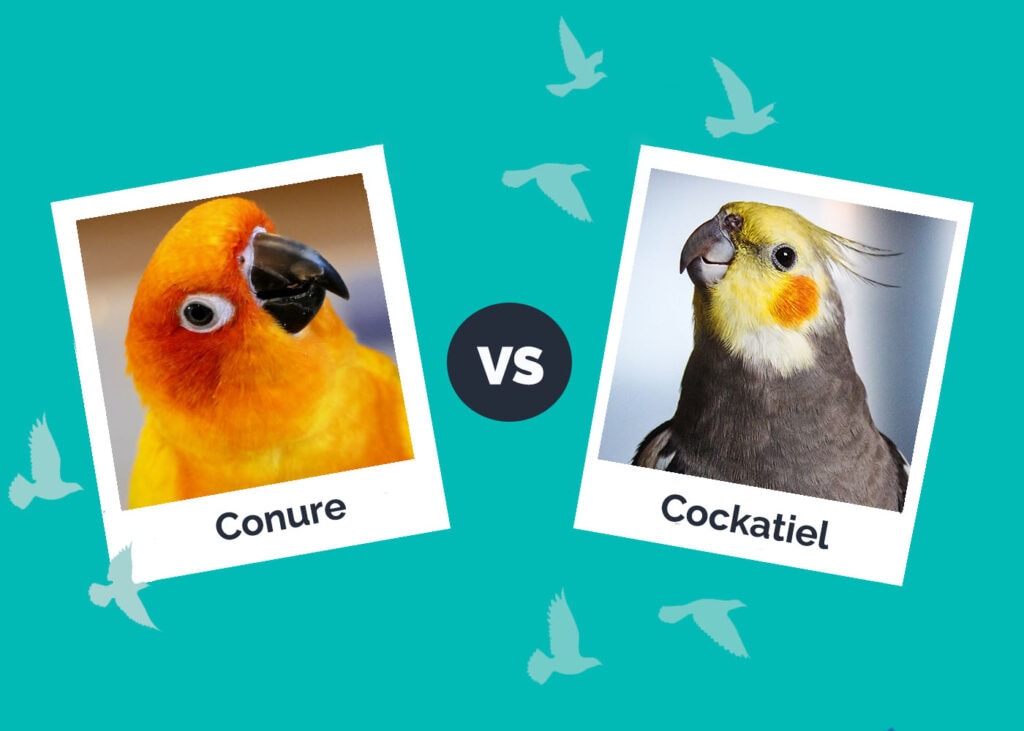
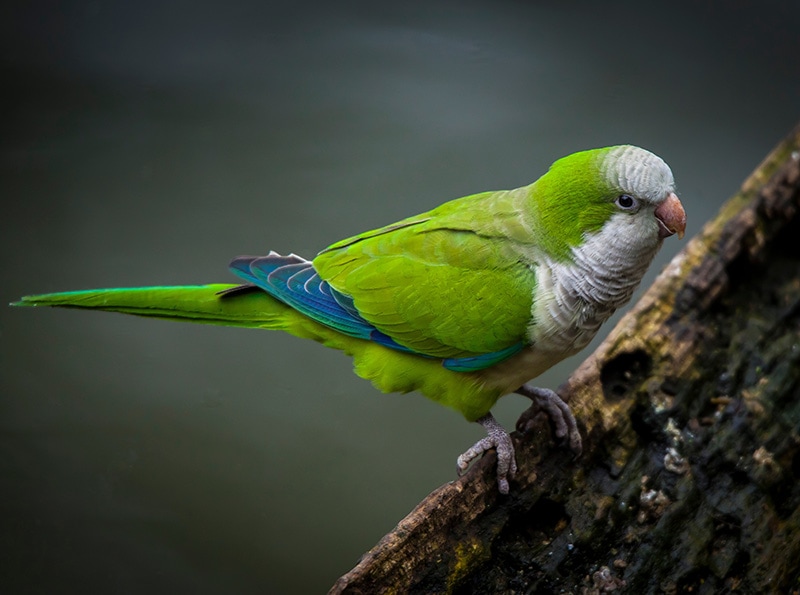
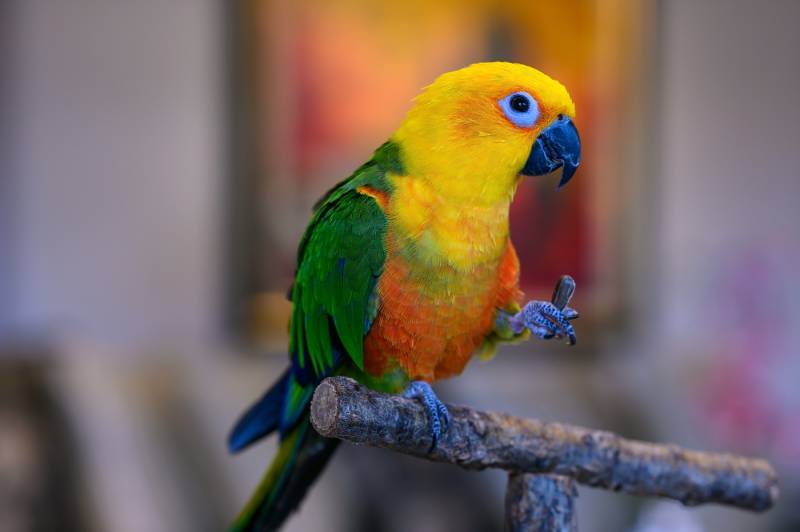
Conures are small to medium-sized birds. They tend to be slender birds and they come in a great variety of colors including yellow, orange, red, green, and blue. They have what is known as an eye ring, which is a ring area around the eyes where there are no feathers. There are many different species of conure, each with a unique appearance.
For example:
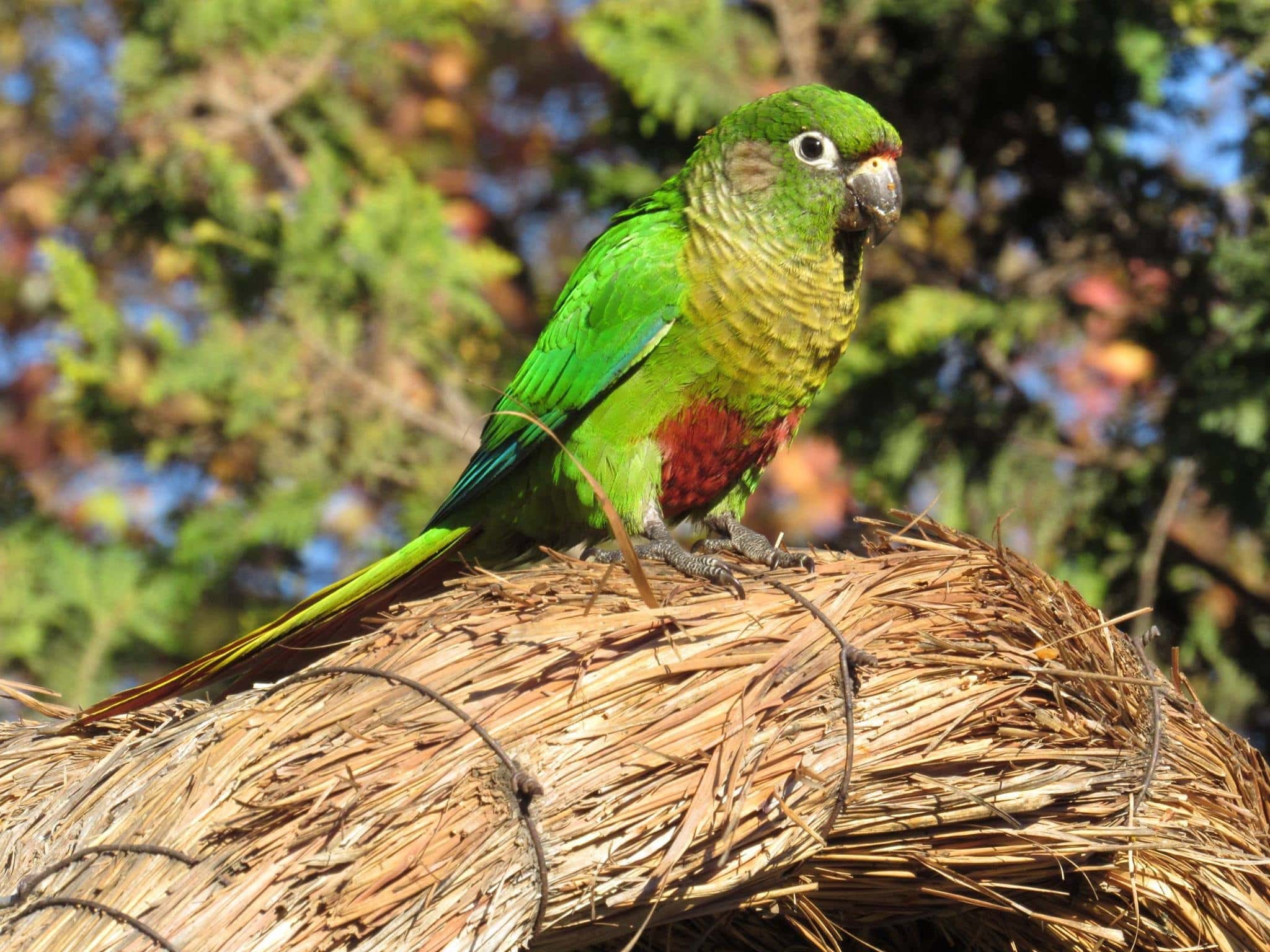
The green-cheeked conure (Pyrrhura molinae) is one of the more popular pet species, and has multi-color plumage with green on the back, wing tips, and cheek patches. The male and female green-cheeked conure look the same.
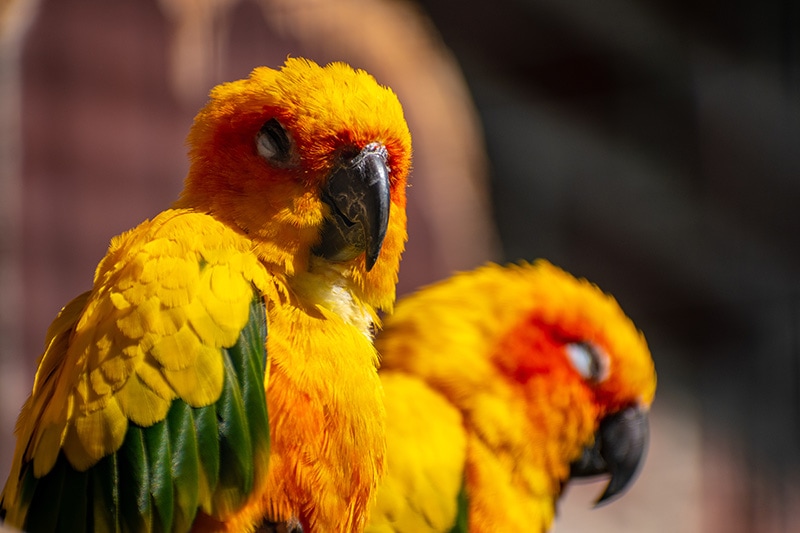
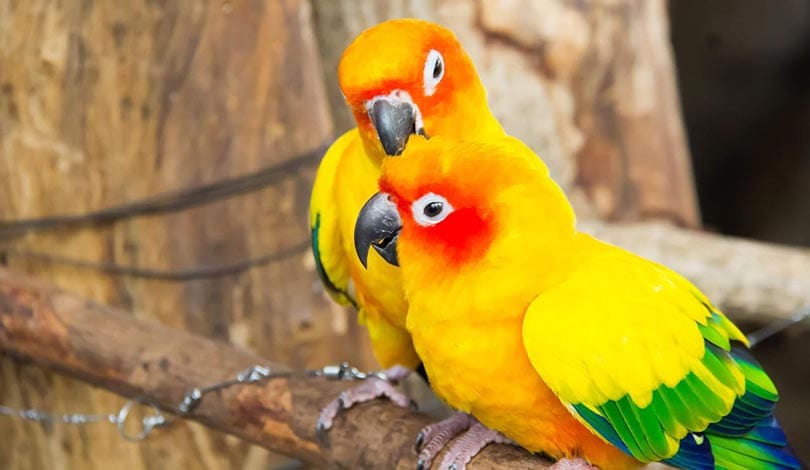
Another popular pet species is the sun conure (Aratinga solstitialis), recognizable for their striking orange plumage over their head and chest, with bright yellow wings tipped with green.
Personality
This species makes a very popular pet bird species because it is friendly, fun, lively, and sweet-natured. They like to be held and enjoy spending time with their owners, provided they have been handled regularly from a young age. They are not known to be prolific talkers, with many never speaking a word, but they make up for this with their big personalities and joyful outlook on life. Despite not being talkers, conures can be noisy birds.
Training
Although most cannot be taught to talk, some conures will pick up a few words, and these intelligent birds can easily be taught a few basic commands. Owners generally teach their conures to hop on their fingers or to fly to them across the room. Conures are fun birds, so if you can turn training into an enjoyable game, this bird will quickly pick up commands that can make both of your lives easier.
Health & Care
Although conures are considered good beginner birds, they, like all birds, require regular and ongoing care. Parrots, especially, require a lot of enrichment and socialization, and you will need to let your conure out of its cage for at least two hours a day. Handle them regularly from a young age if you want a conure that enjoys spending time with you.
The species benefits from daily misting and some feather maintenance to keep them looking and feeling their best. Common health problems include fungal infections, bacterial infections, beak misalignment, and, rarely, psittacine beak and feather disease.
Suitable For:
New and experienced owners looking for an alert, friendly, and intelligent bird. Although the species is suitable for beginners, you do need to do your research and ensure that you have time to spend with your conure every day.
Pros
- Intelligent bird that can be trained quite easily
- Fun-loving bird that will keep owners entertained
- Relatively small, so doesn’t need a huge aviary
- Very colorful species are readily available
Cons
- Can be noisy, but rarely talks
- Needs a lot of stimulation
Parakeet Overview
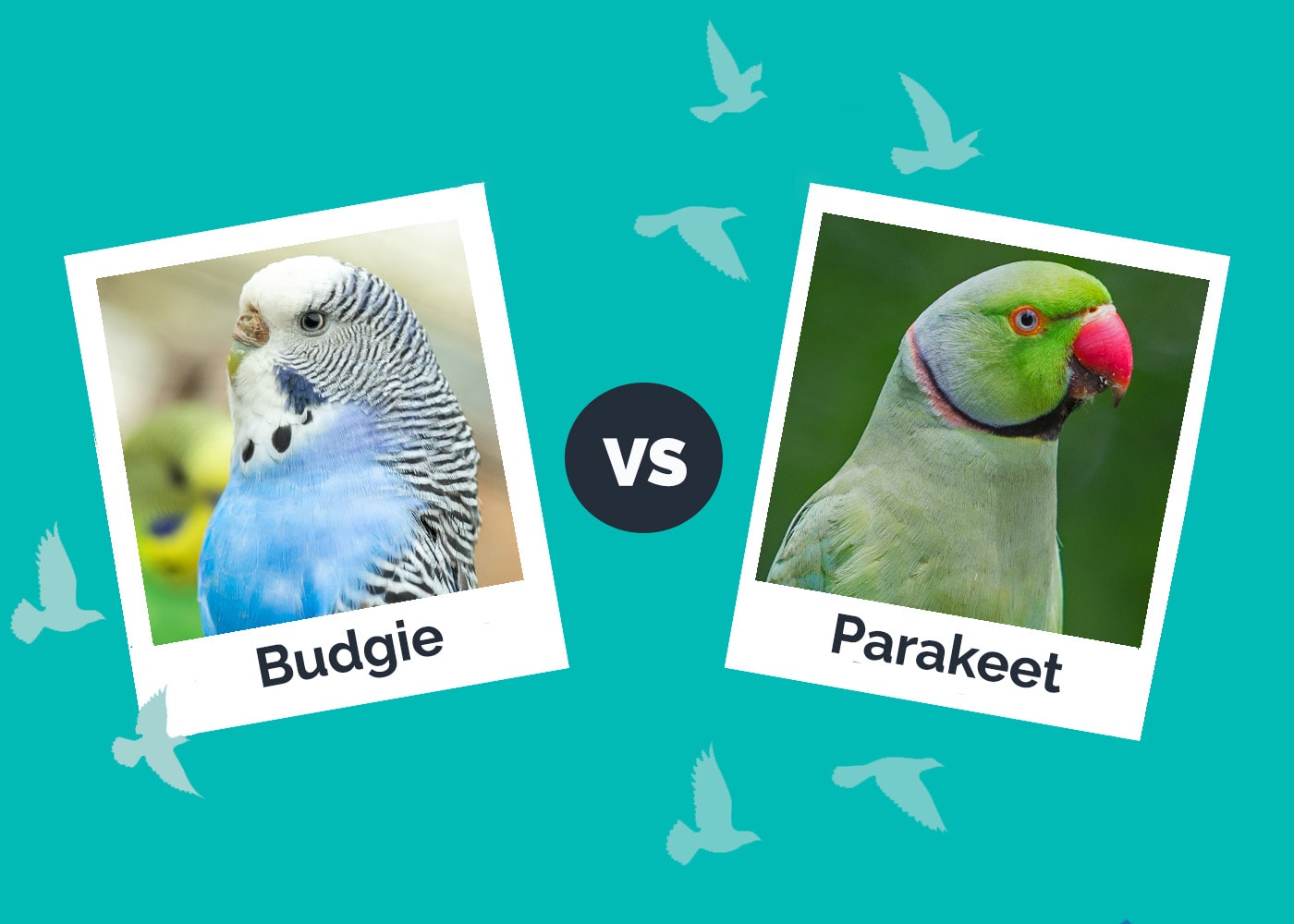
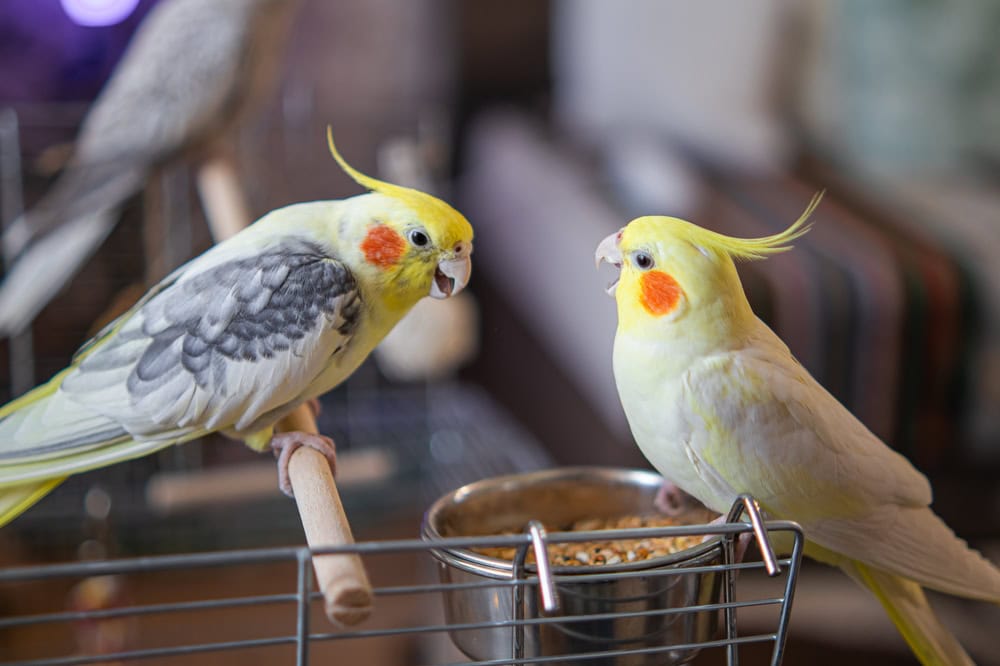
The parakeet (or budgie) is another very popular pet parrot species. It is smaller than the conure, typically only weighing only an ounce or two. They are sociable birds, and are also one of the more affordable species of companion birds. Colors vary, although most budgies do have bar markings on their feathers. Although they can be difficult to teach, budgies can learn a few human words and they are very skilled at mimicking other sounds including phone rings and alarm clocks.
Appearance
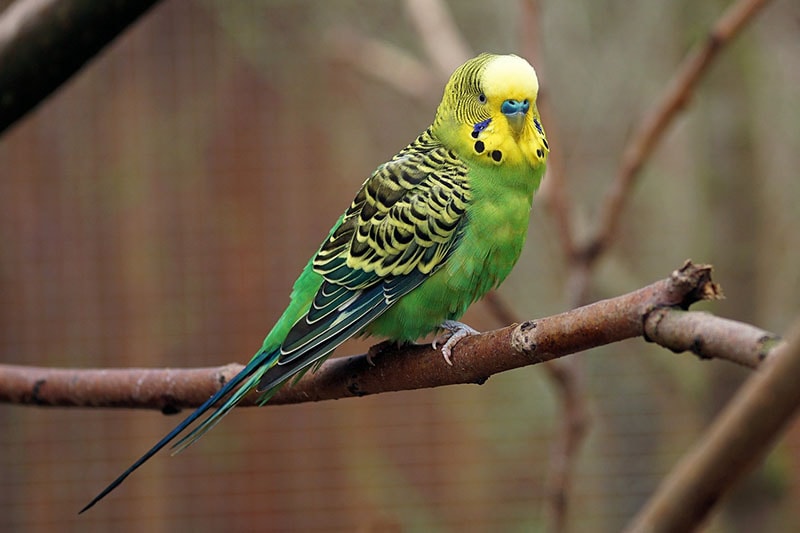
In the wild, parakeets are predominantly green in color, with black barring on their wings. However, through selective breeding, the range of colors and markings available in the pet trade is considerable. Colors range from green to blue and there are those without bars as well as with a fantastic array of other markings.
Personality
Parakeets are sweet and friendly little birds that can be easily hand-tamed, especially if you start handling them every day when they are young. They can live in pairs or small groups, although this may mean that the birds do not bond as closely with their human family. Although playful, parakeets tend to be quieter than a lot of other species, which makes them a popular choice with some potential owners.
Training
Considered intelligent birds, budgies can be easy to train. It is possible to teach most budgies to imitate a few human words, although their speech is not as clear as with other birds. They can also be taught to mimic other sounds, such as whistles. Repetition is the key to teaching parakeets to mimic. You should also be able to teach your parakeet some basic commands including having them fly onto your finger or fly to you across the room.
Health & Care
Despite their small size, parakeets require a fairly large cage so they can fly around. Provide a variety of perches, nests, dishes, and toys. Allow your parakeet at least 2 hours a day out of the cage and encourage it to land on and stay on your hand, if you want a tame bird. Generally, the species is happiest when kept in pairs or in small groups. Conditions that are specific to parakeets, or that they are more likely to develop, include goiters and psittacosis.
Suitable For:
New and experienced owners looking for a quiet, peaceful bird with a sweet nature. Parakeets do require daily interaction and need plenty of time out of the cage to ensure they are happy and tame.
Pros
- Sweet-natured bird that makes a good companion
- Good at intimidating sounds and can learn a few words
- Quieter than a lot of parrot species
Cons
- Requires a lot of attention and plenty of enrichment
- Speech can be hard to understand
Conure vs Parakeet Specifics
Size and Appearance
Both these species are considered small parrot species, but the parakeet is smaller and lighter than the conure. There are different species of conure, and their size, as well as their physical appearance, varies according to what you are considering. As well as the difference in size, there are differences in physical appearances. Parakeets typically have barred feathers, although these black bars are not present in all modern iterations of the pet bird. Conures do not usually have this but they do come in a wonderful array of stunning colors.
Speech and Vocalizations
Neither of these species are known to be prolific talkers. Very few conures will learn to mimic human speech, but they are known to be vocal and loud birds. Parakeets, on the other hand, may try to imitate some human words but it can be difficult to understand the words they do learn. Parakeets are very good at imitating other noises, though. If they are exposed to the noise of alarm clocks, car alarms, or phones, often enough, they can learn to imitate these sounds very accurately.
If you are looking for a prolific talker with a clear voice, neither of these species is ideal for you. If you want a quiet bird, the parakeet is the better option. Similarly, if you want something that imitates sounds other than human voices, the parakeet is the better alternative.
Training and Handling
Both the conure and the parakeet are considered friendly and sociable birds. They can both be kept with other birds of their species, and parakeets can get along with other bird species. Conures are best kept only with other conures, and while parakeets can be kept in small groups, conures do better when kept in pairs.
Both species will thrive when given companionship with other birds of their own species, but this may limit the interaction and closeness they have with their human owners.
Availability
Although both species are popular as pets, parakeets are the most popular pet bird in the world. They can be found in some general pet stores as well as in specialist stores and from breeders. They are easier to source than conures and they also tend to cost less, although some of the rarer colors and markings may make them more expensive.
If availability is important, you will most likely find it easier to buy a parakeet. They are also known as budgerigars or budgies and may be sold under these names in some stores, especially outside the U.S.

Which Breed Is Right for You?
Conures and parakeets are very popular pet bird species. They make good companions because they are friendly, enjoy human interaction, and are lively and fun species. They are also colorful.
Neither bird is known for its ability to mimic human speech. The parakeet may attempt to speak a few words, but you shouldn’t expect the words to be too clear. However, it is very good at imitating other sounds. The conure is popular because it is a very lively and energetic bird that enjoys playing games and generally entertaining its owners.
Both can be kept with other birds of the same species, but while they will usually get along with other species of animals, you need to take care to ensure that cats and dogs do not attack these small birds, especially when they try to take flight.
Sources
Featured Image Credit: (L) Andrea Lightfoot, Unsplash | (R) Martin Mecnarowski, Shutterstock
Get Hepper In Your Inbox


Pet care tips from our vets and experts, straight to your inbox.
You may opt-out at any time. View our Privacy Policy for more information.
Nicole is a lover of animals of all sizes but is especially fascinated with the feline variety. She’s the proud mom of Baby, a Burmese, and works every day so he can relax in the sunshine or by the fire. She’s always had a cat in her home and has spent countless days with others, observing behaviors and softening up even the grouchiest of the lot. Nicole wants to share her kitty expertise with you so you and your cat can live happy, healthy, and care-free.
Join the conversation
Ask a question, share your story, or send private feedback.