Hepper is reader-supported. When you buy via links on our site, we may earn an affiliate commission at no cost to you. Learn more.
16 Types of Conure Parrots: Info, Pictures, Facts & History
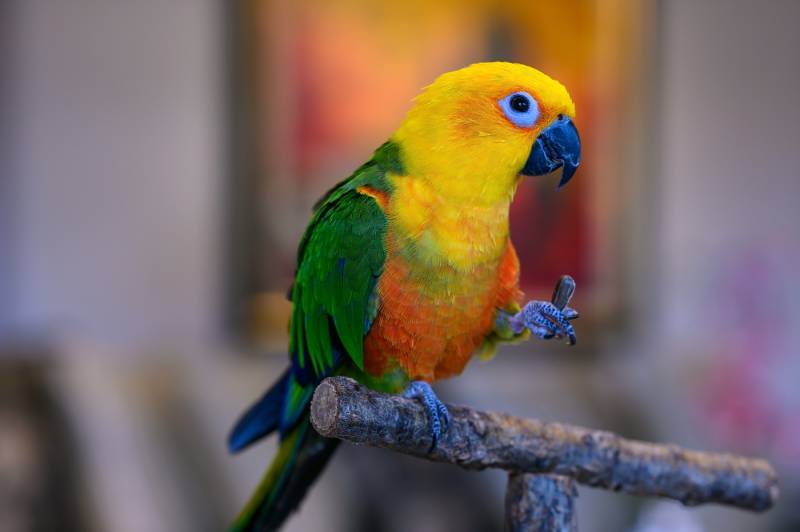
With their bright colors and friendly temperament, Conures are a unique joy to bring home. The small and medium-sized birds, which you might generally label Parakeets, are outgoing and intelligent, making them popular pets for families. When looking for features that make care and ownership a daily delight, these lively parrots check off almost every box.
Comparing Conures to other parrots can get confusing, but the distinction is crucial to ensure a suitable personality for your home. Let’s explore the potential in these bold and lovable birds as we classify and discuss different Conure parrots.

How Are Conure Parrots Classified?
Conure parrots are a specific group of New World Parakeets native to South America. Parakeets are a collection of birds in the order Psittaciformes that includes all parrots. Conures were previously in their own genus called Conuris. Today, the birds fall into more specific genera, with Aratinga and Pyrrhura being the primary groupings.
As Parakeets, Conures generally have slender bodies with long tapered tails that separate them from many other parrots. They are spunky, social, and affectionate creatures that love to clown around and hang out with family. Despite their vocal natures and often shrill screeches, their positive attitudes and talent for learning tricks are a hit with adults and children alike.
There are over 100 Conure species displaying a multitude of color combinations and personality types. Here’s a look at 16 of the most popular Conure parrot types to consider for your family.

The 16 Types of Conure Parrot Species
1. Green-Cheeked Conure
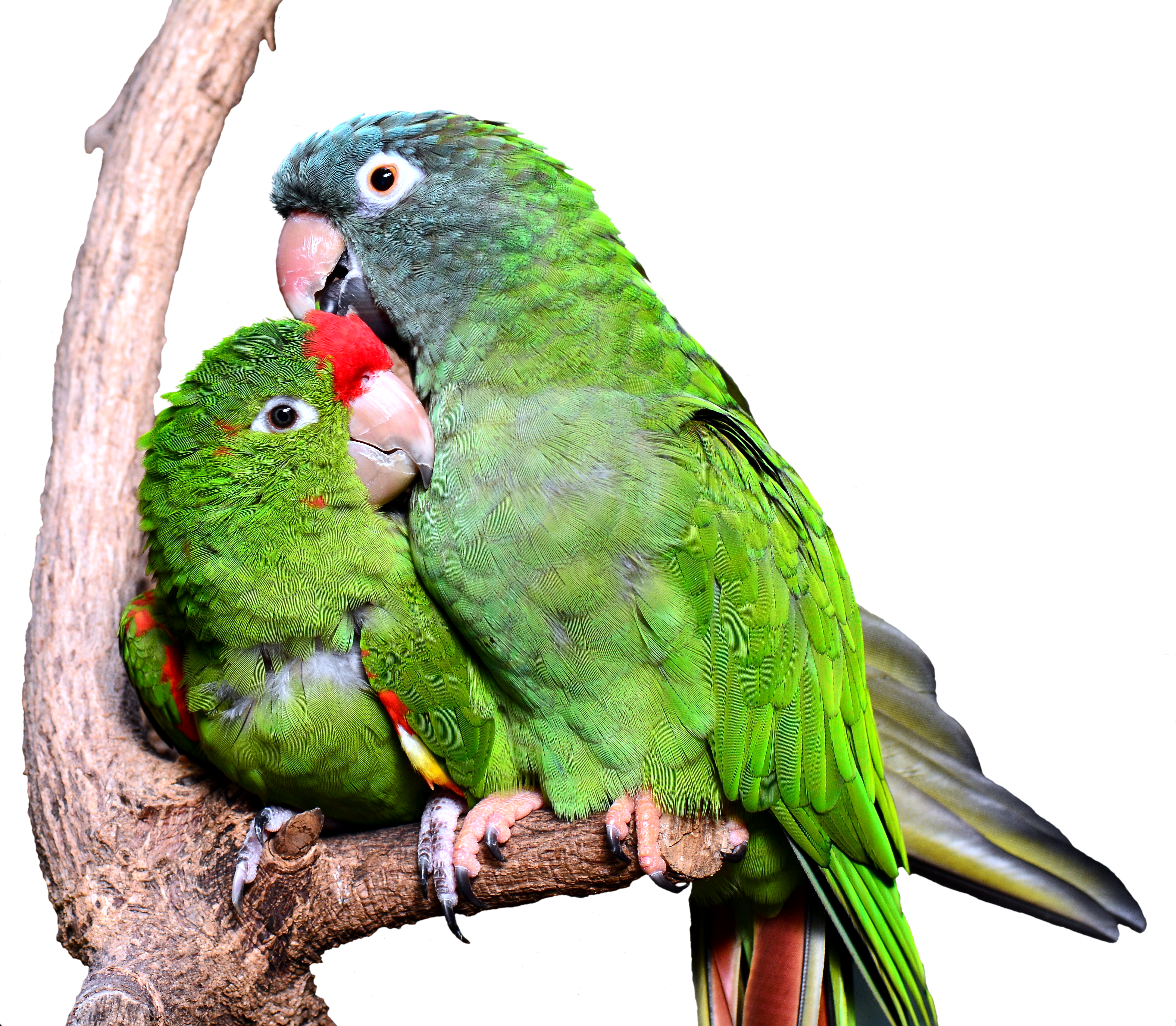
| Scientific Name: | Pyrrhura molinae |
| Origin: | Brazil, Bolivia, Paraguay, Argentina |
| Tip-to-Tail: | 10 inches |
The petite Green-cheeked Conure is one of the most abundant varieties. While still quite comical, they are more reserved than many other Conures. Given the Conure’s propensity for screeching for attention, their relatively quiet nature can be a happy change of pace.
Green-cheeked conures have gray feet and barring on the breast alongside maroon shades contrasting the primarily green feathers. But being the subject of significant selective breeding, Green-cheeked Conures now come in several color mutations. Variations include fallow, blue, turquoise, pineapple, and cinnamon.
2. Patagonian Conure
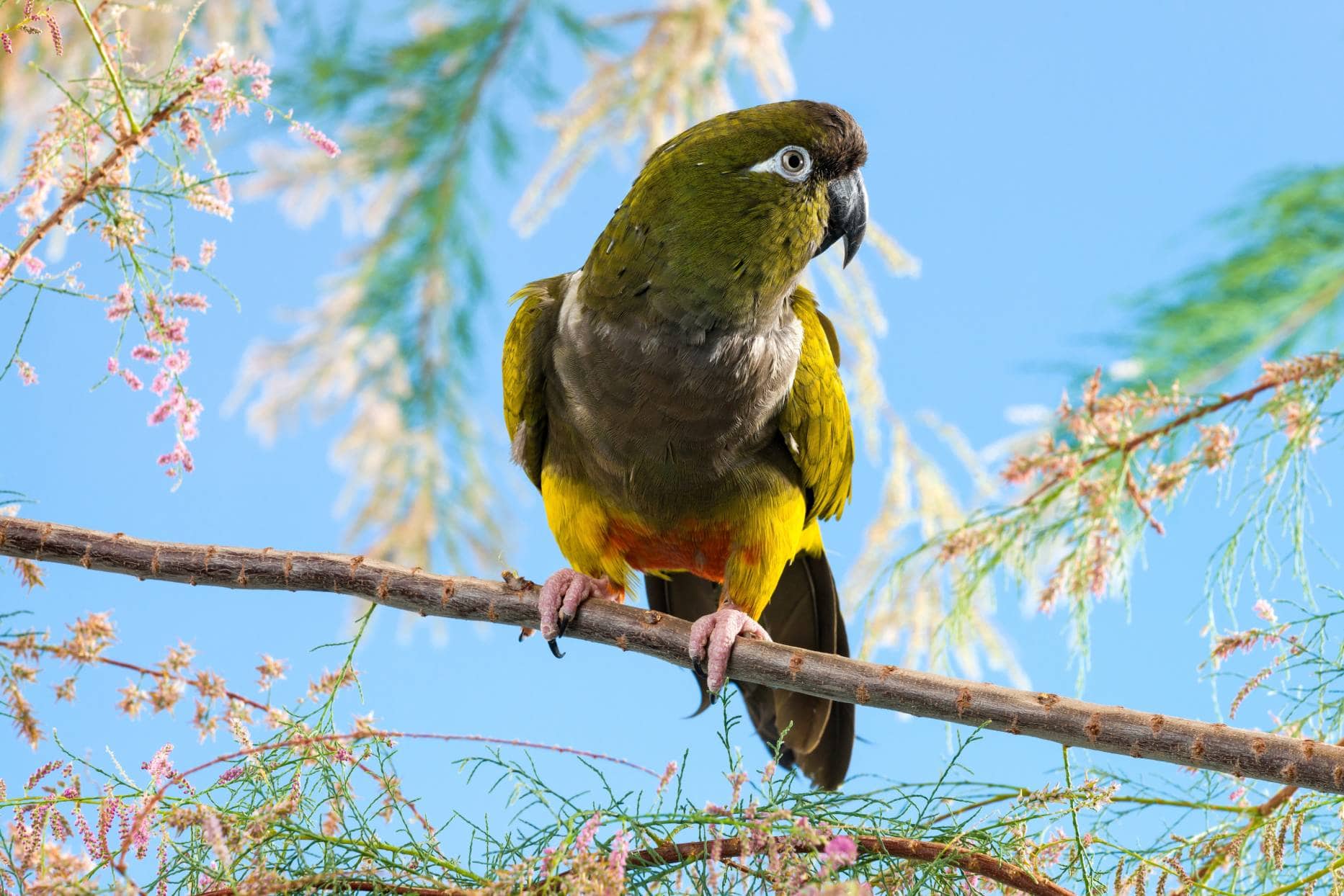
| Scientific Name: | Cyanoliseus patagonus |
| Origin: | Argentina, Chile |
| Tip-to-Tail: | 18 inches |
Well-known as “little clowns” in their native Chile and Argentina locales, Patagonian Conures are as bold and outgoing as they come. The medium-sized parrot typically boasts beautiful yellows, oranges, and reds across the body, leading to subdued gray and olive green around the head.
Patagonian Conures, also called burrowing Conures, are among the most vocal conure varieties and some of the best talkers. Patagonians are talented at playing, dancing, and mimicking human speech. Full of fun and mischief, these birds provide entertainment for skilled owners who can provide the close attention they demand.
3. Sun Conure
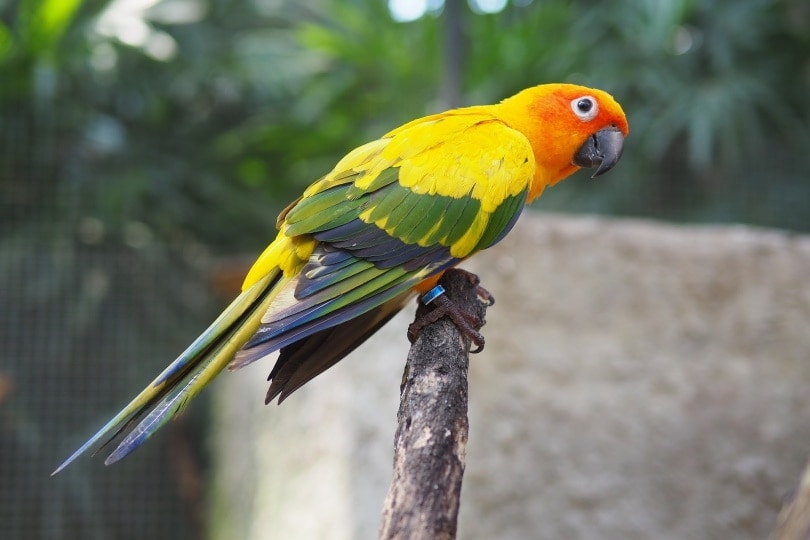
| Scientific Name: | Aratinga solstitialis |
| Origin: | Guyana, northeast Brazil |
| Tip-to-Tail: | 12 inches |
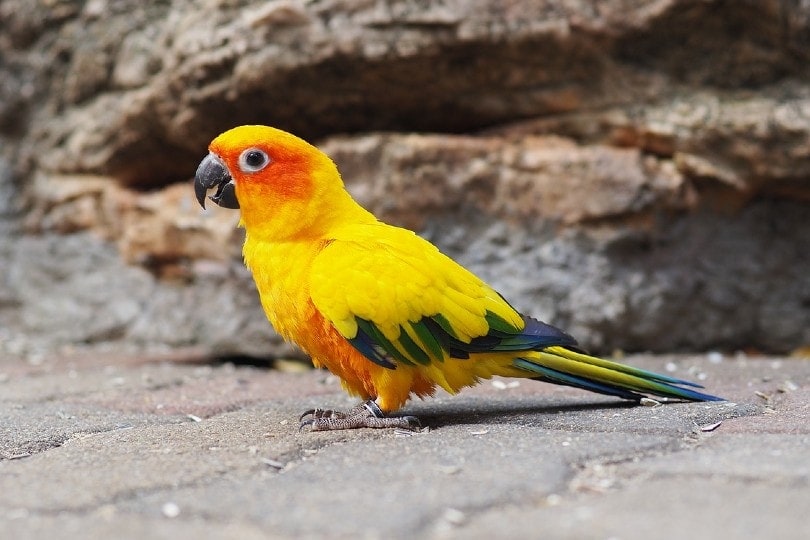
Though understated at birth, the Sun Conure develops into one of the most vibrant species. The long-living birds dazzle in gorgeous gradients of reds, oranges, yellows, and greens. With bright personalities to match, you can expect these parrots to form strong bonds with their owner, especially when introduced at a young age.
Sun Conures are some of the most vocal Conures. They often repeat their abrasive, shrill shriek several times, making them ideal for alerting you to nearby people but less so when living in an apartment with thin walls.
4. Jenday Conure
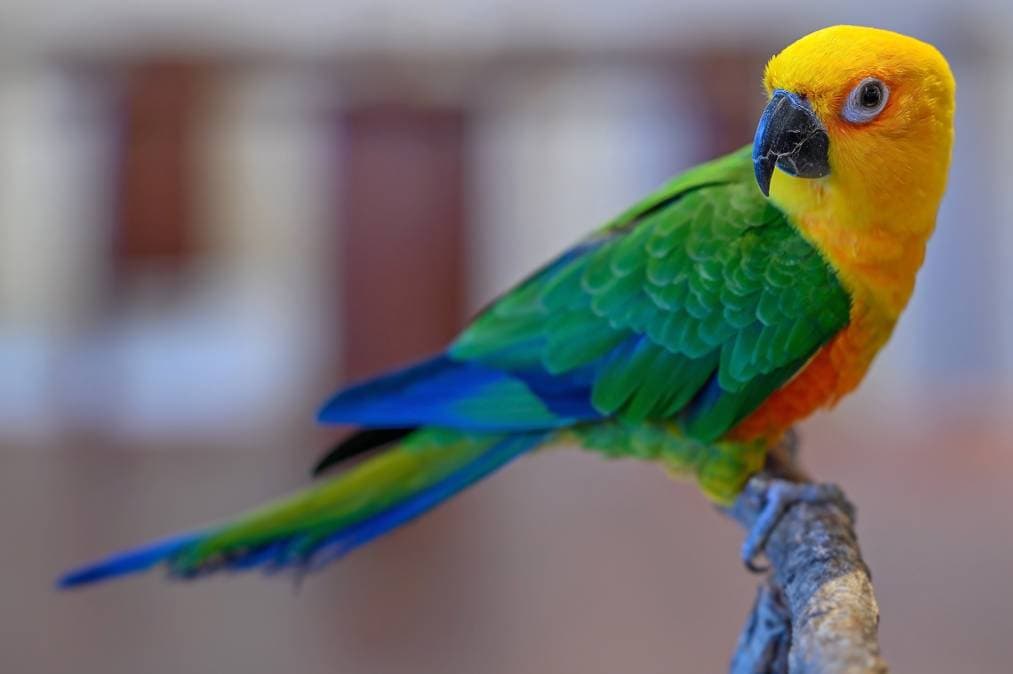
| Scientific Name: | Aratinga jandaya |
| Origin: | Venezuela, northern Brazil, Guyana |
| Tip-to-Tail: | 12 inches |
The Jenday Conure is another attractive member of the broad Aratinga genus, boasting a colorful bright yellow and orange head contrasting the green wings and back. These clever and energetic birds are an amusing addition to the home. Jendays love dancing, singing, playing, and sharing their sunny disposition with their family.
Jenday Conures are magnificent companion animals as they build strong, loyal bonds. Although they don’t speak as much as other parrots, they’ll learn simple tricks quickly and provide endless entertainment with their goofy antics.
5. Maroon-Bellied Conure
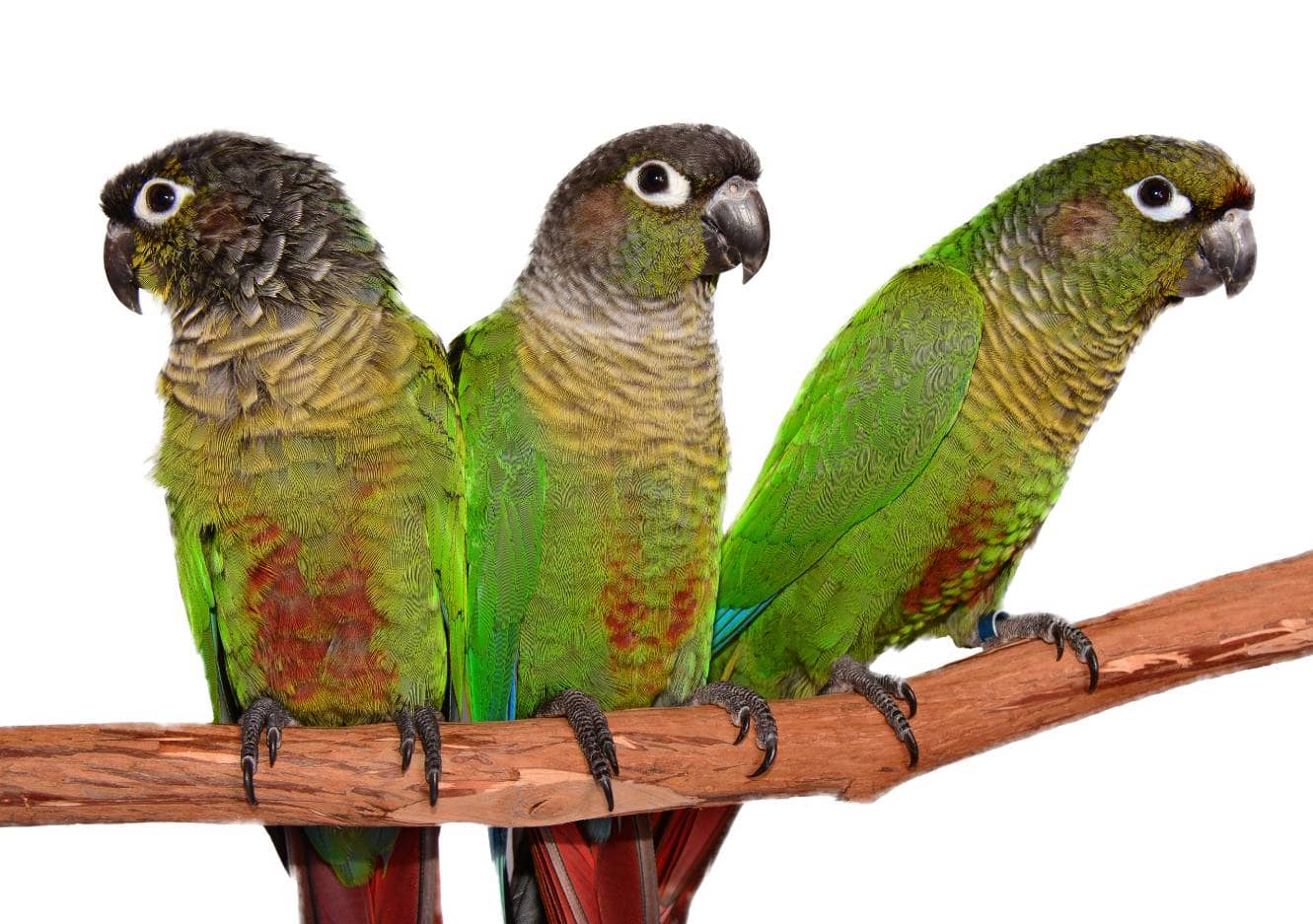
| Scientific Name: | Pyrrhura frontalis |
| Origin: | Brazil, Uruguay, Paraguay, Argentina |
| Tip-to-Tail: | 11 inches |
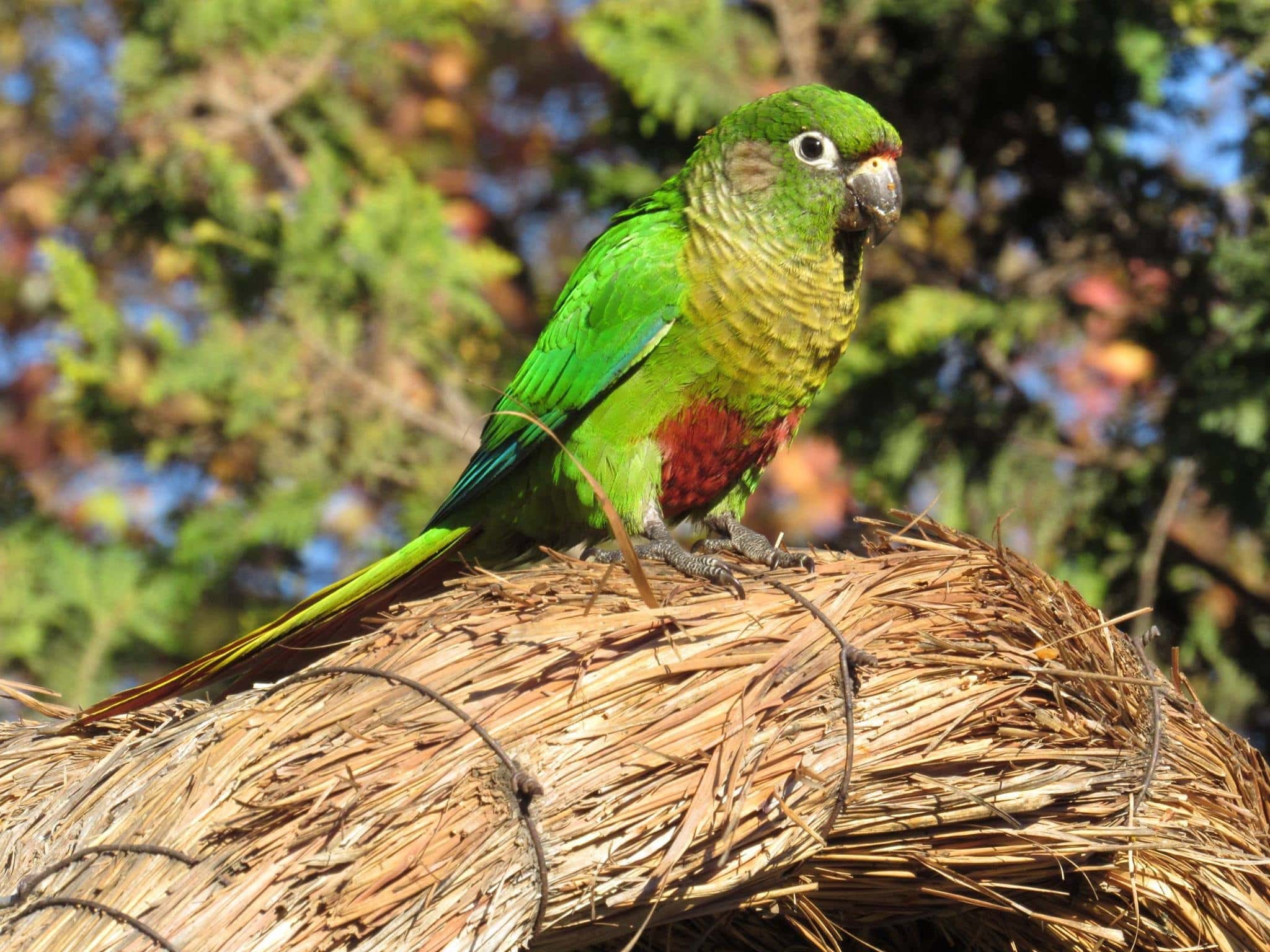
The Maroon-bellied Conure is an undeniable charmer and a popular pet due to its easygoing yet playful and silly personality. They’re one of the quietest Conures but can still belt out a shrill, piercing cry when excited. Thanks to their tiny bodies, curious and upbeat temperaments, and polite personalities, they make some of the better Conures for apartment living.
6. White-Eyed Conure
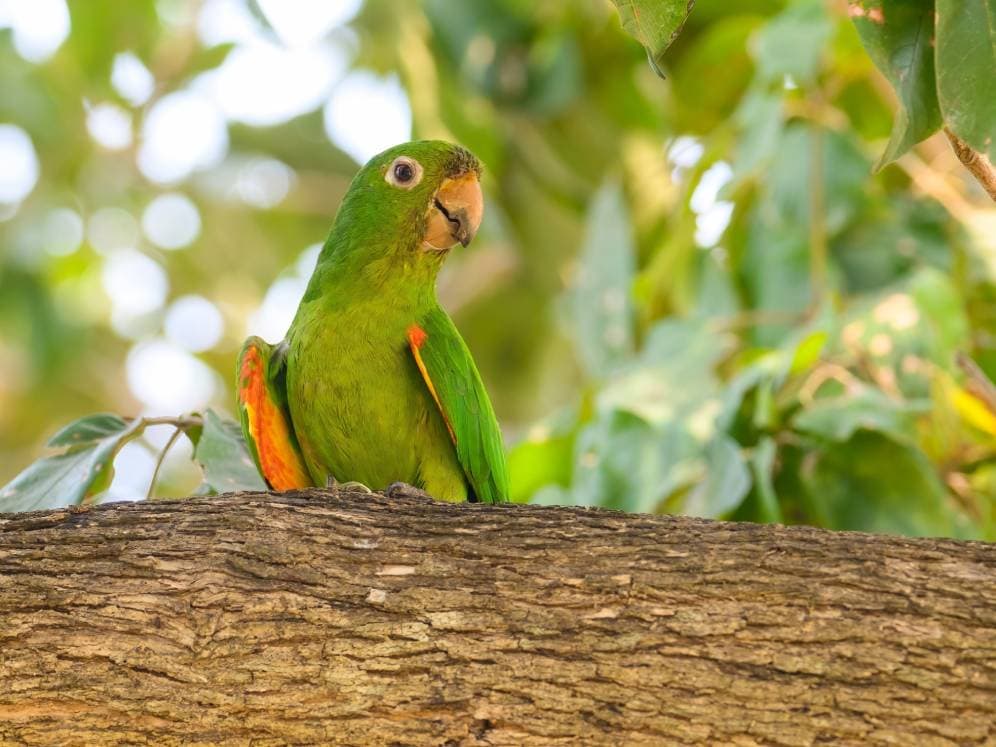
| Scientific Name: | Aratinga leucophthalma |
| Origin: | Venezuela, Colombia, Guyana, Brazil, Uruguay, Argentina |
| Tip-to-Tail: | 13 inches |
There are two subspecies of Amazon-dwelling, White-eyed Conures: the Argentinian variety (Aratinga leucophthalmus propinqua) and the slightly smaller Ecuadorian (Aratinga l. callogenys). Their coloration is usually a lush green across the head and body with primary coverts on the wings bearing splashes of gorgeous yellow and red.
White-eyed Conures are relatively laid-back, tame, and extremely sweet when they receive proper care. They have a sharp cry but aren’t overly noisy. Although they are less likely to wake the neighborhood with their screeches, white-eyed conures are apt to mimic speech, another fun quirk of these enjoyable pet birds.
7. Nanday Conure
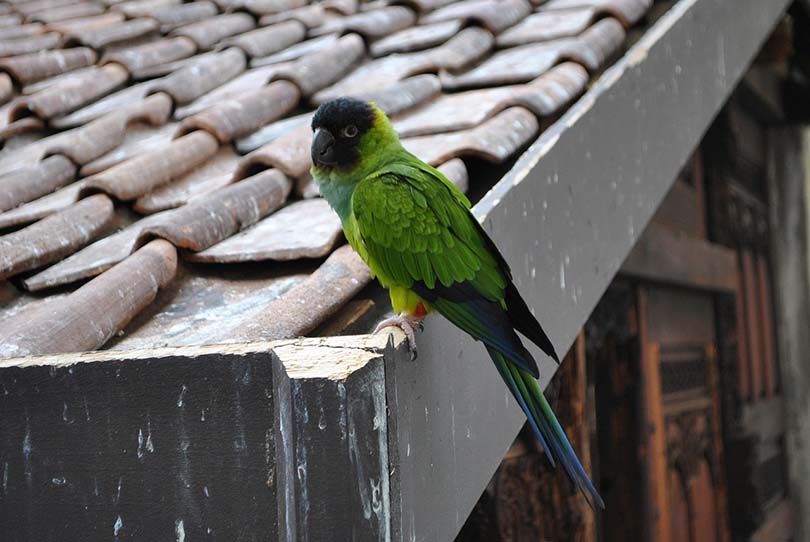
| Scientific Name: | Aratinga nenday |
| Origin: | Southern Brazil, Paraguay, Argentina, Bolivia |
| Tip-to-Tail: | 12 inches |
Nanday parakeets are popular in the pet trade. The central South American native now has established feral populations in California, Florida, and other warm areas across the southern United States. Striking in looks and tenor, the Nanday is easily identifiable by the onyx black head that produces perhaps the loudest cry of all Conures.
Since their screams can reach 155 decibels, Nanday conures aren’t ideal for apartments or those sensitive to loud noises. Although they require significant interaction and training, their friendly personalities and skill at doing tricks make them more than welcome in a suitable home. They’re also adaptable. When tamed, their cries can be reduced, allowing you to enjoy more of the benefits of these unique conures.
8. Peach-Fronted Conure
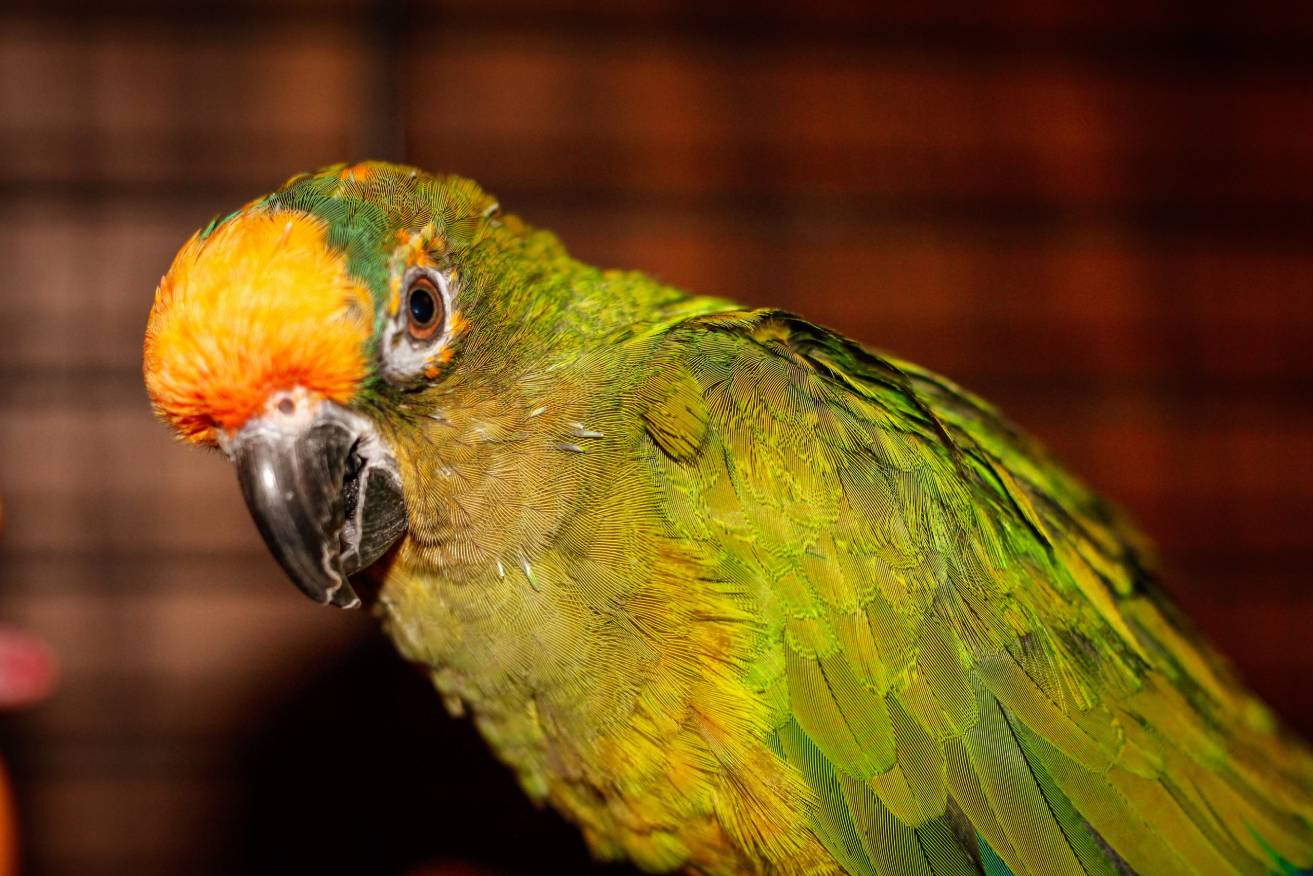
| Scientific Name: | Eupsittula aurea |
| Origin: | Brazil, Surinam, Bolivia, Peru, Argentina |
| Tip-to-Tail: | 10 inches |
With a frame and temperament similar to the Green-cheeked Conure, the aptly named Peach-fronted Conure sports what looks like a peach on their otherwise green head. They are on the smaller side, and their high-pitched call isn’t as piercing as most Conures.
Peach-fronted Conures may be one of the better options for first-time conure owners. Since they’re easy to train and highly social, they’ll forge quick bonds and take on a docile nature with little goading. Pairing them with other birds can be risky in some cases, as they may either begin to ignore their owner or become aggressive.
9. Golden Conure
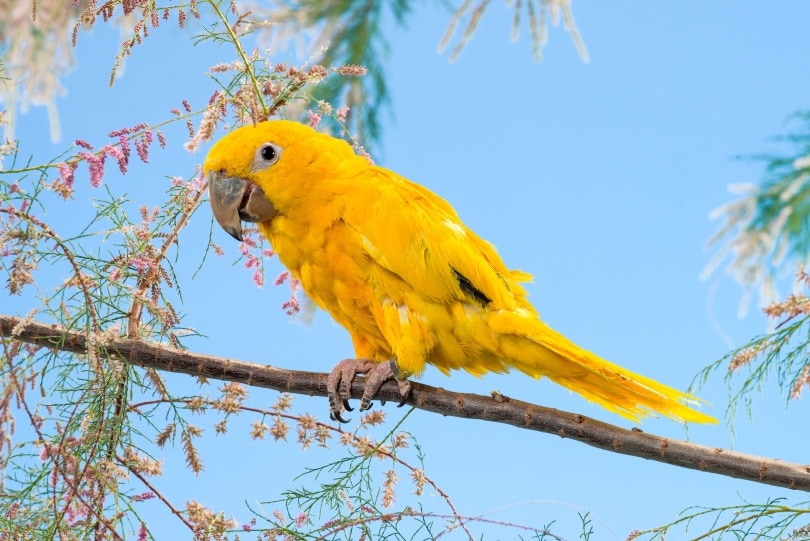
| Scientific Name: | Guaruba guarouba |
| Origin: | Northeastern Brazil |
| Tip-to-Tail: | 14 inches |
Also called the Queen of Bavaria Conure, the Golden Conure may be the most recognizable variety, even if they aren’t the most accessible. Golden yellow feathers run from the head to the tail, and the only break in color is the dark green-tipped wings.
Golden Conures are one of the rarer species and aren’t particularly social. They're tricky to spot in the wild. Being endemic to the Amazon rainforest in northern Brazil, golden Conure numbers dwindled considerably due to the pet trade and habitat loss. Thankfully, recent reintroduction programs have helped to increase the wild population.
10. Red-Masked Conure
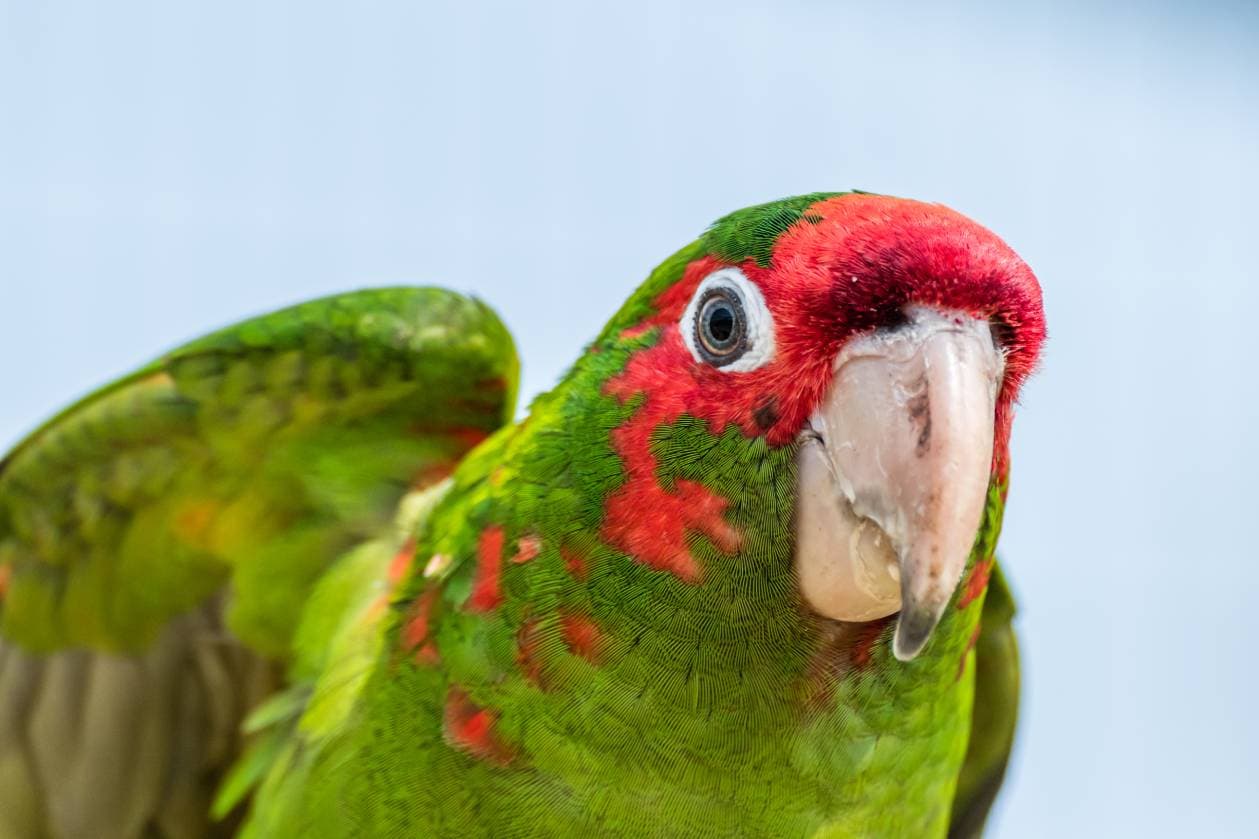
| Scientific Name: | Psittacara erythrogenys |
| Origin: | Ecuador, Peru |
| Tip-to-Tail: | 13 inches |
Known as the Cherry-headed Conure or Red-masked Parakeet, the Red-masked Conure’s many names are equally fitting in describing the crimson face on their all-green bodies.
Although they aren’t as common nowadays in their native coastal Peru and Ecuador, these Conures are popular pets and even make up several wild populations in the U.S. A feral San Francisco group of Red-masked Conures was the focus of the 2003 documentary The Wild Parrots of Telegraph Hill.
Red-masked Conures are quality talkers compared to other Conures, partially explaining why they’re so beloved. The playful and affectionate species flourishes with engaging owners who can give them the attention they deserve.
11. Austral Conure
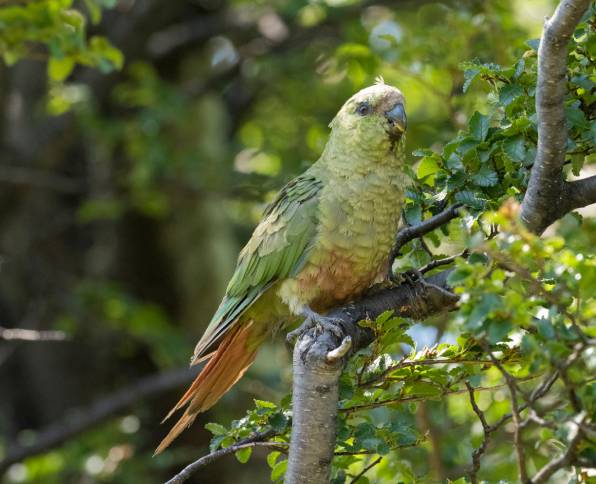
| Scientific Name: | Enicognathus ferrugineus |
| Origin: | Chile, Argentina |
| Tip-to-Tail: | 13 inches |
The Austral conure, or Emerald Parakeet, has the most southern distribution of all Conures. They’re common in the range extending from the southern tip of South America to roughly Chile’s mid-point. Though the austral conure has only recently become popular for breeding, the Chilean Conure sub-species is well-established in the pet world.
Austral Conures are not the smallest Conures but are also not overly verbose. They make excellent companions, bringing a peaceful, loyal, and adoring demeanor to the home.
12. Half-Moon Conure
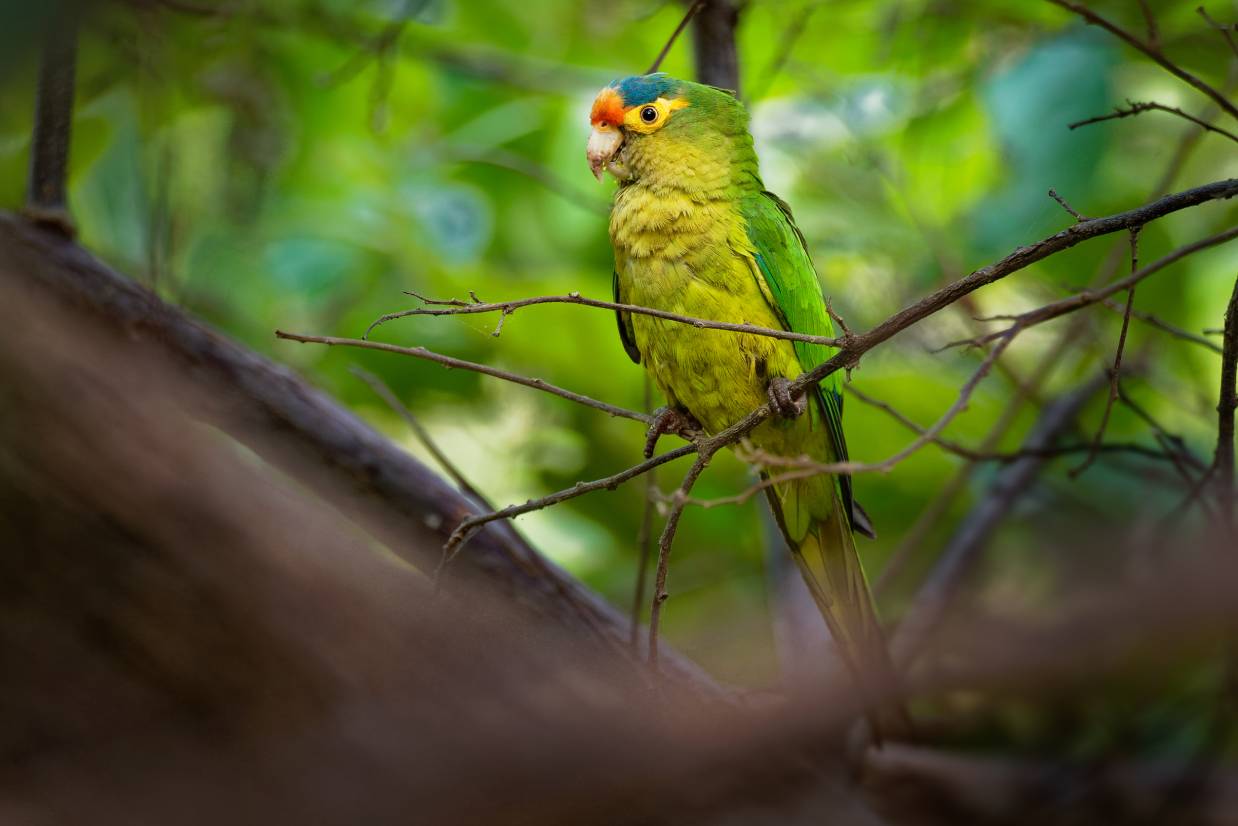
| Scientific Name: | Eupsittula canicularis |
| Origin: | Mexico, Costa Rica |
| Tip-to-Tail: | 10 inches |
The all-green Half-moon Conure, or Orange-fronted Conure, isn’t the most vocal of Conures nor the most destructive. But that doesn’t mean they’re less expressive than other parrots. They are highly active and playful, loving nothing more than greeting and hanging out with their owner.
Although they aren’t the most active talkers among parrots, half-moon conures are exceptional mimics in the wild. Studies have shown their unique ability to immediately pick up and imitate the vocalizations of individuals within a flock to enhance their communication.
13. Dusky-Headed Conure
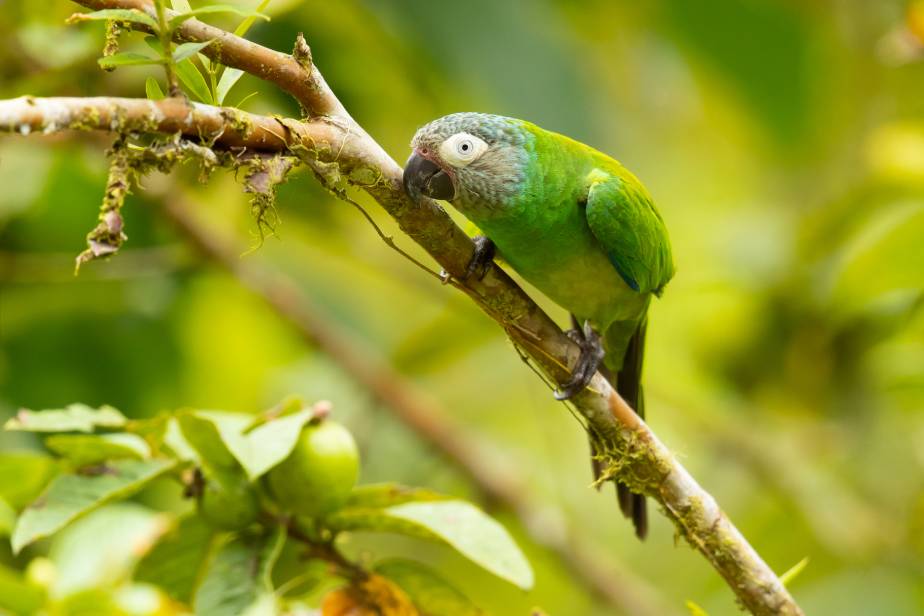
| Scientific Name: | Aratinga weddelli |
| Origin: | Colombia, Ecuador, Peru, Brazil, Bolivia |
| Tip-to-Tail: | 11 inches |
The tiny, green, Dusky-headed Conure stays low-key relative to other Conures, typically only making itself heard through occasional quiet chirps. Owners love their easygoing temperaments. They aren’t as demanding as other Parakeets, but these funny, cuddly, and charming Conures still provide much entertainment and adoration for caring family members.
14. Blue-Crowned Conure
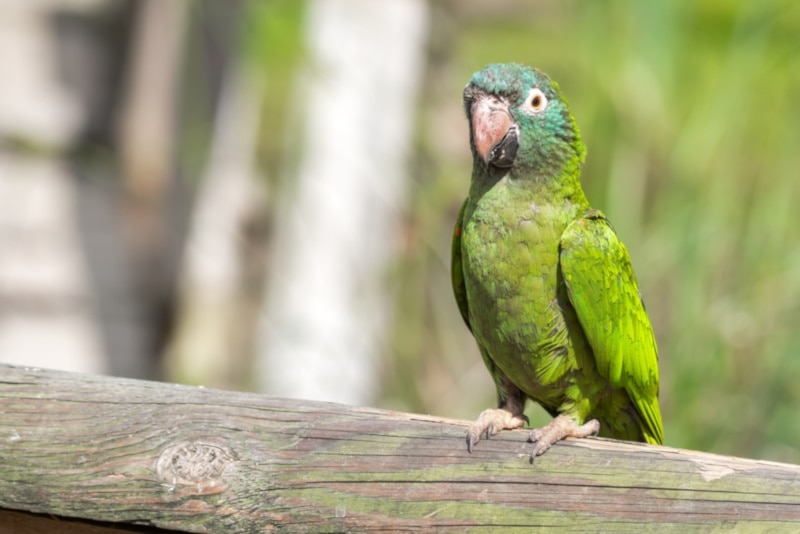
| Scientific Name: | Thectocercus acuticaudatus |
| Origin: | Venezuela, Colombia, northern Argentina, Brazil, Bolivia, Paraguay |
| Tip-to-Tail: | 15 inches |
Though Blue-crowned Conures lack the glaring warm coloration of many other varieties, they are still as stunning as any, with shimmery shades of green leading to an iridescent turquoise head. As an exceptional companion animal, this Conure is gentle, outgoing, and capable of quickly developing deep bonds with attentive owners.
Blue-crowned Conures are bright, trainable, and energetic. The species gained considerable popularity after the movie Paulie came out in 1998. While they aren’t as articulate as the movie’s title character (or other popular parrots), Blue-crowned Conures are better talkers than most conure varieties.
15. Mitred Conure
| Scientific Name: | Aratinga mitrata |
| Origin: | Peru, Ecuador, Colombia |
| Tip-to-Tail: | 15 inches |
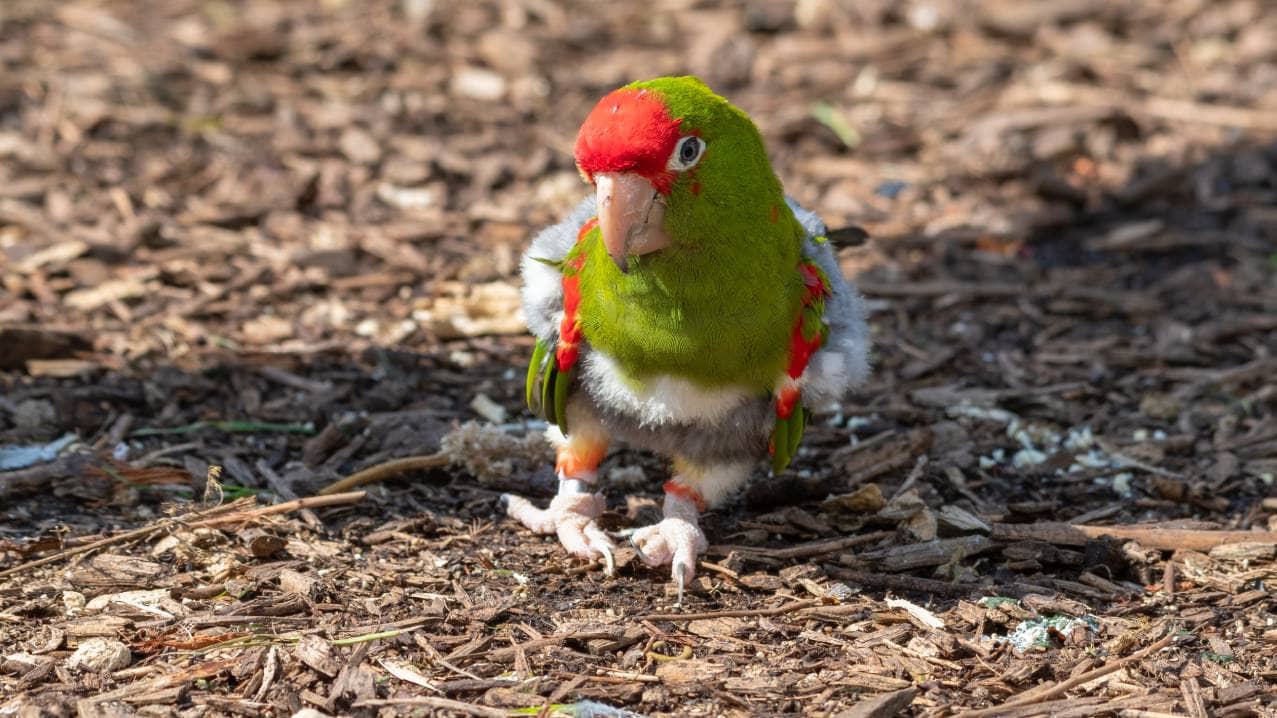
Mitred Conures do all they can to grab attention. Eye-catching and crisply defined crimson red splotches randomly cover the head to complement the vibrant, natural green body. Being full of attitude, their bold disposition lends to chattiness and a highly social nature. They’re fun, comical, and curious, with an energy that often won’t quit.
The vivacious and temperamental Mitred conure isn’t for first-time parrot owners. They demand ongoing attention to avoid bad behavior like screeching and nipping but will offer boundless love and amusement to capable family members.
16. Golden-Capped Conure
| Scientific Name: | Aratinga auricapillus |
| Origin: | Brazil, Paraguay |
| Tip-to-Tail: | 14 inches |
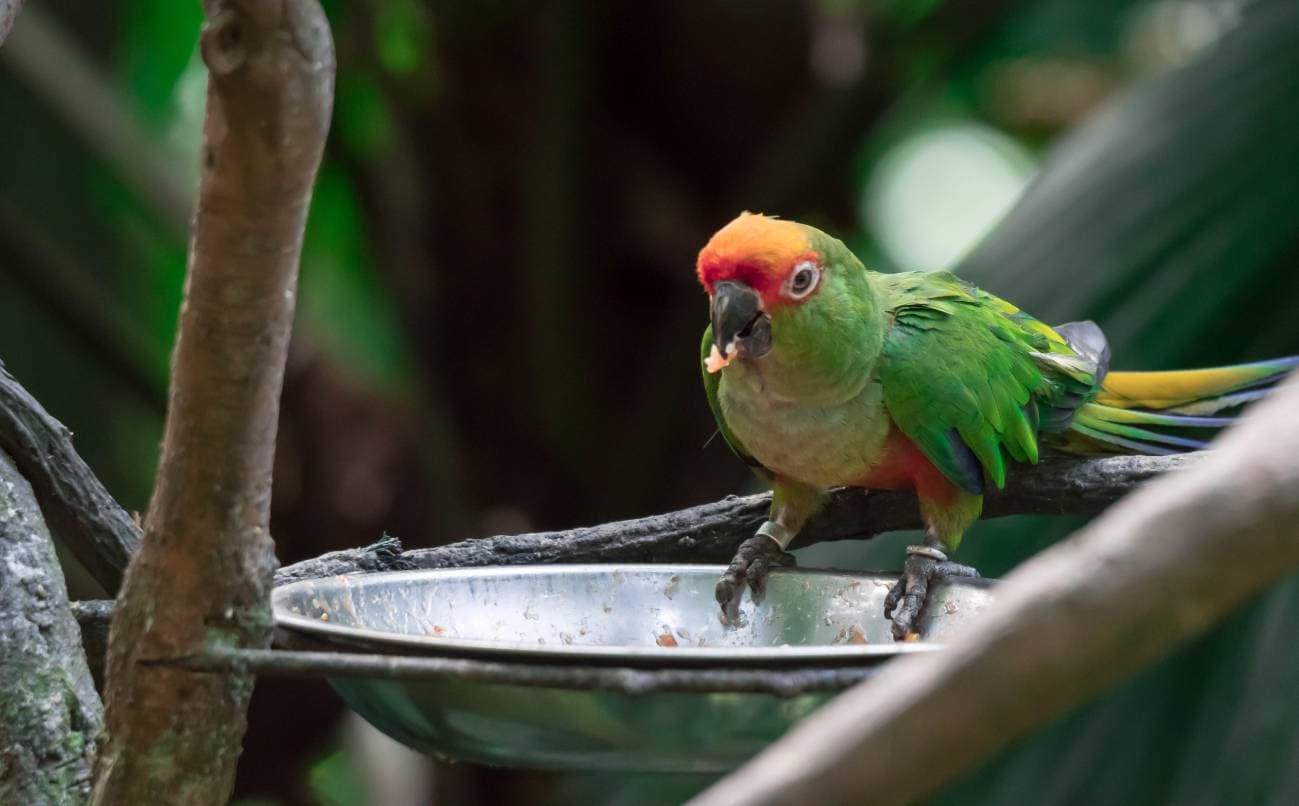
Golden-capped Conures display a rainbow of colors between their blue-tipped tail feathers and red and yellow masks. The trainable birds have an enjoyable temperament that eases teaching tricks and limited speech. Though playful and cuddly, they also demand attention and can fall into poor behaviors if they don’t get it.
What Is the Best Conure for a First-Time Owner?
All Conures are snuggly and funny, but they’re also more demanding than most pets. While many of these birds can be a handful for a first-time owner, Green-cheeked and Maroon-bellied Conures are some of the quieter and less nippy options.
Which Conure Is the Most Talkative?
Blue-crowned Conures are one of the most conversational varieties. Many can learn over 15 words and short phrases, but they aren’t always easy to understand. Mitred conures and other larger varieties also tend to speak more. But if you’re looking for the best talking birds, Conures aren’t as chatty as parrots like Amazons, African Greys, and Monk Parakeets.
Summary
No parrot is a breeze to own, but you can be sure your home will be bright and lively with a Conure in the family. As we’ve shown, Conures are diverse in color and temperament, meaning you might easily find the perfect bird to suit your style. Work out your budget, consider your neighbors, and decide which type of parrot will ensure the best experience for everyone involved.
See also:
Featured Image Credit: JumpStory
Get Hepper In Your Inbox


Pet care tips from our vets and experts, straight to your inbox.
You may opt-out at any time. View our Privacy Policy for more information.

Nicole is a lover of animals of all sizes but is especially fascinated with the feline variety. She’s the proud mom of Baby, a Burmese, and works every day so he can relax in the sunshine or by the fire. She’s always had a cat in her home and has spent countless days with others, observing behaviors and softening up even the grouchiest of the lot. Nicole wants to share her kitty expertise with you so you and your cat can live happy, healthy, and care-free.
Join the conversation
Ask a question, share your story, or send private feedback.