Hepper is reader-supported. When you buy via links on our site, we may earn an affiliate commission at no cost to you. Learn more.
Do Cats and Rabbits Get Along? Risks & Vet-Approved Safety Tips



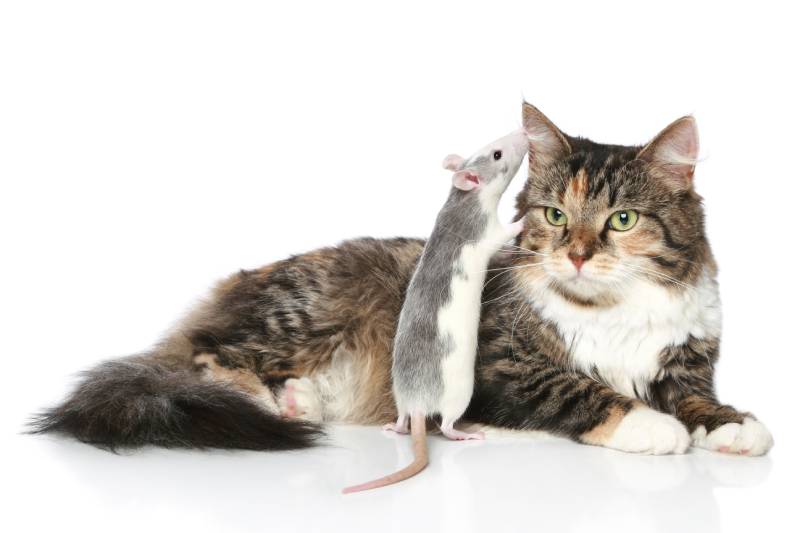
Many animal lovers want to keep multiple pets. This may not always be a good idea. However, it can be difficult to predict whether those pets can cohabitate safely, especially when one of those pets is a natural hunter and the other is prey. The good news is that many animals can get along just fine as long as they are introduced properly and early in their life, as well as carefully observed and supervised during their time together.
Some cats and rabbits can indeed live together when introduced from a very young age, but this is an exception rather than the rule. Risk of the encounter going very wrong is unfortunately high, especially for the rabbit. Always seek veterinary advice before attempting to introduce the two species, as often this may lead to serious conflict, stress, and injuries.
Read on as we get into the details of attempting to create a tolerable relationship between these two lovable pets from an early age.

Keeping Cats and Rabbits Safely
Cats and rabbits certainly seem like an odd pairing. However, they are frequently kept as pets in the same household without problems if all the safety requirements are met and rabbits are kept in a secure area away from the cat. If you wish to have both as pets, there are a few things you will need to do to keep everyone safe.
Introduce Them Slowly
Don’t rush the interaction between your pet cat and pet rabbit. This may take months or longer. There are recommended steps to introduce these two pets, and you should follow them to ensure a safe coexisting. We have outlined some tips below to assist you in slowly introducing your cat and rabbit.
The Younger the Cat, the Better
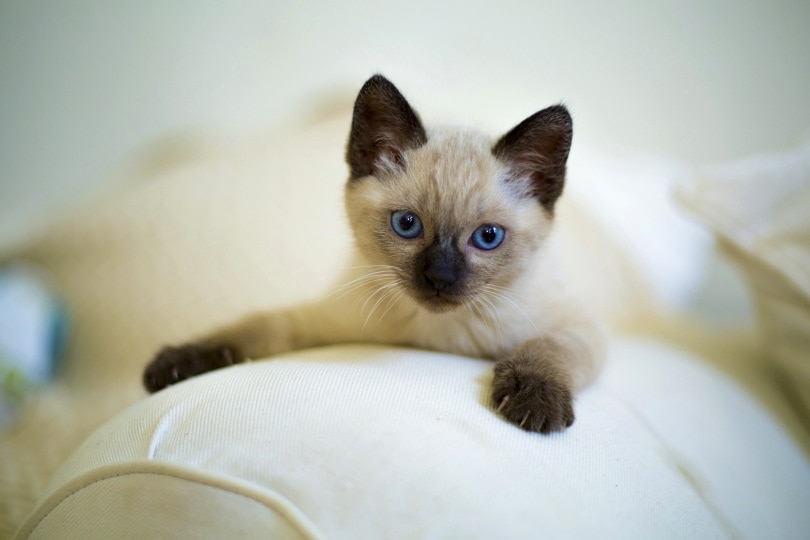
If you introduce a kitten and a rabbit, the kitten will likely grow up thinking the rabbit is a friend, not prey. This makes it easier for the two to maintain a peaceful relationship as they get older. Plus, the kitten may develop a respectful and sometimes even fearful attitude towards an assertive and territorial rabbit, no longer considering them prey.
Make Sure Both Pets Have Their Own Spaces
Cats and rabbits alike are very territorial and must have a place they can call their own. They like to relax and feel safe in their own space. Rabbits also need a safe, relaxing place where they can rest without noise or interruptions. By making sure each pet has their own place, you will ensure that they feel safe and comfortable in your home.
Monitor Interactions Closely
Even if they are usually friends with your pet rabbit, cats are natural-born hunters and consider rabbits prey. Rabbits can be very bossy and territorial. Monitoring these traits in both of your pets and making sure both are relaxed when they interact is very important. Never leave them unsupervised and never allow direct contact. Ensure at least one, or ideally both, pets are in their own carrier and have a hiding area to withdraw to in case of uncertainty.

Keep Feeding Times and Places Separate
Allowing both your cat and rabbit their own space to eat their meals will also calm anxiety over their interactions. Both can be territorial, so keeping them well away from each other and in separate parts of the house when they eat will not only help tamp down any temptation to be territorial about their food but will also allow them to enjoy their food without stress and fear.
How to Introduce Cats and Rabbits
If you want your cat and rabbit coexistence to be a success, then there are several suggested steps you should follow. Remember, you should take introductions very slowly, and don’t be afraid to rewind to an earlier step if needed, or completely stop if things are not going according to plan. Many cats and rabbits will just not get along safely, and it’s better to be safe rather than sorry.
1. The First Introduction Should Be With Both Pets in a Crate or Carrier
The bars of the crate should not be big enough for the cat to reach in. The cage should be large enough for the rabbit to hop around and stand up. There should also be a place for the rabbit to hide in the box. A smaller cardboard box or cave will do. The cat should be kept in their own carrier at a distance that is gradually reduced over time, ideally a few weeks, allowing them both to get used to each other’s presence.
Allow your cat to observe the rabbit without interfering. The cat must see the rabbit exhibiting normal behavior like hopping and running around so that they don’t associate that behavior with the rabbit being a prey or a threat of any kind. Offer both of them food so they can exhibit normal behavior in each other’s presence. Make sure both animals are comfortable and are not showing any signs of distress or fear. If this is the case, stop the attempt straight away. Make sure both animals are far away from each other in their own crates and cannot get into physical contact at any point.

2. Help the Animals Get Familiar With Each Other’s Scent
The Humane Society recommends using a soft cloth to stroke the back of the rabbit and then the back of the cat or use each pet's toys or beds. Place them close to each animal’s hutch, crate, or carrier, but do not leave it inside their safe area. You can repeat this several times to help them get used to the other’s scent. Keep in mind that the smell of a cat might be enough to scare some rabbits and this will not work for many of them.
3. Allow This Type of Interaction to Continue
For at least an hour each day, monitor the behavior of the two animals while secure in their own crates. If the rabbit seems stressed, you should stop the process altogether.
4. Once You Have Done This for Several Weeks or Longer…
The two animals might be used to each other’s scents and movements, so you can move on to the next step. Pick a time when both animals are relaxed and let the rabbit out of their cage. Do not force the bunny out; let them decide for themselves. You should keep the cat in a cat carrier for this interaction. Make sure the rabbit has a place to hide and that the hutch is open and nearby. Repeat this interaction several times, if well tolerated, and stay in control of the situation, looking for if there would be any signs of distress or upcoming conflict.
5. 5. After Both Animals Are Comfortable With This Situation…
We would only consider attempting this step in the case of having a kitten. Risk of an adult cat trying to injure and kill the rabbit is very high, especially if the rabbit starts running around, and this is against our advice due to welfare concerns for the rabbit’s well-being.
After practicing the previous step for weeks to months, you can allow both the kitten and rabbit out at the same time, but make sure you are close by and able to control the situation. Interestingly, the rabbit will often be the more aggressive party at this point. They may even charge at the kitten to assert their dominance. This shows the kitten the rabbit is not food. A kitten who is comfortable with the rabbit will just walk away.
6. Continue to Monitor Their Interactions
Always separate them if there are any signs of stress from either animal. It is important to not yell at or punish either pet if they are not getting along. You should just separate them and try again at a different time.

Risks of Keeping Cats and Rabbits
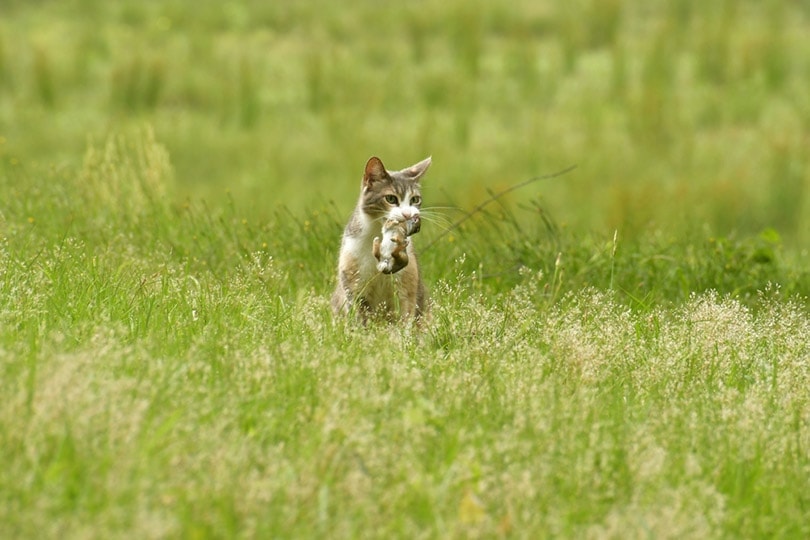
There are many risks of having both a cat and a rabbit. One of the biggest risks is the cat injuring or killing the rabbit due to instinctual predator-prey relationship. Transfer of parasites from one pet to the other is also possible, with cats usually being the source of fleas and tapeworms. You should always keep your animals’ food, water, and litter boxes separate to prevent the transfer of parasites between the two.
There is also the risk that the cat will attack the rabbit or that the rabbit will attack the cat. Animals are unpredictable, and they can get along just fine for months or years and then get into a conflict out of nowhere. Either situation can result in injury for one or both animals, or death of the rabbit. Interactions between animals can turn in an instant, so you should always watch the cat and the rabbit when they are together, even if it’s been months since they got used to each other. It is best that both animals are kept separate in their own safe and secure environment, which will minimize their stress and risk of an accident.
Conclusion
Cats and rabbits can sometimes get along and even be friends. This is actually quite rare, but not impossible. Much of their relationship is dependent on their individual characters and how well you handle introductions between the two pets. If you are willing to get advice from your vet and take the time needed to introduce them slowly and monitor their interactions, then you can keep both a cat and a rabbit in your home.
Never leave them unsupervised, as there is always a risk of injuries and it’s best to ensure the cat cannot get to the rabbit’s hutch at any point. If the rabbit is roaming free in the house or garden, make sure the cat is kept well and securely away to avoid any direct interactions.
See also:
Sources
Featured Image Credit: islam zarat, Shutterstock
Get Hepper In Your Inbox


Pet care tips from our vets and experts, straight to your inbox.
You may opt-out at any time. View our Privacy Policy for more information.
Nicole is a lover of animals of all sizes but is especially fascinated with the feline variety. She’s the proud mom of Baby, a Burmese, and works every day so he can relax in the sunshine or by the fire. She’s always had a cat in her home and has spent countless days with others, observing behaviors and softening up even the grouchiest of the lot. Nicole wants to share her kitty expertise with you so you and your cat can live happy, healthy, and care-free.
Join the conversation
Ask a question, share your story, or send private feedback.