Hepper is reader-supported. When you buy via links on our site, we may earn an affiliate commission at no cost to you. Learn more.
How to Introduce a Cat to a Rabbit: 6 Vet Approved Tips


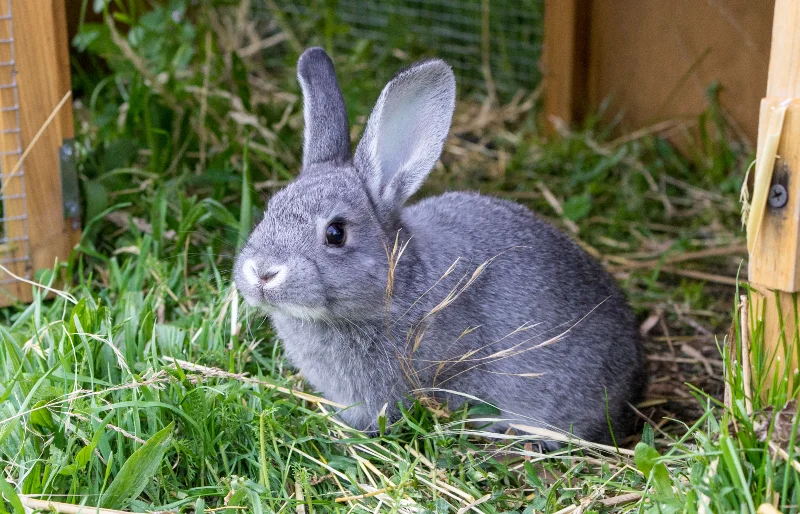
Ever heard of prey and predator becoming friends? This is possible but rare and often unsafe for animals such as cats and rabbits, which are both popular pets. Keeping a cat and rabbit in the same household can be challenging, especially if they haven’t been properly introduced to each other.
That’s why the introduction process is so important since these two pets will need to learn how to coexist peacefully if you want to prevent the potential of the rabbit becoming scared and anxious or both pets getting into fights that may be life-threatening for the bunny. You won’t always be able to keep a nosy cat away from your rabbits. So, by allowing them to gradually socialize with the rabbit under your constant supervision, the process can help ensure both pets are as comfortable with one another as possible. However, if your cat is a hunter, it’s best to keep your bunny in a safe area and completely avoid contact between them.

Can Cats and Rabbits Live Together?
Cats and rabbits can live together in the same home when safety precautions have been ensured, although it is extremely important to deny cats access to your rabbits without your supervision. As a prey animal, rabbits can become easily stressed around cats. This is due to an instinctive fear they have of predatory animals like cats who can harm and kill them. Rabbits don’t need to be friends with other animals like cats, as this is not natural for them, but they can be safely introduced if they are being kept in the same household.
Keep in mind that it is the rabbit who will be stressed during this time, so keeping the rabbit comfortable and safe and removing the cat when you notice your rabbit becoming worried or stressed is important. It can take a few weeks to months to introduce your cat to rabbits, so don’t rush the process if you want it to be successful.
Rabbits rely on other rabbits for company since they are social animals. Keeping rabbits together as a bonded pair is recommended and more appropriate, than attempting to get them to be friends with a cat, which is their natural predator.

The 6 Tips for Introducing a Cat to a Rabbit
Preparation
Here’s what you need before introducing a cat to a rabbit:
Now, let’s get started on the six tips you can use to introduce a cat to a rabbit.
1. Start With Desensitization
Before you let the animals meet face-to-face, you want to gradually get them desensitized to each other’s scent. By doing so, both animals can become familiar with how each of them smells.
Start by placing any blankets, toys, or items that your rabbit uses a lot. These items will hold your rabbit’s scent and can be placed around the areas of the house where your cat can smell them. These can be old fleece blankets in your rabbit’s hutch that were due for a wash, which are left in areas where your cat can smell them.
Then, place one of your cats’ old beds or blankets that they frequently lay on near your rabbit’s enclosure but never inside it. Allow the rabbits to smell the cats’ items after several days if they are not anxious and give them treats during this time. You don’t need to keep it around the rabbit hutch for long—an hour or two will do the trick. Repeat this process for a few days or even weeks until both animals become uninterested in smelling the items. If they are avoiding the items or exhibiting any signs of stress, this experiment should be stopped.
2. Use Treats As a Reward
Cats, and rabbits to a slightly lesser degree, are food motivated, so by giving them treats as a reward during the introduction process, you allow them to associate the experience with something positive. Although, some rabbits can actually be picky, especially if they feel stressed, so they may need a slower introductory process. It’s better to use healthy treats but try to feed them the treats that they prefer. Treats will help them to feel more at ease, and it’s a great way to show your cat and rabbit that when they are present around each other, it is worth a reward. For rabbits particularly, do offer treats in moderation, as excess may lead to digestive and other health issues.
3. Allow Them to Smell and See Each Other
Once they have become accustomed to each other’s scent, it is time to allow them to meet in person. This has to be done safely since you won’t know how your cat or rabbit will react to each other. Either the cat or the rabbit should be placed inside a carrier to prevent the cat from injuring the rabbit. Your rabbit might feel stressed if they are trapped in a cage with a loose cat near them, so placing your cat inside the carrier is a better idea.
To keep your rabbit safe, do not let them meet the cat without a barrier between the two animals, even if you are there to supervise. You may find that your rabbit will be a bit more scared when meeting your cat, whereas the cat will show more curiosity in sniffing the rabbit. Attempt to introduce them to each other at the earliest possible age.
4. Keep the Rabbit In a Secure Environment
Even if you feel like they are getting along well, you don’t know how your cat may react toward the rabbit. At the end of the day, animals are unpredictable, and the risk of things going very wrong will always be there. If your cat is not familiar with rabbits, their natural predatory instincts can lead to your rabbit getting seriously injured. Most rabbits will need a safe and familiar environment that they can retreat to if they are feeling stressed when confronting the cat.
You might feel that your rabbit and cat can roam together, and your rabbit can access the same area of the house as your cat can. However, this will often lead to injuries and accidents that can be fatal to your rabbit. Both animals will feel more comfortable having their own territory, such as feeding areas, resting places, and toys, and this is a must.
5. Ensure the Environment Is Calm
The introductory process can already be overwhelming for both animals, and a noisy and distracting environment can make them feel uneasy. This can also cause the rabbit or cat to hide rather than become familiar with each other or negatively associate the whole process, which can slow down the introduction. Ensure that the area is quiet with no loud sounds or distractions from other pets, the television, and family members.
6. Offer Distractions
It’s essential to speak to the cat and rabbit calmly and avoid reprimanding either animal if they do something wrong. It is normal for a cat to try and sniff and show interest in the rabbit at first, but don’t reprimand them for this. Make sure at least one of them is in a safe carrier, so the situation is controlled and conflict cannot happen. Prioritize the rabbit at all times. It is much safer for the rabbit to interact with the cat that’s in the carrier, allowing them to move away if stressed, rather than the cat sniffing the rabbit in their enclosed safe space.
Instead, try to direct your cat’s attention by offering them a treat or distraction by calling their name. Once your cat loses interest in the rabbit and remains calm and relaxed, give your cat a treat. This is an excellent way to train your cat to respect the space between them and to not to show unhealthy interest in the rabbit.
Are Cats a Danger To Rabbits?
When introducing a cat to a rabbit, or even keeping them in the same home, don’t be fooled, you are putting your rabbit at risk of being injured or even killed by the cat. Cats pose a danger to rabbits, even if they have been well-socialized.
Even the friendliest cat can injure your bunny without meaning to do so. Your cat’s saliva and claws are riddled with bacteria and can cause a seemingly minor injury like a scratch on your bunny to turn into a serious infection, especially as rabbit’s skin is thin and fragile. This makes it important to keep your cat’s nails trimmed and ensure that their interactions with the rabbit are supervised. If you notice that your rabbit has been bitten or scratched by your cat, they need to be taken to a veterinarian right away, and all further introduction attempts should be stopped.
Are Rabbits Dangerous for Cats?
Unfortunately, the risk of these species interacting isn’t one-sided. Rabbits (in particular, adult female rabbits) are territorial too, and though less likely, they can easily injure a young kitten if they feel as if the kitten is encroaching too close to their territory. If you notice that your kitten or cat has been injured by your rabbit, you should have them taken to a vet. Similar to the scenario discussed above, you should again cease all introduction attempts.
Conclusion
Most rabbits and cats are never going to become the best of friends, but introducing them properly from the start allows these two animals to become more tolerant of each other. This will ensure the cat can stay in the same areas of the home where the rabbit’s hutch is without posing much of a threat but with constant supervision. In rare instances, some rabbits and cats can form a bond, but this should not be pursued actively or forced.
If you keep their introductions positive, both animals will eventually become comfortable, tolerant, and able to coexist. This is the main goal of introducing your cat to a rabbit, and all your patience during the introductory process will hopefully pay off in the end.
Sources
Featured Image Credit: Cora Mueller, Shutterstock
Get Hepper In Your Inbox


Pet care tips from our vets and experts, straight to your inbox.
You may opt-out at any time. View our Privacy Policy for more information.
Sarah is residing in South Africa with her partner and pets. She currently is interested in veterinary science and ichthyology, which she wants to study alongside her main passion: pet content writing. Sarah has over 60 fish including goldfish, tropicals, shrimp, and snails. She also keeps hamsters and a tarantula and wishes to provide quality content for readers and allow others to learn from her knowledge and experience. Sarah has much experience in all aspects of pet care, and providing the world with knowledge on ethical pet ownership is her lifelong dream.
Join the conversation
Ask a question, share your story, or send private feedback.