Hepper is reader-supported. When you buy via links on our site, we may earn an affiliate commission at no cost to you. Learn more.
Will My Cat Kill My Rabbit If They're Together? Vet Approved Socialization Tips & FAQ


In this article
For many of us, the idea of a rabbit and cat living together under one roof would have “disaster” written all over it—and for a good reason. Rabbits can be challenging enough to socialize with each other, but before that, you have to worry about whether your cat will see your rabbit as prey.
Cats can kill a rabbit if they are together, especially when you place them in the same room without any forethought or supervision. But with the right kitten, the right rabbit, lots of patience and time, and a calm and relaxed temperament between them, they may learn to tolerate each other or become friends with your training and encouragement, although this is rare.
Getting your cat and rabbit to accept and tolerate each other takes time, and there’s always a chance the two won’t ever be 100% comfortable. They should never be left unsupervised, as even after months or years of living in harmony, an incident may happen and your rabbit can get seriously injured or killed. Plan for a successful pet pairing by learning how to keep both animals happy and safe.

Will My Cat Kill My Rabbit If They’re Together?
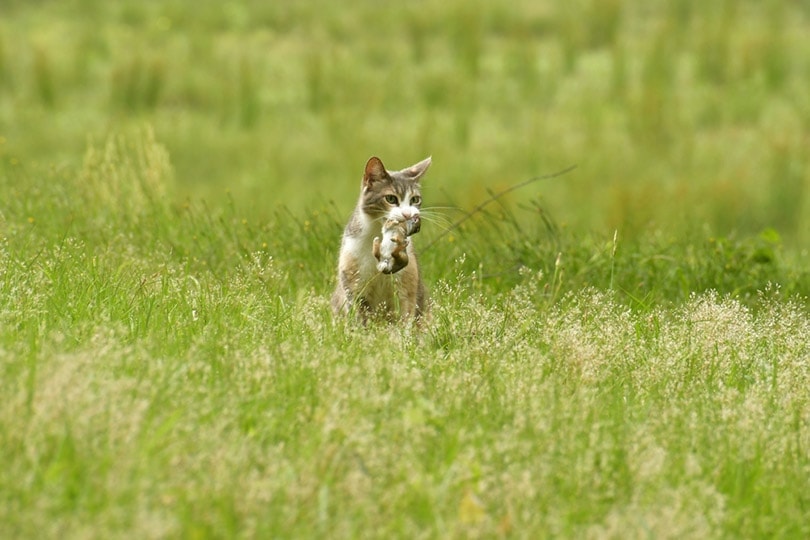
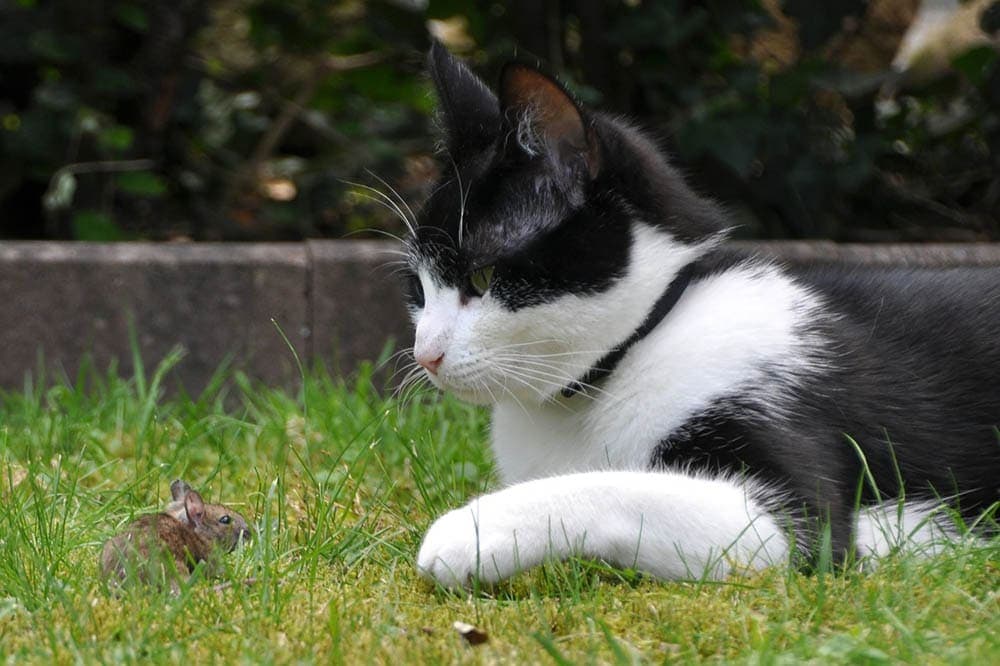
Cats have a strong predatory instinct with an innate trigger to stalk mammals, birds, lizards, and nearly any animal they feel they can take on. Outdoor cats have proven to be 2 to 10 times deadlier than natural predators, and the cumulative efforts of outdoor owned and unowned cats in the United States account for over 6 billion killed mammals annually.1 Bringing that threat around a timid and relatively helpless rabbit without gradually and safely introducing them, can be hazardous for several reasons.
If they get scared, your rabbit may run, causing the cat to chase and likely kill them. In other cases, a highly predatory cat may not need them to run before deciding to attack. But even without touching your rabbit, your cat can instill enough fear to cause physical harm. When rabbits get suddenly stressed, but also due to constant chronic stress, their bodies react in harmful and potentially life-threatening ways, such as:
Living in separate parts of the house in secure areas or a slow, short, and carefully monitored meetups are crucial to keep both pets in a low-stress and friendly environment. Giving your pets a chance to escape and feel safe as needed may allow them to grow familiar at their desired pace and avoid hostile interactions. However, remember that, in most cases, this attempt of inter-species introduction or friendship will actually not be possible due to rabbit’s fear and risk for their health and should not be pursued or forced.

Do Cats Eat Rabbits?
Small mammals, particularly rodents, are a favorite food for cats, a group of obligate carnivores that, particularly if not owned, rely solely on other animals for sustenance. Though larger than the average rat, a rabbit wouldn’t be off-limits to a sizable cat. Even if the cat was owned and regularly well-fed and unlikely to eat the rabbit, a feline’s urge to kill often compels it.
Rabbits Can Also Be the Aggressors
Your rabbit may be more at risk in many cat-rabbit relationships, but that doesn’t mean they can’t take on the role of aggressor. A confident rabbit can get territorial and establish dominance, especially when encountering a kitten. As pack animals, rabbits try to define and enforce a pecking order, while solitary cats take more individualistic approaches to socializing, often forming communities devoid of a hierarchical structure.
It isn’t uncommon for the rabbit to hold superiority over a kitten. In most cases, a dominant rabbit with a mild-tempered kitten or young cat is often the only tolerable relationship. When a rabbit engages your cat rather than the other way around, they will be much less likely to view the rabbit as prey.

How to Keep Your Cat From Injuring or Killing Your Rabbit
Creating an atmosphere free of any predator-prey dynamic between your cat and rabbit can take several weeks or even months of separation, complete avoidance, or, in some cases, controlled interactions requiring pre-planning and home-proofing. Ideally, a rabbit should enjoy their secure hutch and living area far away from the cat, without sharing living space with their natural predator. Keeping both indoors is an excellent idea because it removes the cat from its natural predatory environment and reduces their negative impact on wildlife.
Patience is essential. Premature or unplanned encounters can overstimulate both pets or lead to injuries, making it more challenging to have them accept one another in the house. Most importantly, remember that both pets can live a very happy, safe, and stress-free life if they are kept away from each other, fully removing the risk of injury for both animals without forcing them to interact with each other.
1. Exchange Scents
Whether the cat or the rabbit is the newest family member, separating your pets and slowly introducing them will give you the best chance of keeping both at ease. Keep the new pet in a single room to avoid overwhelming them with the new house. As they get more acquainted with the space, you can show them the rest of the home, one room at a time.
Introductions to other pets require even more care. Prepare your pets for interactions by getting them used to the other’s scent. Wipe your cat’s back with a clean cloth, and do the same with the rabbit using a separate cloth. Leave such a cloth or toys from one pet in a room where the other one lives or spends time in.
Never leave a cat’s toy or cloth with their smell in a rabbit's hutch, as this may cause them stress with cats being their natural predators and they cannot get away from it. Leave it in the room well away from the hutch initially, and over time, move it closer to the hutch unless the bunny is exhibiting any signs of stress. Do this many times before even considering the first meeting to make the smell recognizable.
2. Protect Against Claws
One swipe of a sharp claw is all it takes for your cat to harm your rabbit due to their delicate, fragile skin. Make sure your cat is never around the rabbit unless in their crate or carrier, as it’s best to allow the rabbit freedom of movement. Your rabbit may charge your kitten to assert themself, which could cause your cat to bat at it instinctively, even from their carrier. If that happens, you won’t want them to catch your rabbit on the eye or open a wound that becomes infected.
Keep claws trimmed down to prevent any unfortunate accidents. Cut the hooked tip from your cat’s claws well away from the “pink” part, and stop trimming before hitting the quick. If you’re concerned about hurting your pet, talk to your vet about the best technique. You’ll want to trim the nails periodically, depending on your cat’s lifestyle and affinity towards scratching posts, to protect your rabbit from your cat’s paws.

3. Introduce Them in a Territory Where the Rabbit is Well Established
After acquainting your pets via scent, you can attempt to safely introduce them in the area where the rabbit is established and feel confident, especially if dealing with an adult cat. On the other hand, when meeting a kitten, neutral territory is more appropriate, as some territorial rabbits may charge and even injure the kitten. The room will vary depending on how you’re bringing the pets together. Remember both or at least one pet needs to be in their carrier or crate, ideally the cat.
4. Give Your Rabbit Space to Move and Hide
Do not let your pets make physical contact. Even after months and years of living together, a cat can still attack and injure or even kill the rabbit. In-person introduction is against our advice as there is always a risk of injury for one or both animals. Kittens may be more amenable to introductions and less interested in considering the rabbit their prey, but again, there is no guarantee that accidents won’t happen.
Keep your cat in their carrier box and the rabbit in a crate or hutch, giving the bunny enough space to run and move freely. You want your cat to see and get used to the movements that could cause them to pursue the rabbit. Ensure the cage won’t allow your cat to reach a paw inside it and give your rabbit a box inside the hutch where they can hide.
It would be best to keep the cat in a secure carrier while the rabbit is in their hutch with an open door, with a choice to interact and exit the hutch or stay in their safe place. You may find the rabbit has no interest in getting anywhere close to the cat and this should be respected.
Let your cat and rabbit exchange scents and get close to explore one another, only if the rabbit chooses to do so. Try to play with both pets and reward them with treats while in the room together to make them comfortable with each other’s presence, while each is in their own safe space. The idea is for both pets to be relaxed enough to eat and exhibit normal behavior while not being particularly interested in each other.

5. Keep Interactions Short
Make the initial meetings around 5–15 minutes to prevent either pet from becoming too stressed. Remember that an outmatched kitten is easily intimidated, especially when your rabbit feels territorial and confident. Be ready to remove your rabbit immediately if the cat acts aggressive or predatory.
Every animal warms up to new pets at a unique pace. Don’t feel the need to rush their introduction before they’re 100% comfortable around each other. And even then, they need to be supervised and completely avoid direct physical contact, with one or both of the pets being in a secure carrier or crate.
6. Supervise Your Pets
Even animals that belong to the same species should be supervised during interaction, as conflict is always a possibility, especially early on in a new relationship. This is a must when attempting to introduce different species, like cats and rabbits, that have a predator-prey relationship.
When introducing a kitten to a rabbit, in some cases, the rabbit may be assertive, which they will often display by confidently charging up to the cat. Make sure one or both are crated, and if the rabbit is the one roaming free, that they cannot get to the kitten through their carrier.

Should I Introduce My Pets at a Young Age?
Many feel that introducing kittens and rabbits gives them a better chance of building a comfortable and tolerant relationship. Although the logic is sound, you must be extremely careful bringing young cats around a grown rabbit and take all the precautions we discussed. The rabbit will likely be the more assertive one and may easily frighten your kitten. This way, the kitten should realize the rabbit is not prey and should learn to avoid them and maintain a safe distance. Rarely, the two animals may form a bond, and they should not be forced into interaction or “friendship” that is likely to come as unnatural or dangerous to them.
At the same time, temperament is more important than age. An aggressive kitten is no better to pair with a rabbit than a mild-mannered adult cat. Socialized adult cats are often even-tempered and open to sharing spaces with other animals with the proper introductions, but there is never a guarantee that they won’t exhibit their natural predatory instinct when faced with a rabbit. Animal shelter operators can tell you about the personality and background of their cats to help you find the best match for your rabbit, but even calm and relaxed cats may show a strong hunting instinct.
Will My Animals Get Along?
Not getting your cat and rabbit to get along is definitely not a failure. This is natural for most and you should respect this and keep both pets happy and safe. You may also need to be wary of certain cat breeds and outdoor cats prone to giving into their wild nature around typical prey animals. For instance, mousers and exotic hybrids, such as Savannah cats and Bengals, can threaten almost any pet, particularly a small rabbit, and may not be suitable to keep both species in the same house.
Final Thoughts
Rabbits and cats have a prey-predator relationship in most cases, and they should not be forced to make friends, as this often leads to stress, fear, and risk of health issues, injuries or even death for the rabbit. Of course, there are always exceptions to this rule, and your animals may learn to tolerate each other, or even bond, but this is a gradual process that requires constant supervision.
You should have unlimited patience, allowing your rabbit to assert themselves on their territory and build confidence. It is still possible that your cat will try to injure or even kill your rabbit, even with gradual and appropriate introduction. You’ll often find the rabbit sets the rules in the house with a kitten, but the risk of injuries will always be present. There are instincts to iron out on both sides, but with careful planning, research, and supervision, the two animals may find a way to tolerate each other’s presence in the home under your constant watchful eye.
Sources
Featured Image Credit: Robert Way, Shutterstock
Get Hepper In Your Inbox


Pet care tips from our vets and experts, straight to your inbox.
You may opt-out at any time. View our Privacy Policy for more information.
Nicole is a lover of animals of all sizes but is especially fascinated with the feline variety. She’s the proud mom of Baby, a Burmese, and works every day so he can relax in the sunshine or by the fire. She’s always had a cat in her home and has spent countless days with others, observing behaviors and softening up even the grouchiest of the lot. Nicole wants to share her kitty expertise with you so you and your cat can live happy, healthy, and care-free.
Join the conversation
Ask a question, share your story, or send private feedback.