Hepper is reader-supported. When you buy via links on our site, we may earn an affiliate commission at no cost to you. Learn more.
Do Cats Eat and Hunt Rabbits? Vet-Verified Facts & FAQ


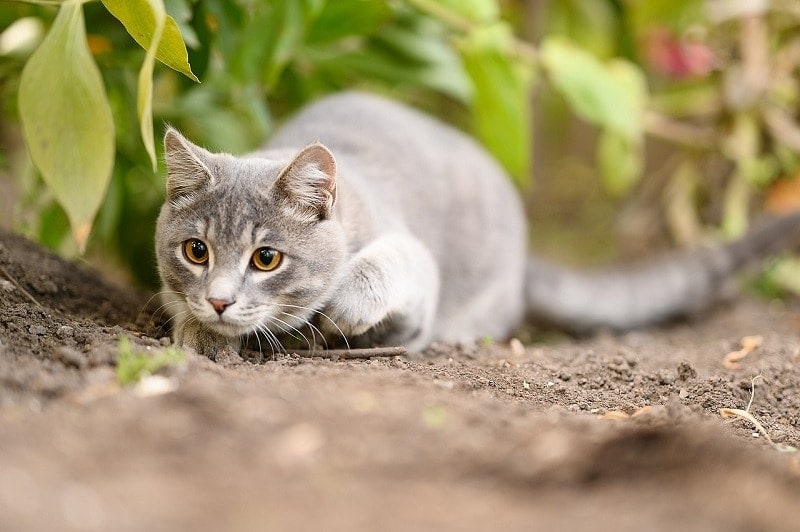
As you watch your cat sleep more than half of the day, it’s hard to believe that your pampered feline is related to such mighty hunters as lions and leopards. If the only prey your cat ever stalks are catnip mice and the occasional unlucky bug, you might wonder how talented pet cats really are when it comes to hunting. If they needed to, could they capture animals they consider prey, such as rabbits?
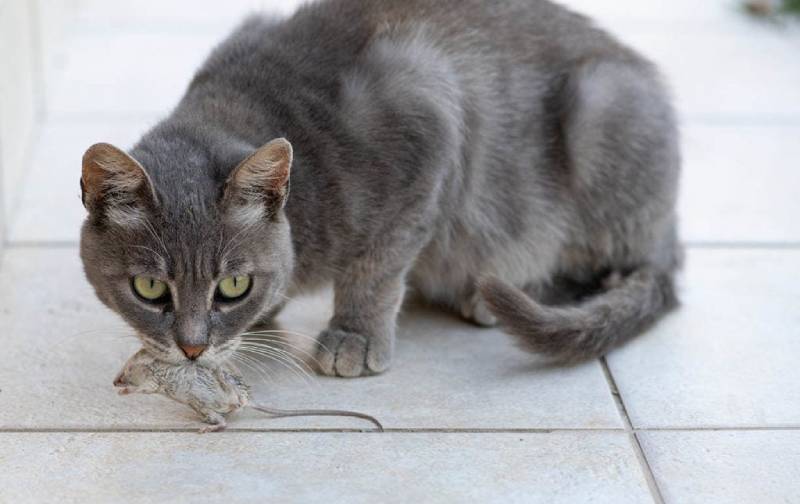
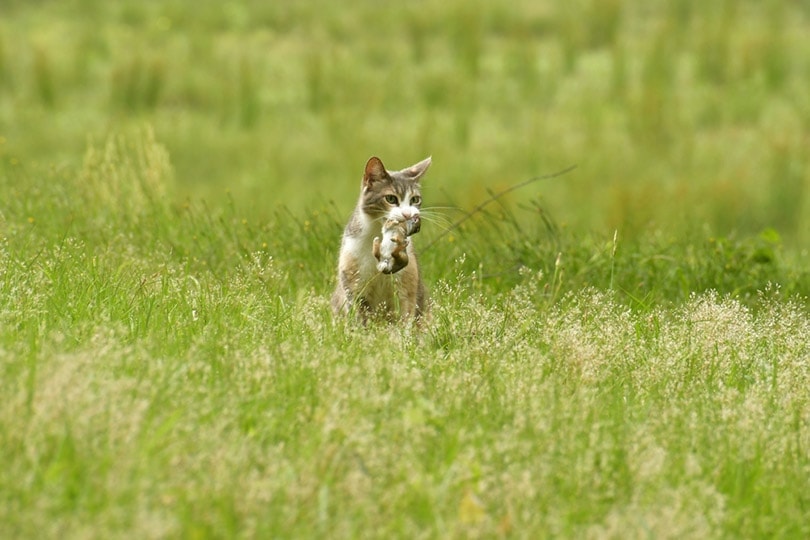
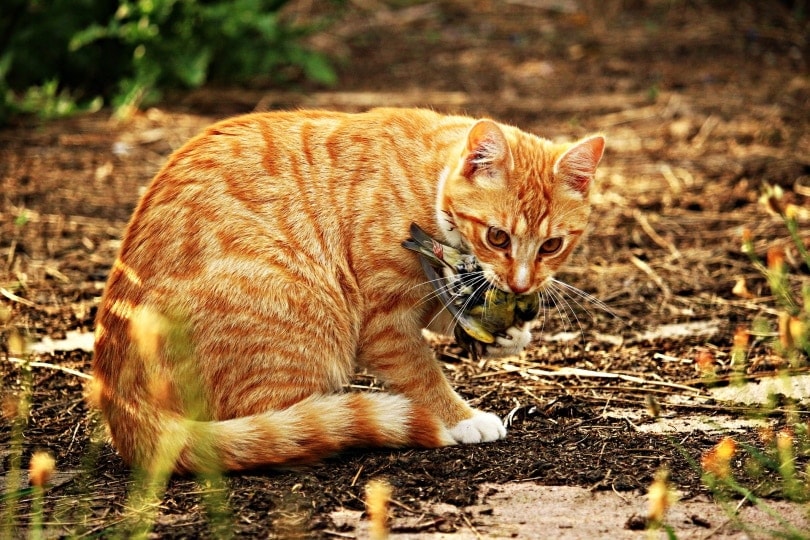
Do cats hunt and eat rabbits? Owners of outdoor cats are likely to find the answer to this question in the form of a gruesome gift left on the porch, but yes, cats will hunt and may even attempt to eat rabbits given the chance, along with other small mammals and birds, negatively impacting the number of wildlife species. Consuming rabbits may also pose a hazard to a cat’s health.

Cats: Wildlife Serial Killers
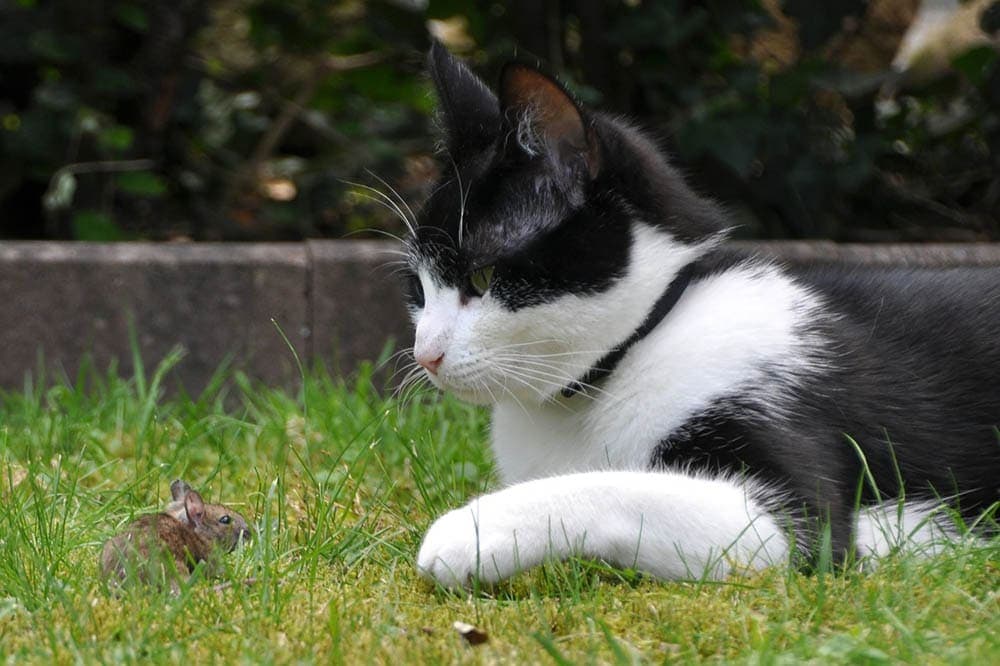
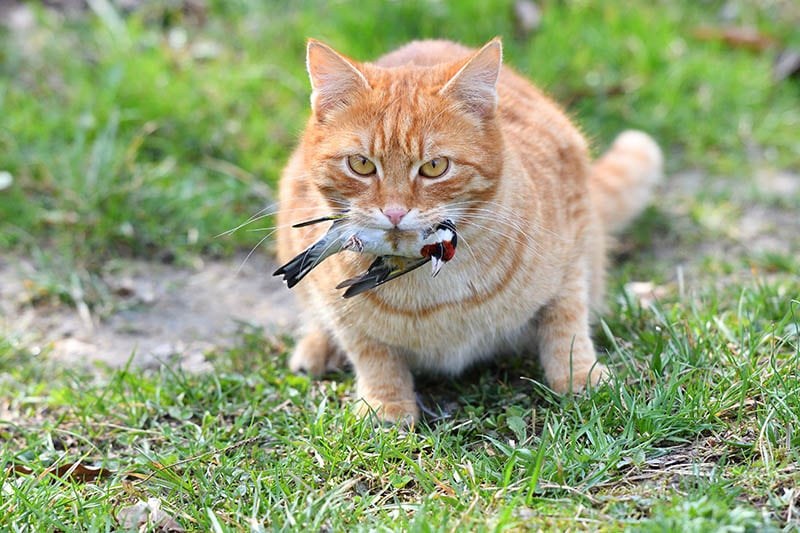
Not only will cats hunt and eat rabbits, but they’ll also prey on other small wildlife and birds. Cats, particularly free-roaming strays, are considered the greatest threat to birds and mammals in the United States.1 A study published in 2013 estimated that cats kill around 1–4 billion birds and 6–22 billion mammals every year.2
Worldwide, cats are considered an invasive species in some countries where they’ve been introduced. At the time the study was published, they were also responsible for or had contributed to the extinction of 33 species.
Rabbits may breed like, well, rabbits, but unfortunately, some other species haven’t been so lucky.
Rabbits Bite Back (Sort Of)
Cats hunting rabbits generally ends poorly for the rabbit rather than the cat. Sometimes, cats injure the rabbit before they manage to escape, causing prolonged suffering. However, eating rabbits can also be dangerous for cats due to tularemia.
What Is Tularemia?
Tularemia is a bacterial infection commonly called rabbit fever. It’s found in rabbits and rodents and in North America, Europe, and Asia. Cats can become exposed to the disease by eating infected rabbits, drinking contaminated water, or being bitten by insects carrying it.
How Serious Is Tularemia?
Tularemia is a relatively rare disease in cats. When they become infected, the diagnosis is severe and often fatal. The disease causes high fever, swollen lymph nodes, and eventually organ failure. Tularemia can be hard to diagnose because other, more common illnesses must be ruled out first.
Treating tularemia involves intensive care in an animal hospital. Early diagnosis and treatment give the best chance for success, but the death rate is unfortunately high. Avoiding the disease altogether is the best option to keep a cat safe.
Humans can catch tularemia from insect bites or drinking contaminated water. They can also become infected if a sick cat scratches or bites them.

How to Keep Cats From Hunting and Eating Rabbits
Since we’ve now learned that hunting rabbits is dangerous for the cat and the wildlife population, how do you keep your cat from hunting and eating rabbits? Well, unless your house is also home to a wild rabbit population, the simplest solution is to keep your cat indoors or have a secure outdoor ‘catio.’ Not only will this keep them from hunting rabbits and other wildlife, but they’ll stay safer overall.
Outdoor roaming cats risk being killed or injured by cars or fights with other animals. They’re also more likely to catch infectious diseases like feline leukemia virus (FeLV) or feline immunodeficiency virus (FIV). Other dangers outdoor cats may encounter include ingesting poisons like antifreeze or being harmed by humans who consider them a nuisance.
Outdoor cats live significantly shorter lives than indoor-only felines, but evidence-based research on this topic is still lacking and outdated. The life expectancy was believed to be 2 to 5 years for outdoor cats, compared to 10 to 15 years for indoor cats, according to statistical analysis performed by researchers at the University of California, Davis. This was based on a study published in 1985 by Richard Warner of a very small population of Illinois farm cats.
If you worry your cat is missing out by never going outside, consider safe alternatives like training them to walk on a leash from a very young age or arranging an enclosed and secure outdoor play space.
What About Cats and Pet Rabbits?
So far, we’ve been discussing cats hunting wild rabbits, but what if you own or are thinking about adding a pet rabbit to your home with a cat already in residence? Can cats and pet rabbits get along? The answer may surprise you, given what you just read about outdoor cats and their hunting skills, but pet rabbits and indoor cats can and do co-exist happily when specific requirements are met.
Sometimes, they can bond and become friends, but it cannot be forced and is usually only possible when introducing rabbits to a kitten. Still, the risk of a cat injuring or killing a rabbit or a confident rabbit injuring a kitten is real, and the introduction process should not be attempted without veterinary guidance, further research, previous experience with keeping both species, and plenty of patience.
As with any new pet introduction, the key is to go slowly and supervise all interactions. Baby rabbits aren’t safe around adult cats, but kittens may be easier to introduce to an adult rabbit. Larger rabbit breeds who are less likely to get scared and run from a cat also do better.
Remember that rabbits still view cats as predators. Don’t force your cat’s friendship on your rabbit if they don’t seem to want it. Predator stress reactions can harm the rabbit’s short- and long-term health.
Final Thoughts
Given the opportunity, cats will hunt and eat rabbits and most small mammals and birds. They might even be so proud of themselves that they thoughtfully bring you the leftovers! To avoid any chance of your cat becoming infected with rabbit fever and to keep your cat safer and healthier while protecting wildlife welfare and diversity, keep them indoors or in a secure outdoor ‘catio’ away from rabbits or other animals they could hunt or hurt.
If your cat still has a strong hunting instinct, try getting them stuffed toys, puzzles, and games instead to provide them with enough exercise and keep their mind busy!
See Also:
Sources
Featured Image Credit: Serenity Mitchell, Shutterstock
Get Hepper In Your Inbox


Pet care tips from our vets and experts, straight to your inbox.
You may opt-out at any time. View our Privacy Policy for more information.
A lifelong lover of all creatures great and small, Elizabeth got her first cat at 5 years old and at 14, she started working for her local veterinarian. After spending more than 20 years working as a veterinary nurse, Elizabeth decided to step away to become a stay-at-home parent to her daughter. Now, she is excited to share her knowledge with our pet parents. Elizabeth lives in Iowa with her family, including her two fur kids, Linnard, a husky mix and Algernon, the worldʻs most patient cat. When not writing, she enjoys reading, watching soccer, and spending time outdoors with her family.
Join the conversation
Ask a question, share your story, or send private feedback.