Hepper is reader-supported. When you buy via links on our site, we may earn an affiliate commission at no cost to you. Learn more.
Do Frogs Bite? Vet Reviewed Reasons, Species & FAQ


In this article
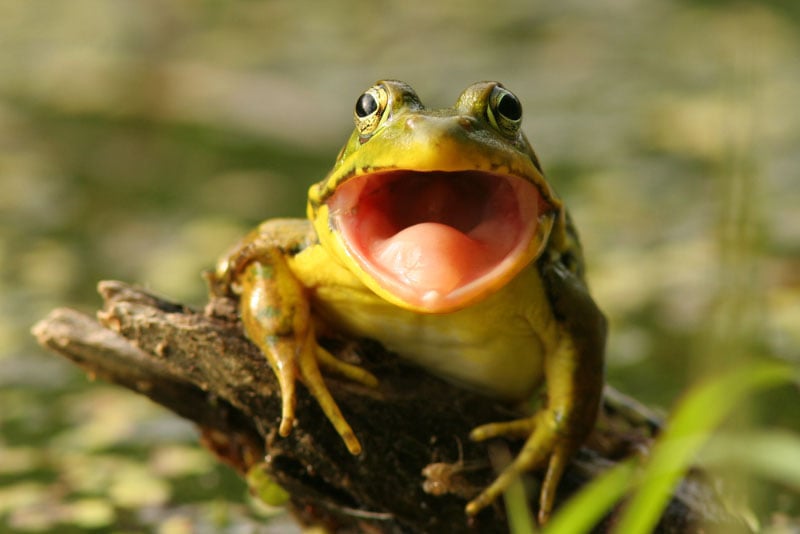
There is a good chance that you may encounter a frog at some stage during your life if you haven’t already. You may even have to rescue one that has become trapped indoors or captured by a naughty kitty. This begs the question—if you need to, is it safe to pick one up, and will it bite you? It’s a very reasonable question since many wild critters defend themselves by biting.
Yes, some species of frog bite, but that is not to say they will bite you. If you pick up a frog, it’s more likely that you’ll get peed on as the frog tries to escape rather than bitten!

Important
Why Do Frogs Bite and How?
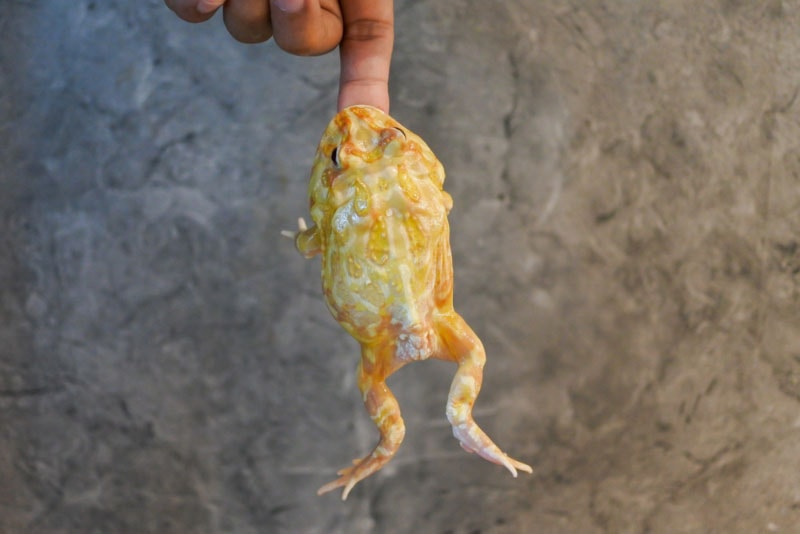
Frogs never bite without reason. The two most common reasons a frog will bite you or another animal is when they feel threatened or mistake your tasty-looking pinkie finger for a meal. You’d be surprised how often this happens to frog owners. Frogs are not the greatest at distinguishing between fingers and food.
Your Finger Resembles Food
Frogs are instantly and inherently attracted to movement when hungry and on the hunt. They possess feature detection cells in their brain which cue them to react to targets of a particular shape, color, and size. Fingers fall neatly into the correct category. Because of that, many owners feed their frogs with forceps or tongs.
They’re Frightened
Before they bite in response to a threat, most frogs will warn others that they are feeling threatened. They’ll puff themselves up to appear bigger or issue an alarming scream-like croak. If they issue you this caution, you should leave them alone.
Which Species of Frogs Are More Likely to Bite?
Of the various species of frogs kept as pets, several are more likely to bite for any of the reasons mentioned above.
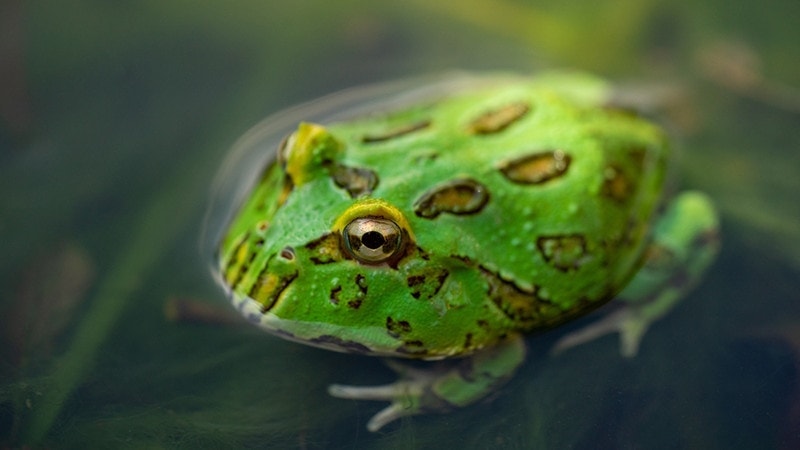
Pacman Frogs
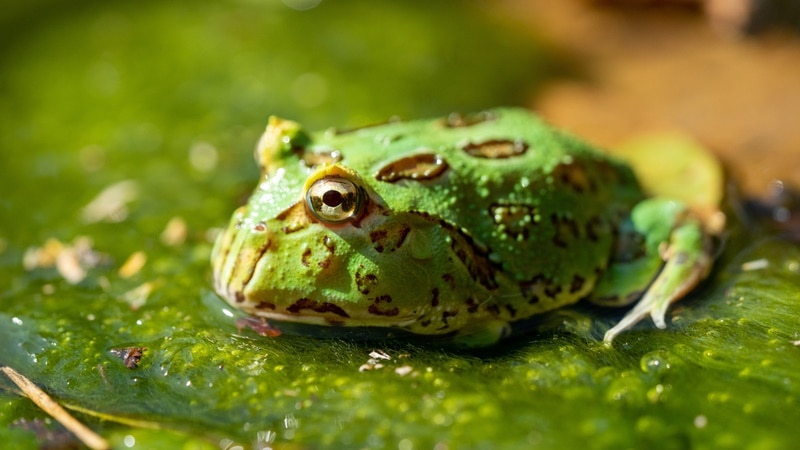
Pacman frogs make interesting and rewarding pets and are popular with amateur herpetologists. They are one species of frog that readily bite to defend themselves when threatened. However, they rarely bite their keepers.
They are most likely to bite the hand that feeds them because they’ve mistaken it for their food! They have small backward-pointing teeth, which may prove difficult to extricate a finger without some discomfort and perhaps a little bloodshed. They also have a particularly powerful bite force for their size.
African Bullfrogs
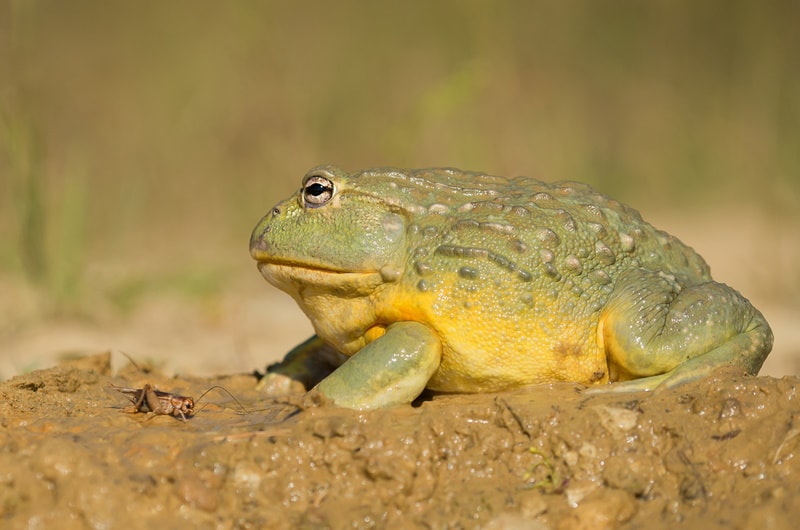
African bullfrogs are also popular as pets and can weigh up to 4 pounds (around 2 kg). They will bite when they are provoked or threatened, or when they misconstrue your finger for a meal. Although they don’t have real teeth, they have three spiny projections in their lower jaw, one centrally located and two on either side. They have a powerful bite that can inflict a painful wound that will undoubtedly draw blood. African bullfrogs bite in an attempt to crush live prey because they lack other means of subduing them.
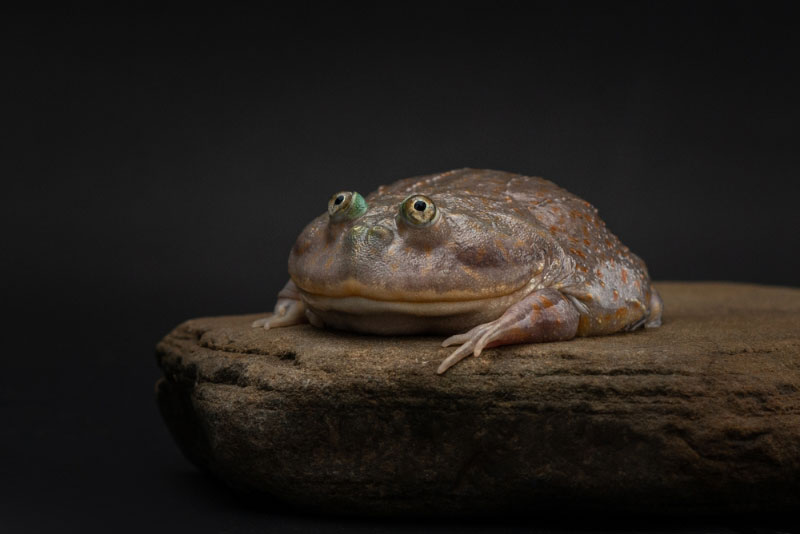
Budgett’s Frog
The Budgett’s frog will also bite to protect itself against predators or other perceived threats. They have two large tooth-like projections in their mouth that will undoubtedly cause damage to a hand or finger. They will, however, usually issue a warning before biting. They puff themselves up and let off a hissing scream to deter potential attackers.
Is a Frog Bite Dangerous?
Relatively speaking, a frog bite is not very dangerous. As you have read, the worst that can happen is that you will feel pain and end up with slight bruising. The most significant risk lies with a bite that draws blood.
Always wash the wound thoroughly, preferably with an antibacterial soap, to avoid an infection. After that, apply a topical antiseptic before seeking a doctor’s opinion on the wound.
Important:
What Should I Do If a Frog Bites Me?
If you get bitten by a frog, they will most likely bite and release immediately and inflict little or no physical harm. However, you may get worried if the frog doesn’t let go. This sometimes happens, particularly if the frog is convinced your finger is food. Sometimes even when they realize their error, they cannot let go because of the backward-facing spines in their mouth specifically designed for this purpose. This is particularly true of the popular pet Pacman frog.
In this instance, you should stay calm and not snatch your finger away. You must carefully pry the frog’s jaws from your finger (or whatever part has been engulfed) and push them away with your other hand and fingers. Be careful not to let it latch onto any of your other appendages once it has released the previous one! It’s important to be very gentle as frogs are delicately boned and thin-skinned and could be easily injured if handled too roughly.
As you will have read, some species of frogs can inflict a more serious wound with their strong bite and tooth-like oral projections. If you suffer a more significant injury, ensure you apply the appropriate first aid treatment to any wounds and see a doctor.
Is It OK To Pick Up a Frog?
Many frogs are very slightly poisonous; unless you are an expert, you may inadvertently touch one, which could make you a little ill. This is more of a concern to children and animals that both tend to mouth things.
Extreme examples of poisonous frogs are the Poison Dart frogs—particularly the Golden Poison Dart frog, which contains enough poison to kill two elephants. Fortunately, you’re not likely to encounter one since they are endemic to South American rainforests.
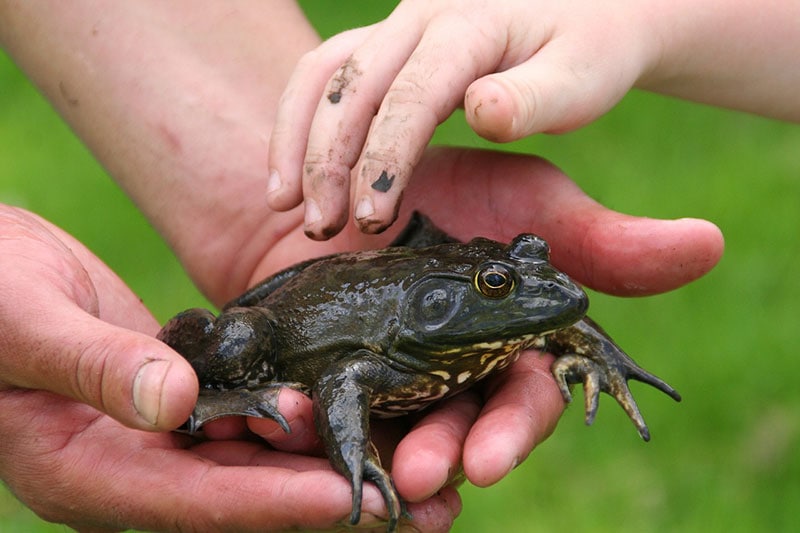
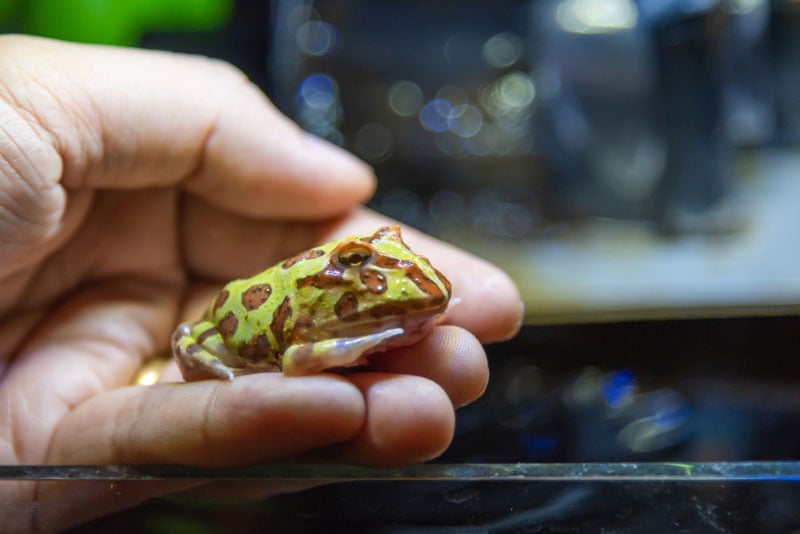
However, picking up a pet frog isn’t a good idea either. They don’t like to be handled, and it’s not particularly good for them. They have sensitive skin, and oils, lotions, and soaps on human hands could adversely affect them.
Conclusion
You’re not likely to shed much blood or many tears because of a frog bite, but some species can undoubtedly make you yelp if they sink their chops into your finger. Frogs are not malicious by nature and will never bite without reason. Their reasons may sometimes be unpredictable, like when they confuse your finger for food.
It’s best to avoid putting yourself in any position where you might get bitten by a frog in the first place. They don’t like being handled, so refrain from doing it as much as possible. If you have a pet frog, it’s a good idea to feed them with forceps to avoid causing feature detection confusion and a nip to your digit.
Featured Image Credit: Brian Lasenby, Shutterstock
Get Hepper In Your Inbox


Pet care tips from our vets and experts, straight to your inbox.
You may opt-out at any time. View our Privacy Policy for more information.
Eleanor is a high school Math and Science teacher and freelance writer. She lives in the lush KwaZulu Natal Midlands of South Africa with her six-year-old son, horse, cat and three chickens. As an animal devotee, science graduate and life-long learner, she is overjoyed to be able to turn her passions into helpful articles for pet parents. Eleanor and her son love to explore their beautiful country in their spare time. Road-tripping to interesting camping destinations is a favorite pastime. They particularly enjoy relaxing near the ocean, in the mountains or surrounded by African wildlife.
Eleanor is a high school Math and Science teacher and freelance writer. She lives in the lush KwaZulu Natal Midlands of South Africa with her six-year-old son, horse, cat and three chickens. As an all-time animal devotee, science graduate and life-long learner, she is overjoyed to be able to turn her passions into informative and helpful articles. Eleanor and her son love to explore their beautiful country in their spare time. Road-tripping to interesting camping destinations is a favorite pastime. They particularly enjoy relaxing near the ocean, in the mountains or surrounded by African wildlife.
Join the conversation
Ask a question, share your story, or send private feedback.