Hepper blog

Search our database of over 9,984 posts with up-to-date information from our experts and veterinarians.

Hepper is reader-supported. When you buy via links on our site, we may earn an affiliate commission at no cost to you. Learn more.

Are Frogs Nocturnal? Vet-Verified Biorhythm Explanation

By Codee Chessher · Reviewed & fact-checked by Dr. Luqman JavedVet Approved
Dr. Luqman Javed
Reviewed & Fact-Checked byDr. Luqman JavedDVM (Veterinarian)
Dr. Luqman grew up with an extreme fondness for animals and turned a childhood dream into reality by becoming a veterinarian. His goals are now focused on helping pet owners understand their pets better in order to ensure the best quality of life for all pets globally. He is passionate about wildlife, exotic pets, pet owner education, and animal welfare. Luqman has 3 years of professional experience working with a variety of animal species. He has skills in demonstrating proper animal husbandry and training some exotic species, such as parrots. Additionally, he has decades of personal experience with keeping many exotic pets: freshwater fish, parrots, songbirds, chickens, ducks, turtles, and hamsters.View authorThe information is current and up-to-date in accordance with the latest veterinarian research. Read about our vets
Share
Ask us a question in the comments
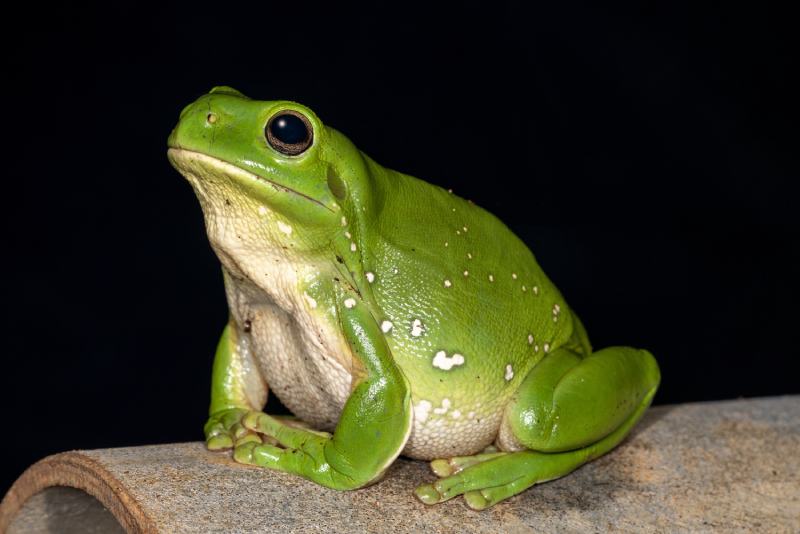
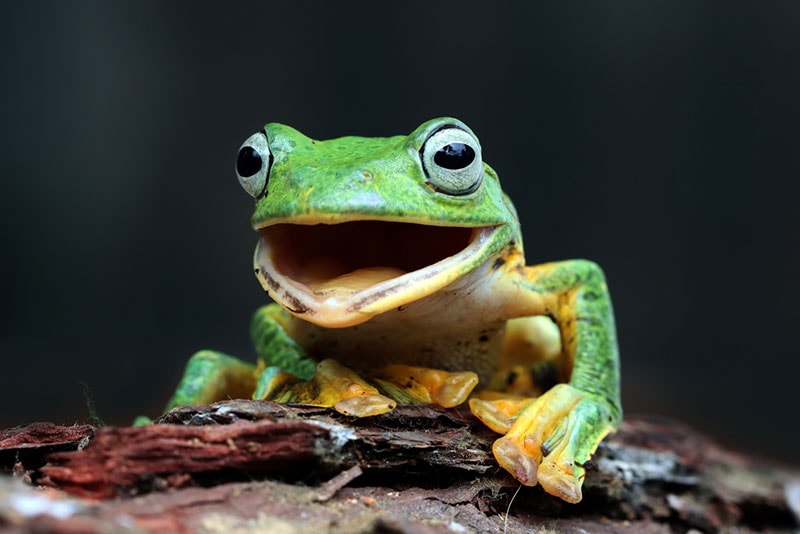
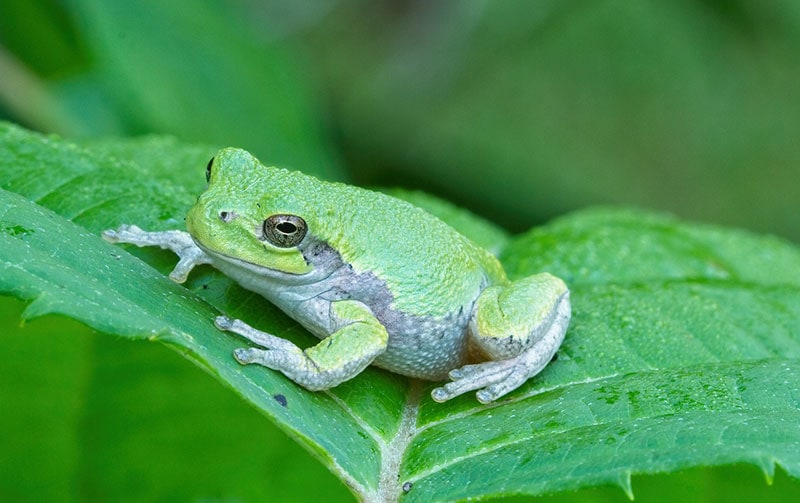
Australian Green Tree Frog preparing to jump

The animal kingdom is full of night owls, moonlight-prowling cats, and—nocturnal frogs? Yes, most frogs are nocturnal critters that prefer to sleep during the hot days that would normally overheat their ectothermic bodies. At night, they wake up to hunt, call for mates, and skip daytime predators in the poor light. For the nocturnal predators, frogs have adapted to sort of camouflage into the night grass and confound would-be assailants.

Just as important, nights are a lot cooler, and a frog that may have spent the day in a warm, stuffy burrow can cool off. The night also gives frogs an advantage in the food department because insects are a lot more active at night, so they have more opportunities to fill their bellies. That said, being too cool can make a frog slow down, so it’s a fine balance for them.

If you’ve ever wondered about frogs’ sleeping habits, you’re in the right place. Join us as we explore the frogs that aren’t nocturnal, how frogs communicate at night, and whether frogs hibernate.

What Do Frogs Do at Night?

We briefly covered the basics of what frogs do at night: mate, hunt, avoid predators, and cool down. Let’s discuss those in a little more detail below so you can get a better idea of how the frog lives in the wild.

Mating

Aside from their iconic ribbet, different species of frogs may bellow or croak to try and attract mates at nighttime. Frog mating season is typically during the spring or wet season when the ground is thawing and becoming more moist. When it’s time to lay eggs, frogs prefer to lay them in slow-moving bodies of water like ponds or fens.
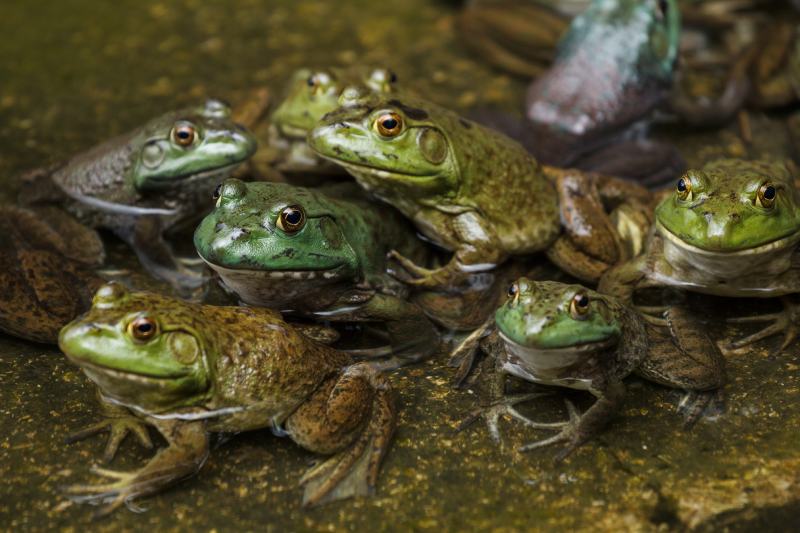
Group of frogs rest in a pool
Image Credit: janusz.kolondra okonato, Shutterstock

Hunting

Frogs in the wild are carnivores that eat an array of prey animals, but the one constant is insects. Frogs can shoot their long, sticky tongue out an astonishing distance to snatch bugs out of the air, and they even have teeth designed to hold prey while they swallow it. Larger frogs can eat fish, small rodents, minnows, and even other frogs.

Evading Predators

Most of the frog’s natural predators are asleep during the night, making it the perfect time for the frog to get their business done. However, frogs still face mortal threats like snakes, owls, and foxes. That’s why they’ve evolved to better camouflage into the dark green forest, which makes predators squint really hard before they can grab a frog for lunch.
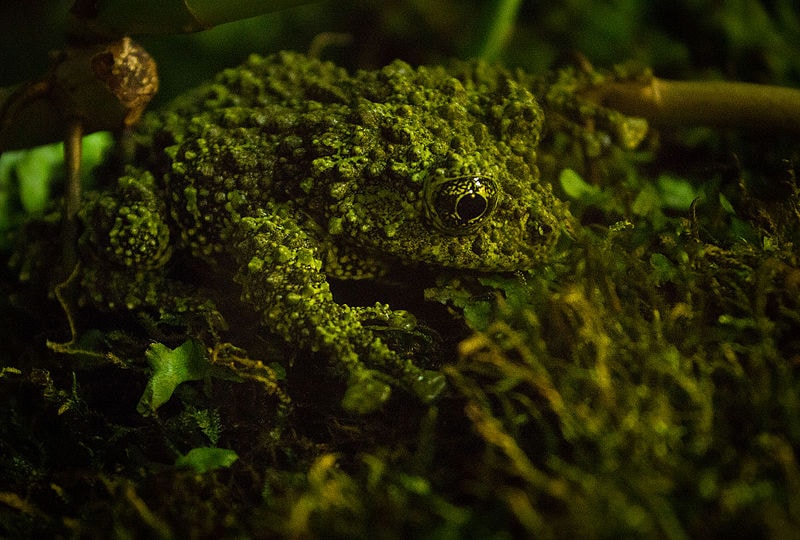
Vietnamese Mossy Frog
Vietnamese Mossy Frog (Image Credit: ThartmannWiki, Wikimedia Commons CC SA 4.0 International)

Are All Frogs Nocturnal?

Most frogs are nocturnal but not all. Certain species of frogs—most notably, many of the ones found in the forest regions of the Amazon—are diurnal. They sometimes sport brighter colors, which is considered to be a defense mechanism: So boldly standing out may give some predators the impression that the frogs are poisonous. The warmth of the daytime helps these frogs stay active by raising their body temperature in contrast to the cool temperatures that make frogs slow down at night.

Do Frogs Hibernate?

Yes! Frogs do hibernate, and they have a remarkable ability to go for long periods of time without sustenance as they do so. Being coldblooded, a frog’s hibernation is more accurately referred to as brumation. 

Instead of finding a suitable cave, though, frogs simply burrow into the ground. They typically choose a sheltered location that retains warmth well, like piles of dead leaves and twigs, mud, or compost piles. It’s also important that they do not lose too much moisture, so moist materials are preferable when possible.
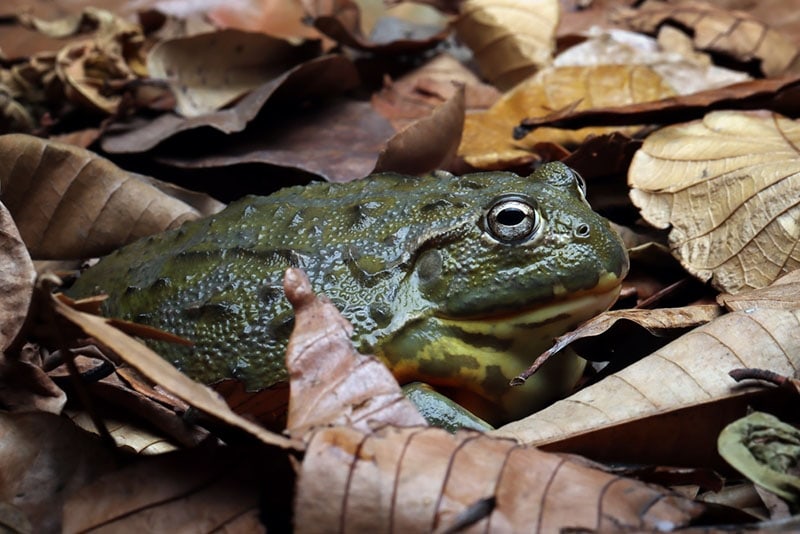
female pixie frog or african bullfrog hiding on dry leaves
Image Credit: Kurit afshen, Shutterstock

Conclusion

Frogs are some of the most fascinating (albeit slimy) creatures in the animal kingdom, and most of them are nocturnal by nature. Certain brightly colored frogs, such as several poison dart frogs and a few tree frogs are active during the day, but they are most definitely the exceptions rather than the rule.

See Also:

Sources

Featured Image Credit: Ken Griffiths, Shutterstock

Get Hepper In Your Inbox

Pet care tips from our vets and experts, straight to your inbox.

List

Select all that apply.

You may opt-out at any time. View our Privacy Policy for more information.

Codee Chessher
Authored by

Codee Chessher

Join the conversation

Ask a question, share your story, or send private feedback.
Rate this post
Required to post. Only our editors see your rating.
Who should see this?

A human reviews every comment before it appears. Your email is never published.

Picked to go with this article

Why Do Frogs Croak at Night? Reasons, Science & FAQ

Why Do Frogs Croak at Night? Reasons, Science & FAQ

There’s nothing like the sleep you get after a bit of rain on a peaceful night. Just when you close your eyes, ready to drift off into bliss, the orchestra dow…

Melissa Gunter
By Melissa Gunter ·
Can Frogs See in the Dark? Vet-Reviewed Facts & FAQ

Can Frogs See in the Dark? Vet-Reviewed Facts & FAQ

Since you mostly hear frogs at nighttime, you may wonder if they can see in the dark, and if so, how well? What is incredibly interesting about frogs is that t…

Ashley Bates
By Ashley Bates ·
Do Toads Sleep? Vet-Reviewed Behavior, Care Tips & FAQ

Do Toads Sleep? Vet-Reviewed Behavior, Care Tips & FAQ

If you’re considering a toad as a pet, you probably have several questions about the amazing amphibian. One of the most common we’ve heard is, “Do toads sleep?…

Gregory Iacono
By Gregory Iacono ·
Do Frogs Hibernate? Vet-Approved Facts & FAQ

Do Frogs Hibernate? Vet-Approved Facts & FAQ

As we retreat indoors for warmth and comfort when winter nears, we often forget that not every creature has the same luxury. The sights and sounds of active ba…

Nicole Cosgrove
By Nicole Cosgrove ·

Keep reading

More stories you might like

Why Do Frogs Croak? Vet-Reviewed Amphibian Communication Facts

If you grow up near a pond or lake, you are likely familiar with the distinctive croaking sounds of frogs that you can hear on a warm summer night. These vocal…

Ed Malaker
By Ed Malaker ·
Why Do Frogs Croak? Vet-Reviewed Amphibian Communication Facts

Are Frogs Cold-Blooded? Vet-Approved Facts & FAQ

Frogs are amazing little creatures that spark curiosity in many people. One question that often comes up is whether frogs are cold-blooded or not. The answer i…

Nicole Cosgrove
By Nicole Cosgrove ·
Are Frogs Cold-Blooded? Vet-Approved Facts & FAQ

Can Frogs Eat Fruit? Vet Approved Nutrition Advice

Generally, adult frogs are obligate carnivores, which means that they only eat meat. As such, adult frogs should not be given fruit as part of their diet. Howe…

Oliver Jones
By Oliver Jones ·
Can Frogs Eat Fruit? Vet Approved Nutrition Advice

Do Frogs Sleep? Vet Reviewed Facts & FAQ

Have you ever wondered if frogs sleep? These fascinating creatures may not snuggle up in beds like we do, but they indeed experience periods of rest. When we t…

Nicole Cosgrove
By Nicole Cosgrove ·
Do Frogs Sleep? Vet Reviewed Facts & FAQ

Frog vs Toad: Vet-Reviewed Differences (With Pictures)

At a glance, toads and frogs seem indistinguishable from one another in terms of the sort of animal that they are. As with many types of animals, there is stun…

Eleanor Glaum
By Eleanor Glaum ·
Frog vs Toad: Vet-Reviewed Differences (With Pictures)

What Is a Group of Frogs Called? Two Interesting Options & Their Vet-Verified Meanings

One would expect an ordinary term to describe a group of frogs, but Mother Nature and the English language have something slightly unexpected in store. As it t…

Nicole Cosgrove
By Nicole Cosgrove ·
What Is a Group of Frogs Called? Two Interesting Options & Their Vet-Verified Meanings

11 Interesting Tree Frog Facts: Vet-Verified Info With Pictures

Tree frogs are among the most popular frogs on the planet and are found everywhere except the snowy landscapes of Antarctica. They are also among the most dive…

Nicole Cosgrove
By Nicole Cosgrove ·
11 Interesting Tree Frog Facts: Vet-Verified Info With Pictures

Is a Frog an Herbivore, Carnivore or Omnivore? Vet Approved Facts & FAQ

Frogs are extraordinary creatures! All frog species have their own way of operating. They can be brightly colored to warn predators or camouflaged to suit thei…

Ashley Bates
By Ashley Bates ·
Is a Frog an Herbivore, Carnivore or Omnivore? Vet Approved Facts & FAQ