Hepper is reader-supported. When you buy via links on our site, we may earn an affiliate commission at no cost to you. Learn more.
Is Honey Good for Dogs? 5 Health Benefits Based on Science



In this article
Humans don’t just love honey due to its sweet taste. Based on scientific research, it offers so much more than sweetness as it contains antioxidants, minerals, and even vitamins. In addition, it’s always been regarded as the healthiest alternative to sugar, since it comes with a slightly lower glycemic index.
But what about dogs? What are the health benefits of honey for the canine community? And more importantly, could it be toxic? Well, these are the types of questions that we’ll be answering today. We hope by the end of this article, we will have answered all your questions.

Is Honey Good for Dogs?
First off, it is important to note that the conversations revolving around natural and holistic pet health have made many people wary about what they feed their dogs nowadays. But honey hasn’t raised any serious alarms, as far as those conversations go.
While dogs love this viscous substance due to its sweetness, seeing as it’s basically sugar, it is not something that you want to feed your dog on a regular basis. Honey may have medicinal applications or benefits for some dogs, but it should definitely be avoided in diabetic dogs.
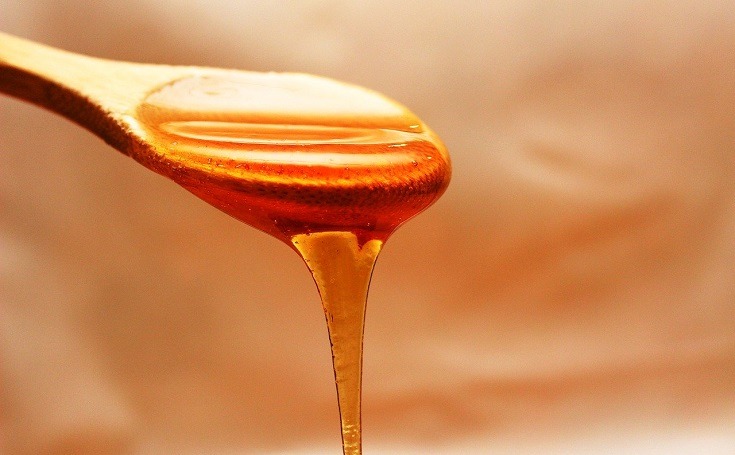

The 5 Health Benefits Based on Science
1. Pollen Allergies
Environmental pollen allergies are also present in the canine community. They are affected just as much as we are, but their signs tend to be different. Dogs will become itchy, their skin will suddenly become dry, and they may present areas of alopecia or recurrent ear infections. This is known as atopic dermatitis.
If your dog is grappling with an allergy, chances are that your vet will recommend an antihistamine. If you have identified the cause of your dog’s allergy to be pollen, there is a possibility that locally produced honey can help your dog. This natural substance has been found to have trace amounts of pollen grains and various anti-inflammatory compounds. Together, they can help desensitize allergy sufferers.
Of course, this will only work if your dog is allergic to the pollen contained in the honey. Also, the honey therapy should be offered to the dog year round, not only during the spring or pollen season. Furthermore, if your dog is allergic to something else, like certain food items, honey can’t be applied. It's not a panacea; it’s specifically used for desensitization therapy.
2. Medication for Wounds
Researchers have found that honey can help complex wounds heal faster, thus making it a strong topical remedy. Complex wounds have several bacterial strains coexisting in a biofilm. Antibiotics like Neosporin are often effective but not always, as some bacteria have evolved to become more resistant. While getting rid of bacteria, hydrogen peroxide can damage tissues. Honey is a viable option because it’s gentle on the tissues and helps get rid of the bacteria around the wounds.
It's worth noting that we have different types of honey because it can be made from different plant species. Honey made from buckwheat tastes malty, while sourwood honey has an anise flavor. It’s also why its applicability and potency vary.
Sidr honey, for example, is just as effective as iodine1. Honey is also an antiseptic and can be used as a substitute for conventional options in some cases.

3. Might Soothe Certain Intestinal Problems
Honey might be an effective remedy for dogs that experience constipation, diarrhea, or infrequent bouts of indigestion. But you need to check in with a vet to be sure no existing medical conditions are precipitating those manifestations.
Honey contains natural enzymes and probiotics that can help with intestinal problems. It also contains kynurenic acid, commonly abbreviated as KynA. Studies have shown that this L-tryptophan amino acid product can inhibit intestinal hypermotility—increased abnormal movements in the digestive tract2. KynA also works as an anti-inflammatory treatment, and the pain and discomfort caused by inflammation can potentially be subdued using honey.
4. Natural Energy Booster
Dogs usually slow down as they age. You’ll notice that they lack the stamina that they once had and prefer resting instead of exercising. Adapting them to less-strenuous activities is often recommended to protect their bones and joints from deteriorating further.
Sport competition or working dogs might also require a “pick me up” at times to boost their energy levels, and honey might be an easy option.
5. Might Help Soothe Your Dog’s Throat
If you have a cough that won't go away, all you may have to do is take a teaspoon of honey and give it a couple of minutes. Some researchers believe that honey’s viscous nature is responsible for this effect, as it coats the throat. However, others believe that it’s due to its anti-inflammatory and antimicrobial traits. We’re just grateful that it works, and the same benefits are transferable to dogs.
The daily dosage will vary, though, as it all hinges on the size of the breed and the severity of the condition. Half a teaspoon will do the trick for small dogs, and a tablespoon can be given to large ones. You can increase or reduce the dosage after getting it approved by your veterinarian.
Frequently Asked Questions
Can Honey Make My Dog Sick?
Yes, it can. Even though it’s not cane sugar, it still has the ability to raise your dog’s glucose levels, consequently leading to vomiting and diarrhea.
Always serve honey in moderation, and ask your veterinarian for their approval before offering it to your dog.
Can Honey Make My Dog Gain Weight?
Yes, it could. Honey is still sugar, albeit in a more natural form. Feeding your dog too much sugar is not good, especially if they aren’t exercising enough. It can also worsen an underlying condition like diabetes, so please serve it in moderation.
Conclusion
Honey is a probiotic and an antioxidant that has both anti-inflammatory and antimicrobial properties. If it’s used the right way, it will help ensure that your dog maintains an optimal health status. It's rich in vitamins and minerals that are essential to immune support and overall health. As usual, ensure that a honey treatment is cleared by your vet first. Also, remember that honey is a source of carbohydrates, so while it may help in some cases, it should not be offered to your dog on a daily basis.
Featured Image Credit: Pexels
Get Hepper In Your Inbox


Pet care tips from our vets and experts, straight to your inbox.
You may opt-out at any time. View our Privacy Policy for more information.
Nicole is a lover of animals of all sizes but is especially fascinated with the feline variety. She’s the proud mom of Baby, a Burmese, and works every day so he can relax in the sunshine or by the fire. She’s always had a cat in her home and has spent countless days with others, observing behaviors and softening up even the grouchiest of the lot. Nicole wants to share her kitty expertise with you so you and your cat can live happy, healthy, and care-free.
Join the conversation
Ask a question, share your story, or send private feedback.