Hepper is reader-supported. When you buy via links on our site, we may earn an affiliate commission at no cost to you. Learn more.
Histiocytomas in Dogs: Our Vets Explain the Signs, Causes & Treatment

In this article
Skin growths can be very disconcerting, especially since they can arise without obvious cause—which can lead to speculation, and googling for various possible underlying causes. And as we all know, googling for medical information often ends in more worry than it ever seems to help!
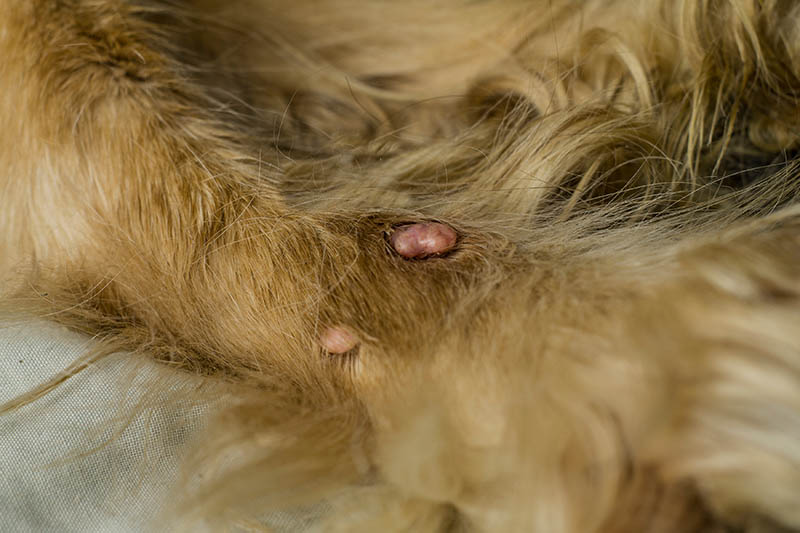
One example of a visually impressive skin growth that infrequently causes actual medical issues is a histiocytoma in a dog. These often raised, red, round skin masses can be found on the skin of dogs, particularly on younger dogs. But, they often go away on their own without further treatment.
Read on to learn more about these odd skin growths, what causes them, the symptoms, and how to care for them if they occur in your pup.

What Is a Histiocytoma?
Histiocytomas are skin growths that arise from a type of immune-system cell called a Langerhand cell, found in layers of the skin. Langerhans cells are also called histiocytes, and serve to provide a sort of surveillance system in the skin, alerting the body to any foreign invaders.
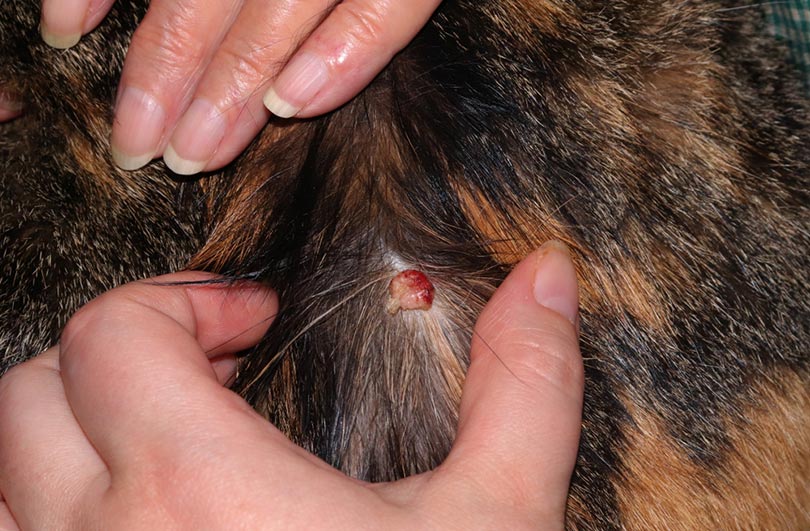
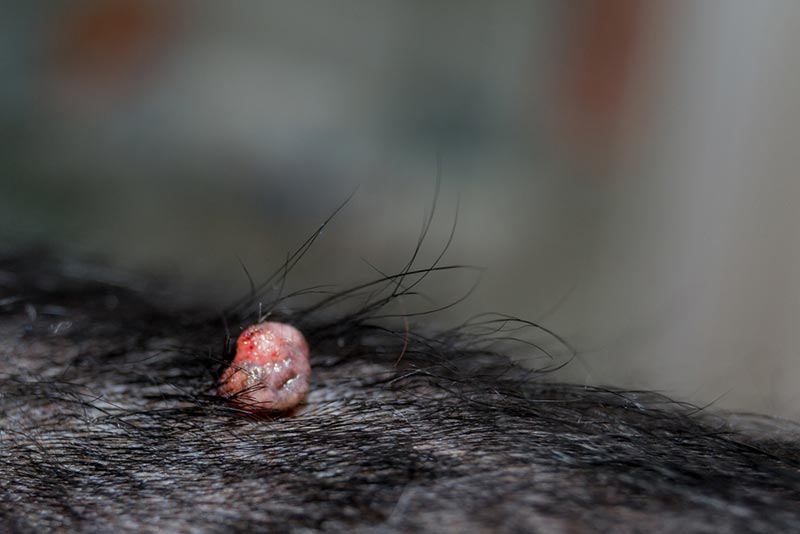
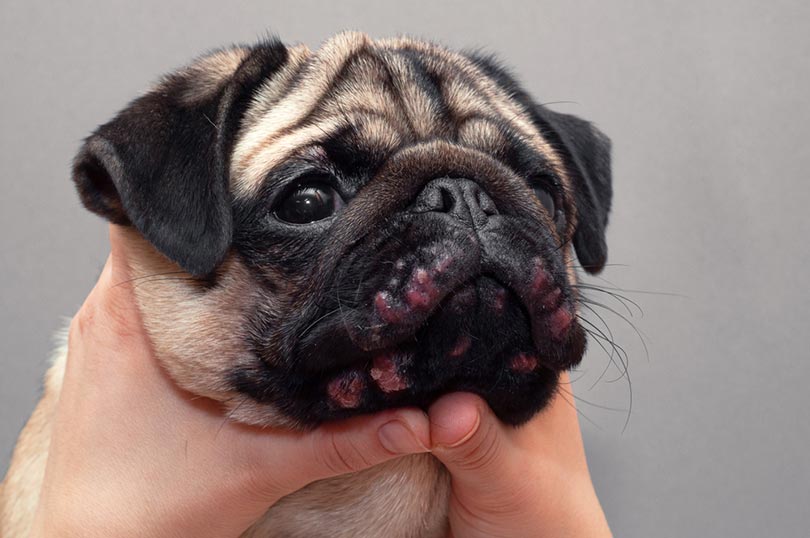
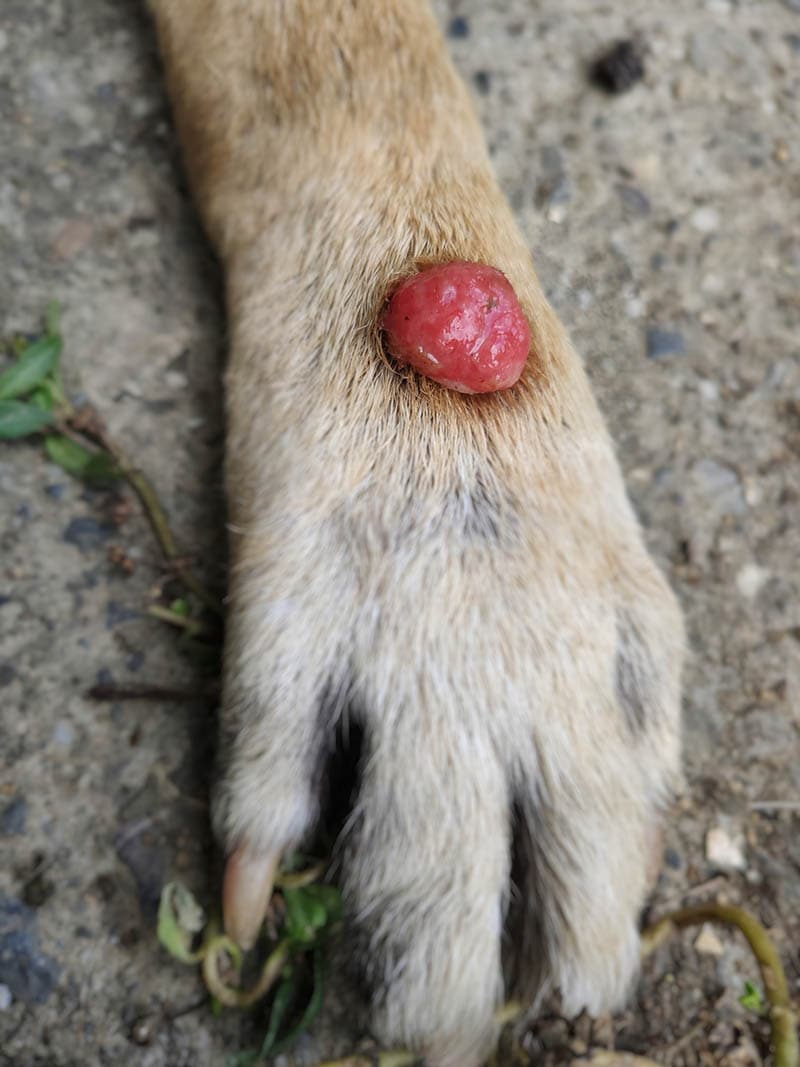
In dogs, these growths tend to occur on the front half of the body, including the trunk, legs, or neck. They appear as round, reddened, and usually solitary hairless growths. Because they don’t tend to cause issues with other organs (unlike histiocytosis, which is a very different disease), don’t become locally invasive, and generally resolve on their own, they are considered benign masses.
Younger dogs, and certain breeds such as Labs, Boxers, Staffordshire Terriers, and Bull Terriers seem more prone to developing these lumps. However, that does not mean they don’t occur in other breeds and age groups as well.
What Are the Causes of Histiocytomas?
It is not entirely sure what causes these cells to turn into a mass—though speculation of prior trauma, as well as an ongoing stimulus to the local histiocytes in the same area, has been considered.
Where Are the Signs of Histiocytomas?
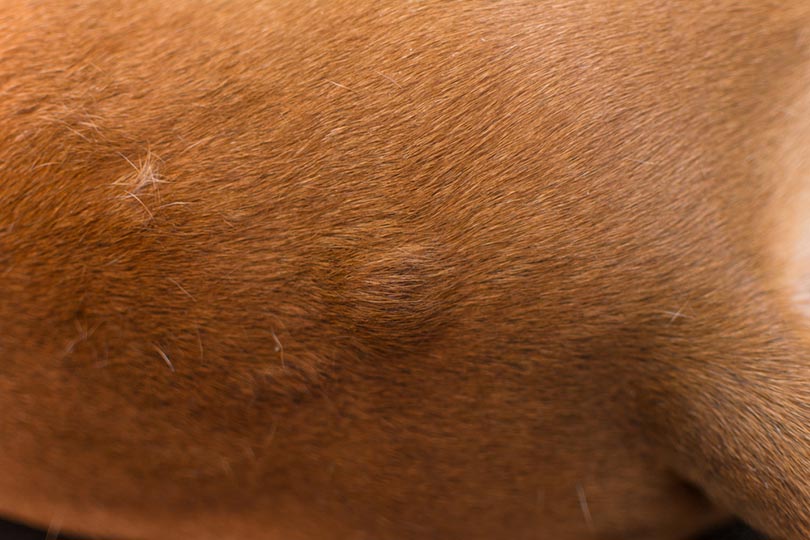
Signs of histiocytomas are much what you’d expect: a red, raised, rounded growth protruding from the skin. They tend to be hairless or sparsely-haired. You may first notice them while petting your dog, when they may be smaller and still hidden in the hair coat.
However, histiocytomas can grow to be multiple centimeters in size. As they grow, they may commonly be described as lumps, bumps, or masses. While not technically a cancerous skin tumor, they may also be referred to as such.
What Are the Potential Risks of Histiocytomas in Dogs?
Histiocytomas in dogs are generally not considered to be painful. Even when left untreated, most of these will regress, and eventually resolve on their own—though it can take many weeks for this to happen. Sometimes, dogs may itch, lick at, or chew at a histiocytoma.
Dogs with histiocytomas generally seem to feel fine, as these growths don’t seem to cause other signs of illness, such as loss of appetite, weight loss, or lethargy. If you notice any of these changes in your dog, they may be experiencing something other than a histiocytoma. So talk to your vet if you notice any of these issues.
What is the Treatment and Care for Histiocytomas?
Most people will choose to simply monitor a histiocytoma, as they will often resolve over time. If you take this approach, however, be prepared to show some patience, as many of these growths will require weeks to fully resolve. They aren’t considered contagious to other pets, so no need to separate your pup if you go this route.
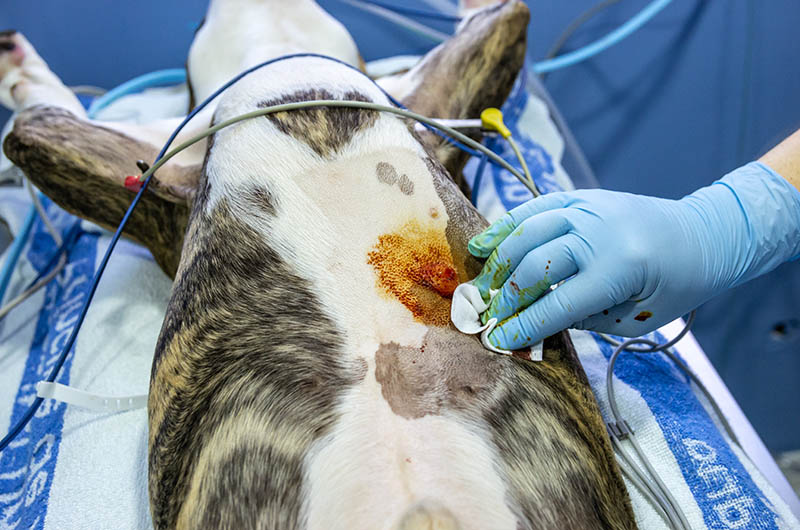
However, for some dogs that do become bothered by their histiocytoma, or if it’s in an area causing it to become traumatized, leading to local skin irritation and inflammation, then surgical removal of the mass may be a faster and safer option for treatment.

Frequently Asked Questions
What should I do if I think my dog may have a histiocytoma?
First, get a photo of the histiocytoma, and also make note of where on your dog’s body the growth is. Many times, once in the vet clinic, people forget where they found the growth, and it’s difficult to examine a growth if you can’t find it!
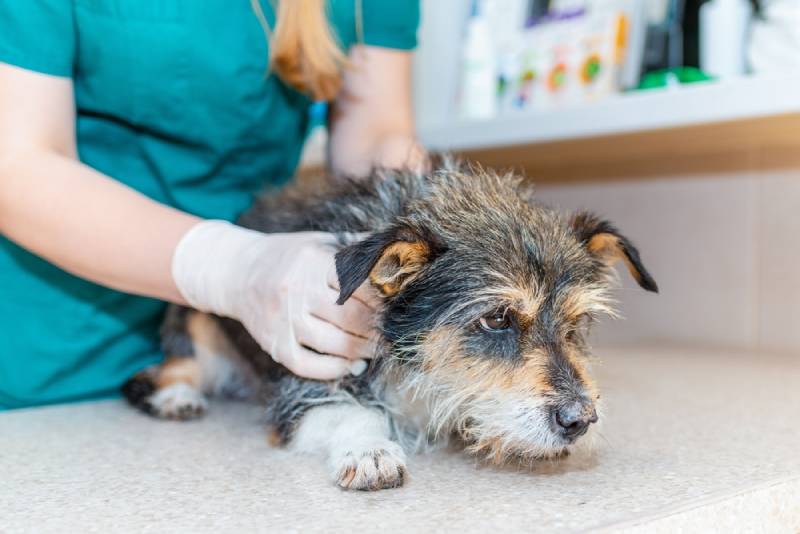
Often you can email the photo to your vet to find out what the best next steps would be. Sometimes, they may ask you to monitor the growth at home, while other times, they might want to see your pup to get a better idea of what’s going on.
How are histiocytomas diagnosed?
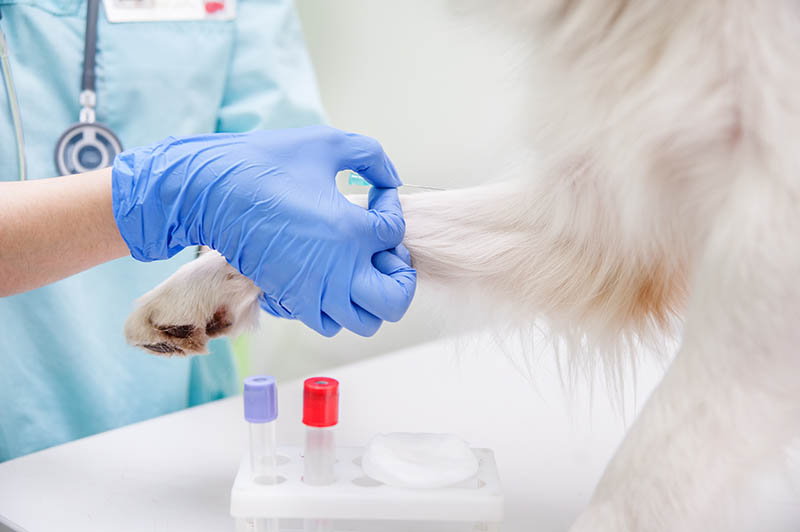
Sometimes, the suspicion of a histiocytoma can be confirmed with a needle sampling, called a fine needle aspiration. Cells sampled in this process can be looked at, to determine if the mass is indeed made of histiocytes. However, the only definitive way to make the diagnosis is with a true biopsy, which is often most easily done by surgical removal of the mass.
What does having a histiocytoma surgically removed involve?
Surgical removal is also know as a “mass removal” or “lumpectomy”. This can be done either as a general anesthetic, or less commonly, under sedation with local anesthetic. The procedure involves removing the mass in its entirety, and then closing the healthy skin with sutures or staples to allow it to heal. The benefit of this procedure is that the histiocytomas are cured during the removal, and the diagnosis can also be confirmed by sending the removed tissue to a pathologist. Most of these procedures are short, and recovery is generally very straightforward for most pups.
Can you prevent histiocytomas in dogs?
Unfortunately, there are no known preventative measures for histiocytomas that currently exist.
Final Thoughts
Histiocytomas in dogs are one of the more commonly diagnosed skin growths, and are good to be aware of. The good news is that finding one often requires nothing more than monitoring it at home until it resolves. However, you should always contact your vet to let them know of any unusual findings in your pup, just to be safe.
Sources
Featured Image Credit: Anna Shalam, Shutterstock
Get Hepper In Your Inbox


Pet care tips from our vets and experts, straight to your inbox.
You may opt-out at any time. View our Privacy Policy for more information.
As a veterinarian, Lauren is happy to share her experience in emergency medicine and cats, with everyone. She enjoys sharing insightful, real life tips for having cats as part of your life, and what to do in critical situations with your pets.
Lauren is a vet with over a decade of experience in cats and dogs, along with infectious diseases. She loves teaching, and lectures for students, owners, and clinicians, on various topics.
Lauren received her degrees from Murdoch University, in Perth.
Experience
Education
Join the conversation
Ask a question, share your story, or send private feedback.