Hepper is reader-supported. When you buy via links on our site, we may earn an affiliate commission at no cost to you. Learn more.
Skin Papilloma & Dog Warts: Our Vet Explains Causes, Signs & Risks

Wicked witches and troublesome toads—these are creatures you might associate with warts. But what about our canine companions? Do dogs get warts? And, if so, should you be worried?
The following article will discuss warts, also known as papillomas, in dogs—including the causes, symptoms, and potential dangers associated with this skin condition. We will also review frequently asked questions regarding canine papillomas, such as diagnostic and treatment options, to keep you up-to-date on this unsightly condition.

What is Skin Papilloma?
Canine skin papillomas are benign growths most frequently caused by viral infection. These transmissible growths or tumors were first noted in dogs in 1898, though they weren’t understood to be caused by a virus until 1959.
Continued research led to the identification of papillomavirus as the cause of transmissible warts in dogs. Currently, 18 different papillomaviruses have been identified as affecting canines.
What Are the Causes of Skin Papilloma?
Skin papilloma in canines is most often caused by infection with canine papillomavirus (CPV); however, non-viral papillomas, known as squamous papillomas, may also occur.
Papillomaviruses are contagious among canines, and are spread by direct contact with infected dogs. However, indirect spread through the environment (including contact with contaminated food bowls, bedding, and toys) is also possible.
Microabrasions (small cuts or scrapes) must be present for the virus to enter the skin of an exposed animal and establish infection. The incubation period, or period from exposure to the development of symptoms, is approximately 1–2 months for viral papillomas.
Dogs infected by canine papillomavirus (CPV) may experience one of three disease presentations:
- Oral papillomatosis—most commonly caused by CPV-1
- Cutaneous papilloma—associated with CPV-1, 2, 6 and 7
- Cutaneous pigmented plaques—caused by CPV-3–5, 8–12, and 14–16
Most dogs infected with papillomaviruses will experience subclinical infections, meaning that they will not develop symptomatic disease; this is because their immune systems can prevent the virus from significantly altering affected skin cells. The mechanisms by which some dogs develop papillomas, while others remain asymptomatic, are not well-understood; however, canines with a suppressed immune system appear to be at an increased risk of developing visible lesions.
What Are the Signs of Skin Papilloma?
Signs associated with papillomavirus infection will vary depending on the specific virus, and the disease presentation it causes:
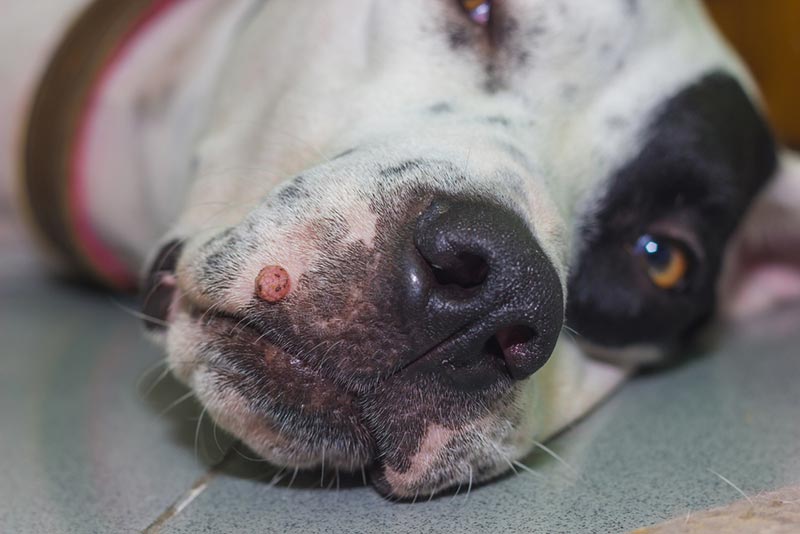
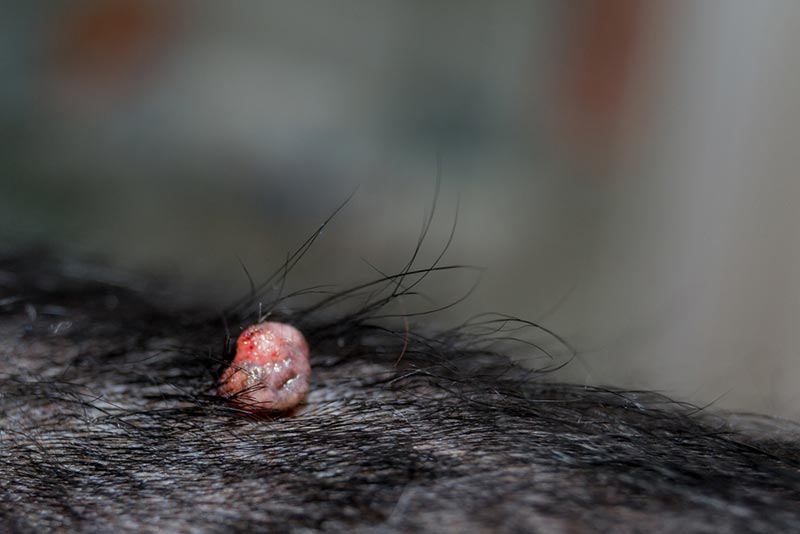
Oral papillomatosis. Canine oral papillomatosis is the most common papillomaviral disease in dogs. This condition is most frequently seen in young dogs, and lesions are commonly present on the lips, tongue, gingiva, throat, and inside of the cheeks. Multiple cauliflower-like growths are frequently noted, and their appearance may vary from small, white, or pink nodules, to larger, gray masses.
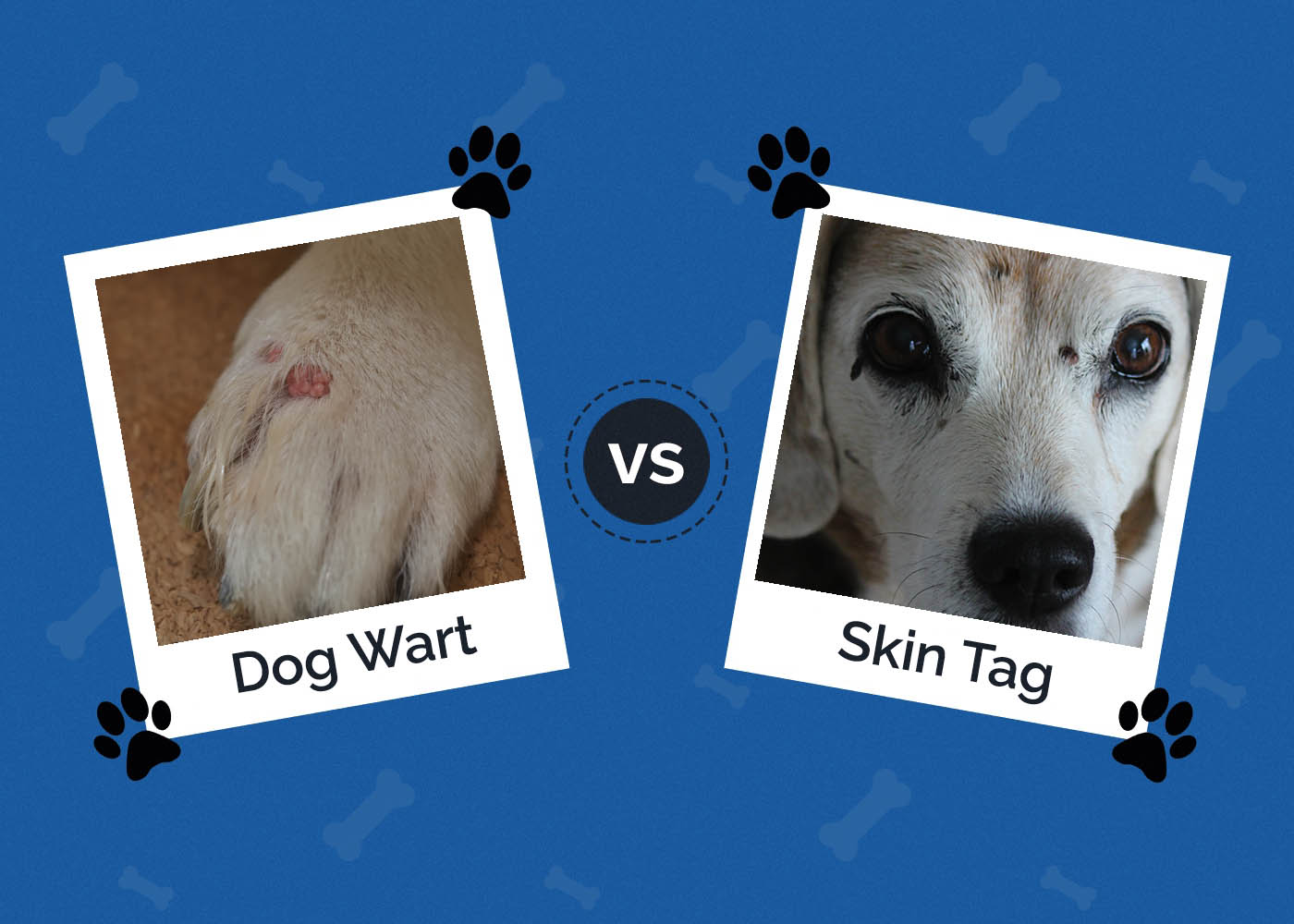
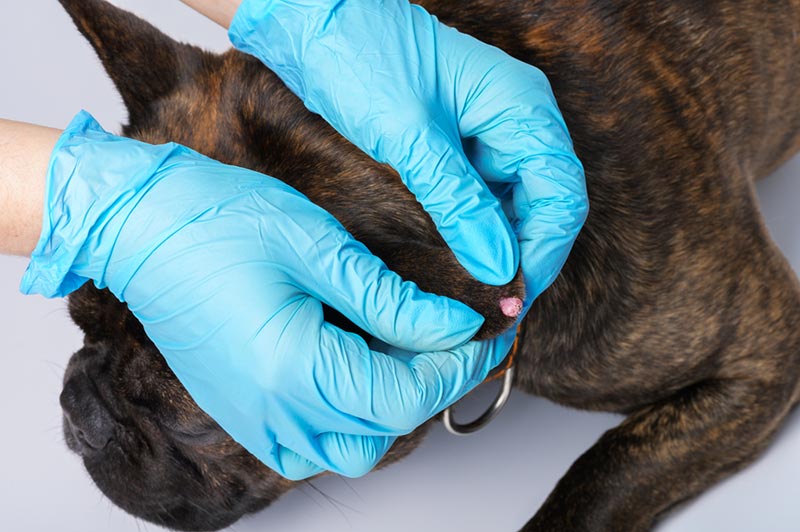
Cutaneous papilloma. Cutaneous papilloma may be noted in either younger or older canines and can be classified as either exophytic or inverted. Exophytic papillomas can occur anywhere on the body as single or multiple growths; however, they are most commonly noted on the head and feet. Similar to oral papillomas, while their exact appearance may vary, a cauliflower or wart-like appearance is common.
Older male dogs, cocker spaniels, and Kerry blue terriers may be predisposed to the development of these growths. Inverted papillomas are often noted in young adult dogs; these lesions tend to occur on the abdomen and appear as a gray, cup-shaped growth with a central, keratin-filled pore.
Cutaneous pigmented plaque. Pigmented plaques typically present as multiple small, dark, raised plaques, most commonly noted on the abdomen, limbs, or axillary (armpit) areas. These growths are most frequently noted in pugs.
Visible growths aside, the majority of papillomas do not cause significant clinical signs. However, dogs with large or extensive oral papillomas may experience drooling, bad breath, or difficulty eating. Canines with cutaneous papillomas on their feet may experience lameness or discomfort secondary to the growths. In all forms of papilloma, growths that are accidentally scratched or traumatized can bleed, or experience swelling, redness, or discharge that may be indicative of infection.
What Are the Potential Dangers of Skin Papilloma?
In general, papillomas of the skin and oral cavity are not considered to be dangerous. Both oral and cutaneous papillomas will typically resolve spontaneously, with oral papillomas often regressing within 6–12 weeks. Cutaneous plaques may self-resolve, however, progression to involve extensive areas of skin is possible.
While oral papillomas tend to resolve on their own without significant issues, cases of severe papilloma growth can interfere with normal eating or breathing on the rare occasion. Dogs with extensive or persistent papillomatosis may also be predisposed to developing oral squamous cell carcinoma—a type of cancer that affects the mouth.
Similarly, cutaneous papillomas and cutaneous pigmented plaques that do not spontaneously regress have been rarely reported to undergo transformation to invasive, malignant, squamous cell carcinoma.

Frequently Asked Questions (FAQs)
How is papilloma diagnosed?
Canine oral papillomatosis is often diagnosed based on the characteristic, appearance, and location of suspicious growths—especially in a young dog with a history of exposure to other canines. Cutaneous papilloma and pigmented plaques may be less straightforward to diagnose, however, and your veterinarian may recommend surgical biopsy with histopathology (microscopic examination of the diseased tissue) to obtain a definitive diagnosis.
Can dog papillomas spread to humans?
Papillomaviruses affect a wide variety of mammalian species, including dogs, cats, cows, horses, and humans. Papillomaviruses are highly host-specific, meaning that a virus causing disease in dogs cannot infect humans, and vice-versa.
How are canine papillomas treated?
Many papillomas do not require treatment, as symptoms secondary to the lesions are often minimal and spontaneous regression is common. For extensive, large, or persistent papillomas, or those causing significant clinical signs, treatment is warranted.
Surgical removal, including electrosurgery (surgery using electrical currents to cut through tissue), or cryotherapy (using freezing temperatures to destroy abnormal tissue) is a potential treatment option for papillomas.
Medications including azithromycin, interferons, or imiquimod have also been used for treatment and may also be considered for affected canines; however, further studies detailing the effectiveness of various medical therapies are needed.

Conclusion
In summary, canine papillomavirus is the causative agent behind oral papillomatosis, cutaneous papilloma, and cutaneous pigmented plaques. While these conditions most often have a favorable prognosis, extensive or persistent disease may occur, and transformation of lesions to cancerous growths is a rare possibility.
If you are concerned that your dog may have a papilloma, further evaluation by a veterinarian is recommended to obtain a diagnosis, and determine the best course of action for your loyal companion.
Sources
Featured Image Credit: Todorean-Gabriel, Shutterstock
Get Hepper In Your Inbox


Pet care tips from our vets and experts, straight to your inbox.
You may opt-out at any time. View our Privacy Policy for more information.
Dr. Leigh is a US-based veterinarian with over 9 years of experience. She is a lifelong animal lover who grew up with all kinds of pets, including dogs, hamsters, and fish. Leigh received her Doctor of Veterinary Medicine degree from the University of Minnesota and has specialized in shelter medicine and small animal clinical practice ever since. She enjoys small animal preventative medicine and surgery and loves helping pet owners by sharing her knowledge on a wide variety of veterinary topics. Leigh lives with her husband, two young children, and Hershey, her elderly pug mix. Outside of work Leigh likes traveling, reading, and hanging out with her family.
When Dr. Leigh was a child, her passion for animals started. She grew up tending to hamsters, guinea pigs, rats, fish, and dogs. She now shares her home with her husband, her two young children, and Hershey, her geriatric pug mix. When she's not working, Leigh loves spending time with her family, reading, and traveling.
Education
Leigh graduated from the University of Minnesota, where she received her Doctor of Veterinary Medicine degree. She has worked in both small animal clinical practice and shelter medicine since graduation.
Experience
Dr. Leigh has over 9 years of veterinary experience. She enjoys small animal preventative medicine and surgery and is passionate about helping pet owners through sharing her knowledge on a wide variety of veterinary topics.
Check out some of our top posts written by our veterinarian team:
Can I Put Vaseline on My Cat’s Paws? Is It Safe?
Join the conversation
Ask a question, share your story, or send private feedback.