Hepper is reader-supported. When you buy via links on our site, we may earn an affiliate commission at no cost to you. Learn more.
Papillomas in Cats: Causes, Signs, and Care (Vet Answer)

In this article
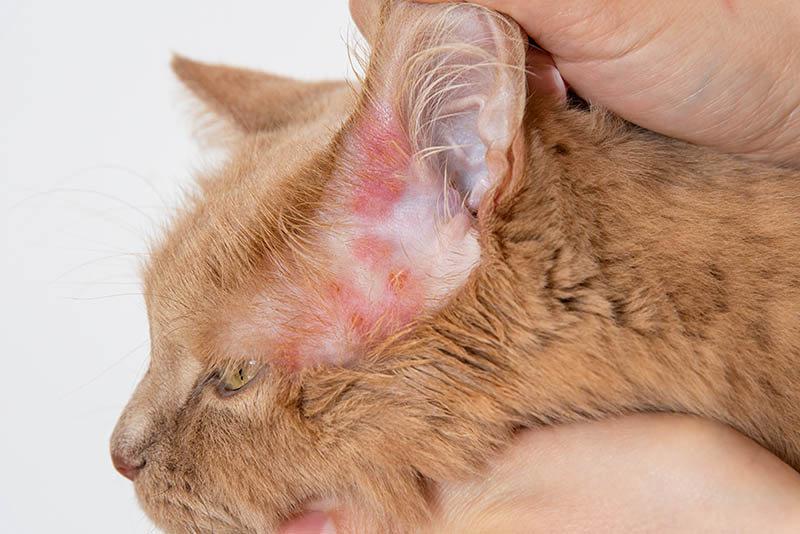
Papillomas in cats are caused by viruses that cause excessive skin growth— in short, warts. It was only relatively recently that such viruses were discovered and linked with these growths, so a lot of information has yet to be fully determined about papillomas in cats.
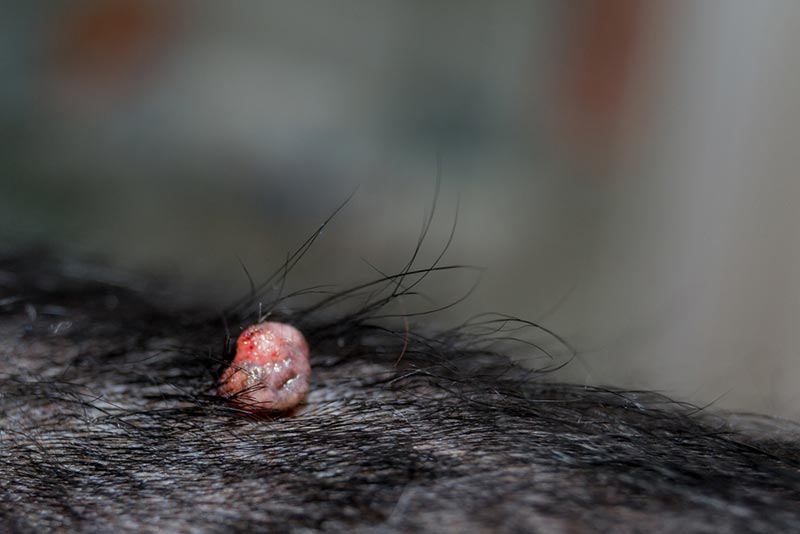
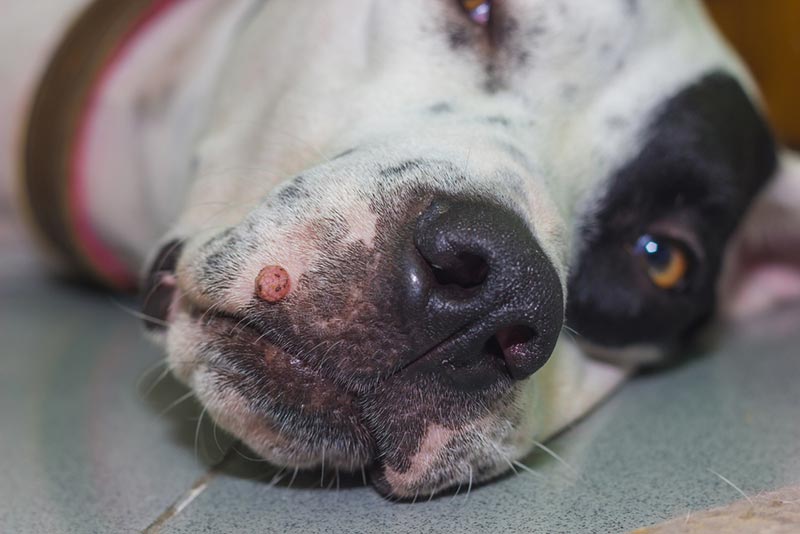
Signs are generally pretty straightforward: skin growths that look warty! Most cats with papillomas generally feel ok, and don’t show other typical clinical signs of illness, such as weight loss, GI upset, changes in behavior, or poor haircoats. The good news is that papillomas aren’t considered to be transmissible to other cats—or at least they haven’t been shown to be yet.
The typical infection of papillomas in cats involves non-painful skin growths. However, the disease has sometimes been shown to develop into certain types of cancer. Treatment for straightforward papillomas often involves taking a wait-and-see approach, since many warts will go away on their own. Vaccines don’t yet exist for the various wart-causing viruses in cats (unlike similar vaccines in people that help protect from papillomavirus-induced cervical cancers).
Read on to learn more about papillomas in cats- the causes, the signs, and the treatment.

What Causes Papilloma in Cats?
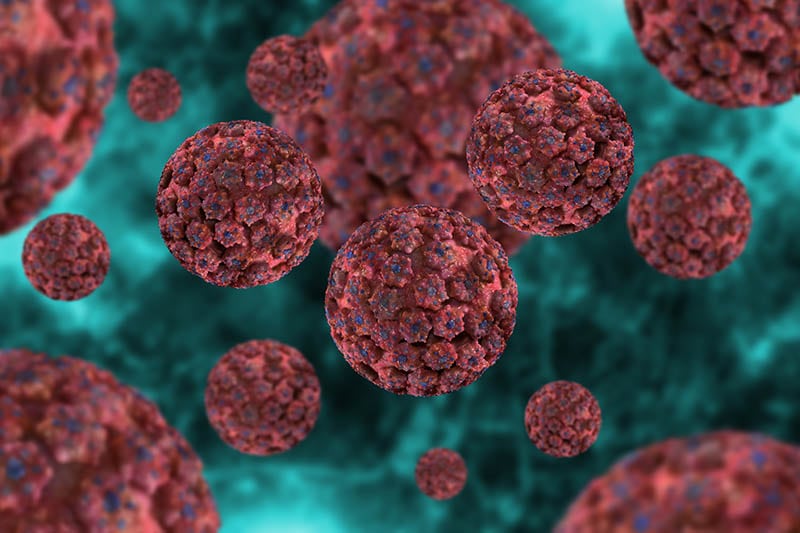
Many warts in cats are believed to be caused by a virus. The virus infects the deeper layers of the skin, and causes spots of increased production of skin cells, which leads to the formation of papillomas. There is no vaccine to prevent papillomas from forming in cats.
Papillomas can form weeks (or longer) after the initial viral infection occurs, as it takes that long for the virus to work its way to the upper layers of the skin, and produce the warty growths. If a cat infected with papillomavirus is exposed to other factors that might aid the virus in reproducing, in rare cases, the virus can actually become cancerous. In these cats, instead of producing benign papillomas, the virus can cover large regions of the skin, sometimes producing ulcers and causing local irritation. In even rarer instances, it can then spread, or metastasize, to other parts of the body, such as the lung.
Where Are the Signs of Papilloma in Cats?
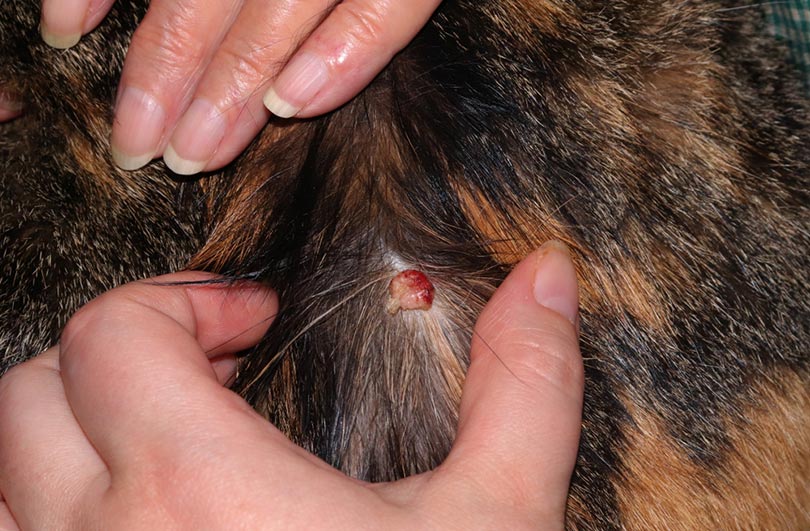
Signs of papillomas in cats are usually fairly straightforward: growth on the skin! Most cats otherwise seem to feel fairly well, though in very rare instances, these growths may become cancerous and, even more rarely, may spread to other parts of the body.
Signs can include:
Many times, a cat or kitten with papillomas will show no signs of feeling unwell. They will simply have growths on their skin. Generally, these do not present as an emergency, and therefore, while contacting your vet is always advised to alert them to what you are seeing (a photo is even better!), you can often monitor these cats at home.
How Can You Care for a Cat With Papillomas?
Oftentimes, cats with papillomas actually need little to no care—which is fantastic! Just like in people, many of these skin growths, given time, will go away on their own through a process called “regression”.
Therefore, you might care for a cat with papillomas by first taking a photo of the growth(s) when you notice them. This allows you to compare back, and decide if the papillomas are getting bigger, smaller, or staying the same. It helps to have a size reference within the photo—either a ruler or a coin placed next to the growth will give you a better comparison of the size of the growth, and any notable changes.
If the growth doesn’t go away after a few weeks, then it is time for your cat to see your vet. The sooner, the better if you have any concerns, such as bleeding or irritation at the site of the growth.
What Are Treatment Options?
Treatment options can vary for cats with papillomas. As mentioned previously, sometimes it is a case of “wait and see” since many will go away on their own without actual treatment. However, if this doesn’t happen, then your vet might recommend other treatment options, which can include freezing, surgical removal, or topical medications.
Treatment is not always as effective as we might like since papillomas caused by a virus can be resistant to treatment. And for cats that develop advanced forms of papilloma, that are more aggressive and cancerous, treatment can be very difficult, if not impossible.

Frequently Asked Questions (FAQs)
What Should I Do if I Suspect My Cat Might Have Papillomas?
If you suspect your cat might have papillomas, start by taking a photo and sharing this with your veterinarian. Many times, they can provide initial guidance on skin concerns through a photo, which would include telling you how soon your cat needs to be seen and what to expect at that visit. Sometimes they might have you monitor the growth for a while at home if your cat otherwise seems well.
Are Feline Papillomas Contagious?
Potentially, but this has not yet been documented from cat to cat. They are considered unlikely to spread to humans, however.
What Can Look Similar to Papillomas in Cats?
Normal skin growths, such as nipples in both male and female cats, might sometimes look a bit like a wart. Hair follicles can also become blocked in a process known as a sebaceous gland adenoma, and these, too, can look especially warty! Skin tags can be present from birth, which can also look a lot like papillomas. Fatty lumps aren’t as common in cats as they are in dogs, but they, too, might look a bit like a papilloma.
Other skin cancers, which are a bit more serious, include mast cell tumors, and might look like a papilloma early on. If you notice any odd skin changes on your cat and you aren’t sure what has caused it, definitely speak with your vet about your concerns.
Prevention
Prevention of papillomas in cats isn’t quite possible, at present. Human medicine has developed vaccines to the viruses that are found in humans and cause similar issues, but this has not yet translated into feline medicine. Because the condition is relatively rare, however, it is not a large concern, and therefore isn’t likely to find a preventative option any time in the near future.
Conclusion
Papillomas in cats is a disease that is not often encountered. Because it is not considered to be highly contagious, and because the disease is often quite subtle and not life-threatening, it will likely remain off many cat owners’ radars. Most people will never see a papilloma in a cat.
Treatment can be difficult, but many papillomas go away without requiring treatment. If you do see signs that the papillomas are not going away, however, it is time to consider what treatment options are available. The good news is that papillomas generally aren’t emergencies but do require close observation once noticed. And it never hurts to include some photos and start a conversation with your vet about what you’ve found!
See also:
Sources
Featured Image Credit: lev.studio, Shutterstock
Get Hepper In Your Inbox


Pet care tips from our vets and experts, straight to your inbox.
You may opt-out at any time. View our Privacy Policy for more information.
As a veterinarian, Lauren is happy to share her experience in emergency medicine and cats, with everyone. She enjoys sharing insightful, real life tips for having cats as part of your life, and what to do in critical situations with your pets.
Lauren is a vet with over a decade of experience in cats and dogs, along with infectious diseases. She loves teaching, and lectures for students, owners, and clinicians, on various topics.
Lauren received her degrees from Murdoch University, in Perth.
Experience
Education
Join the conversation
Ask a question, share your story, or send private feedback.