Hepper is reader-supported. When you buy via links on our site, we may earn an affiliate commission at no cost to you. Learn more.
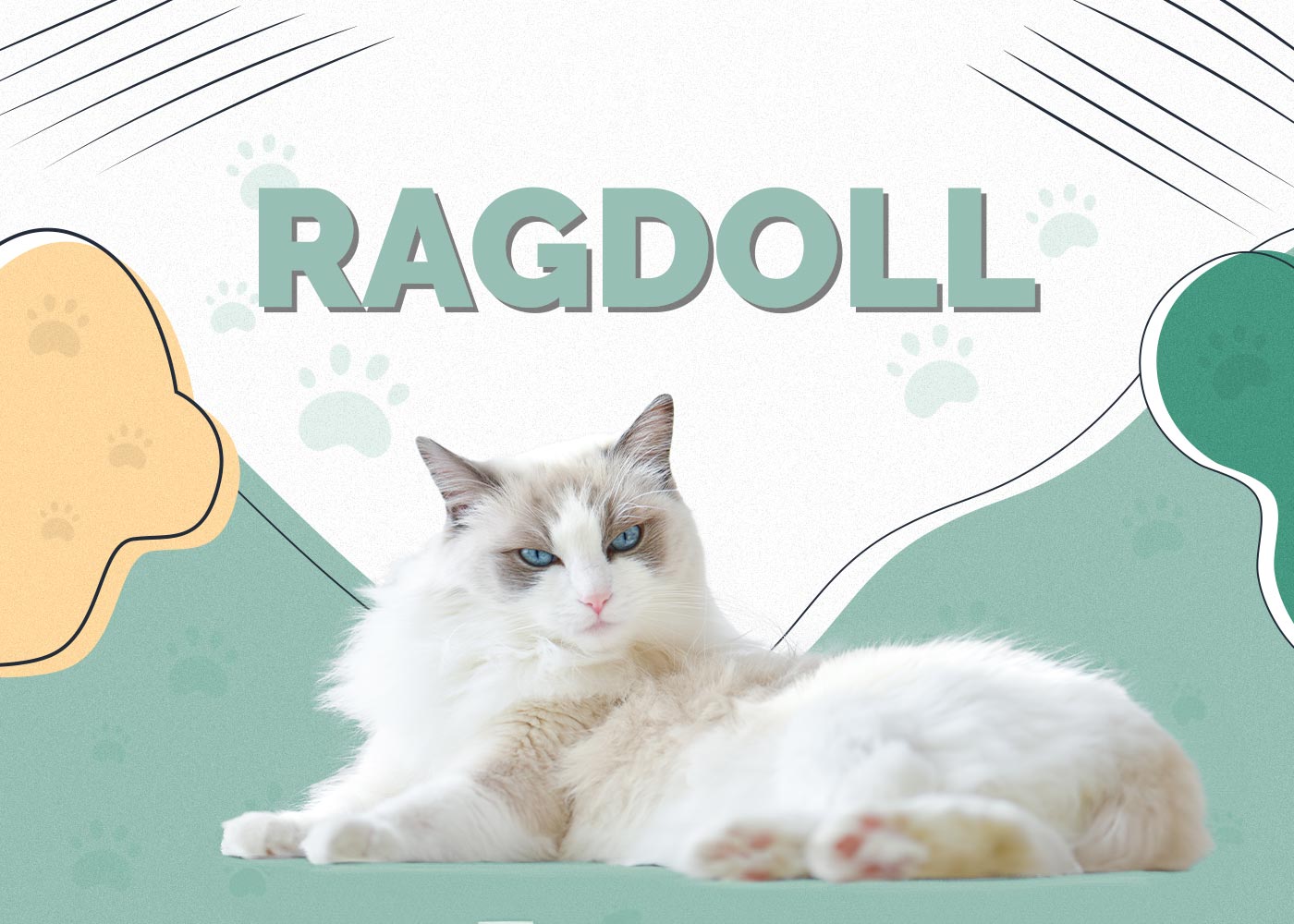
How Big Does a Ragdoll Cat Get? Growth & Weight Chart
In this article
According to the Cat Fanciers Association, Ragdolls are one of the most popular cat breeds1. Take one look at one of these giant, fluffy kitties, and it's not hard to see why.
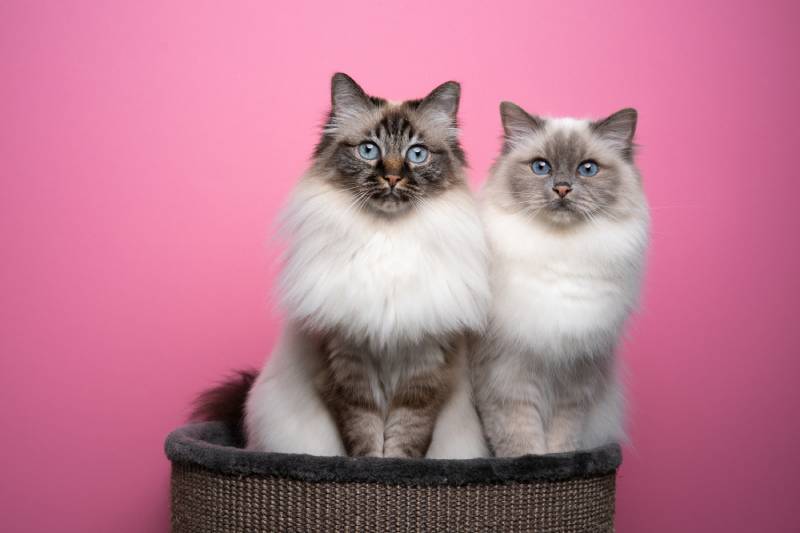
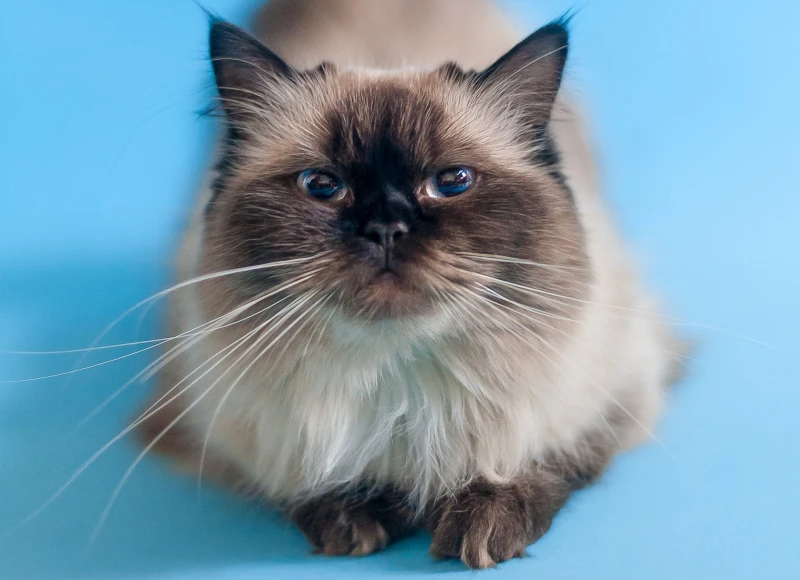
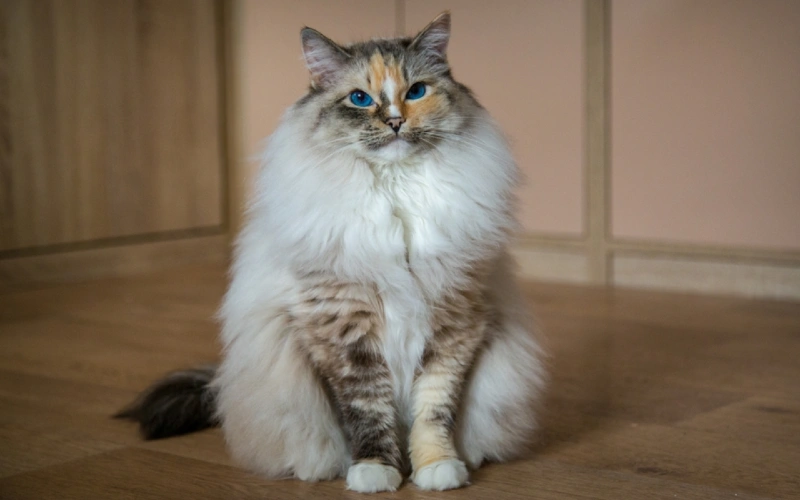
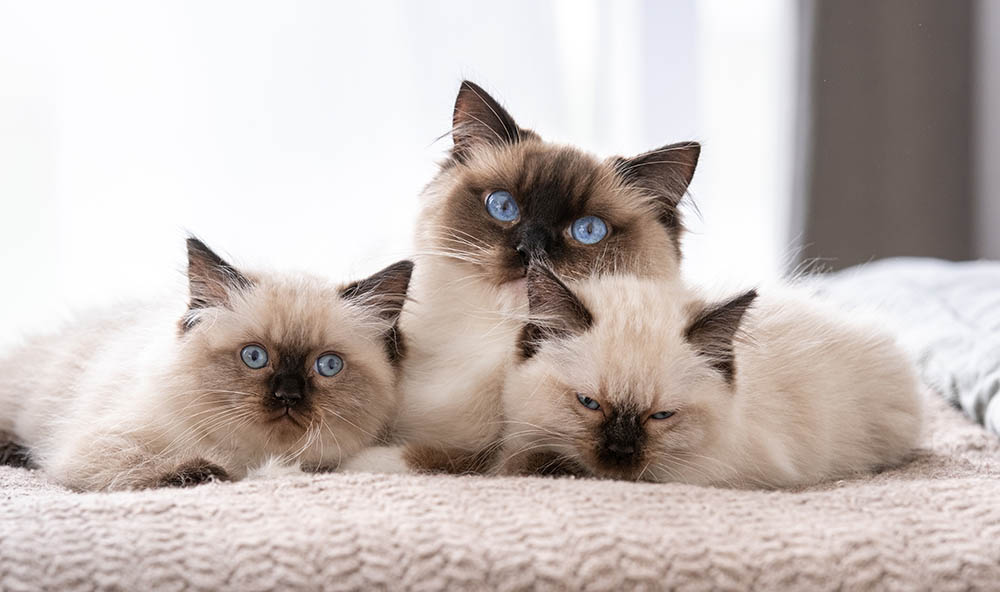
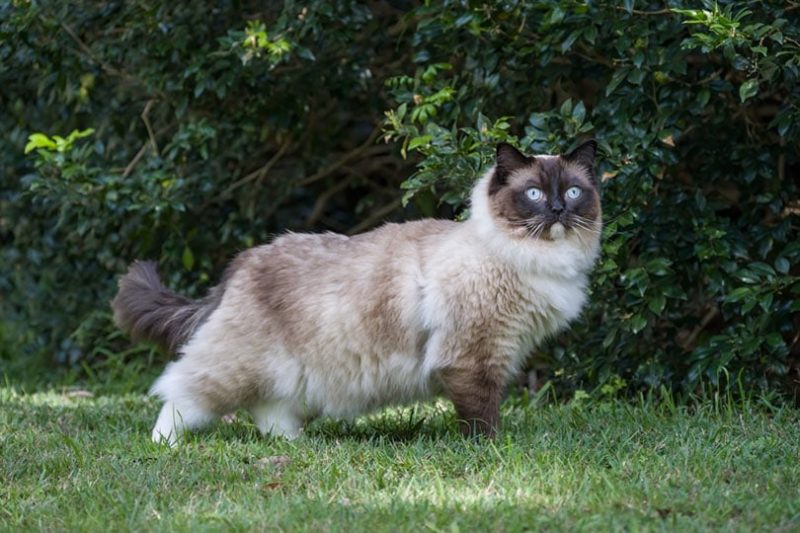
Ragdolls are known for their beautiful coats, piercing blue eyes, and large size. If you are considering adopting one, you should know what to expect regarding its growth. Ragdolls are one of the largest cat breeds, so familiarizing yourself with size expectations is not a terrible idea. Ragdoll cats can grow up to 25 inches!
Keep reading to find our helpful guide for understanding your cat's growth and ensuring it is just large and not overweight.

The 3 Facts About Ragdolls
1. Most Ragdolls Have Blue Eyes
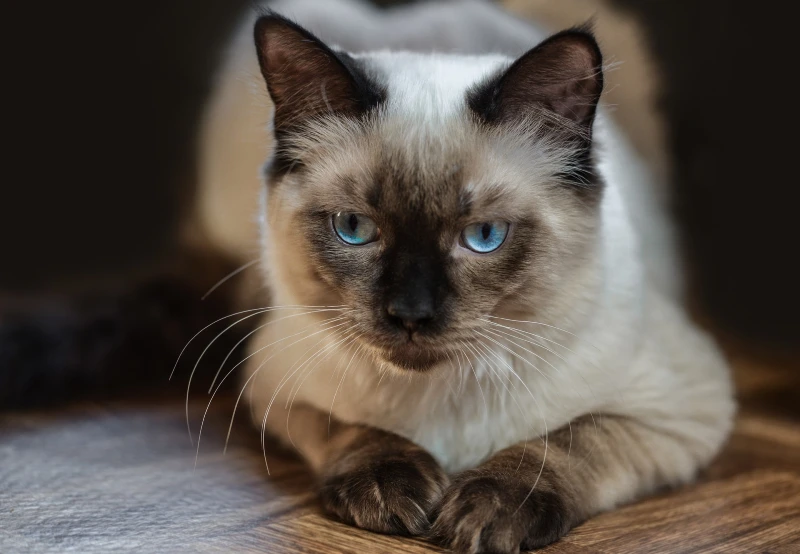
Aside from its luxurious plush fur and robust body, the Ragdoll is known for its beautiful blue eyes. A small number of Ragdolls may have just one blue eye, many of which are also deaf on the same side as their blue eye.
Your Ragdoll may have shades of green or yellow in its eyes, but unfortunately, it is likely a mixed breed. All purebred Ragdolls have blue eyes.
2. They're Very Dog-Like
If you're a cat person but wonder what it would be like to have a dog, you might consider adopting a Ragdoll to get the best of both worlds. Ragdolls take many of the best canine traits, like loyalty and playfulness, and present them in a beautiful blue-eyed feline package.
Many Ragdolls are born knowing how to play fetch and can do so without training. They also love carrying their favorite toys in their mouths and will often greet you at the door when you come home from work.
3. Ragdolls Earned Their Name
You might wonder why they're called Ragdolls, and, as it turns out, they earned this title very honestly. Ragdoll cats are famous for their trademark flop. They tend to go completely limp and relaxed when picked up and aren't opposed to being held like a baby.
Of course, not every Ragdoll will go limp when held, but it is one of the breeds defining characteristics.

Ragdoll Size and Growth Chart
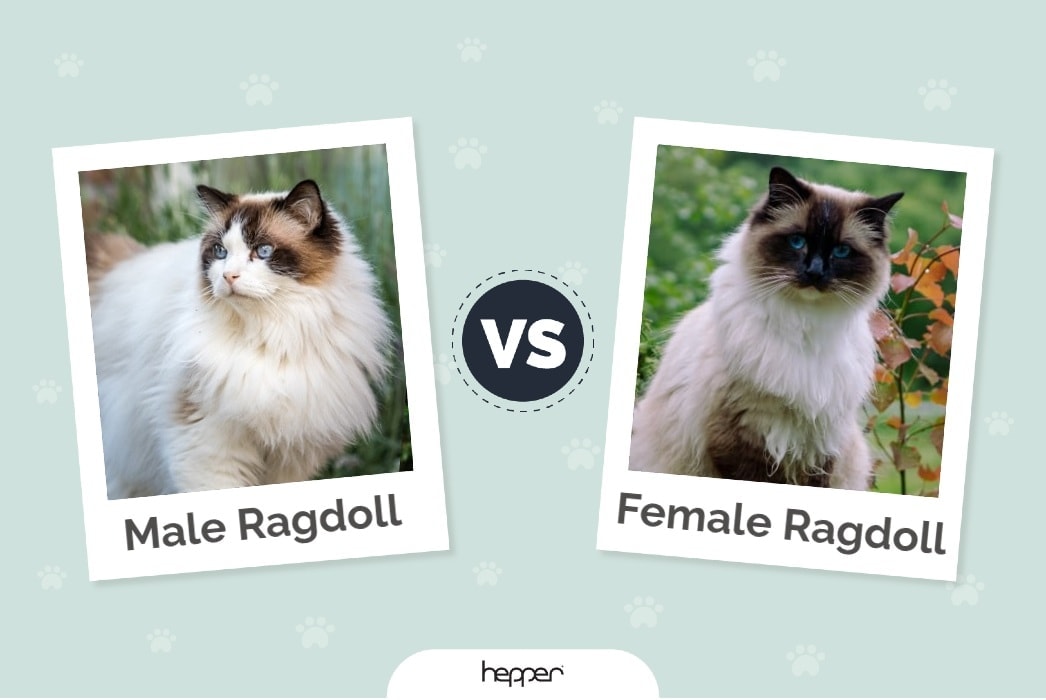
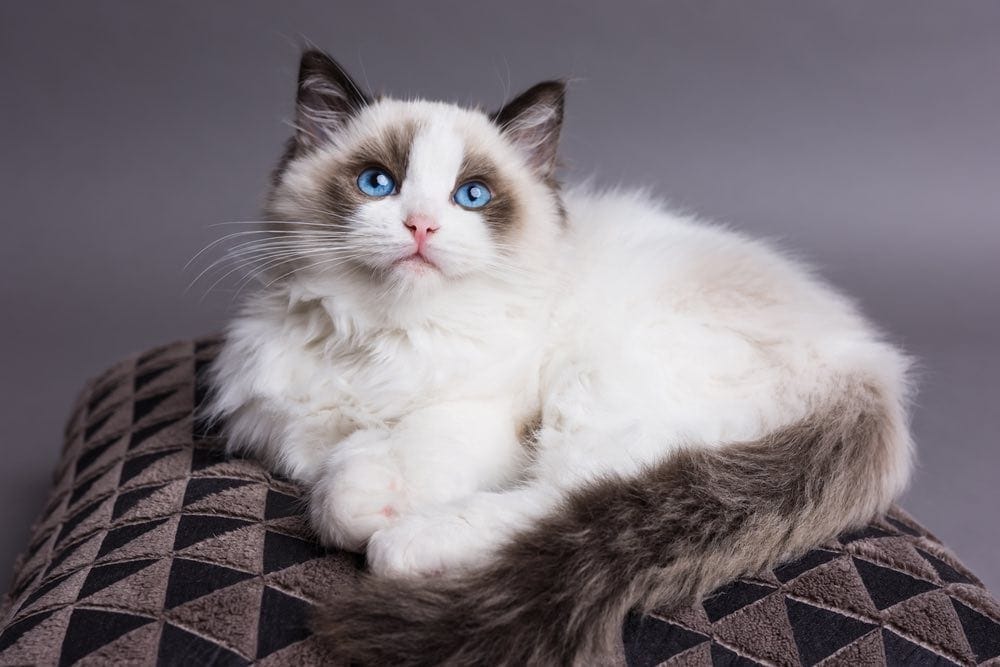
Ragdolls are one of the largest domesticated cat breeds. As with many other animal species, a size difference is to be expected between male and female Ragdolls. Adult males are likelier to be heavier, more muscular, taller, and longer than their female counterparts.
Check out the size and growth chart below to get a rough idea of how long and heavy your Ragdoll should depend on its age. Male Ragdolls are more likely to be on the heavier and longer end of the spectrum, while females are on the lighter and shorter end.
| Age | Weight Range | Length Range |
| 1 Week | 6–7 oz | 4–5 inches |
| 2 Weeks | 9–11 oz | 5–6 inches |
| 1 Month | 1 lb | 6–6.5 inches |
| 2 Months | 1 lb 13 oz to 2 lb 3 oz | 7.5–8 inches |
| 3 Months | 3–4 lbs | 8–9.5 inches |
| 6 Months | 5.5–6 lbs | 11 inches |
| 1 Year | 6–8 lbs | 14–16 inches |
| 2 Years | 11–15 lbs | 16–18 inches |
| 4 Years | 15–20 lbs | 17–25 inches |
Sources
When Does a Ragdoll Stop Growing?
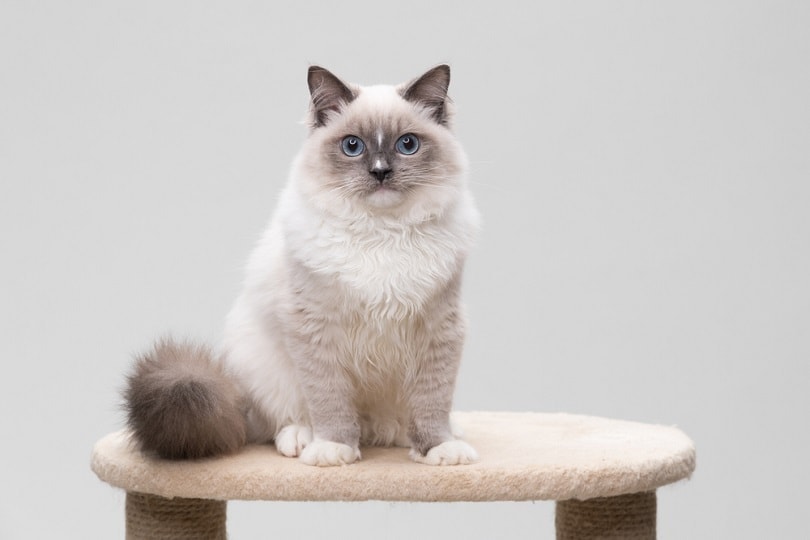
Ragdolls are a slow-to-mature breed. They tend to grow rapidly as kittens, but their growth rate slows as they age. This is similar to many other larger cat breeds.
A Ragdoll kitten will grow at the same speed as most other domesticated kitties during its first three months. While other cat breeds will continue to grow in the first year until they reach their adult size, Ragdolls grow in spurts instead. They don't reach full maturity until they're four years old.
The 3 Factors Affecting the Size of Ragdolls
1. Nutrient Intake
A Ragdoll's nutrient intake in its first few weeks and years of life can affect its size. They have a dramatic growth spurt that needs to be supported by the proper nutrients, so they need to eat the right diet in the right quantities for proper development.
The importance of a high-quality diet does not end when your Ragdoll reaches adulthood, though. Overfeeding or providing a diet poor in nutrients can affect the size of your pet, too.
2. Genes
Your cat's genes are out of your control, but they do play a part in the final size of your pet. Your Ragdoll's adult size is largely set in stone by its DNA. You can certainly influence its weight, but the length and height of your cat will be predetermined by the genes it has inherited from its parents.

3. Spaying or Neutering Procedures
A spayed or neutered cat will grow longer and girthier than its intact counterparts. This is because neutering and spaying cause the metabolism to slow, which may result in body fat being redistributed to other areas. This may be why your kitty's primordial pouch is slightly more pronounced after these procedures.
Ideal Diet for Maintaining a Healthy Weight
Though your Ragdoll will naturally be larger than other domesticated kitties, this does not mean you can let it get fat. Being overweight is bad for any cat breed, but Ragdolls are particularly prone to obesity and hypertrophic cardiomyopathy. In addition, cardiovascular health can be impaired by obesity, as excess weight puts a burden on your pet's heart and vascular system.
To keep your Ragdoll at a healthy weight, you'll need to feed a diet that's high in meat-based proteins and fats. These macronutrients ensure your kitty gets the nutrients it needs for proper growth and muscle development. It is important to ensure the protein you're feeding your Ragdoll is high-quality. Check the ingredient label of your pet's food to look for whole, named meats, including organ meat.
Wet food is typically a better choice for cats as it's high in moisture, something they won't get from dry kibble. Ragdolls can be predisposed to chronic kidney disease (CKD), and since they've been outcrossed with Persians, they may also be at risk for polycystic kidney disease. A dry food diet can aggravate these conditions. So, you must ensure your kitty gets enough water daily to keep these conditions at bay. The easiest way to do so is by feeding canned food since it has a naturally higher moisture content.
How to Measure Your Ragdoll
To measure your cat's height, use a measuring tape when they're standing on all four paws. Measure from the floor to the base of the neck. Do not include your cat's head in the measurement.
To determine your kitty's length, measure from the tip of its nose to the base of its tail. Do not include your Ragdoll's fluffy tail in the length measurement.
The easiest way to figure out how much your cat weighs is to use your scale to figure out how much you weigh. Once you know your weight, get back on the scale with your kitty. Minus that weight from your original number to see how much your cat weighs. Unfortunately, this may not be the most accurate way to determine how heavy your cat is, as many digital home bathroom scales can be off by a significant amount. However, it works fine if you don't need to know your pet's exact weight.
Alternatively, you might consider investing in a pet-specific scale like this one from Beurer. This scale is like the one your vet has, with a curved weighing platform to ensure your kitty stays put while you weigh it.
Conclusion
Ragdolls are one of the largest domestic cat breeds and one of the most rewarding cats to welcome into your home. They don't reach full maturity until they're four years old, so you'll have some time to wait to see if your kitty will be on the lower, middle, or higher end of the growth chart we shared above.
Remember, every cat is different, so don't fret too much if yours is smaller or bigger than the average. After all, one of the most joyful aspects of raising a pet is how unique each will grow to be.
Sources
Featured Image Credit: Aaron Zimmermann, Shutterstock
Get Hepper In Your Inbox


Pet care tips from our vets and experts, straight to your inbox.
You may opt-out at any time. View our Privacy Policy for more information.

Chantelle's life revolves around two passions: writing and animals. Raised on the prairies of Canada amidst a menagerie of pets, she now lives with five cats, two guinea pigs, and a bearded dragon. Together with her husband and child, Chantelle delights in being an exemplary animal parent, going as far as installing wall-mounted cat shelves to give their cats an indoor playground. When she's not cozying up with her cats or snapping their amusing antics, she enjoys venturing into the Rocky Mountains, binge-watching her favorite Netflix shows, and indulging in spontaneous reading adventures.
Join the conversation
Ask a question, share your story, or send private feedback.