Hepper is reader-supported. When you buy via links on our site, we may earn an affiliate commission at no cost to you. Learn more.
How Big Does an Ocicat Get? Average Weight & Growth Chart
In this article
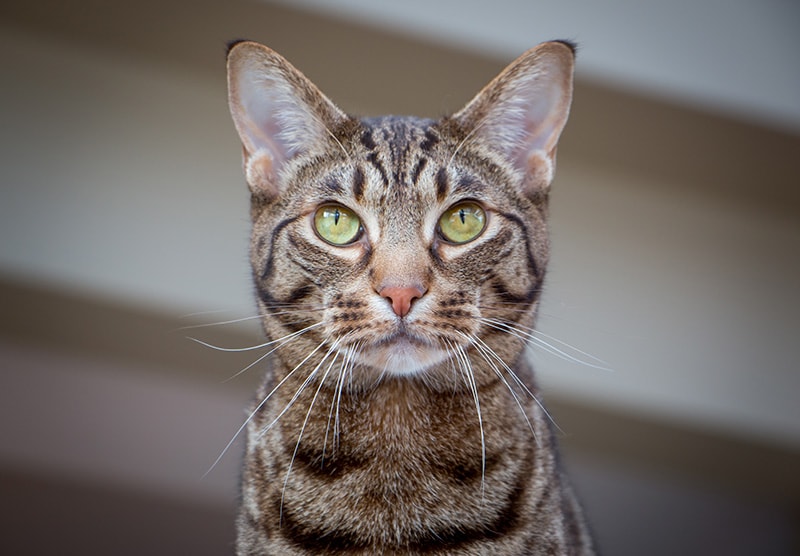
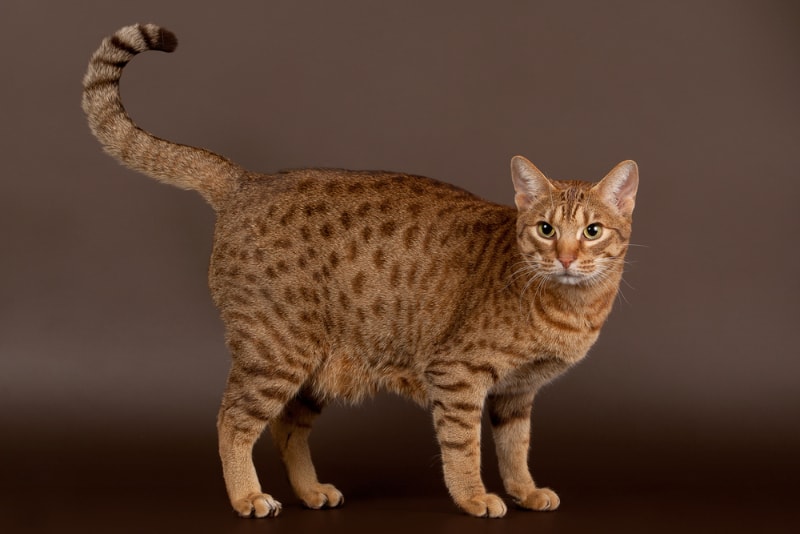
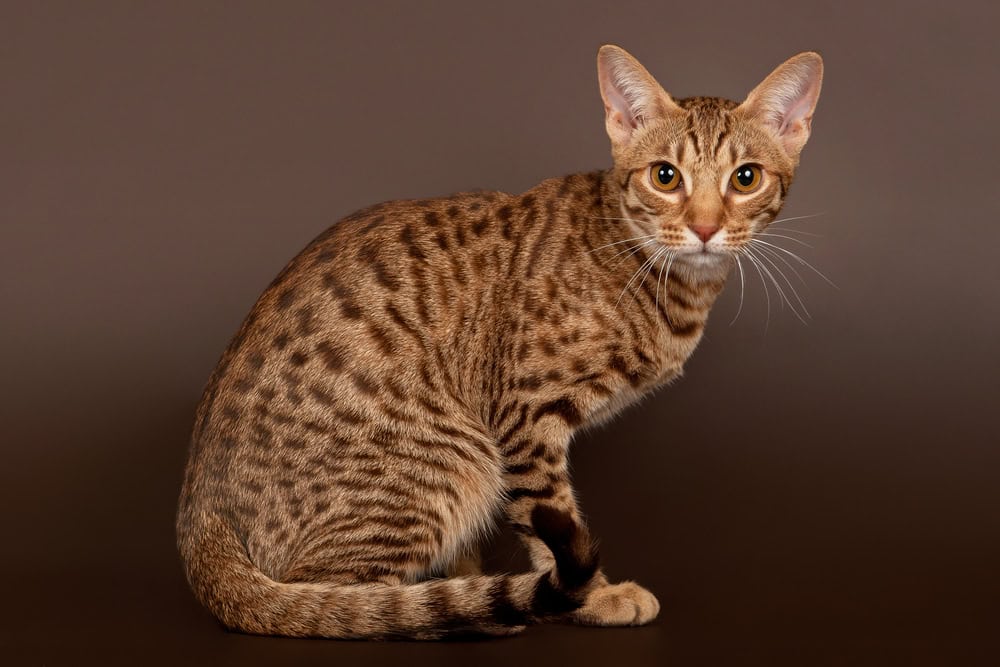
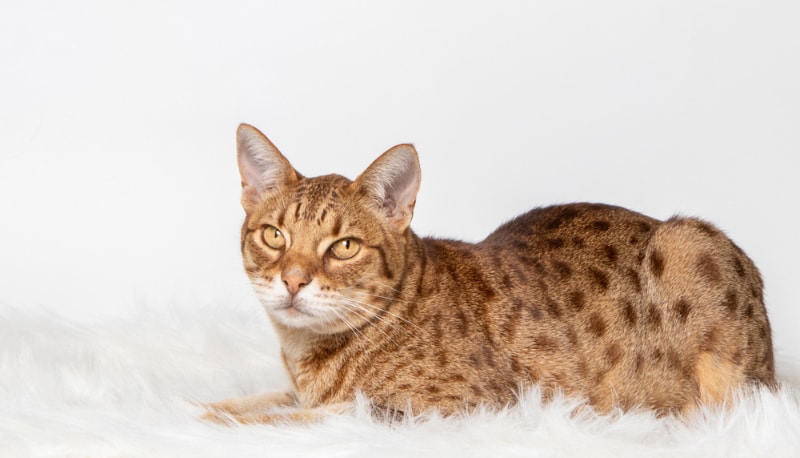
Ocicats look pretty wild—that was why they were selectively bred, to begin with. However, they don’t actually get much larger than your average cat. Therefore, you can expect their growth rate to be about the same as most other domestic breeds. In fact, these cats tend to be on the skinnier side, so they may even be on the smaller side in some cases.
There is not a significant difference in the size of males and females in this breed. You can use the same growth chart regardless of your cat’s gender.

Ocicat Breed Overview
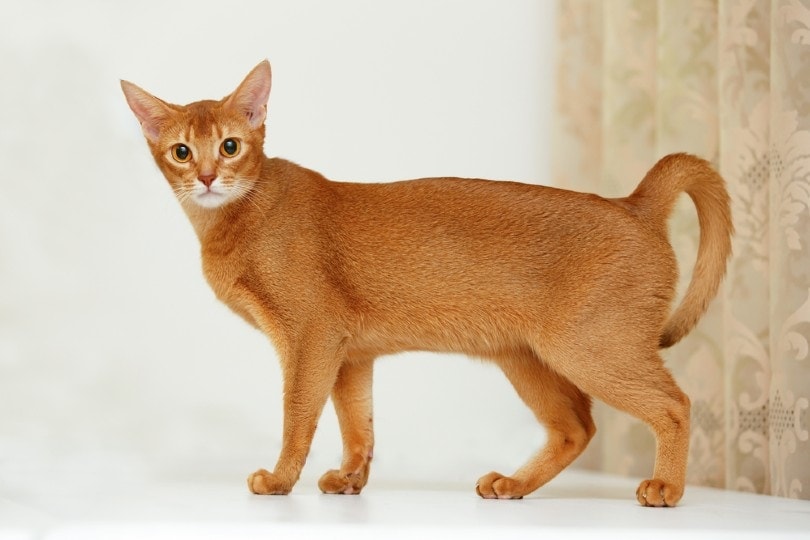
Ocicats may look very wild, but they are actually completely domestic. They have no wild DNA in their genetics, which also means that they act similarly to other domestic cats. This breed was created through selectively breeding Siamese and Abyssinian cats. Originally, Virginia Daly was attempting to create an Abyssinian-pointed Siamese, but this unique breed was created instead.
These felines are friendly and sociable. Therefore, while they look wild, they don’t act like it. They’re relatively easy to train, as they are very loyal and want to make their humans happy. They require a bit more attention from their humans, though. This isn’t a breed that can spend a lot of time alone.
They’re also very energetic, so they do best for those who want a more playful feline. They’re often described as “dog-like.”
Ocicat Size and Growth Chart
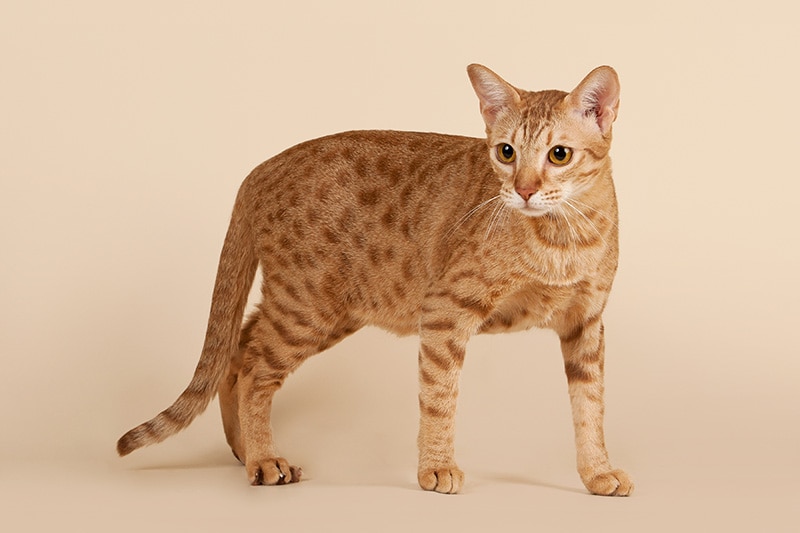
Below, we’ve created an Ocicat growth chart starting at around 7 weeks and finishing around 50 weeks, when these cats are typically fully grown. Of course, no cat will follow this growth chart completely.
If you have any concerns about your cat’s weight, you should speak to your vet. Sometimes, variation is completely normal, while it may hint at an issue at other times.
| Age (in Weeks) | Weight (in lbs) |
| 7 | 1.5–3 |
| 10 | 1.7–4 |
| 15 | 2–5.5 |
| 20 | 3.5–7 |
| 25 | 4–8.5 |
| 30 | 4.5–10 |
| 40 | 5–14 |
| 50 | 6–15 |
When Does an Ocicat Stop Growing?
Usually, these cats stop growing by around 50 weeks, which is just under a year old. However, cats start slowing down much before that. By around 5 months of age, smaller cats will have gained the bulk of their weight. Many cats may already have reached their full height by this point. However, they may take more time to reach their full weight.
Cats tend to gain muscle and extra body fat last.
Larger cats will take longer to grow, though. Even at around 8 months of age, these cats may still be putting on a pound or two a month. Still, all cats tend to experience the most growth when they are younger, and then this decreases as the cat ages.
Factors Affecting the Size of Ocicats
Genetics is one of the biggest factors affecting the size of an Ocicat. Cats from bigger parents tend to be bigger themselves, while those from smaller parents tend to be rather small. In this manner, you can estimate the size of an ocicat based on the size of their parents.
However, this isn’t fool-proof. Genetics that affect size in cats aren’t well understood. Sometimes, a cat may be much bigger than expected or much smaller.
Nutrition also plays a role. If your feline doesn’t get the proper nutrition, you can expect them to be smaller than they might otherwise. Cats can also be overweight, which typically involves them consuming too much food. Both of these should be avoided, though, as they are associated with health issues.
Ideal Diet for Maintaining a Healthy Weight
While these cats are very active, they typically aren’t so active that they require extra calories. Therefore, your average quality cat food is usually enough to keep these cats happy and healthy. Always follow the feeding instructions on the back of the package, at least to start. If you notice that your cat is too skinny or overweight, you may need to adjust their feeding amount.
Do not free-feed these cats, which involves leaving food out for your cat to access at all times. They can become bored easily, and some may eat out of boredom. If not corrected, these felines can quickly become overweight, which is linked to many health problems.
If your cat seems to lose or gain weight suddenly, speak with your vet. Cats are very good at hiding their health problems. However, sudden weight change is associated with many health problems and may be one of the few signs that your cat cannot control.
How to Measure Your Ocicat
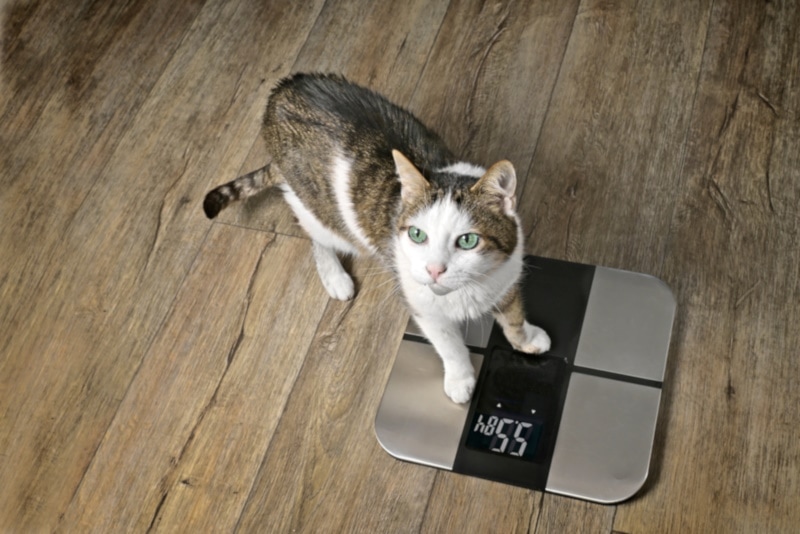
To keep up with your cat’s weight, it’s important to measure your cat regularly. Of course, keeping a cat still on a scale is practically impossible. So, to measure your cat accurately, you have to be creative.
There are several ways to go about this. The easiest way is to weigh yourself on the typical bathroom scale and then weigh yourself holding your cat. The difference will be your cat’s weight. However, this method isn’t terribly accurate and shouldn’t be used for very small kittens. It will work for adult cats in a home setting, though.
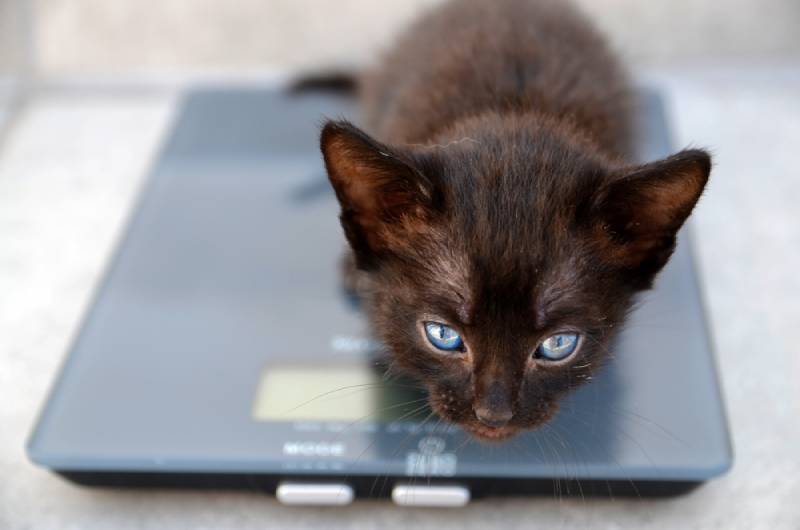
If you need to weigh a very small kitten, you’ll have to purchase a special scale. Sometimes, a food scale will work, but these often aren’t shaped for cats. Again, you’ll have to get creative.
A postage scale also works, but most people don’t have these lying around their homes.
Summary
Ocicats are domestic felines, so they tend to be about the same size as other domestic cats. Despite their appearance, they aren’t actually wild and do not have any wild DNA.
Therefore, you can use the typical growth chart used for other domestic cats when trying to determine if your ocicat is growing properly.
Sources
Featured Image Credit: dien, Shutterstock
Get Hepper In Your Inbox


Pet care tips from our vets and experts, straight to your inbox.
You may opt-out at any time. View our Privacy Policy for more information.

Kristin is passionate about helping pet parents create a fulfilling life with their pets by informing them on the latest scientific research and helping them choose the best products for their pets. She currently resides in Tennessee with four dogs, three cats, two fish, and a lizard, though she has dreams of owning chickens one-day!
Join the conversation
Ask a question, share your story, or send private feedback.