Hepper is reader-supported. When you buy via links on our site, we may earn an affiliate commission at no cost to you. Learn more.
What Is the Ideal Weight for My Cat? Vet-Verified Facts & FAQ


In this article
It is fair to look at your cat and wonder if they are a healthy weight or not. Some cats look small or skinny to the untrained eye. Other cats seem to eat a lot and might look a little rotund. It makes one ask themselves if their cat is an ideal or healthy weight. So, what is the ideal weight for your cat? Every cat is different, and there is no one size fits all answer to this question. Your cat’s ideal weight is going to be unique to your cat and will be determined by a number of different factors.
Here is how to properly identify the ideal weight for your cat – the way veterinarians do it.

There Is No Ideal “Average” Weight for Cats
If you are reading all of this and are just looking for a quick and simple number for how much your cat should weigh, you are going to be disappointed. There is no average weight for a cat. There are too many factors and variables to slap a blanket number on every cat that should describe their ideal weight.
Factors That Determine a Cat’s Ideal Weight
Breed
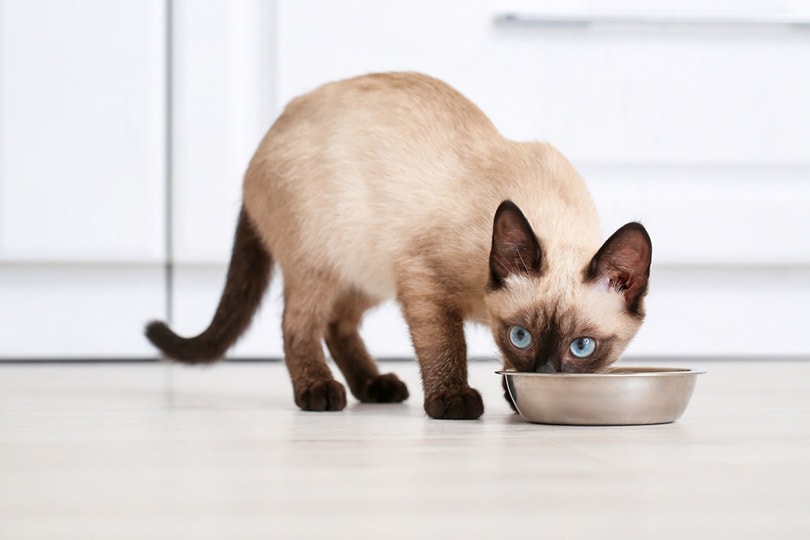
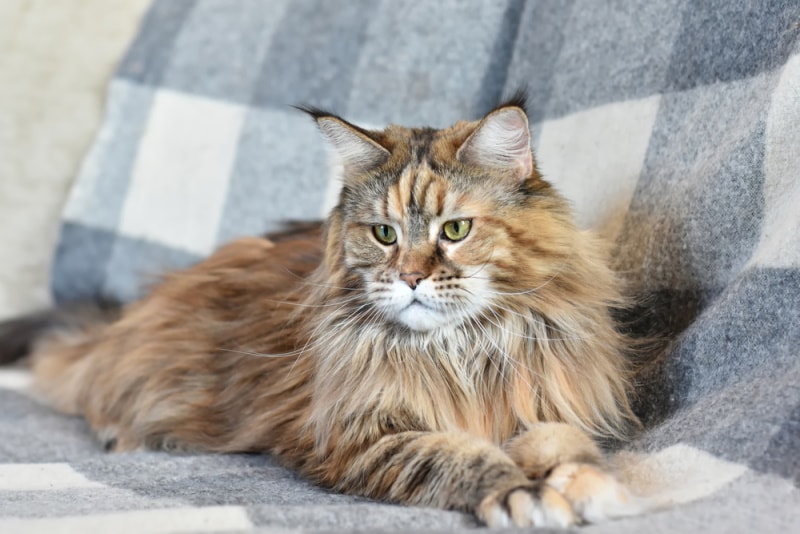
One of the biggest factors that go into determining a cat’s ideal weight is the cat’s breed. Certain breeds are far larger than others. Some small breeds, like Siamese, could only weigh around 8 to 15 pounds as adults. The largest breeds, like Maine Coon or Savannah Cats, can weigh as much as 25 pounds as adults. An 8 pounds Maine Coon cat might be considered to be severely underweight, while a 25-pound Siamese Cat would be considered dangerously obese.
Age
Young cats and kittens will weigh less than older cats. Adult cats will be at their heaviest between 2 and 12 years of age. After that, some cats can start naturally losing fa tand muscle as they age, or gain weight through inactivity. The ideal weight of a 6-month-old cat, a 6- year-old cat, and a 16-year-old cat can all be different.
Sex
Lastly, sex can play a role. Some cats are naturally larger and heavier than others based on their sex. Male cats are typically slightly larger and weigh a few pounds more than their female counterparts. This is particularly true if a male is uncastrated (or castrated later in life), or if and when a female has had kittens. That means that the ideal weight for a male cat is going to be different than for a female cat.

Ideal Weight Is Between Overweight and Underweight
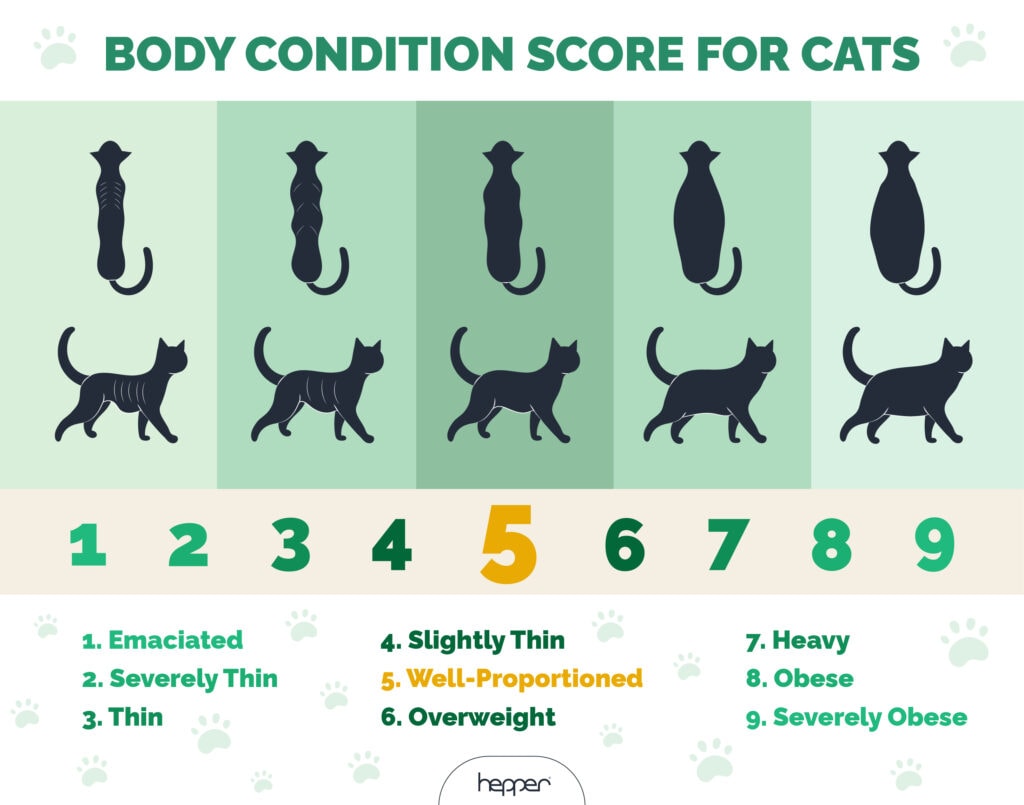
This might seem like an obvious statement, but it also shows that ideal weight is more than just a number. In fact, we should be focusing less on ideal weight, and more on ideal shape. Most veterinarians use something called a Body Condition Score (BCS) to determine if a cat is an ideal weight or not. The BCS looks at each area of the cat from the side and the top to determine if they are a healthy body shape. If your cat scores an IDEAL on the BCS chart, the weight it is at that time is their ideal weight.
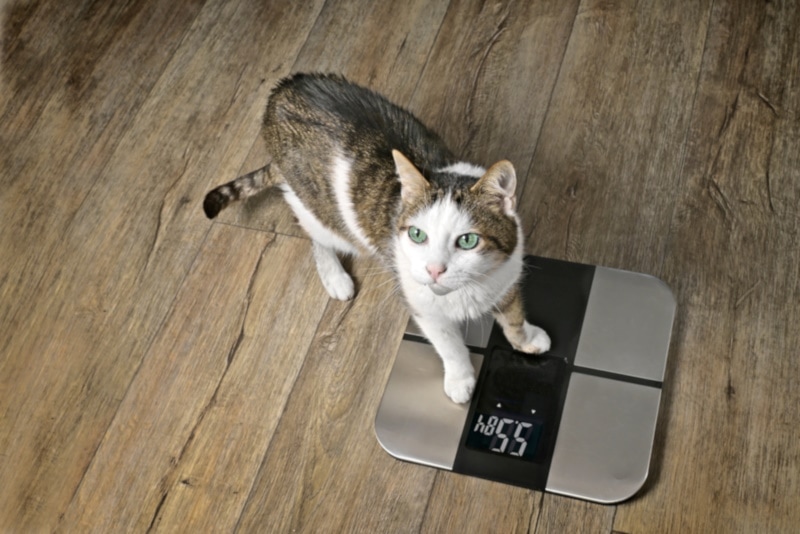
For example, if you have a standard house cat, of no particular breed, and you use a BCS chart to map their condition and find that your cat is IDEAL, you should weigh your cat. If they weigh 9.5 pounds, then your cat’s ideal weight, as determined by BCS, is between 9 and 10 pounds. But that is going to differ for each individual cat.
If you want to determine your cat’s ideal weight the proper way, you should use a Body Condition Score Chart and evaluate your cat. You can find a BCS that you can use at home here.
Most Domesticated Cats Are Overweight
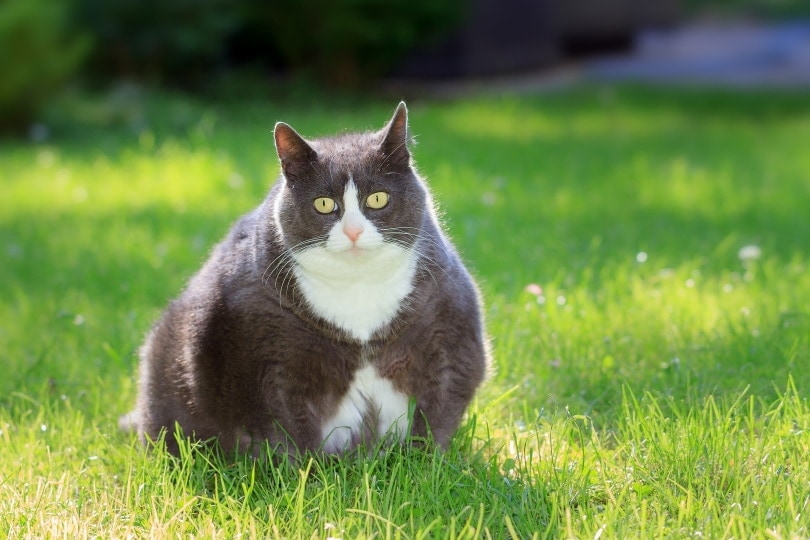
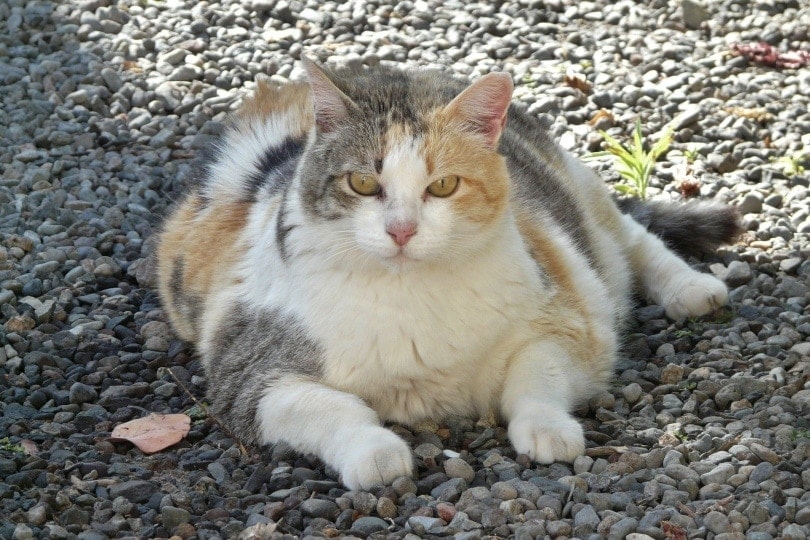
The truth of the matter is that most domesticated cats are overweight. In a recent study, the American Veterinary Medical Association (AVMA) found that nearly 60% of all American house cats are obese. Obesity in cats can lead to health risks and complications, including joint problems, diabetes, and reduced lifespan. The chances are that your cat could be overweight. If you find that your cat is overweight according to the Body Condition Score you should decrease your cat’s caloric intake in order to try and curb the problem before it gets worse.
The main reason for this is that most domestic cats either do not exercise as much as their wild ancestors did, or they are provided with far too much yummy food; often, it is both.
Very few domesticated cats in the United States are underweight, but if they are, they should increase their caloric intake until they start gaining weight. Just don’t let them gain too much. If your cat scores low on the BCS chart but eats very well, a check-up with your vet is a great place to start.
Ask Your Vet
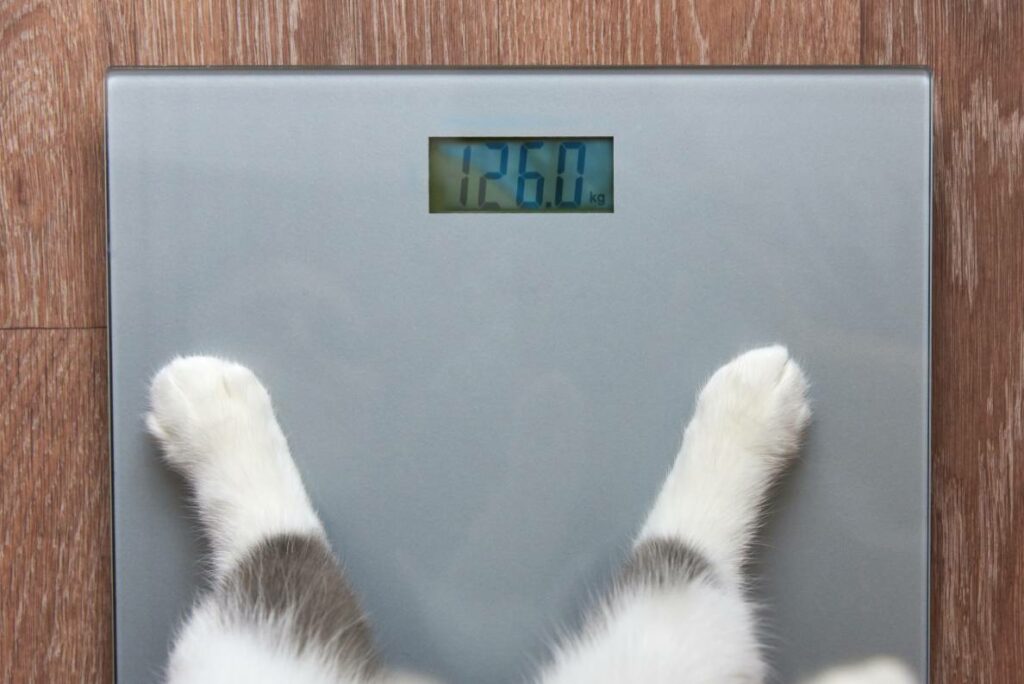
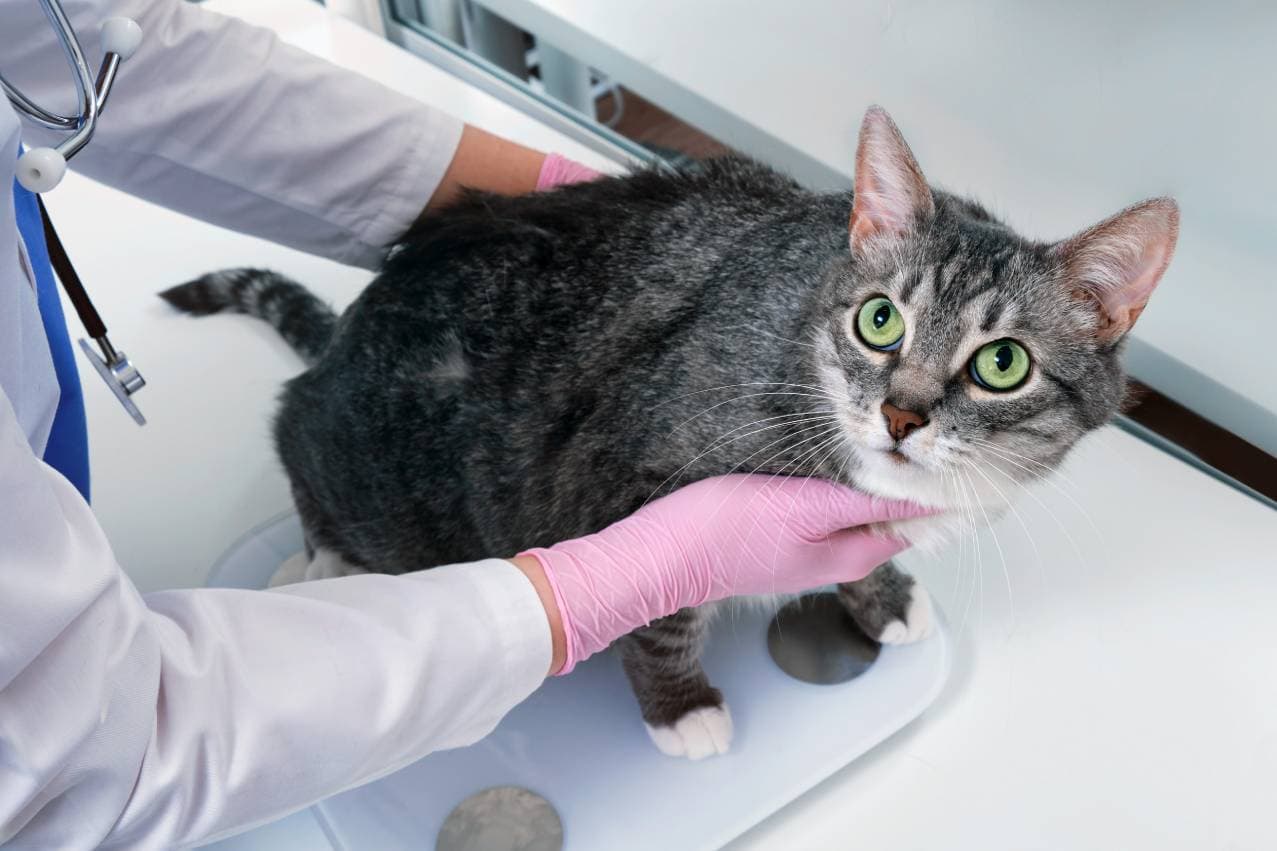
If you want a definitive answer about your cat’s ideal weight, ask your vet. Your veterinarian will give your cat an evaluation and check it against a Body Condition Score card to determine if your cat is underweight, an ideal weight, or overweight. They will give you your cat’s exact weight and offer you tips and guidance about what to do in order to keep your cat happy and healthy.

In Conclusion
There is no universal ideal weight or average weight that covers all cats. Every cat is different. You might have a small Maine Coon or a large Burmese, so their weights are not going to fit any sort of breed standard.
Using Body Condition Scoring to evaluate the shape and fat coverage of your cat is the best way to determine if they are at their ideal weight, and make changes if needed. Talk to your vet if you have concerns about your cat’s weight, particularly if it has changed suddenly.
The good news is once you find your cat’s ideal weight, you will know what your cat is supposed to look like when they are at it. Knowing your cat’s ideal weight and Body Condition Score will help keep them fit, healthy, and happy as they go through a long and fruitful life.
See also: 10 Best Pet Scales for Cats
Featured Image Credit: Lightspruch, Shutterstock
Get Hepper In Your Inbox


Pet care tips from our vets and experts, straight to your inbox.
You may opt-out at any time. View our Privacy Policy for more information.
Grant is a freelance writer with years of experience writing about a diverse range of topics. His days are spent writing and caring for eight animals (two horses, two donkeys, two goats, and two dogs). In his free time he enjoys slowly carving out a quaint hobby farm from the Southern scrub. He currently lives in his native Florida with his wife and son.
Join the conversation
Ask a question, share your story, or send private feedback.