Hepper is reader-supported. When you buy via links on our site, we may earn an affiliate commission at no cost to you. Learn more.
How Cold Is Too Cold for Dogs in a House? Keeping Your Canine Comfortable


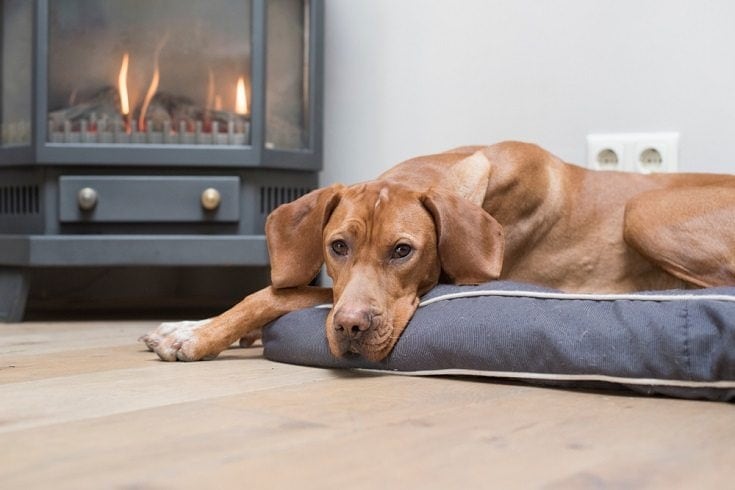
As winter gets closer, thermostat settings begin to change. For humans, getting comfortable in the cold can be as simple as grabbing a blanket, putting on a hoodie, or turning the temperature up a degree or two. But when your dog is uncomfortable with the temperature, there’s not much they can do.
So, as loving dog owners, we want to keep our canines comfortable by setting the thermostat to a temperature that’s as comfortable for them as it is for us. But we can’t ask our dogs what temperature they prefer, so how cold should you keep your home?
Truthfully, every dog is different depending on coat thickness and size, but there are some simple rules you can follow to ensure that you’re always keeping the house pleasant for your pup.

Ideal House Temperatures for Dogs
The consequences can be severe for dogs in low temperatures, but that’s outside where things get much colder than in your home. Inside, frostbite isn’t a concern, but comfort is.
For the most part, your dog will be comfortable in similar temperatures to you, though medium to large breeds can still be comfortable in temperatures that would probably have you shivering a bit.
For larger dogs with thicker coats, 69-70 degrees Fahrenheit is a good temperature. Smaller dogs and those with thinner coats will be fine at these temperatures but would likely prefer it a bit warmer in the realm of 73–75 degrees Fahrenheit, which would be the ideal temperature for dogs to sleep.
But remember, even cold-averse dogs aren’t going to experience any adverse health effects from the cold until they start reaching temperatures near freezing.
When you leave the house, you don’t need to leave the thermostat set quite as high. Even in the mid-60s, your dogs will still be comfortable, especially if you provide them with a warm bed and blankets where they can head if they start to get chilly.
Different Dogs Handle Different Temperatures
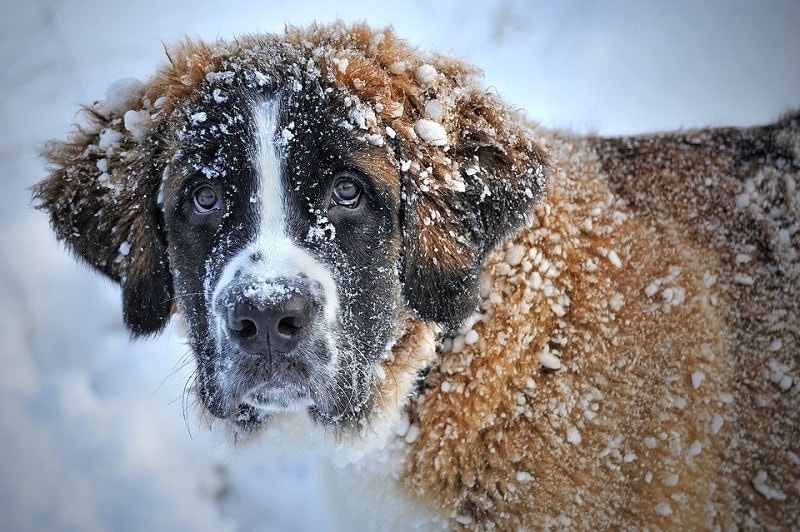
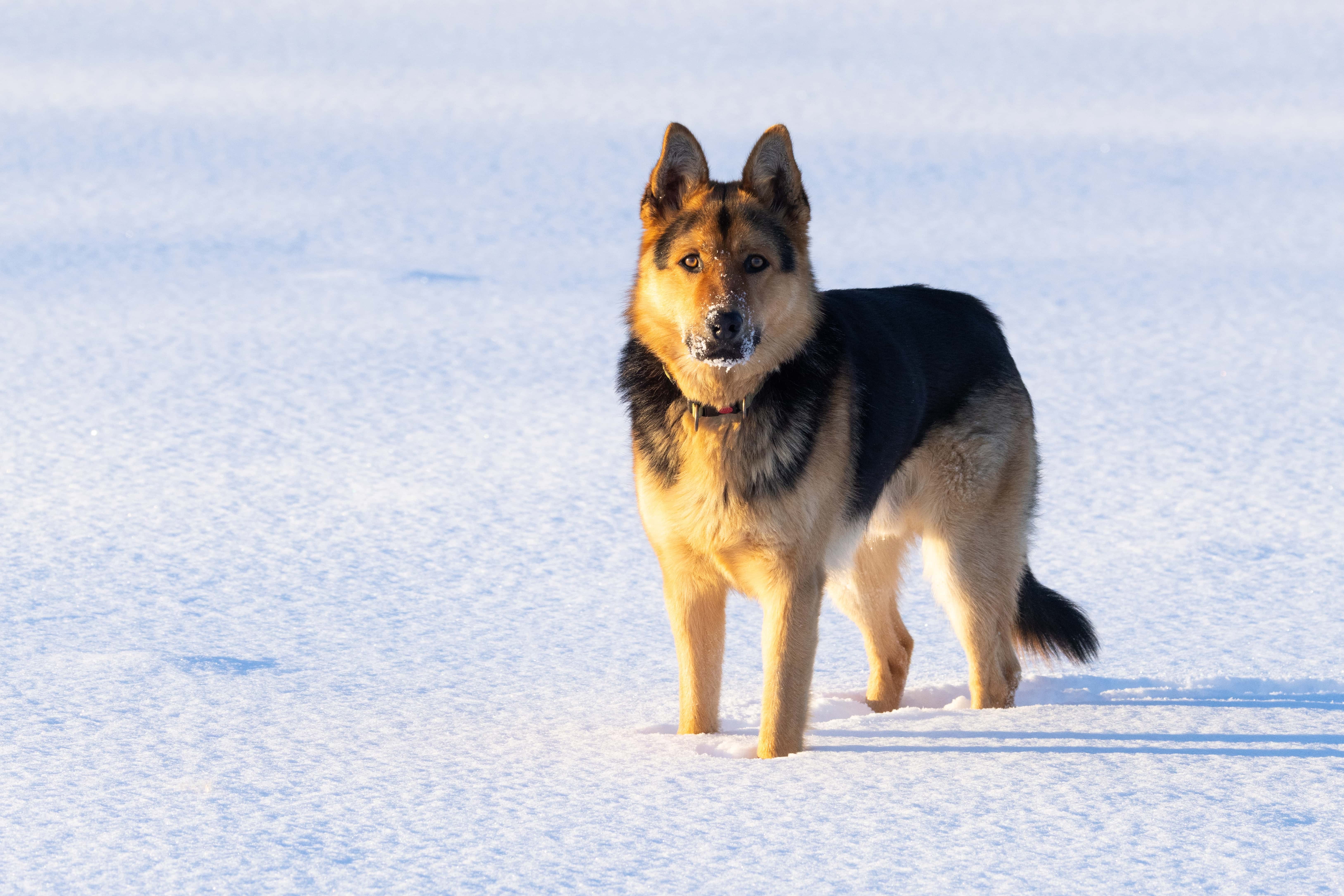
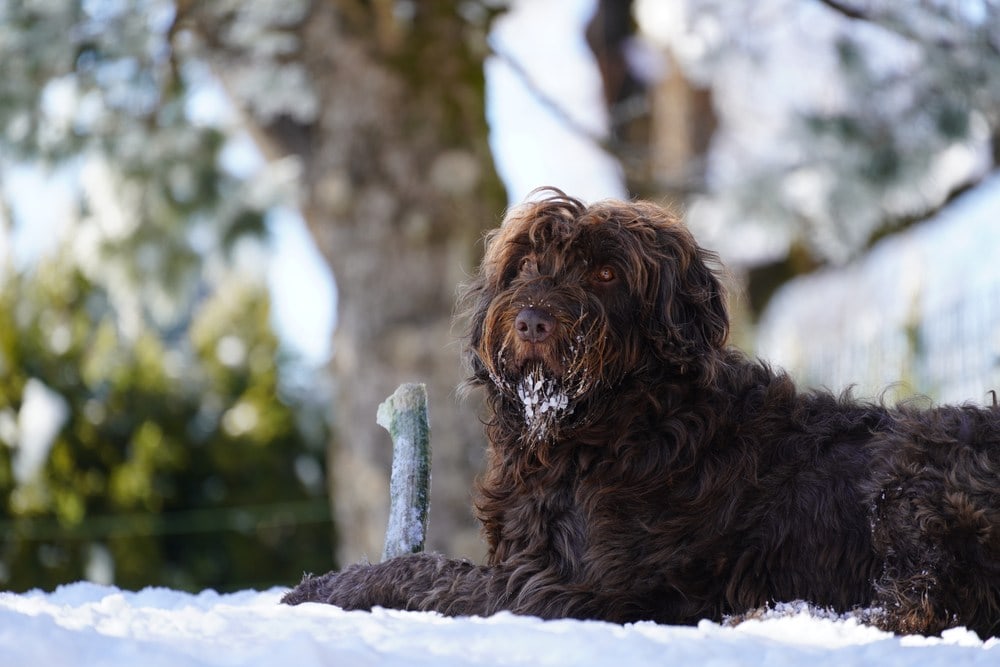
Some dogs are built to handle extreme temperatures, icy cold winds, and snow. Think about breeds like Alaskan Malamutes or Siberian Huskies. It’s likely that if you have one of these dogs, you could be wrapped in a sleeping bag, three blankets, and a parka and you’d still be much colder than your canine.
But compare that to a tiny dog with a thin coat such as a Chihuahua. This breed is from the warm climate of Mexico; they’re not built to withstand cold of any kind! Obviously, dogs like this are going to get cold at much higher temperatures than larger dogs. This is especially true if your Chihuahua has a single coat. Chihuahuas with double coats are slightly more resistant to colder temperatures, but still, their tiny bodies lose body heat quickly.
Factors That Affect Susceptibility to Cold
Many different things can affect a dog’s susceptibility to cold.
- Breed – As we already discussed, some breeds are more or less susceptible to cold due to factors, such as the geographical location where the breed was created. Breeds from Arctic tundra are going to be better adapted to cold temperatures.
- Coat – This does tie into the breed, but sometimes there are mixed breeds that have traits, such as a double coat, that might keep them warm in cooler temperatures. Some breeds, such as the Chihuahua, can have either a single or double coat.
- Size – Bigger dogs are less susceptible to cold than smaller dogs. They have more body mass, which generates more heat. Their body surface represents a smaller percentage of their total volume, which naturally helps to reduce the loss of body heat. Likewise, they have more insulation from the colder temperatures than dogs with less mass.
- Age – Older dogs have a slower metabolism and are more susceptible to cold than younger dogs.

What Is Cold for a Dog?
We’ve already thoroughly talked about how differences between dogs can change the way that temperature affects them. But that’s a very general answer and isn’t going to help you much when you’re trying to figure out what temperature to keep your house so your dog can be comfortable. So, for now, let’s discuss cold-averse dogs.
This includes any dogs that aren’t built for the cold weather. Dogs with short hair, small dogs, old dogs, and any dogs that don’t prefer cold temperatures fall into this category.
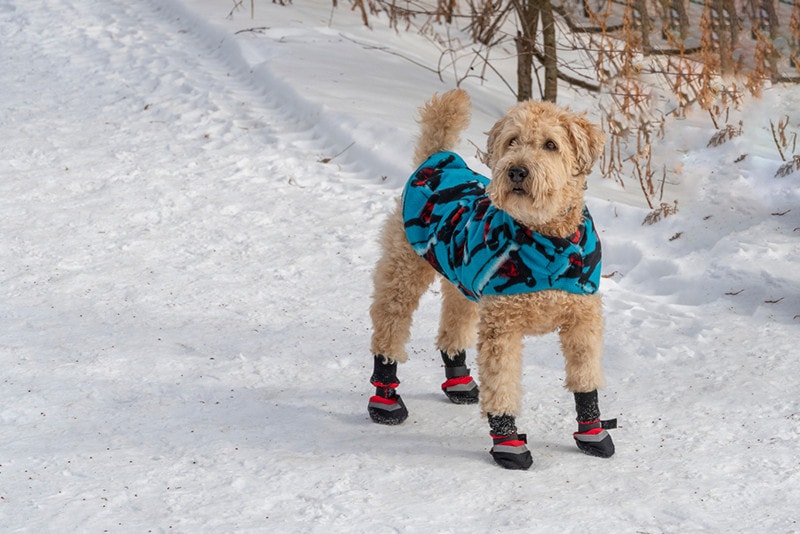
For these dogs, 45 degrees Fahrenheit is where you’re going to start to see the cold’s effects. That said, these temperatures aren’t going to hurt any type of dog. Still, if your dog will be outside in 45-degree weather, they’ll at least need a coat and a safe shelter where they can get out of the elements.
Once temperatures drop below freezing, health risks can become a real possibility. At 32 degrees Fahrenheit, you’ll start to notice the signs of your dog being cold, such as:
At 20 degrees Fahrenheit, the dangers are very real and your dog could suffer serious consequences.
Health Risks for Dogs Exposed to Cold Temperatures
At this point, you’re most likely wondering what negative health effects your dog is going to suffer from being in those cold temperatures.
In temperatures near or below 20 degrees Fahrenheit, your dog could suffer frostbite or hypothermia. Frostbite occurs when ice balls form on your dog, which can cause damage if not treated immediately. Hypothermia is worse and happens when your dog’s temperature gets too low causing reduced blood flow, slowed heart rate, slowed breathing, and even loss of consciousness or death.
For dogs with arthritis, the cold can mean increased suffering. The joints become less and less mobile while they start to lock up. You’ll need to limit the walks and let your dog spend most of their time indoors where it’s warmer.

In Conclusion
Falling winter temperatures can often mean rising electricity costs as you run the furnace more to keep the house warm. The good news is that if you’re keeping the house hot for your dog’s sake, you can probably save some money on your heating bill. Your dog will be comfortable at temperatures between 65 and 75 degrees Fahrenheit. And if you’re concerned that 65 degrees Fahrenheit is too cold for your canine, remember that they’re actually safe below 45 degrees with no concern.
Don’t forget, not all dogs need it warm. If your dog comes from a cold climate and they’ve got a thick double coat, they’re more likely to suffer from the heat than the cold, so do them a favor and let the house cool off a bit!
You may also be interested in:
Featured Image Credit: mveldhuizen, Shutterstock
Get Hepper In Your Inbox


Pet care tips from our vets and experts, straight to your inbox.
You may opt-out at any time. View our Privacy Policy for more information.
Nicole is a lover of animals of all sizes but is especially fascinated with the feline variety. She’s the proud mom of Baby, a Burmese, and works every day so he can relax in the sunshine or by the fire. She’s always had a cat in her home and has spent countless days with others, observing behaviors and softening up even the grouchiest of the lot. Nicole wants to share her kitty expertise with you so you and your cat can live happy, healthy, and care-free.
Join the conversation
Ask a question, share your story, or send private feedback.