Hepper is reader-supported. When you buy via links on our site, we may earn an affiliate commission at no cost to you. Learn more.
How to Help Your Cat Recover From Spaying or Neutering: 5 Vet-Approved Tips


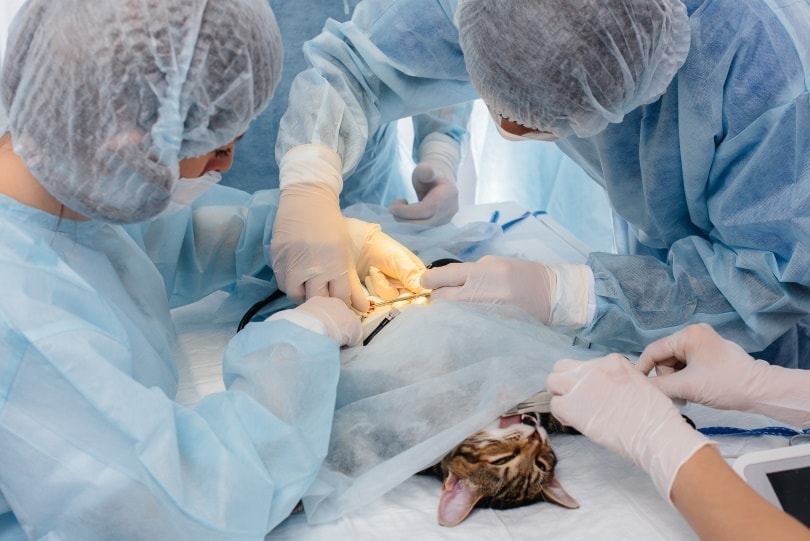
As cat parents, we want to do all that we can to keep our cats safe, happy, and healthy throughout their entire lives. Having our cats spayed or neutered is one way to do just that. There are lots of benefits to be had by spaying and neutering pet cats, including reduced roaming to find mates, lower risk of unwanted kittens and certain illnesses, and healthier and longer lives overall.
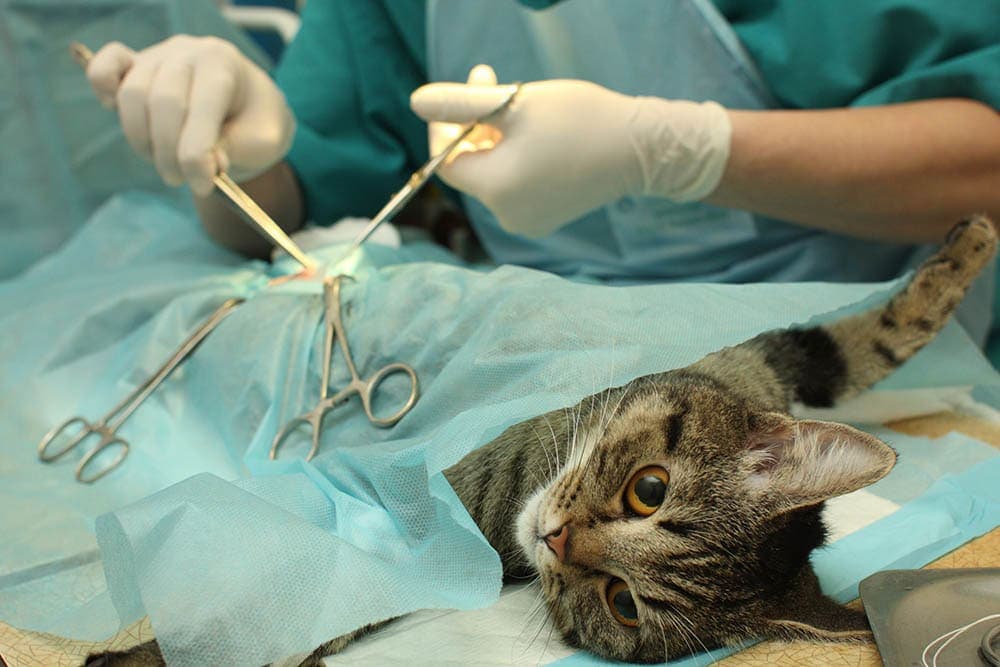
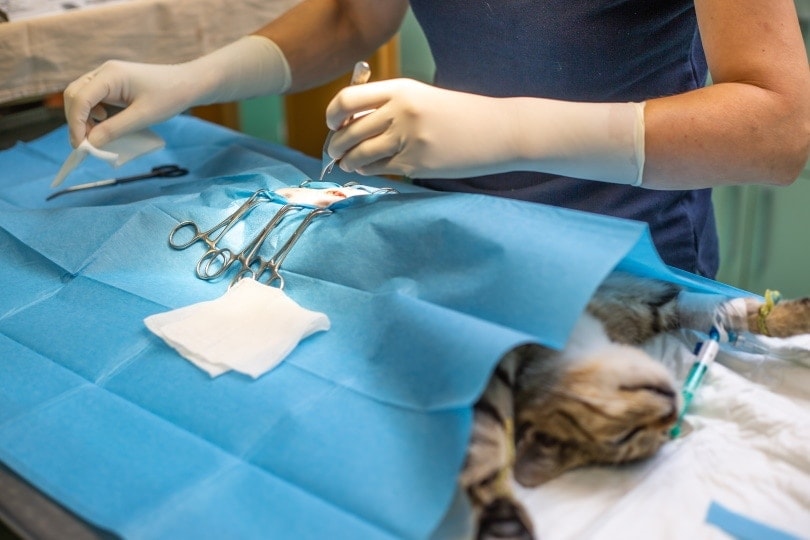
There is a recovery time after spaying or neutering surgery that cats must endure, but luckily, there are some things that you can do to help your beloved cat recover after they have had surgery. Here are five tips you can utilize to make the recovery process a less stressful and more comfortable experience for your kitty cat.

Top 5 Tips to Help Your Cat Recover From Spaying or Neutering
1. Understand the Recovery Timeline
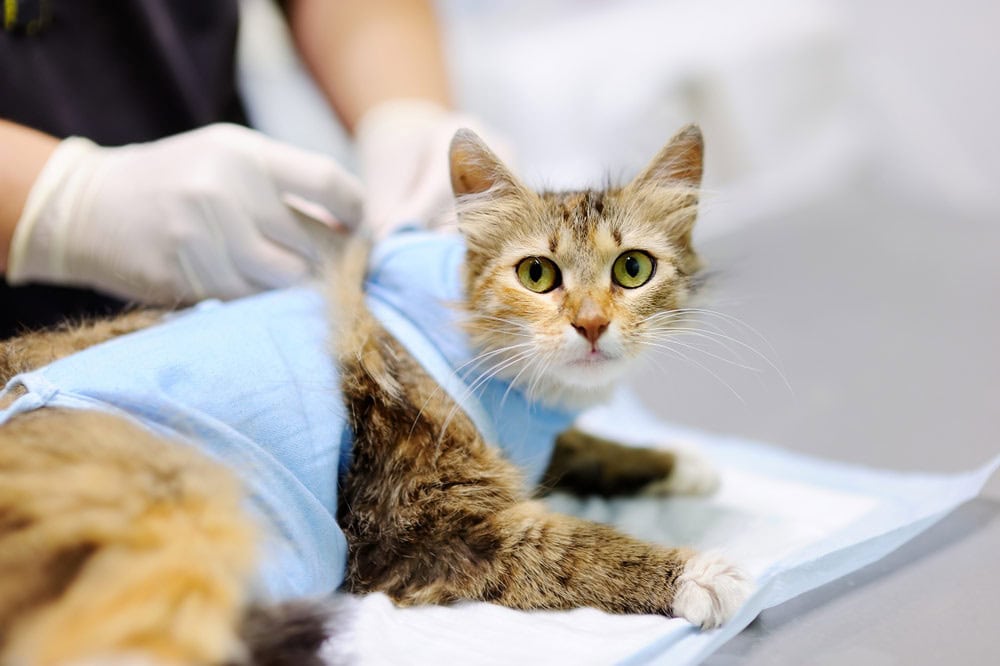
It can take anywhere from 5 to 14 days for your cat to recover after spaying or neutering surgery takes place. The timeline depends on many things, including their age and health status and whether there were complications during surgery. Your veterinarian should be able to provide you with an accurate timeline to rely on before taking your cat home to recover.
Understanding the recovery timeline is important because it will help set your expectations as to how long your kitty will require special care and rest. Setting the right expectations will help ensure that you do not prematurely let your cat go back to their regular activity. The more activity your cat does while recovering, the bigger chance there will be of problems arising.
2. Create a Safe, Contained Recovery Space
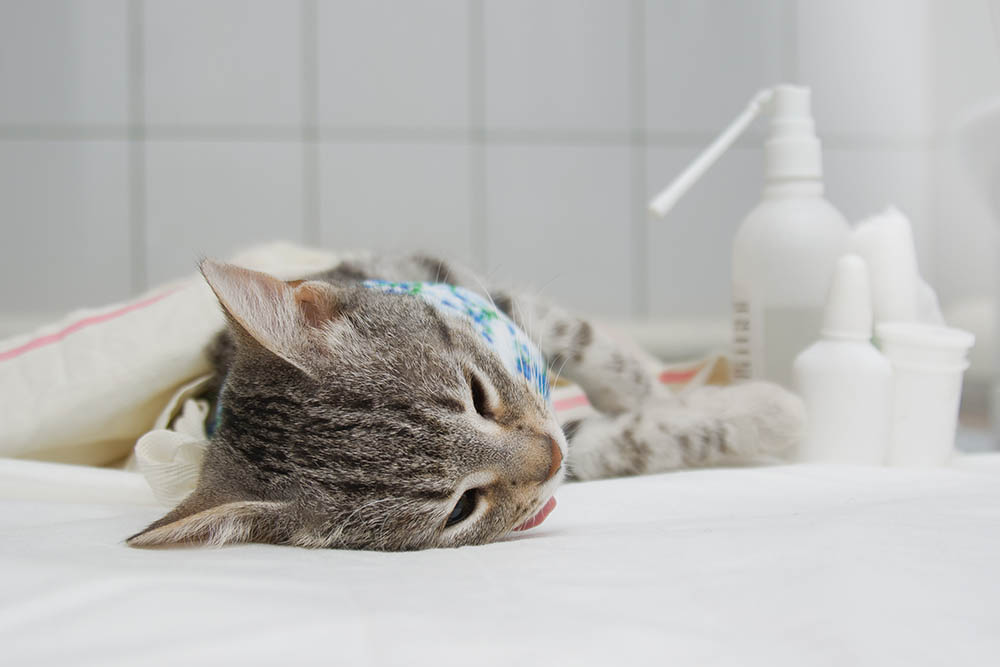
The less your cat moves around, the lower chance there will be of surgical wound complications and serious infections. Therefore, it is a good idea to create a safe, contained space for your cat to recover in for the first few days. This space can be a kennel, a large crate, a bathroom, or a small bedroom, depending on what is available to you. Running around, physical exercise, and jumping should be avoided as much as possible, as any physical activity may put too much tension on the wound and lead to delayed healing or wound complications.
Set the space up with a cozy bed, an extra blanket, and maybe a soft toy to chew on or cuddle with. Keep the lights down low, and make sure that there isn’t too much noise being made in or near the space. Kids should play elsewhere, and televisions and radios should be played on low volume, if at all. The idea is to keep your cat calm so they rest and do not become too stimulated by their surroundings.
3. Check the Incision Site Regularly
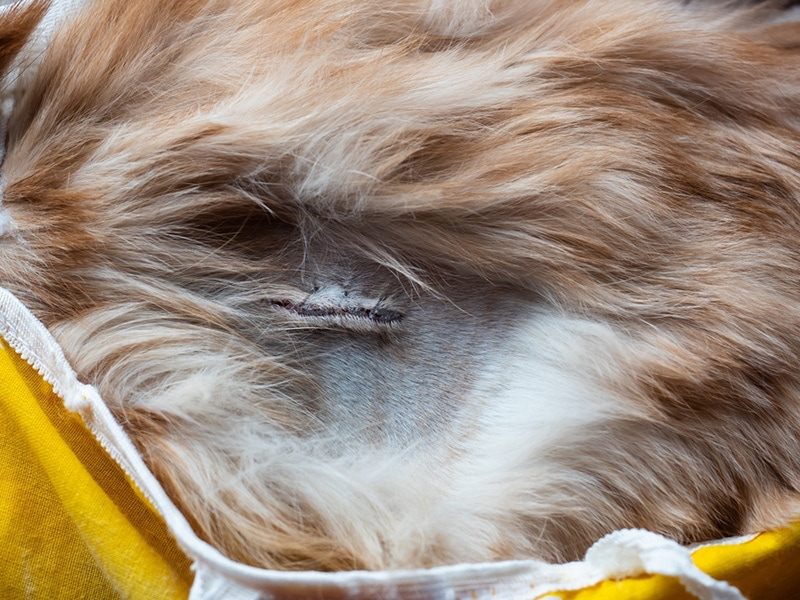
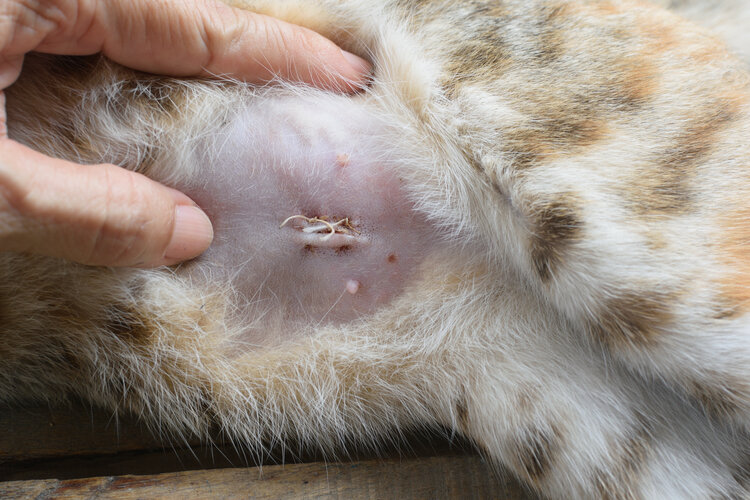
It is extremely important that your cat’s incision site is kept clean and dry and that it does not open at all. Your cat should not be licking the incision site at any point. Your vet will likely give you an Elizabethan collar or another type of protective cone for you to put on your cat, or they'll do so themselves. You should check the incision site several times a day to make sure that it is not pulling apart and that the stitches are completely intact. If the incision site looks red and swollen, seems to be opening apart, or has any discharge or bad odor, you should contact your veterinarian immediately, as your cat may require emergency care.
4. Consider Utilizing a Cone Collar
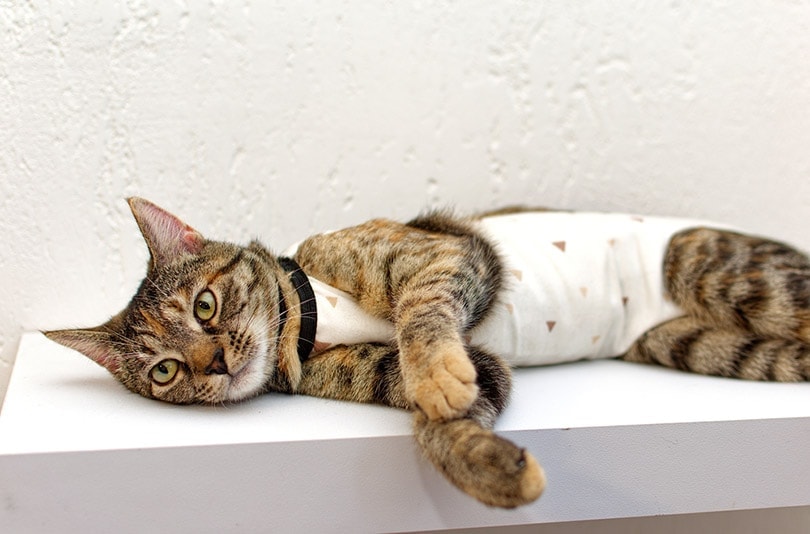
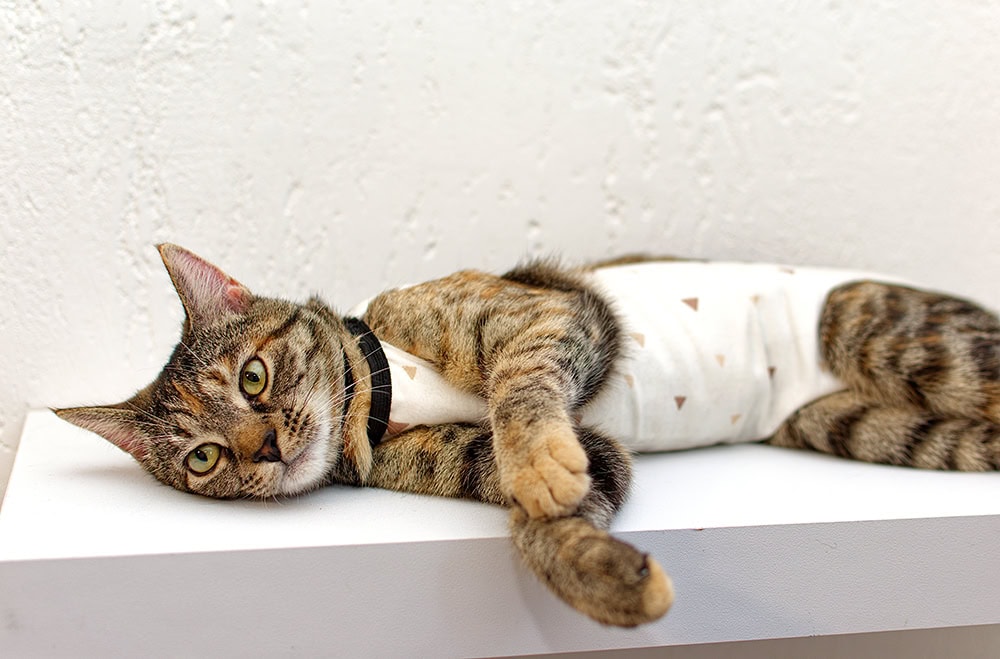
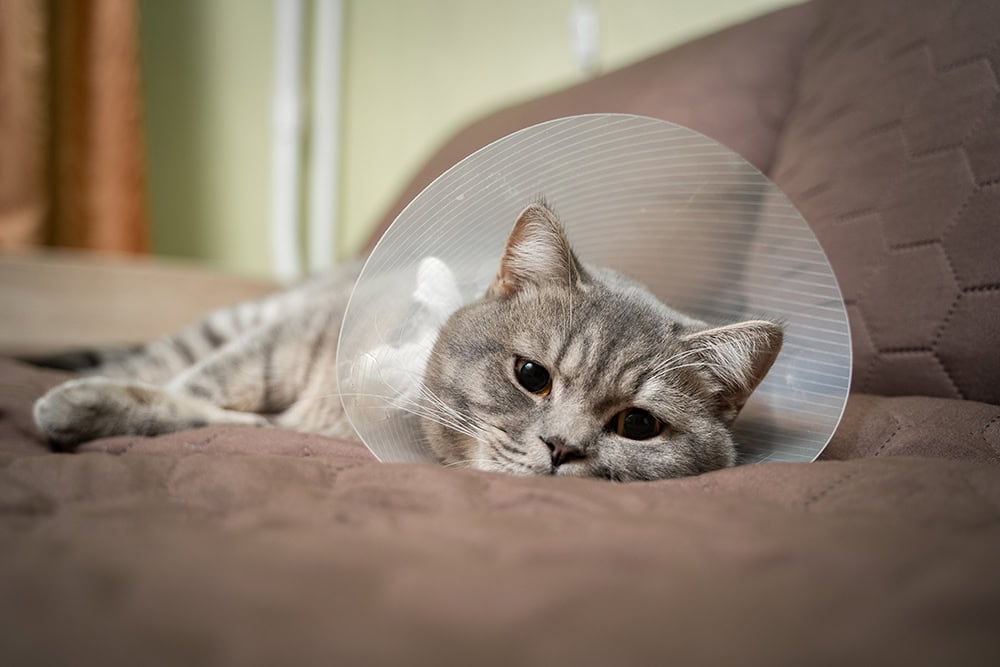
Observe your cat’s behavior. If they show any interest in their wound, they will require a protective collar or a special cat-safe body suit. The cone collar will keep your cat from being able to reach the incision site with their mouth but will not impede their ability to eat and drink if fitted appropriately. The cone collar should be worn and adjusted according to your vet’s advice. Some cats need it for just a few days, while others need it for the whole recovery period. During this time, cats should by no means leave the house, as having a cone on their head may get them into serious and sometimes life-threatening trouble. While recovering, your cat needs to stay indoors until your vet gives them the green light.
5. Check In With Your Veterinarian
You should check in with your veterinarian every couple of days while your cat recovers to provide updates about their progress and to get feedback about your efforts and things you can adjust if your efforts are not working as well as you wish they would. Based on your updates, your vet can let you know when it is safe for your cat to start resuming their regular activities again. If your cat has a reduced appetite or is having signs of an upset stomach or any other issues during this time, your vet will need to recheck your cat, re-adjust their pain medication, and administer further treatment to make sure they start feeling better soon.
Spaying and neutering is an important part of pet care, but it's not the only health expense your pet is likely to incur. A personalized pet insurance plan from a company like Lemonade can help you manage costs and care for your pet at the same time.

In Conclusion
It is important to provide all the support we can to our cats while they recover from spaying or neutering surgery. While things should go smoothly, there is always a chance that some problems could arise. Working closely with your veterinarian will help ensure that even the bumps in the road can be navigated without serious risk to your cat.
See Also:
Featured Image Credit: BadPixma, Shutterstock
Get Hepper In Your Inbox


Pet care tips from our vets and experts, straight to your inbox.
You may opt-out at any time. View our Privacy Policy for more information.
Rachael has been a freelance writer since 2000, in which time she has had an opportunity to research and write about many different topics while working to master the art of fusing high-quality content with effective content marketing strategies. She lives off the grid in Hawaii with her husband, her garden, and her rescue animals including 5 dogs, a cat, a goat, and dozens of chickens. She is an artist at heart and loves to read, paint, and make jewelry in her spare time. As a vegan, Rachael is obsessed with helping animals in need both in her community and anywhere in the world where she feels she can make a difference. Animals also happen to be her favorite topic to write about!
Join the conversation
Ask a question, share your story, or send private feedback.